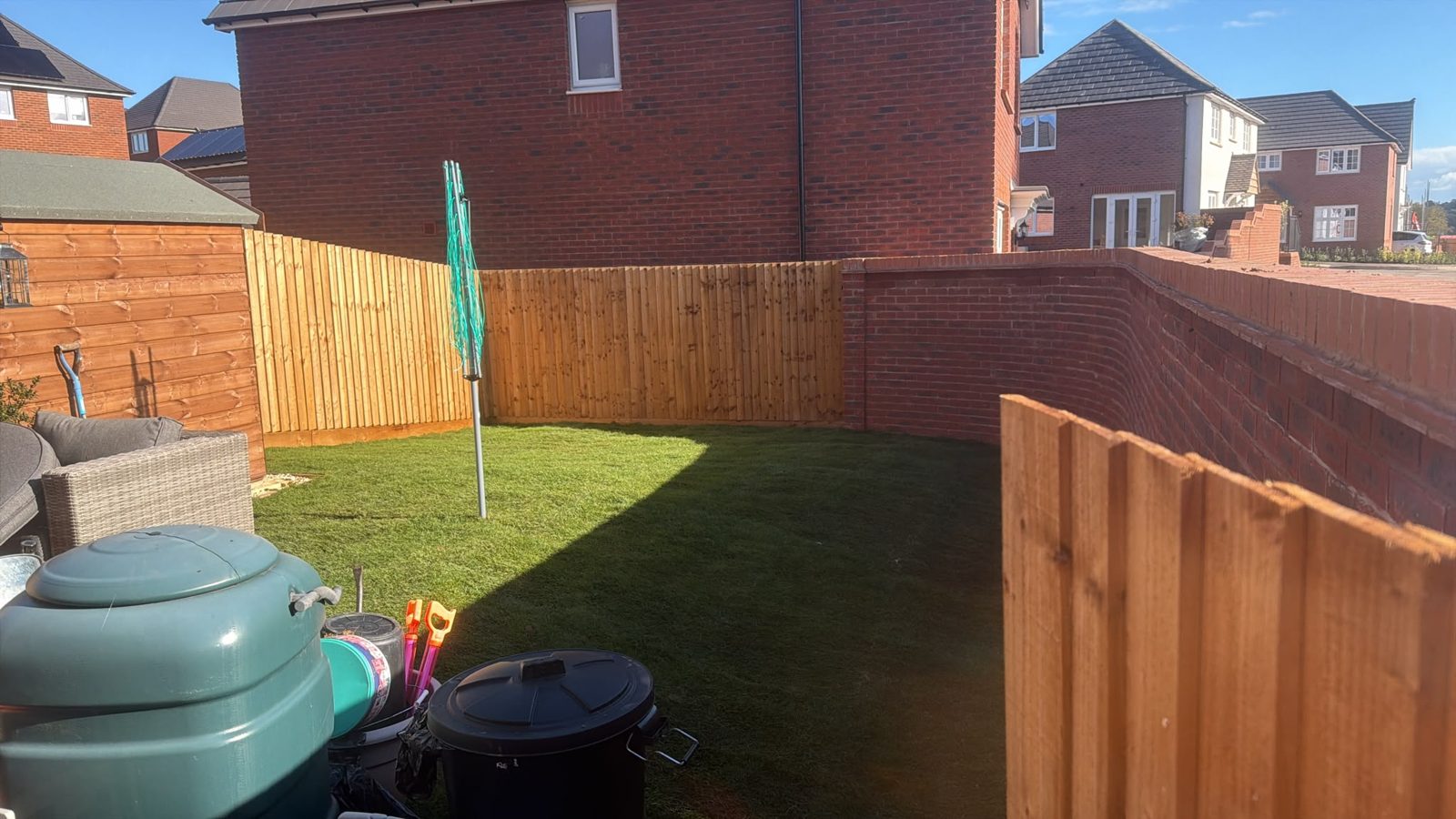
This project took a South Wales garden from an overgrown, neglected corner to a tidy, usable garden in one go: the old growth cleared out by hand, new fencing fitted along the boundary, and a fresh turf lawn laid across the cleared ground.
It is a common combination, because the three jobs depend on each other. A lawn cannot go down until the ground is clear, and a fence is far easier to fit before the turf is there to be trodden on. If you have a garden that has got away from you and you would like it tidied, fenced and turfed in one job, ask for a free quote.
Clearing the ground
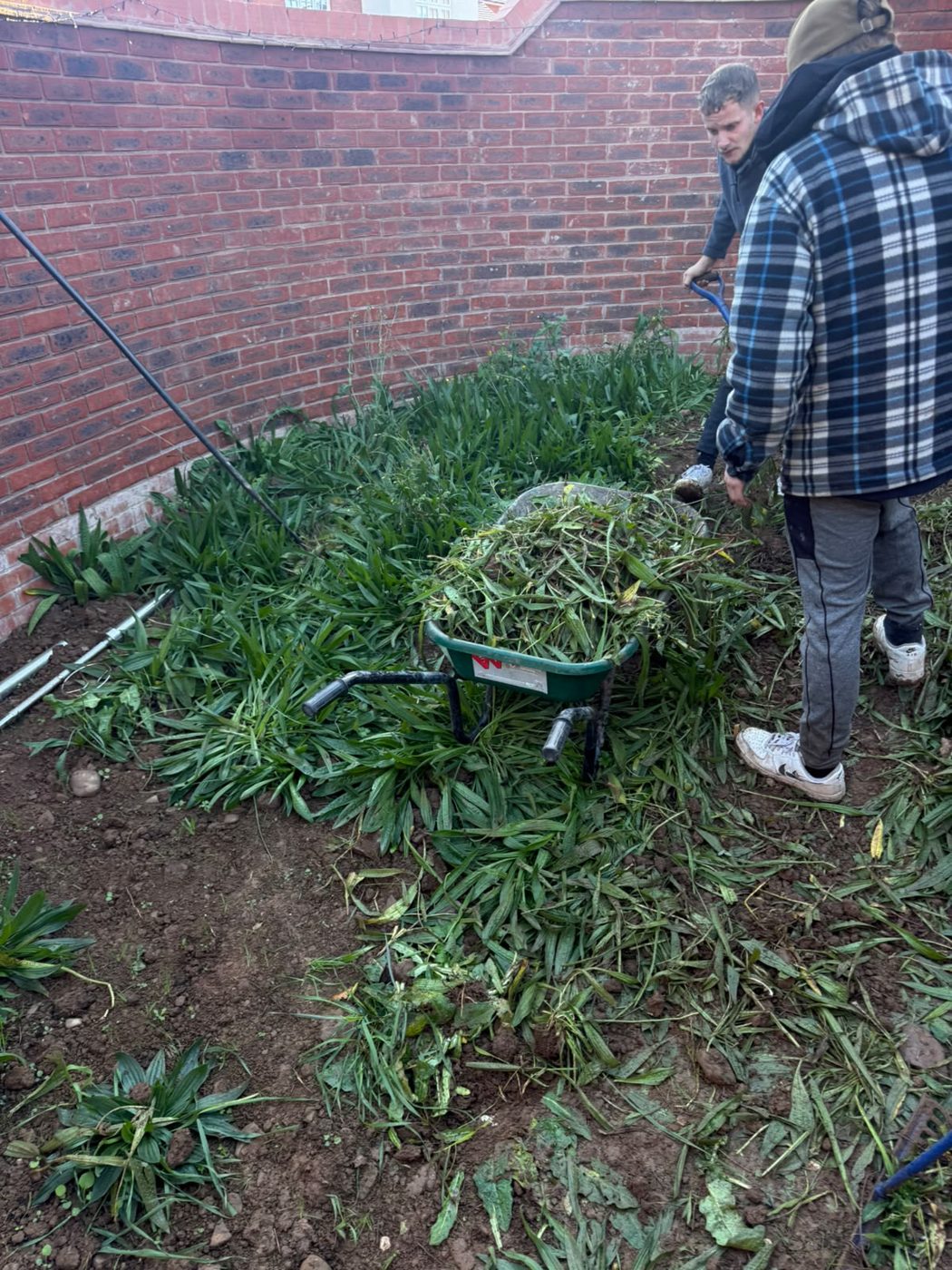
The first photo was taken part-way through the clearance. A bed along the foot of a brick wall was packed with coarse, broad-leaved growth that had spread right across the soil. It was cut back, raked together and loaded into a wheelbarrow to be taken off the plot, leaving bare earth ready to be worked.
On a bed like this the job is as much about what is left as what comes out. Growth that is only cut at the surface comes straight back, so the aim is to lift as much of the crown and root as the ground allows, rake the ground over and leave it clean. If your garden needs the same treatment, our garden clearance service covers cutting back, lifting weeds and taking the green waste away.
- Coarse growth cut back along the wall
- Cuttings raked up and barrowed away
- Soil left bare and ready to be levelled
- Green waste taken off the plot
The new fence
The boundary is closed with new close-board fencing: vertical, overlapping boards that leave no gaps to see through. The timber is still fresh and pale in the finished photo, and it ties in with the existing brick wall rather than competing with it.
In a garden that is overlooked from nearby houses, a solid fence like this does most of the work of making the space feel private. Fitted before the lawn goes down, it can be built without anyone treading on new turf or churning up the soil.
Laying the turf
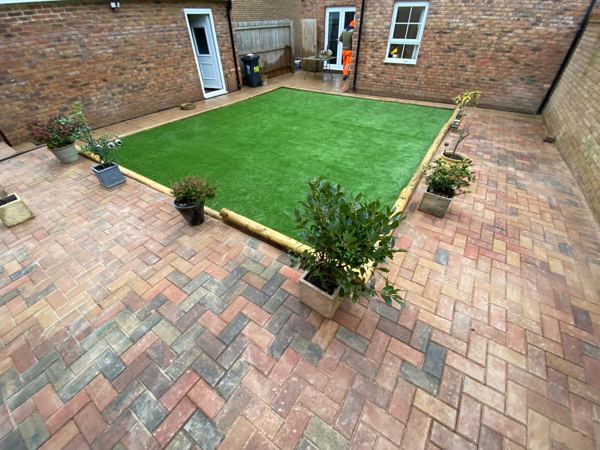
With the ground cleared and the fence in, the lawn went down as fresh turf. The finished picture shows a flat, even surface with tight joins and a clean edge against the fence and the wall, and an even green across the lawn.
New turf lives or dies on the ground beneath it, so the soil is levelled and firmed first, and the rolls are laid in a staggered pattern with the joins pushed tight. Our turf laying page explains how we prepare the ground for a new lawn. After laying, keep off the turf and keep it watered in dry weather while the roots knit into the soil.
Why the order matters
Clearance first, fence second and turf last is the sensible order on a job like this. Clearing leaves a clean surface to work from, the fence posts and rails can be fitted without a finished lawn in the way, and the turf goes on once nothing heavy needs to cross it.
It also means one set of waste to clear, one visit to plan around and one finished result at the end, instead of three separate jobs from three different people. We are happy to look at your garden and tell you which of the three it needs.
Questions About This Job
Can you clear a neglected garden, fence it and lay a new lawn as one job?
Yes. Clearing, fencing and turfing are all work we do, and doing them together in the right order means a single plan and a single quote. Send us a photo and we will tell you what the garden needs.
Do you take the cleared waste away?
Yes. Taking the green waste away is part of our garden clearance, so you are not left with piles to deal with yourself.
Should the fence go in before the turf?
Usually, yes. Posts, rails and boards are easier to fit without finished lawn underfoot, and the turf stays clean and flat. We plan the order when we quote so the lawn is the last thing to go down.
When can I walk on a new turf lawn?
Keep off it while the roots are taking hold, and water it in dry spells. Once the joins have knitted and the turf resists a gentle tug, light use is fine. We will tell you what to expect for your garden.