Turf Laying in South Wales - T J Landscapes

Turf Laying in South Wales

A good lawn starts underneath. Most of the work in a new lawn goes into the ground before a single roll of turf arrives: stripping the old grass, dealing with stones and rubble, sorting the drainage, bringing in topsoil where it is thin and getting the levels right. Get that right and fresh turf knits in within weeks and stays even for years.

Tony and the team lay turf for gardens all over South Wales, from small terrace lawns in the valleys to larger family gardens on the newer estates. We also fit artificial grass where a real lawn is not practical. Every visit to price the work and talk it through is free, so tell us about your garden and we will come and look at the ground.

★ 4.8/5 Google · 69 reviews 10/10 on Checkatrade Free quotes & advice
Google★★★★★4.8/5 · 69 reviews Checkatrade10/105 reviews Our Website★★★★★70 reviews
What we do

The Lawn Work We Do

From a brand new lawn on bare soil to putting a tired one right, these are the jobs we are asked for most.

Turf Laying

New Lawns on Prepared Ground

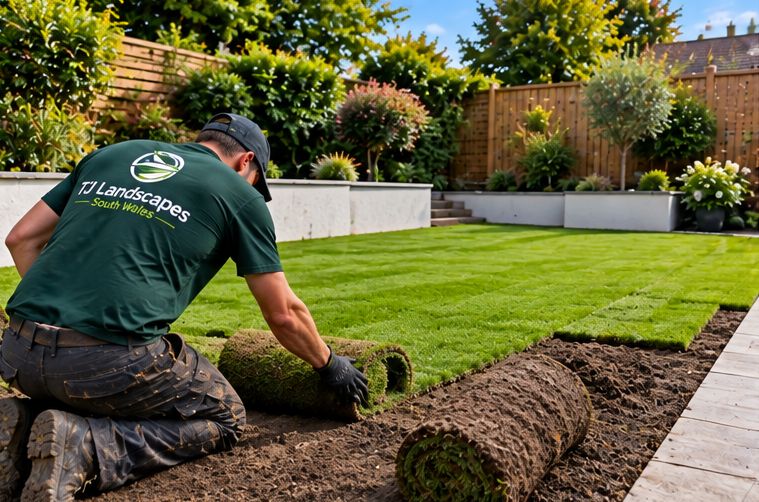
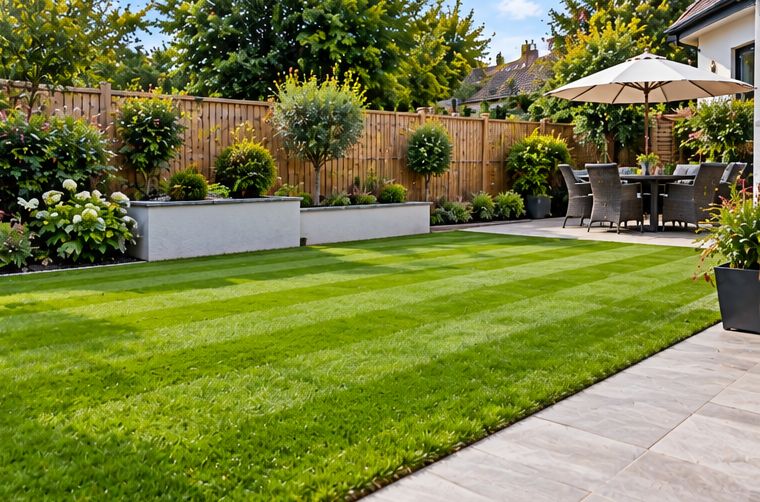
For bare plots, new builds and gardens coming out of a makeover. We clear the area, cultivate and level the soil, add topsoil where it is needed and lay fresh turf with tight, staggered joins. You end up with a usable lawn in a matter of weeks rather than the months seed can take.

T J Landscapes fitter laying turf rollsFreshly laid striped lawn
Ask about new lawns on prepared ground →
Turf Laying

Returfing a Tired Lawn

When an old lawn is more moss, weed and bare patch than grass, starting again is often quicker than nursing it back. We lift the old turf, take it away, loosen and improve the soil underneath and relay. It is a good chance to change the shape of the lawn too.

Freshly laid striped lawnRoll of new turf ready to lay
Ask about returfing a tired lawn →
Turf Laying

Levelling and Topsoil

Bumps, hollows and puddles usually come from uneven or compacted ground. We strip, regrade and firm the soil, importing screened topsoil to fill low spots and build up thin ground, so the new surface is smooth to mow and sheds water properly.

Roll of new turf ready to layRaking the soil level before turfing
Ask about levelling and topsoil →
Turf Laying

Lawns on Sloping Gardens

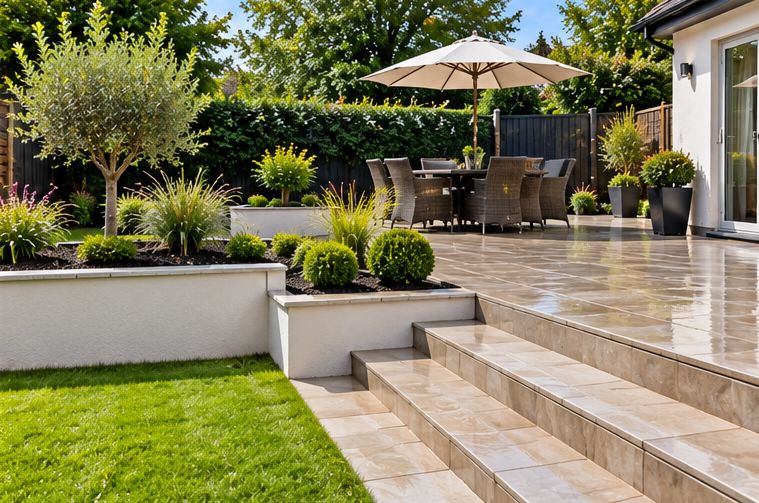
A lawn on a steep bank is hard work to mow and slow to establish. We can shape a slope into flatter lawned terraces held by retaining walls or sleepers, with steps between, so each level is easy to use and look after.

Raking the soil level before turfingT J Landscapes fitter laying turf rolls
Ask about lawns on sloping gardens →
Turf Laying

Drainage Under the Lawn

Grass will not thrive in ground that stays waterlogged. Where water sits, we look at why, then improve the soil, add grit or fit land drains before the turf goes down, because it is far harder to fix afterwards.

T J Landscapes fitter laying turf rollsFreshly laid striped lawn
Ask about drainage under the lawn →
Turf Laying

Artificial Grass

For shady corners, dog runs, small courtyards or anyone who simply does not want to mow, artificial grass is an option. It needs a properly compacted, free-draining base with an edge restraint, and we prepare it with the same care as a real lawn.

Freshly laid striped lawnRoll of new turf ready to lay
Ask about artificial grass →
Step by step

How a New Lawn Goes Down

T J Landscapes fitter laying turf rolls

Every garden is different, but the order of work stays much the same. The aim is a firm, level, free-draining bed of good soil that roots can grow straight into.

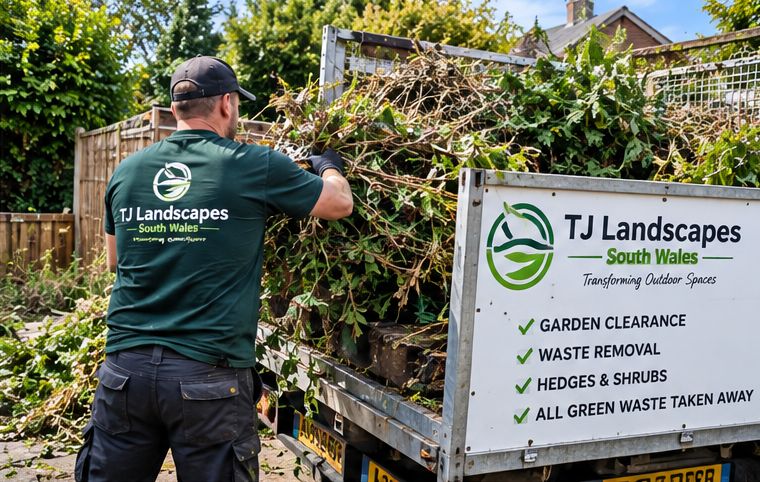
  • Clear the ground: old turf, weeds, stones, roots and buried rubble come out. Very overgrown plots may need a garden clearance first, and we take the green waste away.
  • Loosen and improve: compacted soil is dug or rotavated, and heavy clay is opened up with topsoil and grit so water can drain through.
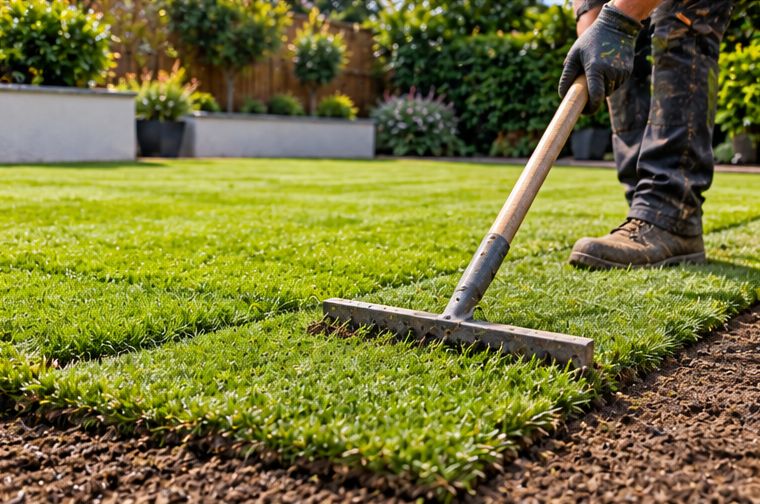
  • Level and firm: the soil is raked to the finished height, then trodden or rolled and raked again until there are no soft spots to sink later.
  • Feed: a pre-turf fertiliser is raked in where the soil is poor, to help new roots get going.
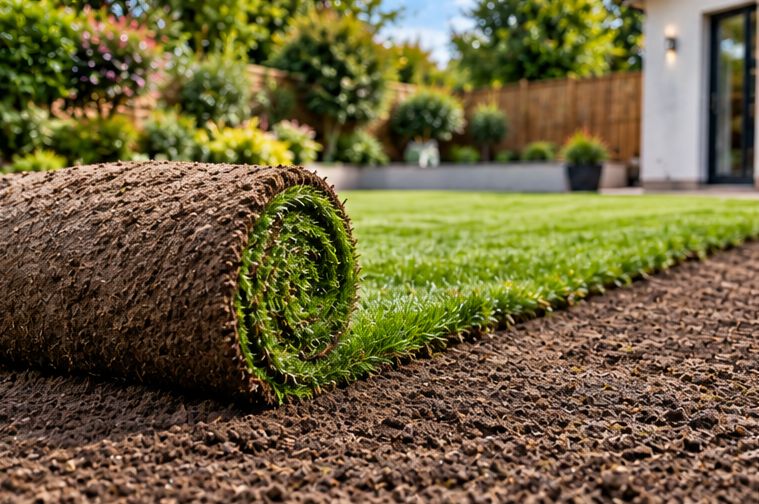
  • Lay: rolls go down the day they arrive, butted tight and staggered like brickwork, working off boards so the prepared soil is not dented.
  • Finish: edges are trimmed to shape, joins are checked and the lawn gets a thorough first watering.

Our guide on how to prepare the ground before laying turf goes into each of these stages in more detail.

Soil and ground

What Lies Under a South Wales Lawn

Raking the soil level before turfing

The ground varies a great deal across the region, and it decides how much preparation a lawn needs. In the older valley towns such as Tonypandy and Abertillery, back gardens can have only a thin layer of soil over stone, ash or old building rubble, so importing topsoil is often part of the job.

On newer estates around towns like Cwmbran and Caerphilly, a common story is a skim of topsoil spread over clay that was squashed flat by building machinery. It looks fine on the day the house is handed over, then turns to a bog every winter. Breaking up that compacted layer is the difference between a lawn that drains and one that does not.

Lower, flatter ground near the rivers and the coast tends to be kinder, although clay is still common. Wherever you are, we look closely at the soil when we come to price, lifting a spade or two where needed, so the quote reflects what is really there rather than a guess. If the ground turns out to need more or less than expected, we explain why before going further.


Seasons

Timing Turf Around the Welsh Weather

Roll of new turf ready to lay

Turf can be laid for much of the year, which is one of its big advantages over seed. Autumn and spring are usually the easiest seasons, because the soil is warm enough for roots to grow and there is normally enough rain to keep new turf from drying out.

Summer lawns are perfectly possible but need plenty of watering in the first few weeks. In winter we only lay when the ground is workable, never on frozen or waterlogged soil, and the colder upland areas around Ebbw Vale and Merthyr Tydfil tend to start growing a few weeks later in spring than the coast does.

If you are still deciding between the two, our article on turf or seed for a new lawn sets out the pros and cons, and when to lay turf in South Wales goes through the year season by season.

Why choose us

Why People Ask Us to Lay Their Lawn

Turf is not complicated, but the lawns that last are the ones where nobody took shortcuts underneath.

Groundwork First

Most of our time on a lawn goes into clearing, levels, soil and drainage, because that is what keeps it flat, green and dry underfoot for years.

Part of the Whole Garden

We also build patios, fences and walls, so edging, steps and paths around the lawn can all be done in the same job.

Clear, Free Quotes

We look at the ground properly before pricing, and explain exactly what preparation is included and why.

Well Reviewed

Our customers rate us highly on Google, Checkatrade and our own reviews page, and we are happy for you to read what they say.

Aftercare

Looking After New Turf

Freshly laid striped lawn

New turf has short roots and relies on you for water until it has grown down into the soil. For the first couple of weeks that usually means a good soak most days in dry weather, enough to wet the soil underneath, not just the grass. Lift a corner now and then to check.

Keep off it as much as you can for the first few weeks. Once it has rooted, and it no longer lifts when you tug it gently, give it a first light cut with the mower on a high setting, then bring the height down gradually over later cuts.

We talk you through the aftercare when the lawn is finished, and there is more in our guide to watering and caring for new turf in the first six weeks. For the longer term, see how to look after a lawn through the year.

Options

Real Turf or Artificial Grass?

T J Landscapes fitter laying turf rolls

Real grass is cooler underfoot, soaks up rain, supports wildlife and costs less to put down. It does need mowing, feeding and the occasional bit of repair, and it struggles in deep shade, under big trees and in very heavy use.

Artificial grass stays green all year and needs no mowing, which suits some gardens and some people very well. It does get warm in strong sun, needs brushing and the odd rinse, and it only drains as well as the base beneath it, so preparation is just as important as with a living lawn.

Plenty of gardens mix the two, perhaps real turf in the open and artificial grass in a shady strip beside the house. If your lawn has struggled for years, it is worth reading why lawns go patchy, mossy or bare first, because the cause often decides the right answer.

Reviews

What Our Customers Say

Real reviews from homeowners across South Wales — rated 4.8 out of 5 on Google from 69 reviews and 10/10 on Checkatrade.

★★★★★

Spectacular work

“Had my patio done by the company and could not be happier. Top quality work done and quickly too.”

Nicola
Patio
★★★★★

Great work, really pleased

“I was pleased to find Tony and his lads were absolutely great! Tony responded quickly & was very polite.”

Jenny
Garden work
★★★★★

Great work

“We were delighted with the work and materials, which were of very high quality. Tony and team helped us.”

Sian Davies
Landscaping
Advice centre

Lawn and Turf Advice

Short, practical guides to choosing, laying and caring for a lawn in the South Wales climate.

More from T J Landscapes

Our Other Garden Services

Most gardens need more than one trade. The same team does all of it, so one visit and one quote covers the whole job.

Areas we cover

Where We Lay Turf

We lay lawns across South Wales from our base in Pontypool. Pick your town to see our turf laying page for it.

Based in Pontypool

Find T J Landscapes

T J Landscapes South Wales
24 Conway Road, Pontypool
Torfaen, NP4 6HL

07423 796115

We cover homes right across South Wales, from Cardiff and the coast up to the valleys and the Brecon Beacons.

FAQs

Common Questions

How much does turf laying cost?

It depends mainly on the size of the lawn, how easy it is to get materials and waste in and out, how much old turf and rubble has to be removed, how much topsoil is needed and whether drainage work is involved. Levels matter too: a sloping plot takes more work than a flat one. We visit and give a free, itemised quote, so get in touch to arrange one.

Can you lay turf straight over my old lawn?

We do not recommend it. Turf laid over old grass sits on a spongy, uneven layer, roots poorly and often dies back in patches. Lifting the old lawn and preparing the soil properly takes a little longer but gives a far better result.

How soon can we walk on new turf?

Light use is usually fine once it has rooted, which is often two to three weeks in the growing season, a little longer in cool weather. Try to keep heavy use, games and paddling pools off it until it has had a few mows.

Do I need to water it myself?

Yes, in dry weather the watering in the first few weeks is down to you, and it is the single biggest factor in how well the lawn takes. We will show you what to look for, such as the turf shrinking at the joins or turning dull and grey-green, which are signs it needs more water.

My garden floods every winter. Is turf still possible?

Usually, but the water has to be dealt with first. Depending on the cause that might mean breaking up compacted clay, adding grit and topsoil, regrading the levels or fitting drains. Our guide on stopping a garden waterlogging explains the options.

Do you fit artificial grass as well?

Yes. We prepare a compacted, free-draining base with a firm edge, then lay and fix the grass. We are happy to talk through whether real or artificial suits your garden better before you decide.

Will you take the old turf and soil away?

Yes. Removing old turf, stones and surplus soil is part of the job, and we take the waste away so you are not left with a pile at the end of the garden.

Get in touch

Ask for a Free Turf Laying Quote

Tell us roughly how big the lawn is and what the ground is like now, and we will arrange a free visit to take a look.

Prefer to talk? Call 07423 796115 or WhatsApp us.

Call WhatsAppFree Quote