A good patio gives you somewhere dry and level to sit, eat and dry the washing, and it should still be flat and draining properly years after the last slab went down. T J Landscapes lays patios, paths, steps and driveways across South Wales, working from our base in Pontypool out to the coast, the valleys and the Monmouthshire border.
We work in six main materials: Indian sandstone, porcelain, natural stone, limestone, granite and block paving. Each has its own look, its own feel underfoot and its own way of coping with wet weather, and each has a page of its own below if you want to read more before you choose.
Paving rarely stops at the patio, so we also build the paths that link it to the rest of the garden, steps between levels, edging and borders, and block paved driveways at the front of the house. Tony and the team give free quotes and free advice on any of it, so tell us what you have in mind.
Six materials, each suited to different houses, gardens and budgets. Tap through to any of them for colours, finishes, how we lay it and how to look after it.
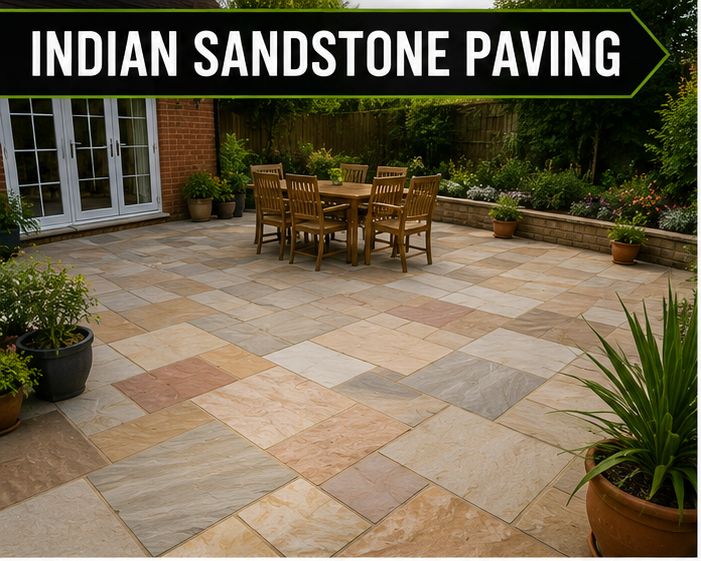
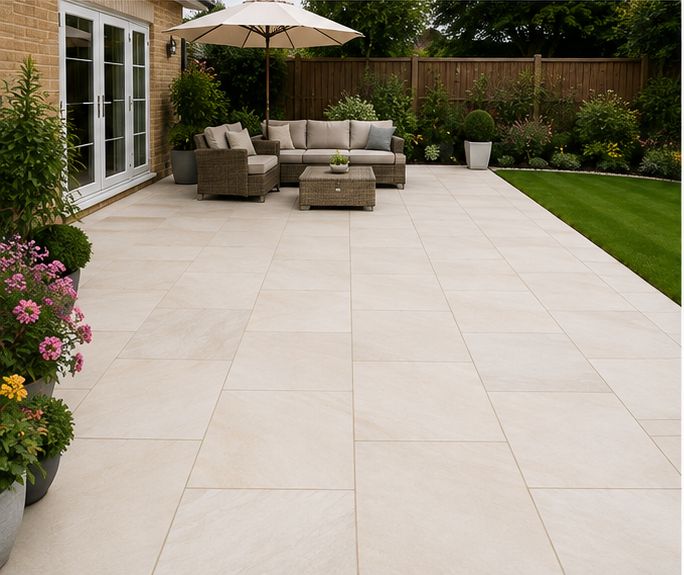
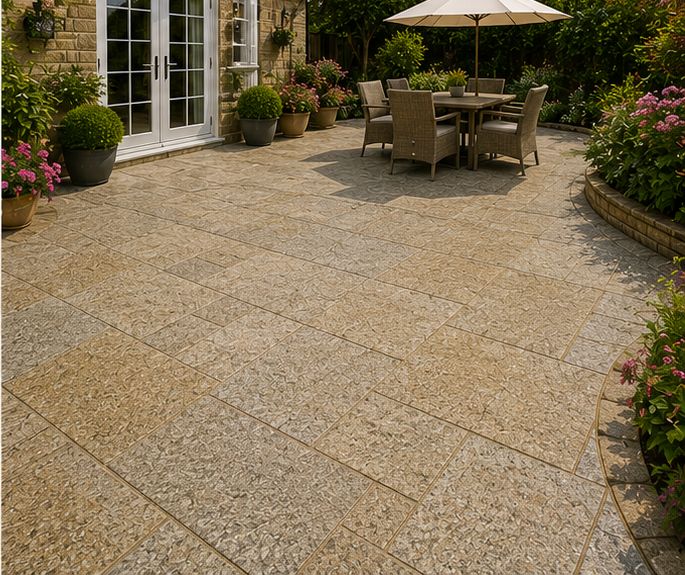
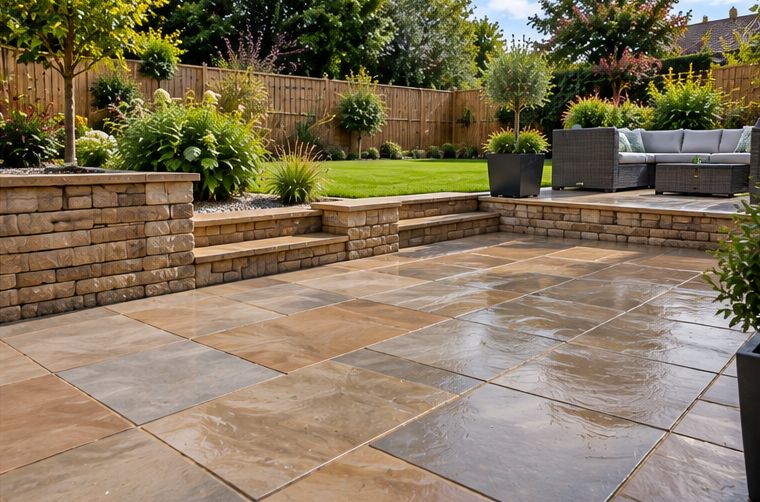
Indian sandstone is the patio stone most people picture: riven or sawn slabs in warm buffs, greys, greens and mixed autumn tones, with natural veining that makes every slab slightly different. It suits cottages and period homes as well as newer houses, and a riven surface gives good grip on a wet day. Being a natural stone, it needs a sealer or a regular clean to keep algae at bay in our damp climate. Read more on our Indian sandstone paving page.
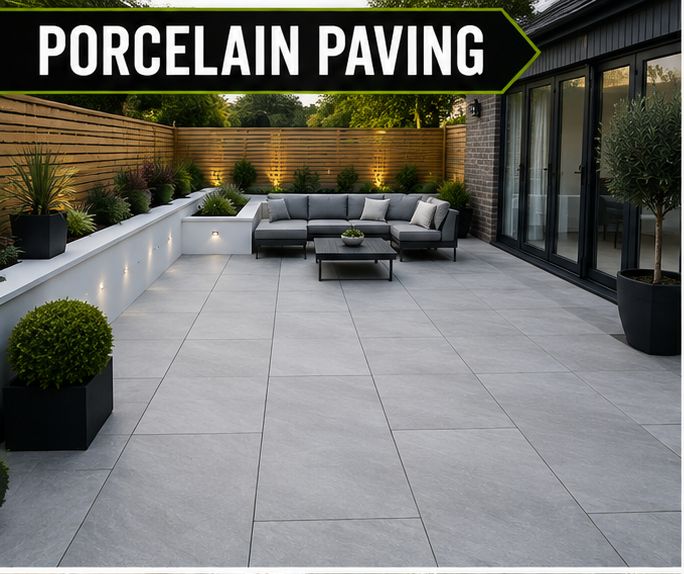
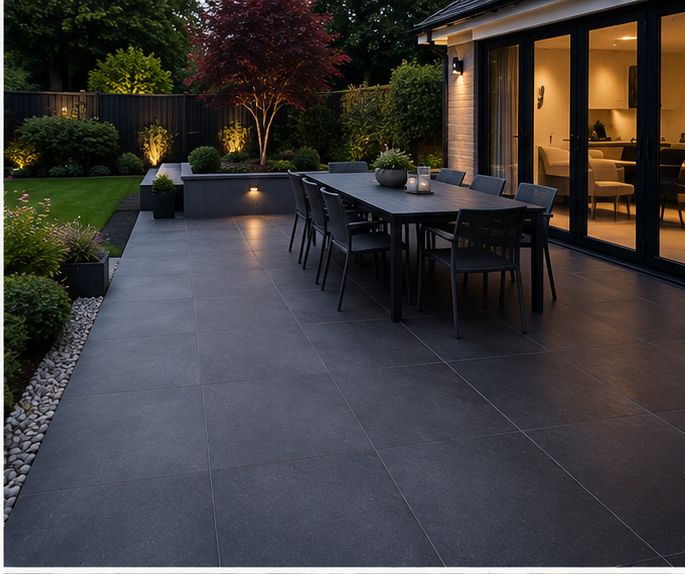
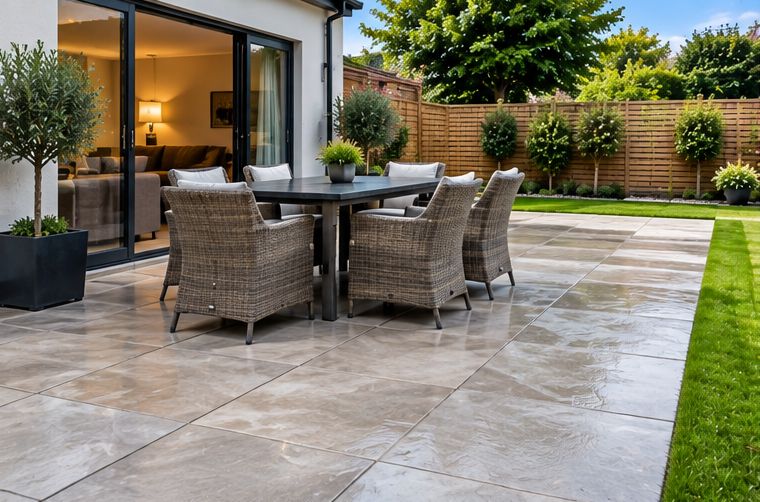
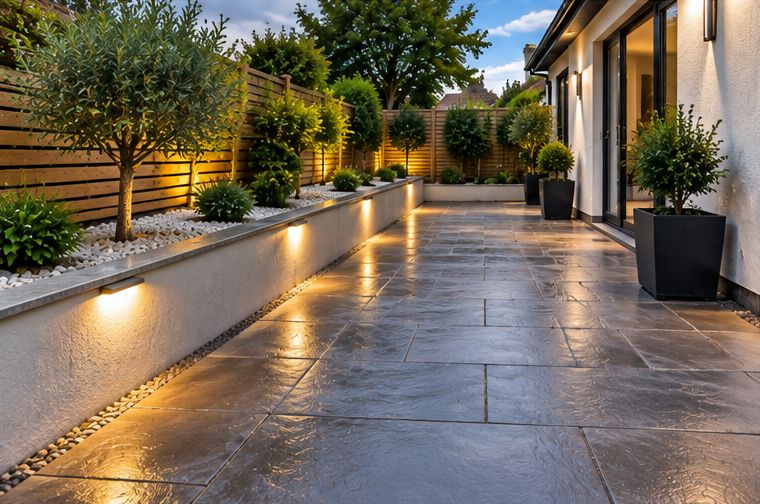
Porcelain is a fired ceramic slab, dense enough that it absorbs very little water, so it resists staining, moss and fading far better than most stone. It comes in crisp modern greys, charcoals and creams, as well as convincing wood and stone effects. Outdoor porcelain is usually 20mm thick with a textured anti-slip finish, and it is laid on a full mortar bed with a slurry primer so it bonds properly. See our porcelain paving page.
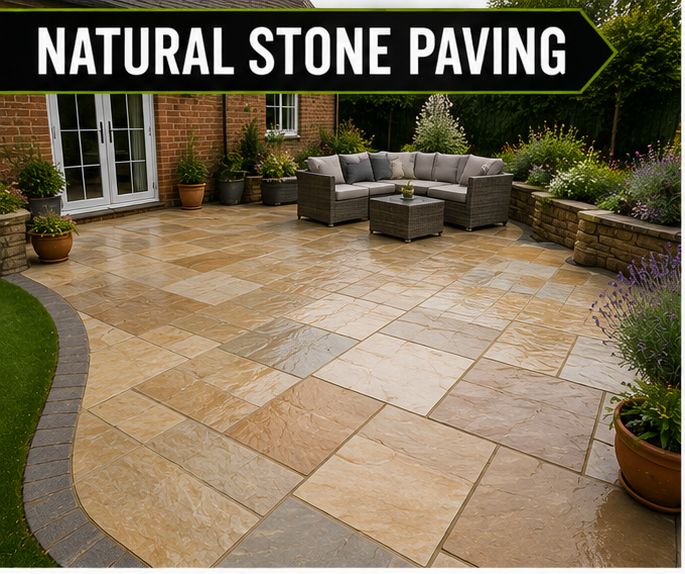
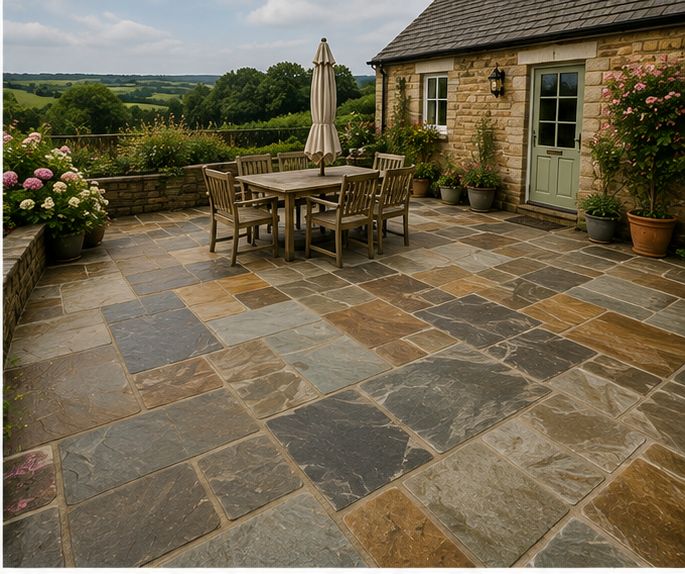
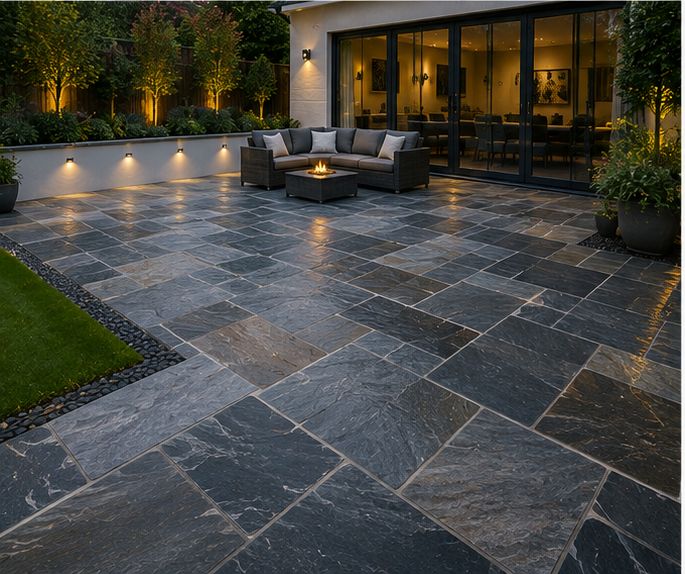
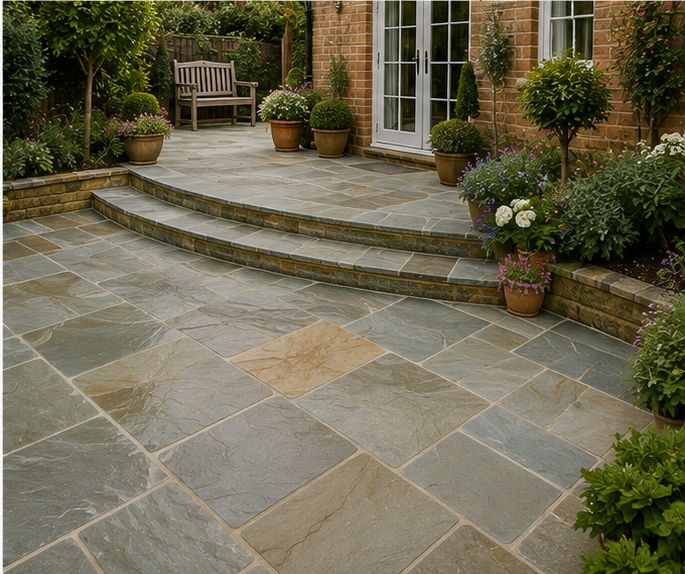
Natural stone covers a family of quarried materials, including slate, sandstones and flagstones, each cut or split into slabs rather than moulded. It brings real texture and depth of colour that weathers in rather than wearing out, which is why it sits so comfortably beside old stone walls and cottage planting. We can help you pick a stone that matches the building and copes with the amount of shade and rain your garden gets. More on our natural stone paving page.
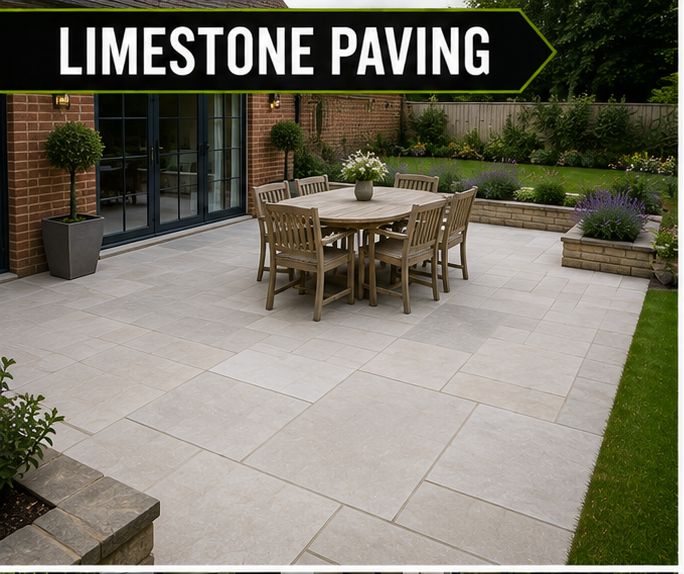
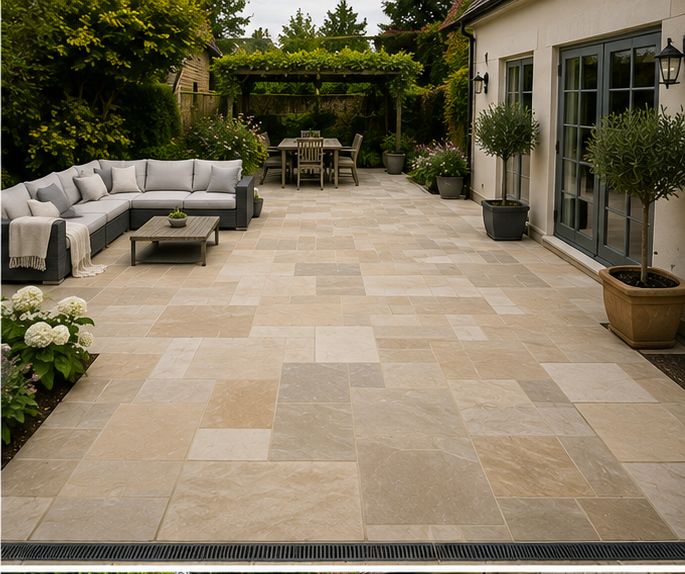
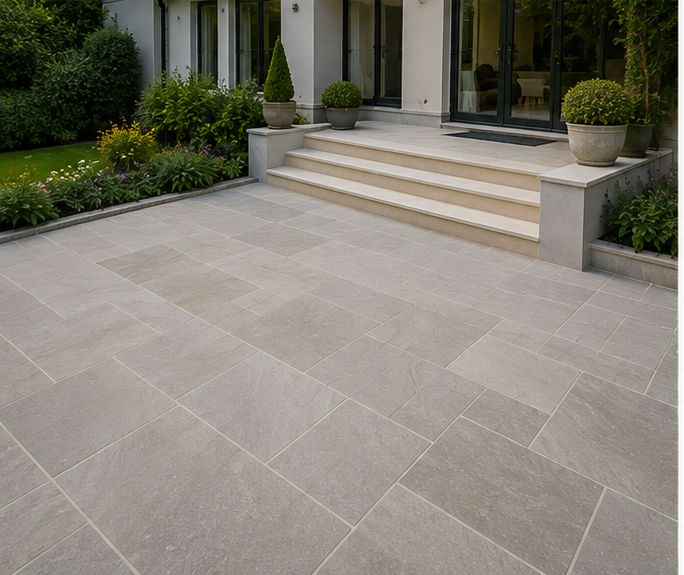
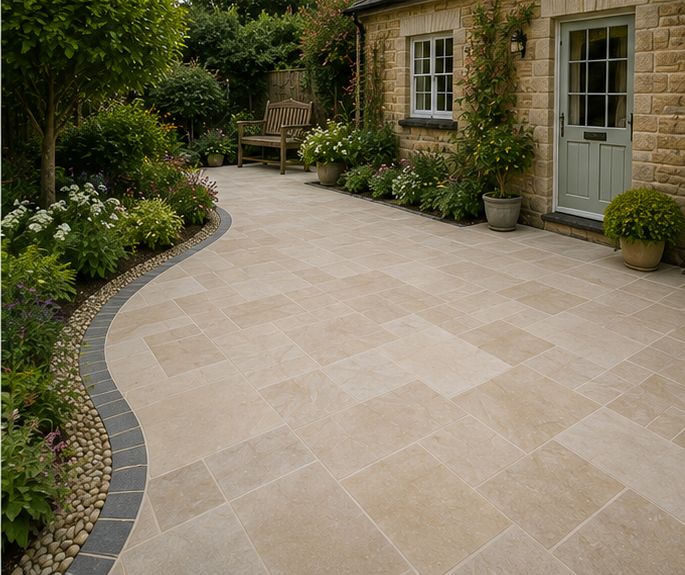
Limestone has a finer, more even grain than sandstone, with soft blues, greys and buffs that give a calm, tidy look. Sawn and honed limestone suits contemporary gardens, while tumbled or riven finishes feel more traditional. It is a little softer than some stones, so it benefits from a sealer and gentle cleaning products rather than harsh acids. Find out more on our limestone paving page.
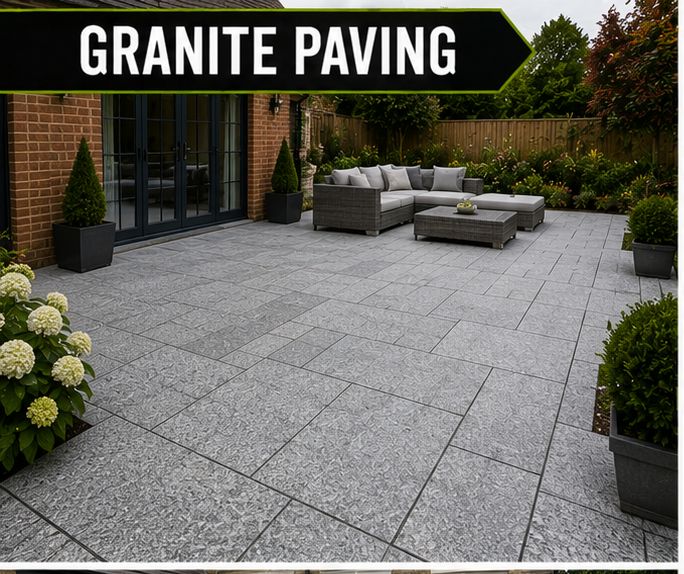
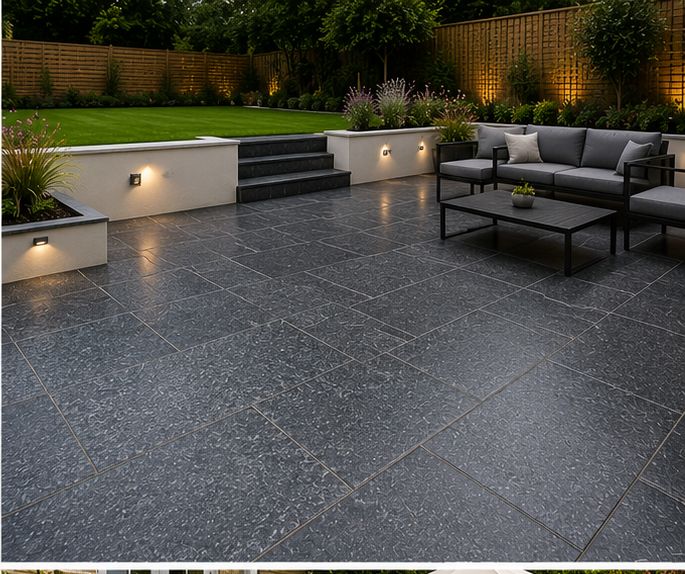
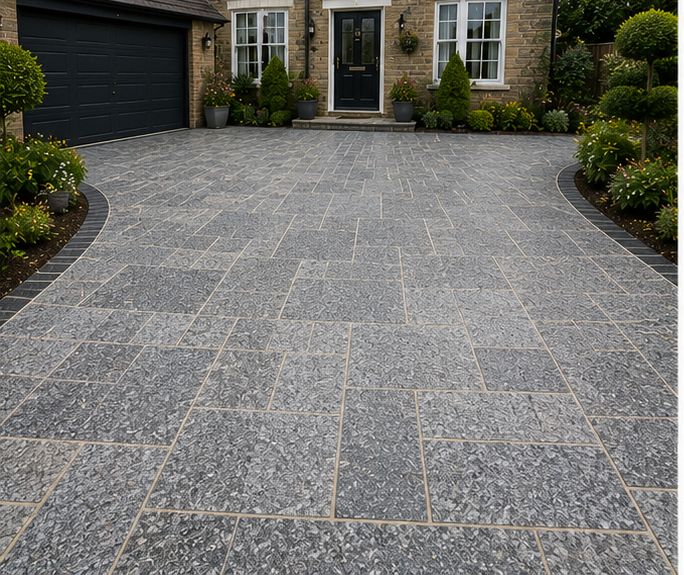
Granite is one of the hardest paving stones you can buy, with a speckled crystal pattern in silver, mid grey, black and warmer tones. Flamed and textured finishes give a surface that grips well in the wet and stands up to heavy use, so it works for busy patios, paths and even driveways. It holds its colour well and suits both modern and more formal designs. See our granite paving page.
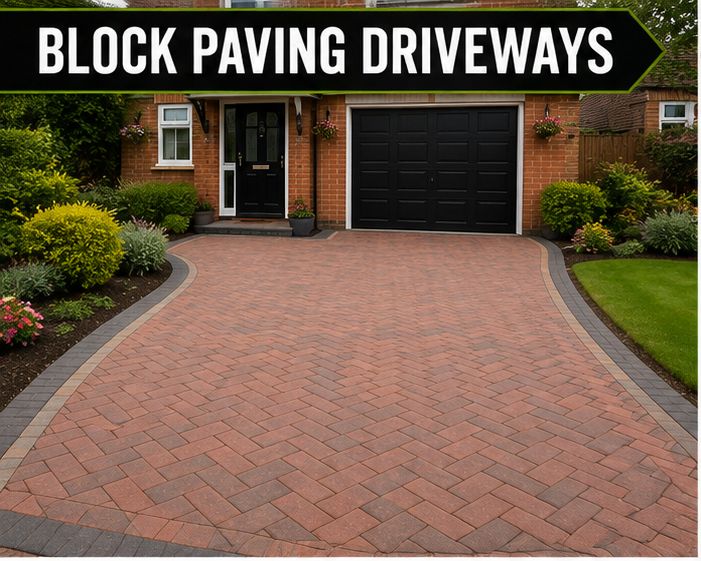
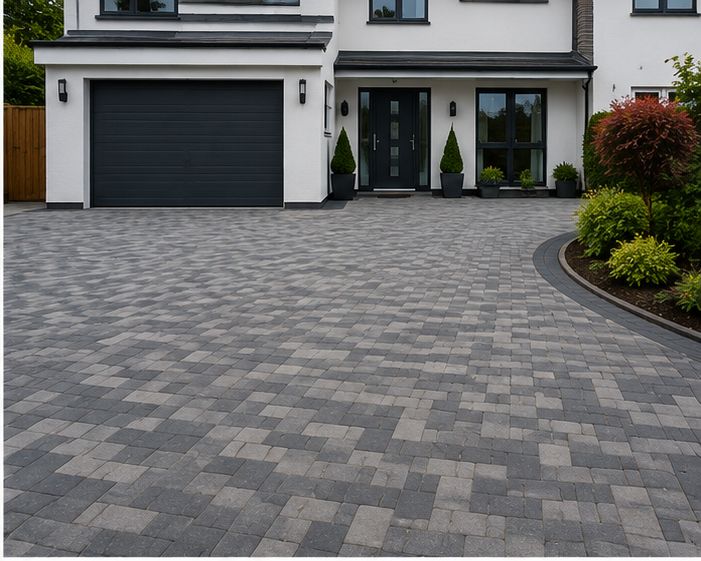
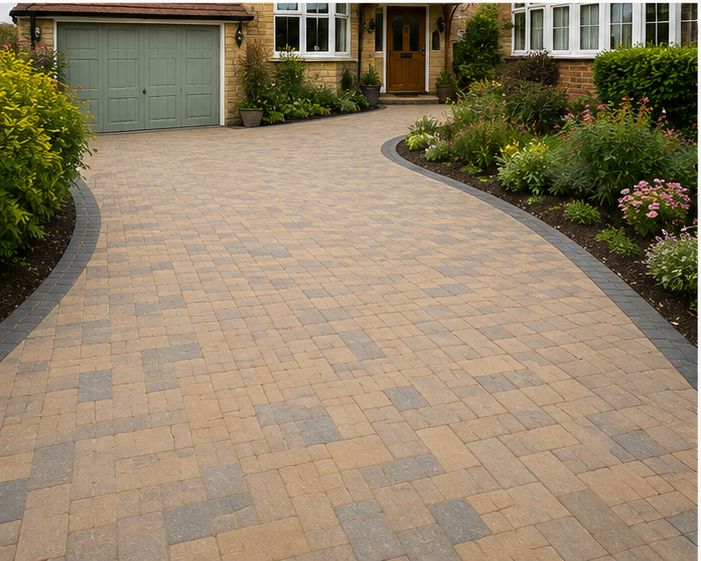
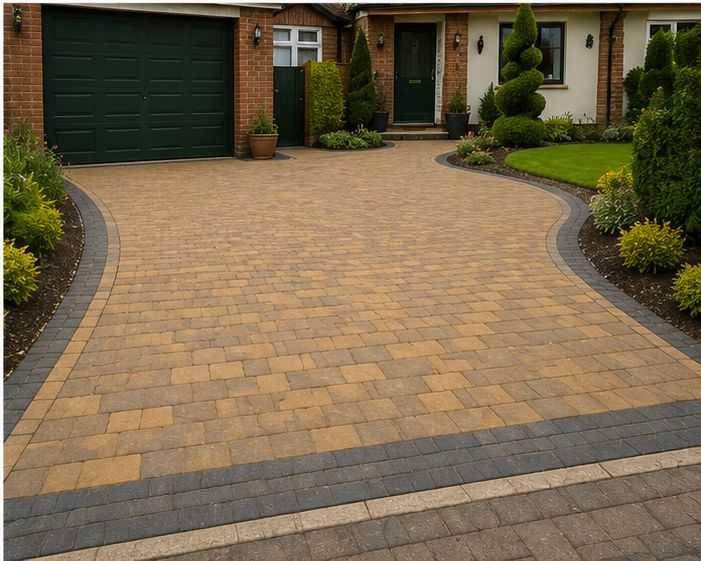
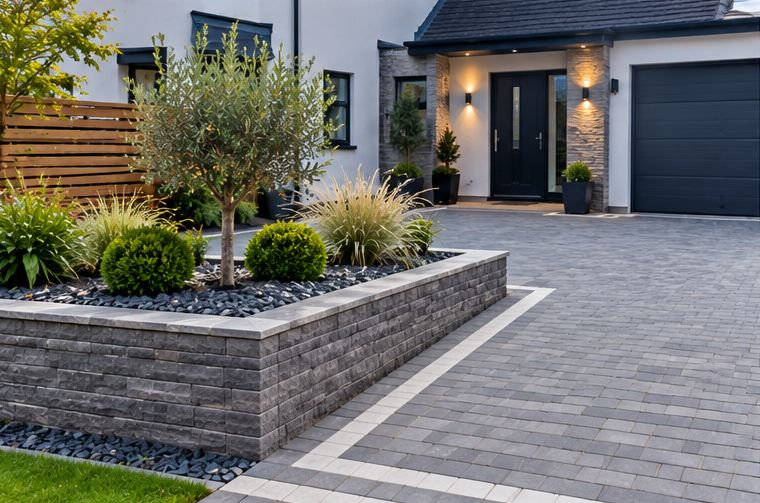
Block paving is made up of small concrete or clay blocks laid in patterns such as herringbone or basketweave, locked together with kiln-dried sand over a compacted sub-base. It is strong enough to take cars, easy to lift and relay if a drain needs attention, and it comes in reds, charcoals, buffs and brindled mixes. Permeable blocks can also let rainwater soak through. Read more on our block paving driveways page.
A patio that sits on its own in the middle of the lawn never quite feels finished. We use paving right through a garden to join the spaces up, so the back door, the seating area, the shed, the bins and the washing line are all linked by something firm and dry to walk on. Using the same stone throughout, or a darker one as a border, helps the whole garden read as one design.
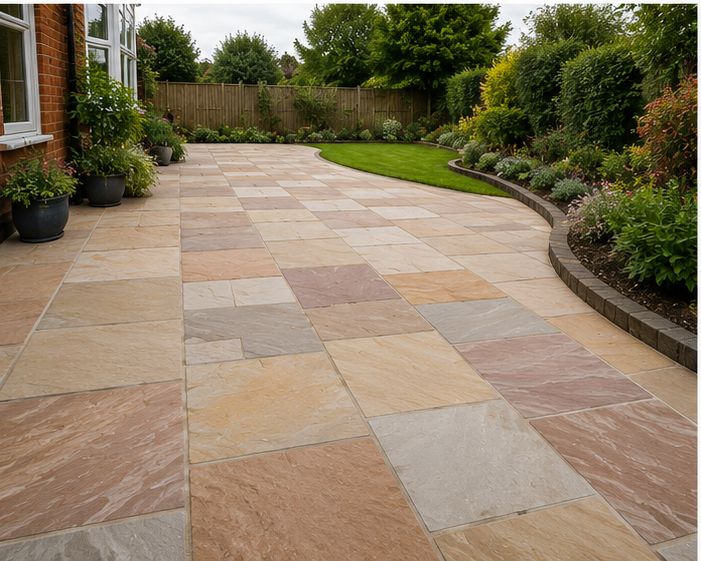
Paths and walkways: front entrance paths, side passages and garden paths in matching or contrasting stone, laid with a slight cross fall so they shed water
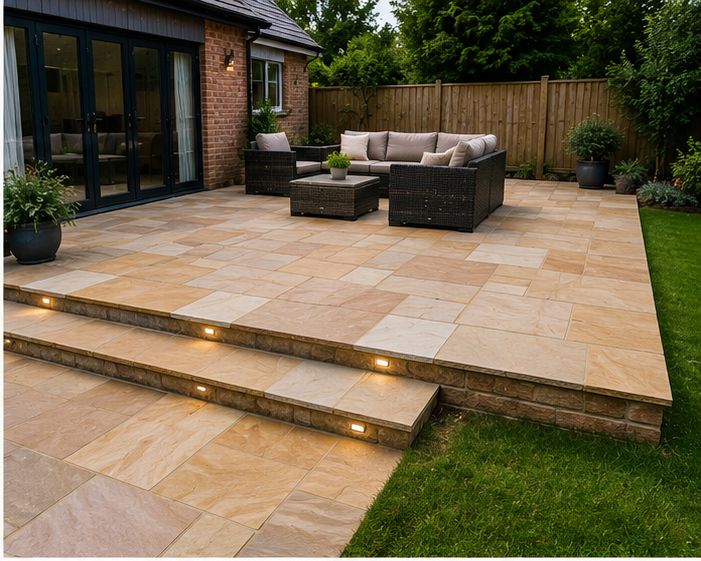
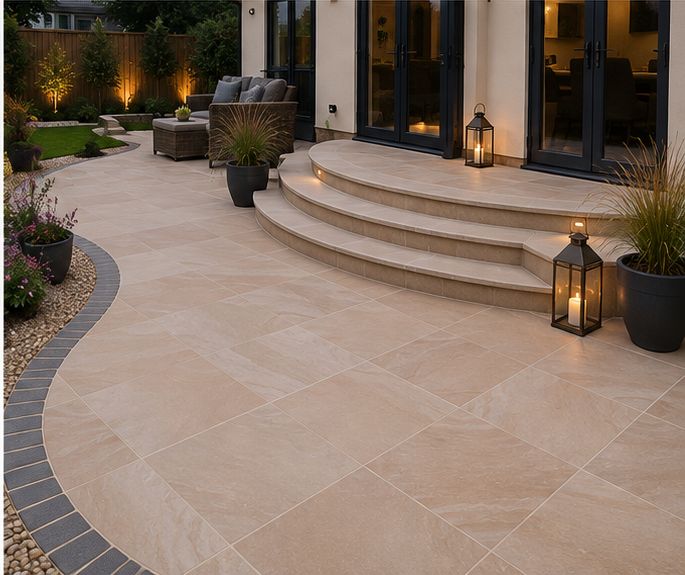
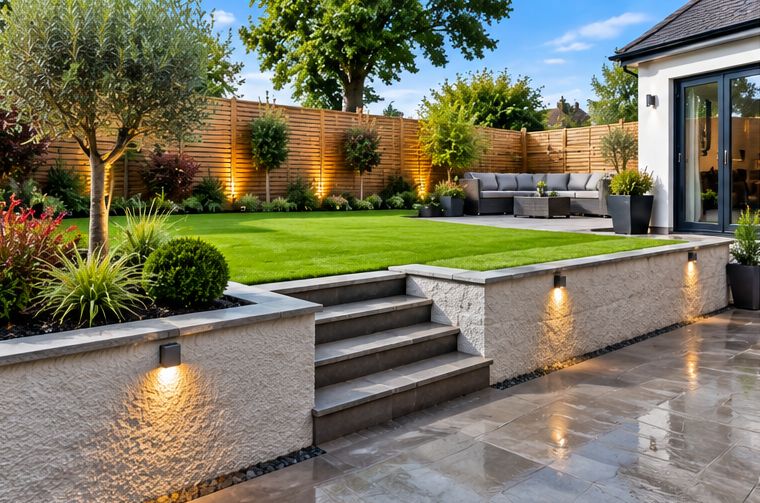
Steps and raised patios: even risers and generous treads that make a sloping garden safe to use in the rain, often combined with brick or stone retaining walls
Edging and borders: soldier courses, kerbs and contrasting bands that frame a patio, hold a path together and keep lawn and gravel where they belong
Bin stores and hard standing: small, practical slabs of paving for sheds, greenhouses, bins and garden furniture
Steps matter most in the valleys, where many back gardens climb steeply from the house. In towns such as Pontypool, Abertillery and Tonypandy, a set of well built steps and one or two level paved terraces can turn a slope you avoid into a garden you use every day.
Design
Patios Planned Around the Way You Use the Garden
There is no standard patio. Some households want a wide terrace right outside the kitchen doors, big enough for a table, a barbecue and a crowd. Others would rather have a small paved corner at the far end of the garden that catches the last of the evening sun. We look at the aspect, the view, the levels and how you actually live before suggesting a size or shape.
Dining and entertaining areas sized around a real table and chairs, with room to walk round them
Quiet seating spots placed where the sun lands in the afternoon or evening
Split-level patios that step down a sloping plot instead of fighting it
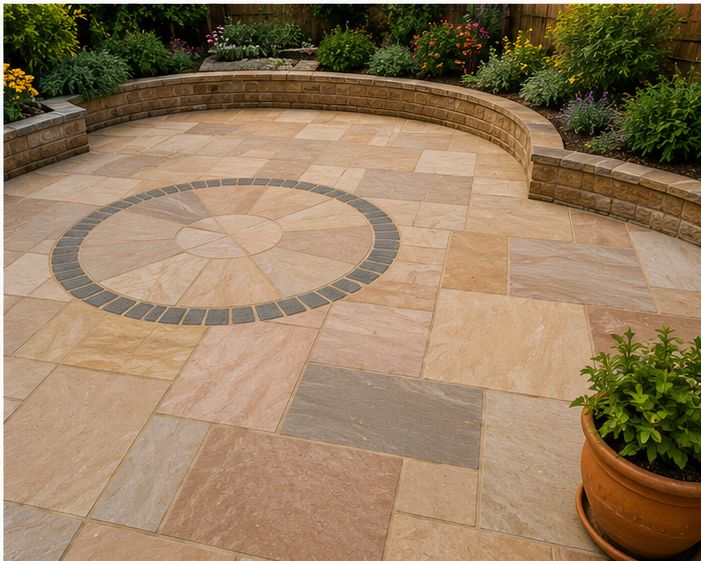
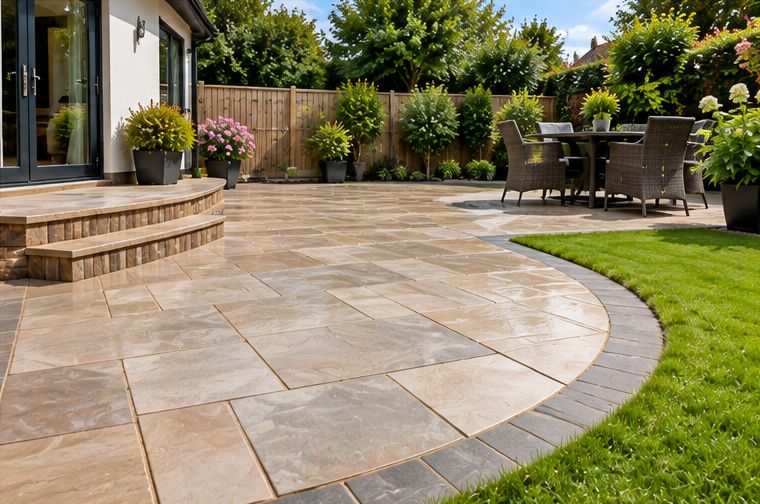
Curved edges, circles and mixed-size layouts to soften a square garden
What Goes Underneath: Digging Out, Sub-Base and Bedding
Most of the work in a lasting patio is hidden once it is finished. Nearly every sunken slab, rocking step or cracked joint we are asked to look at comes back to what was, or was not, put underneath. We spend the time on the preparation because that is what keeps the surface flat through years of wet winters and frosts.
Clearing and digging out: removing turf, topsoil, roots and old paving down to firm ground, and taking the spoil away
Sub-base: a compacted layer of crushed stone, built up in stages and deeper for driveways that will carry cars
Levels and falls: setting the finished height below the damp proof course and giving the surface a gentle fall away from the house
Bedding: a full mortar bed for slabs, so there are no hollow spots, or a screeded sand bed for block paving
Jointing and finishing: pointing, sanding or resin jointing to suit the material, then a clean down before we leave
Clay soils are common across South Wales and hold water for long spells, so on heavy or made-up ground we may dig deeper or add a membrane to keep the sub-base stable. Our guide on how a patio should be laid explains each layer, and if an existing patio has already moved, why patios sink, crack or lift covers the usual causes.
Why choose us
Why Book T J Landscapes for Your Paving
Choosing who lays your patio matters as much as choosing the stone. Here is what you can expect from us.
✓
Straight advice on materials
We will tell you honestly which of the six materials suits your house, your garden and the way you use it, including where a cheaper option would do the job just as well.
✓
Time spent below ground
Digging out, sub-base, levels and falls get the same care as the laying pattern, because that is what keeps slabs flat and water moving away from the house.
✓
Paving as part of the garden
Paths, steps, walls, borders and lawns can all be built by the same team, so the patio fits into a finished garden rather than sitting on its own.
✓
A tidy, well run job
We protect lawns and access routes, keep you told about progress, take away the spoil and clean the paving down before we hand it over.
Drainage
Drainage: Where the Rain Goes Once the Paving Is Down
Paving changes how a garden handles rain. Water that used to soak into soil now runs across a hard surface, and it has to end up somewhere sensible. With the rainfall we get here, this is one of the first things we plan, not something we tidy up at the end.
On a patio the main tool is the fall, a slope too slight to notice that carries water off the surface and away from the house walls. Where the fall has to run towards the building, or a large area drains to one point, we add a channel drain, gully or soakaway. On sloping sites we also think about water coming down the garden towards the patio, and catch it before it reaches the paving.
Falls set away from walls, doors and air bricks
Channel drains across door thresholds and at the bottom of driveways
Soakaways and land drains where the ground can take the water
Permeable block paving that lets rain soak through the joints into the sub-base
Front gardens need extra thought. New hard surfaces at the front of a house often need to be permeable, or drain to a lawn or border, to avoid needing planning permission, and larger schemes can bring in other drainage approvals. Rules change and vary, so we always suggest checking with your local council before work starts. For wider garden drainage, see our guide on stopping a garden waterlogging.
Driveways and areas
Patios and Driveways Across South Wales
We lay block paving driveways as well as patios, which means the drive, the front path and the back garden can all be planned together and finished in materials that suit one another. A driveway needs a deeper sub-base than a patio, firm edge restraints so the blocks cannot creep, and a clear plan for surface water. If you need a new or widened dropped kerb, that is arranged through the council, so it is worth asking them early. Our guide to block paving driveways lists the questions to ask any installer.
From Pontypool we cover the whole of South Wales, including Cardiff, Newport, Caerphilly, Merthyr Tydfil and Chepstow. Whether it is a small paved seating area, a replacement for a tired concrete patio or a new drive and path together, the first step is the same: a visit, a look at the ground and a free written quote.
Reviews
What Our Customers Say
Real reviews from homeowners across South Wales — rated 4.8 out of 5 on Google from 69 reviews and 10/10 on Checkatrade.
★★★★★
Spectacular work
“Had my patio done by the company and could not be happier. Top quality work done and quickly too.”
Nicola
Patio
★★★★★
Great work, really pleased
“I was pleased to find Tony and his lads were absolutely great! Tony responded quickly & was very polite.”
Jenny
Garden work
★★★★★
Great work
“We were delighted with the work and materials, which were of very high quality. Tony and team helped us.”
We lay patios, paths and driveways in all of these towns and the villages around them. Each town page covers patio paving for local gardens and ground.
Which paving material is best for a garden in South Wales?
There is no single answer. Porcelain absorbs the least water and is easiest to keep clean, which suits shady or damp gardens. Indian sandstone and other natural stones give a softer, traditional look but need sealing or regular cleaning. Granite is very hard wearing, and block paving is the usual choice for driveways. We will talk you through them on site.
How much does a new patio cost?
It depends on the size, the material, how much digging out and levelling is needed, access for machinery and barrows, whether old paving has to be broken out and removed, and what drainage the site needs. Steps, walls and borders add to it too. The only way to get a reliable figure is a free quote after we have seen the garden.
Can you lay a new patio over the old one?
Usually we advise against it. Laying on top raises the height, often too close to the damp proof course, and any movement in the old slabs will come through into the new ones. In most cases we break out the old surface and start with a proper sub-base.
How long does it take to lay a patio?
A modest patio is often a matter of days, while a large paved area with steps, walls or a driveway takes longer. Heavy rain and frost can pause mortar work. We give you a realistic timescale with the quote.
Do I need planning permission for a new driveway?
Often not, but it depends. At the front of a house, new hard surfaces over a certain size generally need to be permeable or drain to a garden area, and a new dropped kerb needs council approval. Listed buildings and conservation areas can have extra rules. We are landscapers rather than planners, so please check with your local council before booking.
How do I stop my patio going green?
Sweep it regularly, keep gutters and overhanging plants in check, and give it a wash with a suitable patio cleaner once or twice a year. Sealing natural stone can help. Our guide on cleaning and looking after a new patio has the detail.
Can you repair a sunken or uneven patio?
Often, yes. Where only a few slabs or blocks have dropped, we can lift them, put right the bed or sub-base and relay them. Where the whole area has failed, replacing it is usually the better long-term answer. We will look and tell you honestly which it is.
Get in touch
Ask for a Free Patio Paving Quote
Tell us roughly how big the area is, what is there now and which materials you like the look of. Photos help. We will arrange a visit and a free quote.