
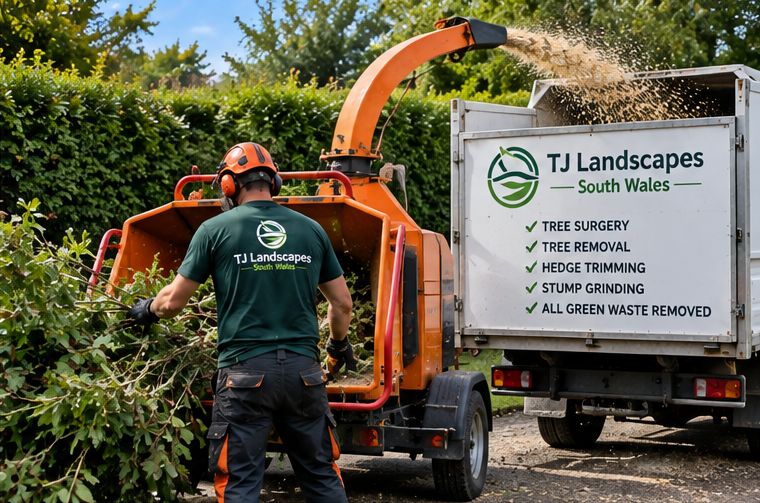
If you have never had tree work done, it is natural to wonder what to expect. Will there be a lot of noise? Do you need to be in? What happens to all the branches? And how do they get a big tree out of a small back garden without damaging anything?
This guide walks through a typical job with our tree surgery and hedge care team, from the first visit to the moment we leave. Every job is a little different, depending on the tree, the garden and the access, but the basic order stays much the same.
Before the day: the quote visit
Most tree work starts with a visit to look at the tree. We check the species, its size and condition, what is underneath it and around it, and how we will get in and out. We talk through what you want to achieve, and whether pruning or felling is the right approach. Our guide to deciding between felling and pruning covers that choice.
We also ask about permissions. If the tree could be covered by a Tree Preservation Order or you live in a conservation area, the council needs to be contacted before work is booked. Our article on tree permission in Wales explains what to check.
The quote sets out the work, what will happen to the waste and any logs, and what we need from you. Cost depends on things like the size of the tree, access to it, what it is growing over, whether it has to come down in sections and how much green waste there is. Quotes and advice are free.
Getting ready: what we ask of you
A few simple things help the day go well:
- Move cars away from the drive or road near the tree if branches could come down nearby.
- Clear garden furniture, pots, toys and ornaments from the area under and around the tree.
- Keep pets indoors and let children know the work area is off limits.
- Make sure there is a clear route to the tree, including side gates unlocked.
- Let your neighbours know, especially if the tree is near their boundary, their car or their windows. It saves surprises and keeps things friendly.
You do not always need to be in during the work, as long as we can reach the garden. Most people like to be there at the start to talk the job through and at the end to check they are happy.
On arrival: checks and setting up
The first thing we do is walk round the tree again and confirm the job with you. Then we look closely for anything that would change the plan: nests in use, signs of bats in older trees, new damage since the quote or overhead cables. If there is an active nest, that part of the work waits. Nesting birds are protected by law, and during spring and summer especially we would rather postpone than risk disturbing one.
Next, we set up a safe working area. The zone under and around the tree is kept clear, and where the work is near a path or pavement, we make sure people are kept back while branches come down. Protective clothing, helmets and eye and ear protection are worn throughout. Fragile surfaces such as lawns or patios may be covered where branches or logs will land.
The work itself: cutting, climbing and lowering
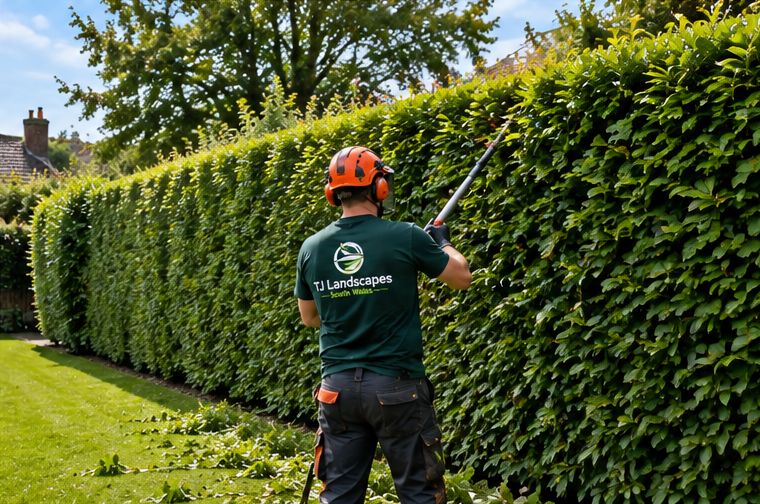
How the tree is worked on depends on the job. Small trees and low branches can often be handled from the ground or a ladder. Larger trees may need climbing, with the climber secured by ropes the whole time.
In an open space, a tree may be felled in one piece. In most gardens, especially the tight back gardens of valley terraces, that is not possible, so the tree comes down in sections. Branches are cut and either dropped carefully into a clear area or lowered on ropes to avoid damaging fences, roofs, sheds or plants. The trunk is then taken down piece by piece from the top.
It can be noisy, with chainsaws running, and on larger jobs there may be a machine to chip the branches. Most garden jobs are done within a day, but larger or difficult trees can take longer. We will give you an idea when we quote.
Clearing up and dealing with the waste
When the cutting is finished, we clear the site. Branches, twigs and leaves are removed, and the green waste is taken away, just as it would be on one of our garden clearances. If you would like to keep logs for a wood burner, or some chippings for mulching borders, tell us beforehand and we will leave them stacked where you want them.
The final part of the job is a proper tidy-up: raking the lawn, sweeping paths, patios and drives, and checking the ground under the tree for sawdust and small twigs. The aim is for the garden to look as though the tree has simply been pruned or gone, not as if a building site has been in.
- Green waste removed from site.
- Logs and chippings left for you if agreed.
- Lawns raked and hard surfaces swept.
- A final walk round with you before we leave.
After the day: stumps, gaps and what comes next
If a tree has been felled, the stump is usually cut low. Whether it stays or is removed depends on what you want to do with the space, and we will have talked that through at the quote stage.
Taking out a big tree often changes a garden more than expected: more light, a new view and space for something else. That can be the moment to think about a new lawn, a seating area or some planting. We can help with that too, through landscaping and garden design or turf laying.
Tony and the team work right across South Wales, from Cardiff and Caerphilly up to the heads of the valleys and over into Monmouthshire. For a free quote and free advice, get in touch with a few details and photos of the tree.
Talk to T J Landscapes about your garden
Free quotes and honest advice across South Wales.
Questions People Ask
Do I need to be at home while the tree work is done?
Not always. As long as we can get into the garden safely, the work can go ahead. Most people are there at the start and the end so we can talk the job through and check they are happy.
Do I need to tell my neighbours?
It is a good idea, especially if the tree is near their boundary, their parking or their windows. If the tree is theirs, or overhangs from their side, speak to them before any work is booked.
What if you find a bird’s nest on the day?
We leave the part of the tree or hedge with the active nest alone and come back once the birds have finished with it. Nests in use are protected by law, so this is not something we would work around by cutting.
How long does a typical tree job take?
Many garden jobs are finished in a day, including clearing up. Large trees, difficult access or trees that must come down in sections over buildings can take longer, and we will give you an idea when we quote.
Will the work damage my lawn or patio?
We take care to protect the garden, using ropes to lower branches in tight spaces and covering delicate areas where needed. Heavy logs landing can mark a soft lawn, so we plan the drop zones carefully and tidy up afterwards.