
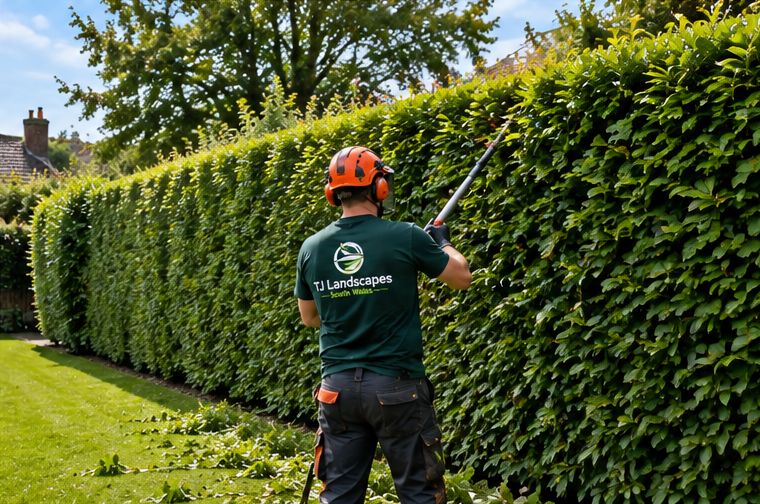
There is a lot of folklore about when to cut trees, and some of it is sound. The simple version is that most broadleaved garden trees are happiest being pruned while they are dormant, after the leaves have dropped and before new growth starts. But there are important exceptions, and the law on nesting birds applies all year round.
This guide gives the general picture for gardens in South Wales. It is not a rulebook: the right timing depends on the species, the kind of work and the condition of the tree. When we price a job through our tree surgery and hedge care service, we will suggest a time of year that suits that particular tree.
Why dormant-season pruning suits most trees
From roughly late autumn to late winter, most deciduous trees are resting. Their energy is stored in the roots and trunk, and there are no leaves to lose. Pruning then tends to cause the least stress, and there is less risk of disturbing wildlife.
There are practical reasons too. With the leaves off, the structure of the crown is easy to see, so it is simpler to spot crossing branches, deadwood and weak joins, and to judge where each cut should go. Waste is lighter and easier to handle, and lawns and borders under the tree are dormant as well.
- Suits: oak, ash, beech, lime, sycamore, most apples and pears, and many ornamental trees.
- Suits: crown reductions and larger cuts, which are easier on the tree when it is not in active growth.
- Worth avoiding: very hard frosts and waterlogged ground, which can make access and footing harder, especially on steep valley gardens.
Trees that should be pruned at other times
A few common garden trees are exceptions, and getting these wrong can harm the tree.
- Cherries, plums and other stone fruit (the Prunus family, including ornamental cherries) are generally pruned in summer, in dry weather. Cutting them in winter leaves them more open to fungal diseases such as silver leaf, which spread more easily in cold, damp conditions.
- Birch, maple and walnut are known for bleeding sap heavily if cut in late winter or spring as the sap rises. The usual advice is to prune them when fully dormant or in late summer, well away from that spring rush.
- Evergreens such as holly, bay and many conifers are often better tidied in late spring or summer, once hard frosts are over. Most conifers will not regrow from old brown wood, so cutting back too far can leave permanent bare patches.
- Magnolias tend to be pruned lightly in summer, as they can be slow to heal and dislike heavy cuts.
If you are not sure what your tree is, send us a photo or ask when we visit. Identifying the species is the first step in timing the work.
Spring and summer: nesting birds come first
All wild birds, their nests while in use or being built, and their eggs are protected by law. That applies to every tree and hedge in every garden, whatever the time of year. The period to be most careful is the main breeding season, which is often described as running from around March to August, although birds can nest earlier or later depending on the species and the weather.
In practice, heavy pruning and felling are best planned for autumn and winter wherever possible. If work has to happen in spring or summer, the tree needs checking carefully for active nests before any cutting starts, and any part with an active nest is left alone until the birds have finished with it. We would rather postpone a job than disturb a nest, and we will tell you if that is what we find.
Bats are protected too, and older trees with holes, cracks or loose bark can hold roosts. If there are signs of bats, work stops until advice has been taken from the council or Natural Resources Wales. This is general guidance rather than legal advice; our article on tree permission in Wales covers the rules in more detail.
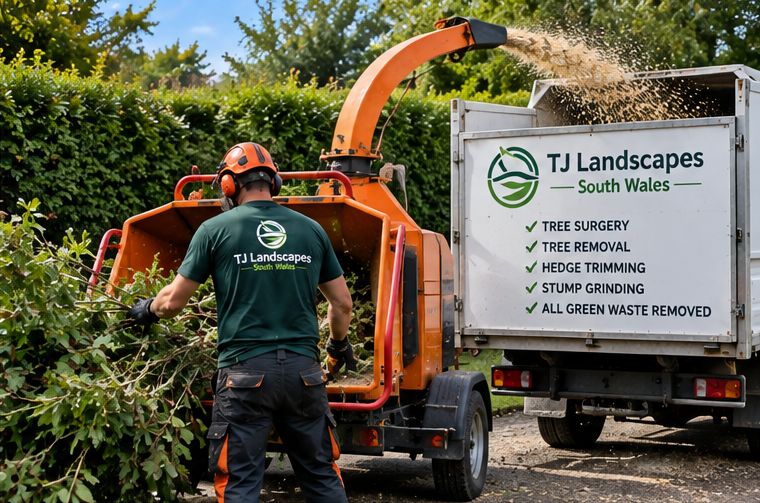
Summer pruning: when it does make sense
Summer is not off limits for trees, once a nest check has been done. Light work at this time of year has some advantages: wounds tend to close over faster while the tree is growing, and with the leaves on, it is easy to see how much shade a branch actually casts.
- Removing a low branch that is blocking a path or catching the car.
- Cutting out dead wood, which stands out clearly against green leaves.
- Light thinning to let more light onto a lawn or patio before the height of summer.
- Summer pruning of trained fruit trees, which helps control vigour.
What summer is not usually the time for is a heavy reduction. Removing a lot of leaf in the growing season takes away the tree’s means of feeding itself. For more on the different kinds of work, see our guide to crown lifting, thinning and reduction.
Autumn: a useful but mixed season
Early autumn can be a good time for light tidying once nesting has finished. Later in autumn, many fungi release spores, and some gardeners prefer to wait until the tree is fully dormant for larger cuts. By late autumn, as the leaves drop, the dormant-season window starts.
Autumn is also when a lot of people start thinking about the winter gales. If a branch is clearly damaged or hanging over the house, it makes sense to deal with it before the storms rather than waiting for a perfect month.
When the timing cannot wait
Some work cannot be put off. A branch torn by the wind, a split limb over a path or a tree that has started to lean after heavy rain needs looking at promptly whatever the calendar says. Even then, the checks for protected trees and nesting birds still apply, so ring your council if the tree may be protected, and keep photos of the damage.
Wet valley weather also plays a part. On the steep terraced gardens around places like Abertillery, a spell of dry, still weather can matter as much as the month, because safe footing and calm conditions make the work easier and safer for everyone.
If you would like us to look at a tree and suggest the right time for it, ask for a free quote and free advice. We cover the whole of South Wales from our base in Pontypool.
Talk to T J Landscapes about your garden
Free quotes and honest advice across South Wales.
Questions People Ask
What is the best month to prune a tree in the UK?
There is no single month for every tree. For most deciduous trees, the dormant period from late autumn to late winter is a good choice. Cherries and plums are usually pruned in summer, and sap-bleeding trees such as birch and maple are generally pruned while fully dormant or in late summer.
Can I prune trees during the bird nesting season?
Nests in use are protected all year, so a careful check is needed whenever you prune. During spring and summer the chance of finding one is much higher, so heavy work is best left until autumn or winter. Light work may go ahead if a thorough check finds no active nests.
Is it bad to prune a tree in autumn?
Not necessarily. Light work in early autumn is often fine, and larger cuts can wait until the tree is dormant. Some trees, such as cherries, are better not pruned in the colder, damper months because of disease risk.
How often should a garden tree be pruned?
It varies with the species and how vigorous it is. Many garden trees only need attention every few years, with deadwood removed as it appears. Fast growers in small gardens may need more frequent visits.
Should I get a tree pruned before the winter storms?
If a tree has dead, split or overhanging branches near the house, a path or a neighbour’s property, it makes sense to have it looked at in autumn rather than waiting. Routine pruning of a healthy tree can simply wait for the dormant season.