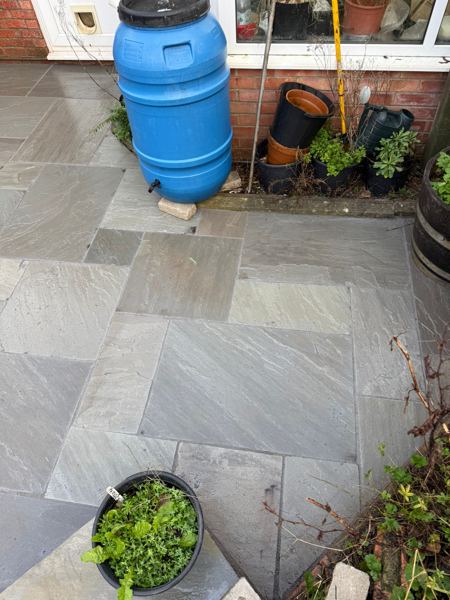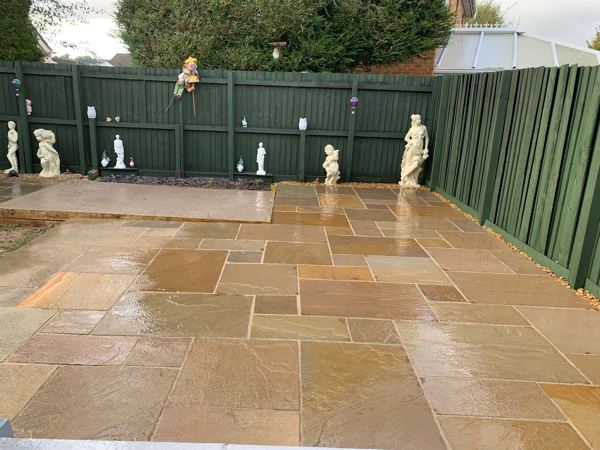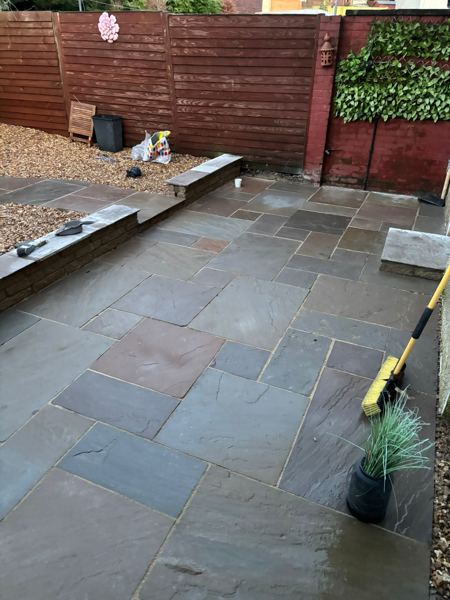
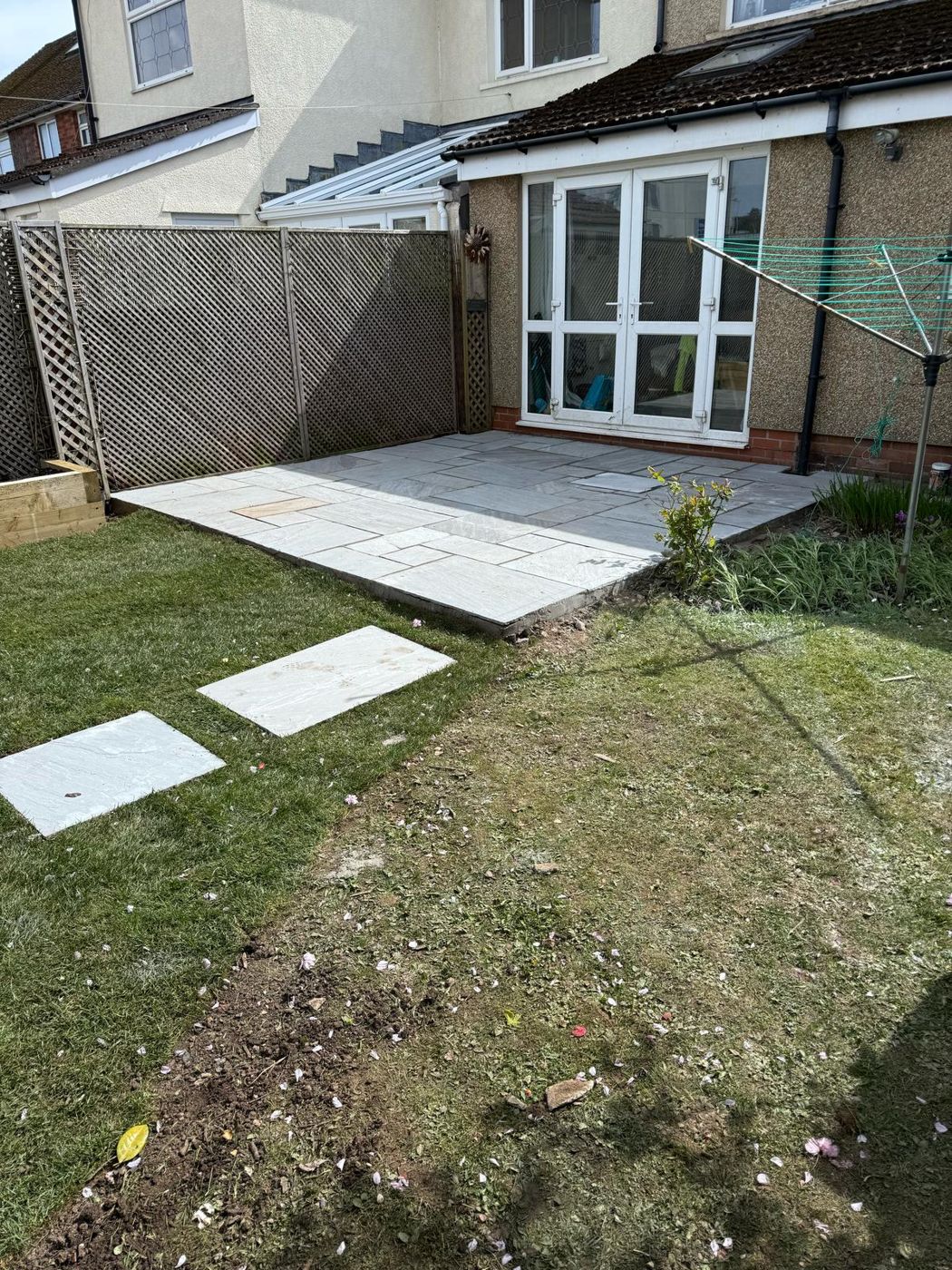
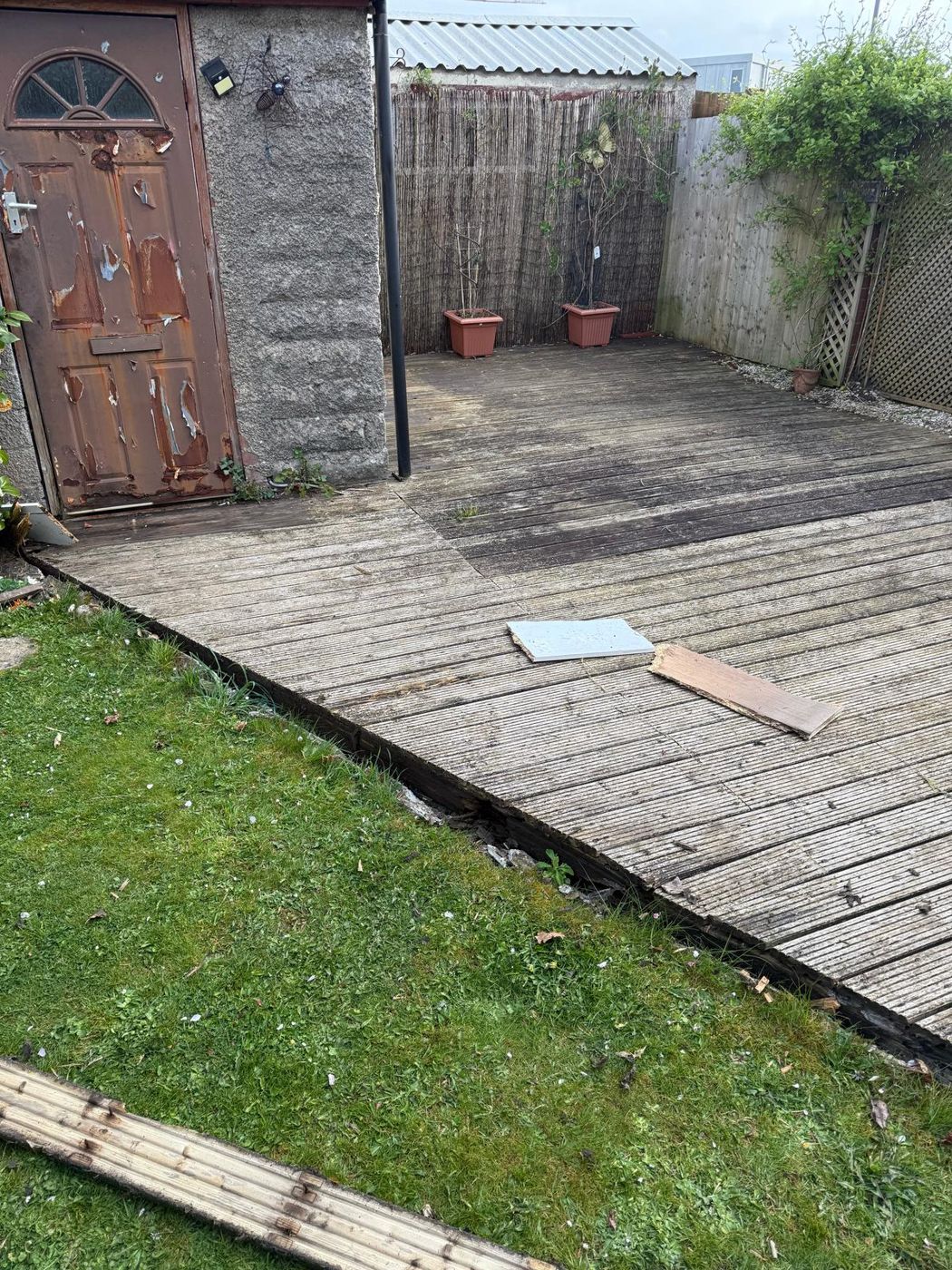
At this house in Pontypool, the space outside the French doors was covered by timber decking that had had its day. The boards were weathered, slippery when wet and a chore to keep on top of, so the owners asked us to take it out and put down a paved patio instead.
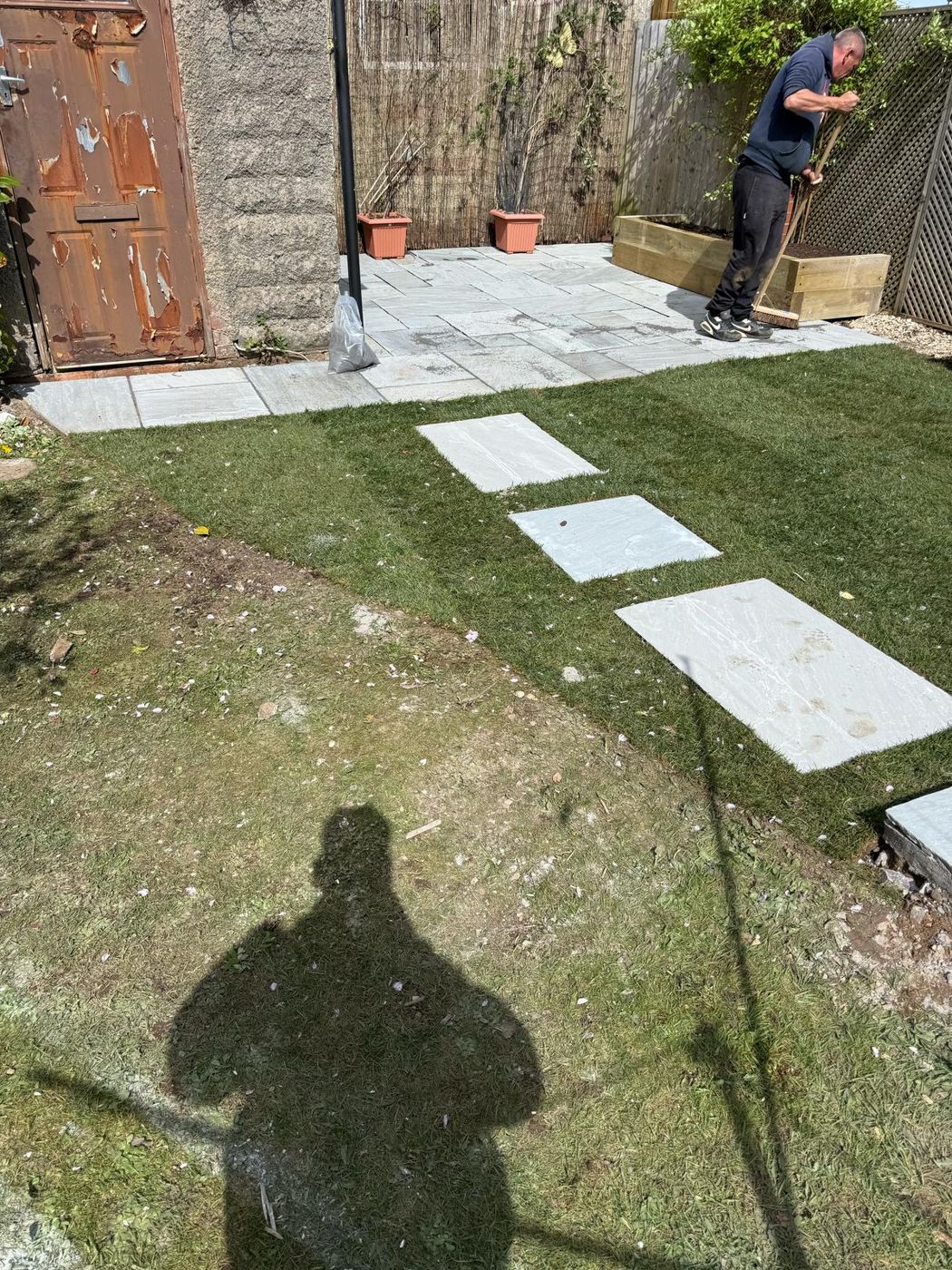
The result is a light grey slab patio in its place, running from the French doors across to the outbuilding door, with a row of matching stepping stones set into the lawn so you can cross the grass without wearing a muddy track.
Lifting the old deck
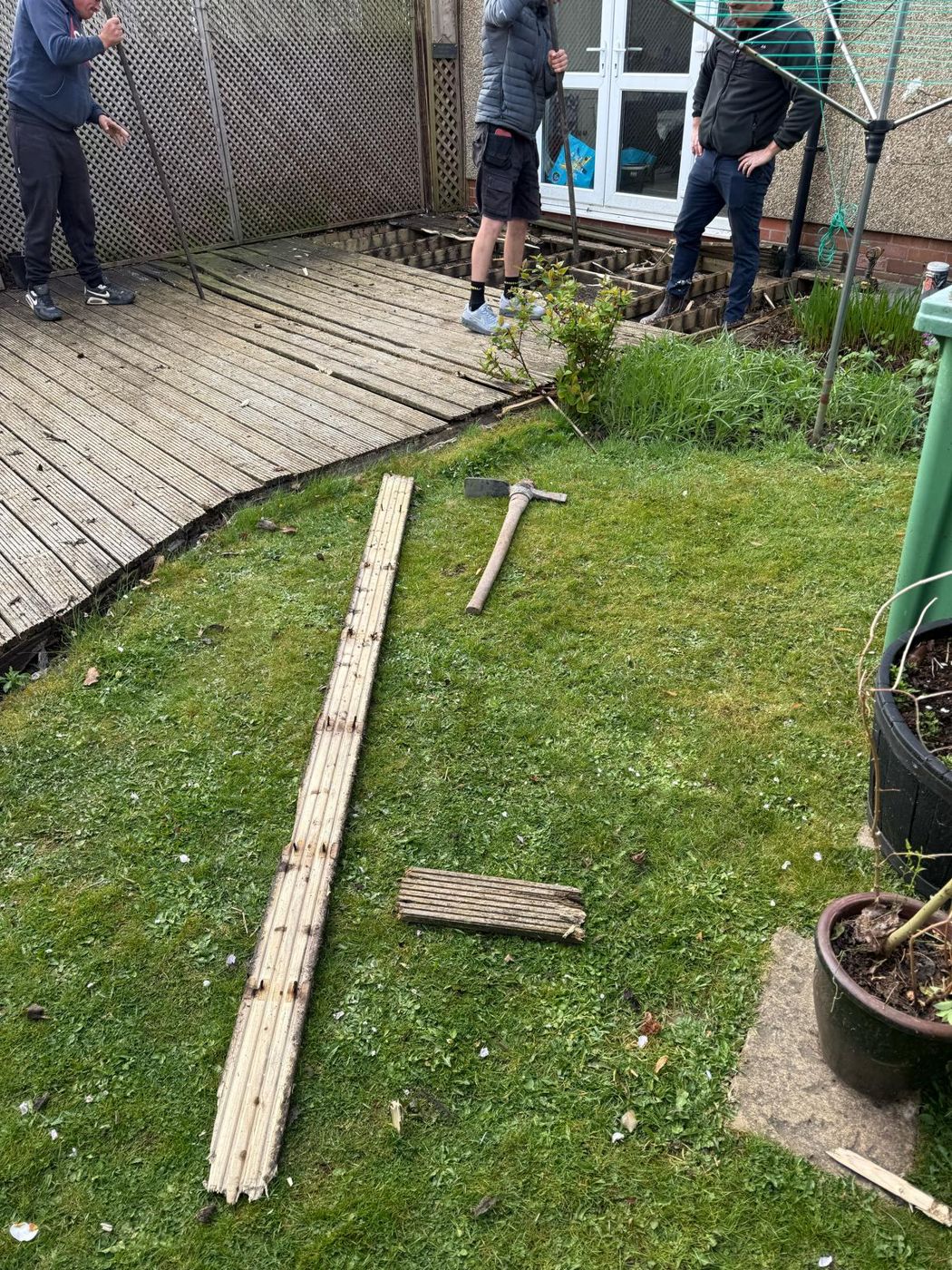
The two photos at the end of the gallery show where the job started. The deck ran right across the corner of the garden, up to the door of a rendered outbuilding, and its boards had gone grey and patchy with a green tinge in the damp spots.
As the boards came up, they revealed the timber joists and the block supports underneath. All of that had to go, along with the frame, before any paving work could begin. Old decking often hides problems: damp ground, rotten bearers and weeds that have grown up through the gaps. Taking it back to bare earth lets us see the real ground and deal with it properly, rather than laying new stone over something soft.
From bare ground to a finished patio
With the deck gone, we prepared the ground for paving. On a job like this that generally means:
- clearing the old timber and any loose soil, and taking the waste away;
- levelling the area and setting a fall away from the house wall and doors;
- laying and compacting a hardcore sub-base;
- bedding the slabs on mortar and pointing the joints;
- setting single slabs into the lawn as stepping stones, set low in the grass so they are easy to mow around.
Why a patio rather than new decking
Timber still has its place, and our garden decking page explains when it works well. But in a wet climate like ours, boards that stay damp can turn green and slick. Slabs laid to a fall shed water quickly, need little more than a sweep and the odd wash, and do not need treating every year.
The pale grey stone also brightens the back of the house and sits well with the trellis fence and the timber raised bed beside it. You can see the other ways we pave on our patio slabbing and paving page, or read about gardens around the town on landscaping in Pontypool.
Questions About This Job
Can you lay a patio where decking used to be?
Yes. We lift the boards, joists and supports, clear the ground underneath and then build a proper sub-base, so the slabs are not relying on whatever was left under the deck.
Is a patio less slippery than decking?
In most cases, yes. Timber that stays damp grows algae and gets slick, whereas slabs with a textured face and a fall to drain stay much safer underfoot. Any outdoor surface can get slippery if it is left dirty, so a sweep now and then still helps.
What happens to the old decking?
We break it up and take it away as part of the job, so you are not left with a pile of timber on the lawn.
How much would it cost to swap my deck for a patio?
That depends on the size of the area, what is under the deck, access and the slabs you choose. Get in touch for a free quote and free advice.