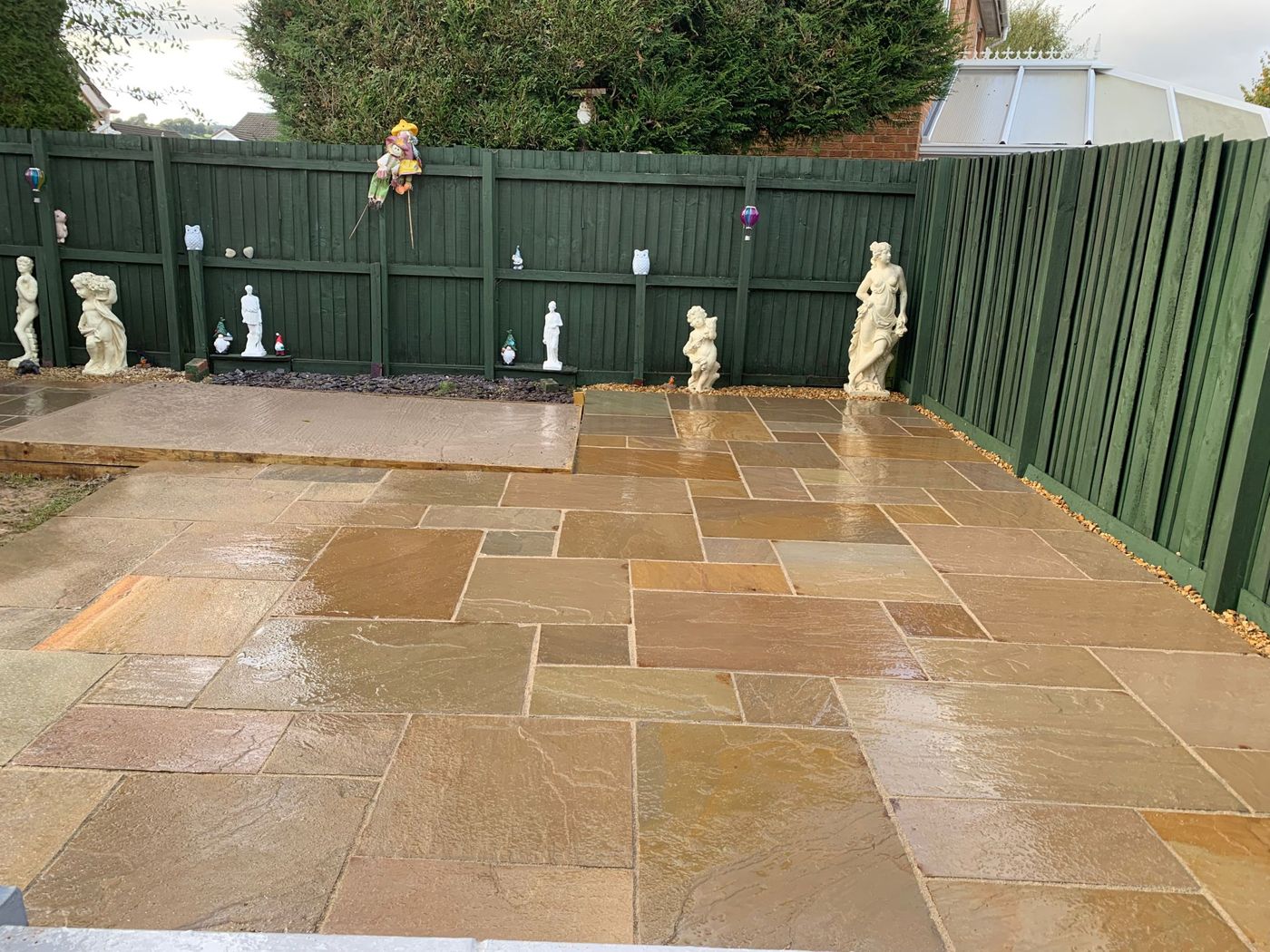
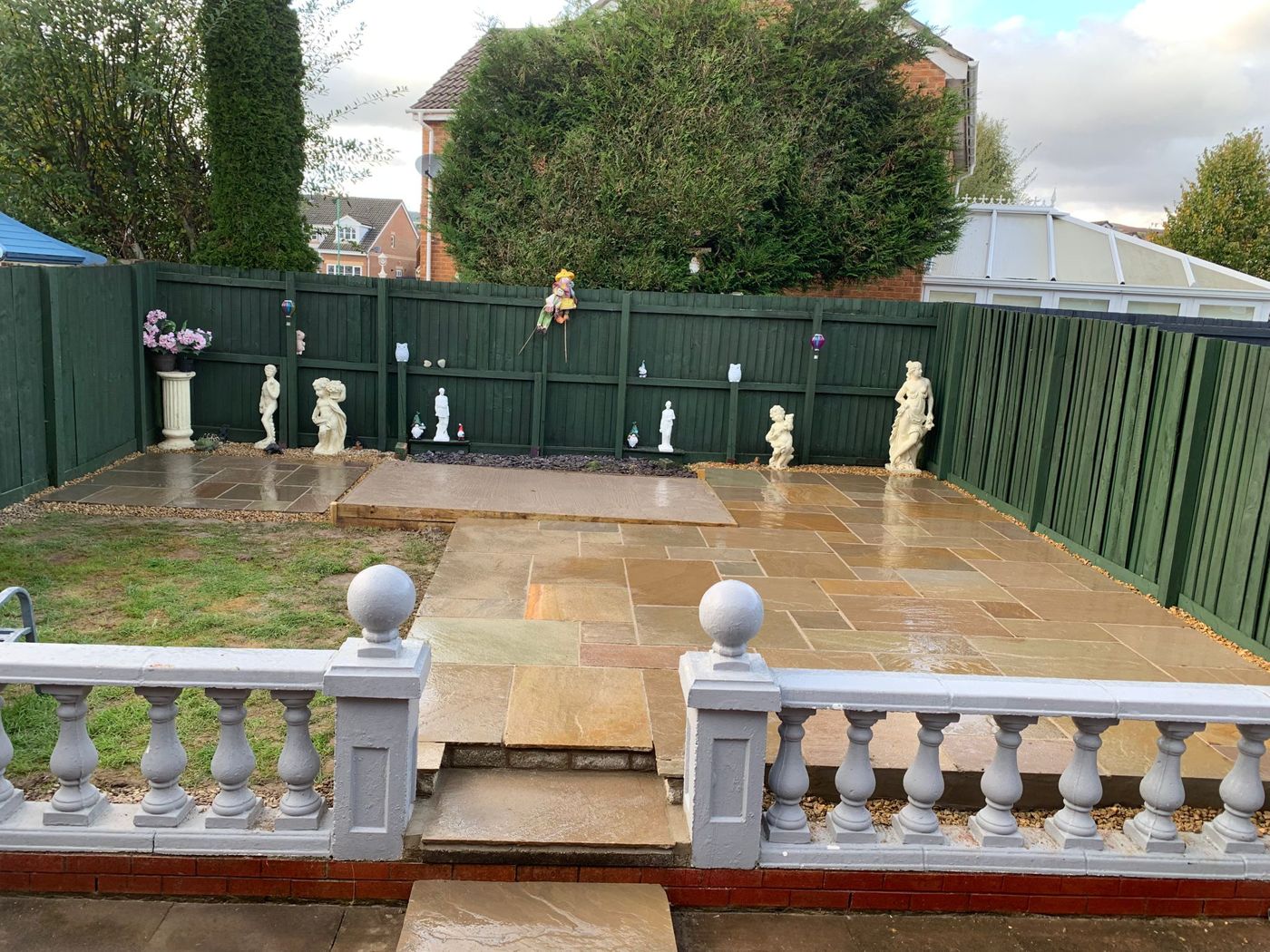
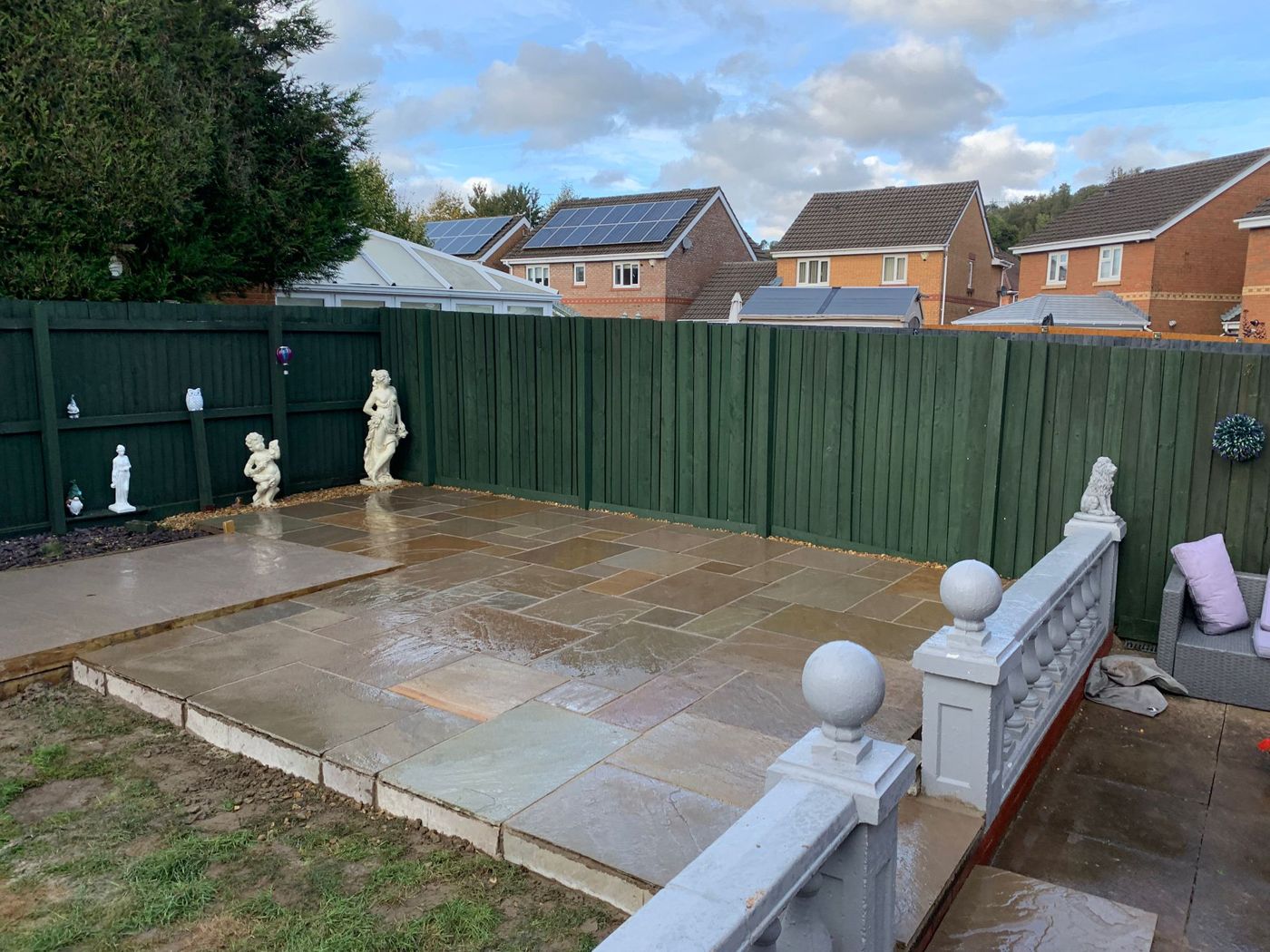
In this Pontypool back garden, a paved terrace with a white balustrade sits by the house, with a lawn below it. We built a new raised patio across the far side of the garden, running right up to the green close-board fence.
The slabs are sandstone in a warm mix of buff, honey, brown and grey tones, laid in a random pattern of mixed sizes. At the back, a second level sits one step higher along the fence line. The photos were taken just after rain, which is why the stone looks so rich in colour.
Two levels and a way down from the terrace
The main feature of this job is the change of level. The patio sits above the lawn on a neat raised edge, and a slightly higher platform runs along the back fence, which now holds a row of white garden statues. Separating the two gives the back of the garden its own shelf, rather than one flat sheet of paving.
From the existing terrace, sandstone treads lead down through the gap in the balustrade and on to the new patio, so it connects with the house instead of standing on its own. Where the paving meets the side fence we left a narrow strip of gravel, which keeps the stone clear of the fence boards and gives surface water somewhere to go.
What sits underneath a raised patio
A patio raised above a lawn needs more groundwork than one laid flush. In general terms, the steps on a job like this are:
- marking out the shape and the finished levels for each tier;
- digging out soft soil and turf and taking the spoil away;
- building up and compacting a hardcore sub-base, with a firm edge where the patio stands above the lawn;
- laying each slab on a full mortar bed, with a gentle fall so rain runs off rather than pooling;
- pointing the joints and cleaning the surface once the mortar has gone off.
Why sandstone suited this garden
The green fence and the white ornaments give this garden a lot of strong colour already. A varied sandstone ties those together better than a flat grey would, and the mixed slab sizes stop a large area looking like a car park. If you are weighing up materials, our Indian sandstone paving page explains how this kind of stone behaves, and our patio slabbing and paving page covers the other options we lay.
We work all over the town, and you can read more about local gardens on our landscaping in Pontypool page. For a slab patio that replaced a worn deck, see this Pontypool patio.
Questions About This Job
Can a patio be built on two levels?
Yes. A step or a raised platform is a good way to deal with a slight slope, or simply to give one part of the garden its own purpose. Each level is built on its own compacted base, and we set the falls so water drains off both.
Why leave a gravel strip by the fence?
It keeps wet paving and mortar off the bottom of the fence boards, lets rainwater soak away at the edge, and makes it easier to treat or repair the fence later without lifting slabs.
Does sandstone change colour when it's wet?
It does. Most sandstone looks darker and warmer when wet and dries back to a paler shade. It is worth looking at a sample both ways before you choose.
How do I get a price for a patio like this?
Every garden is different, so the cost depends on the size, the levels, access and the stone you pick. Send us a message and Tony and the team will come out and give you a free quote.