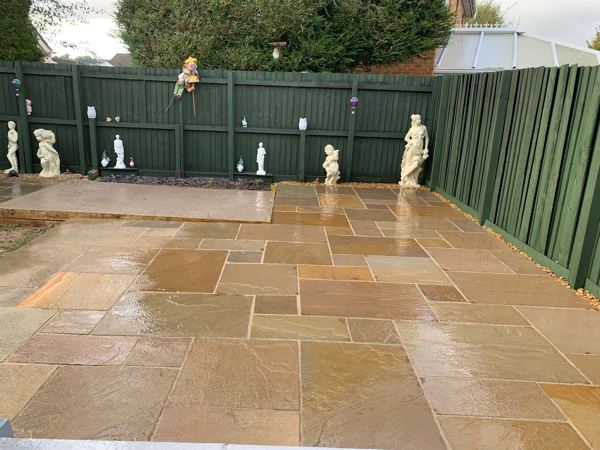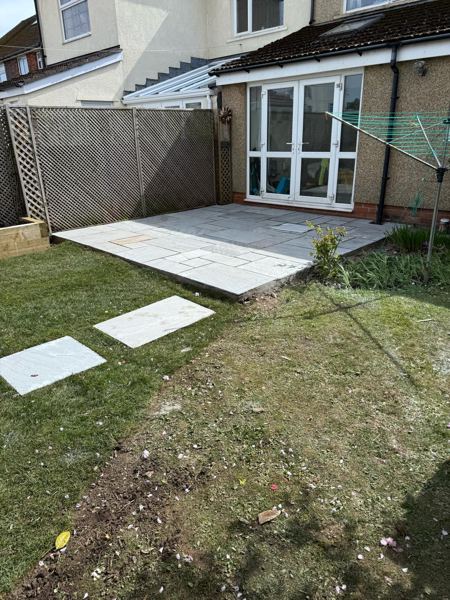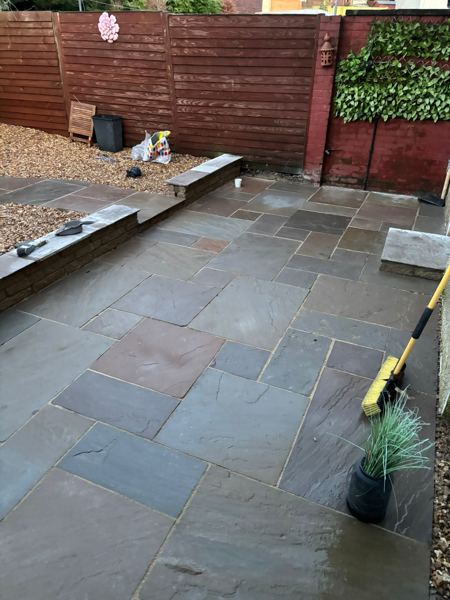
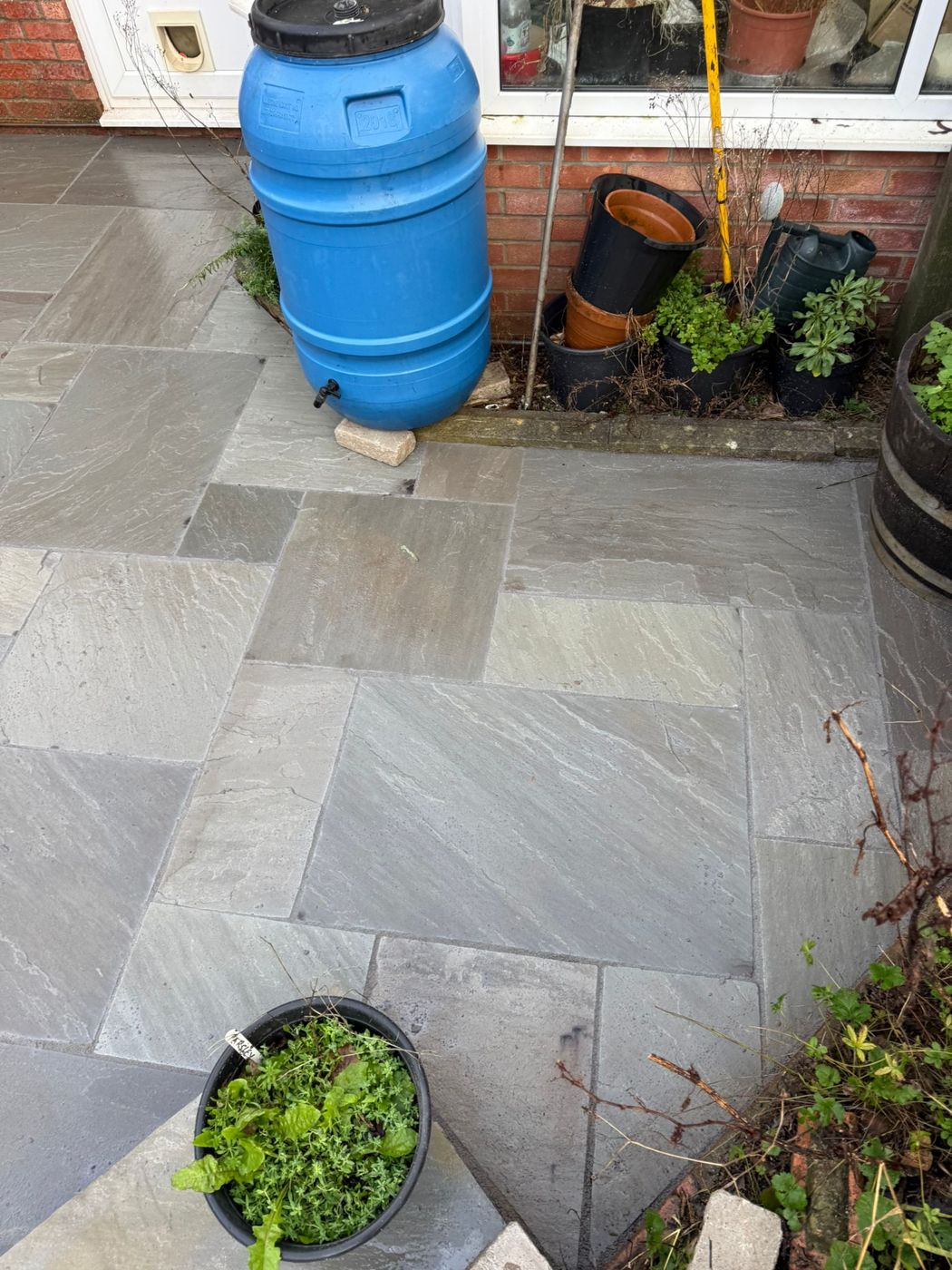
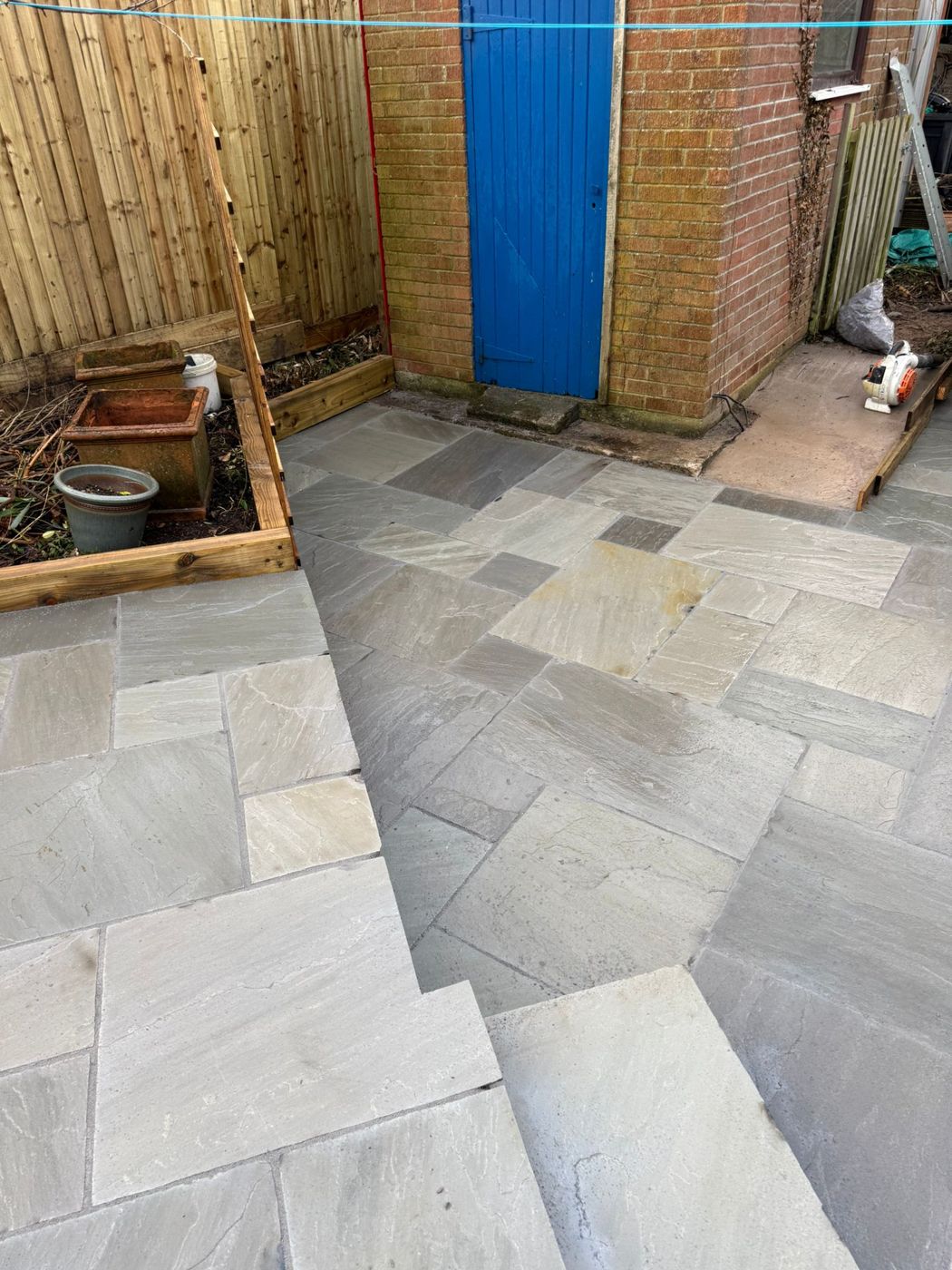
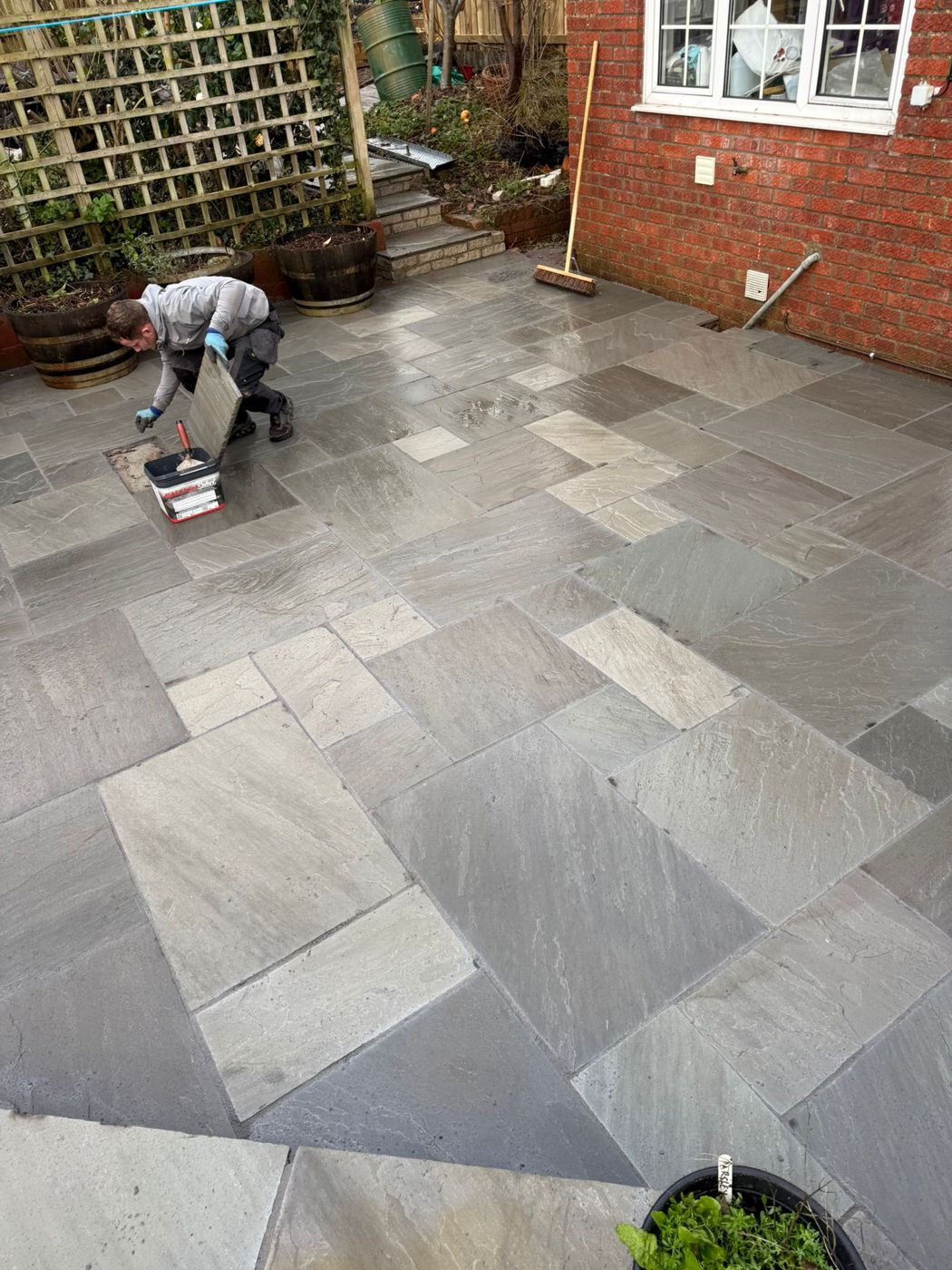
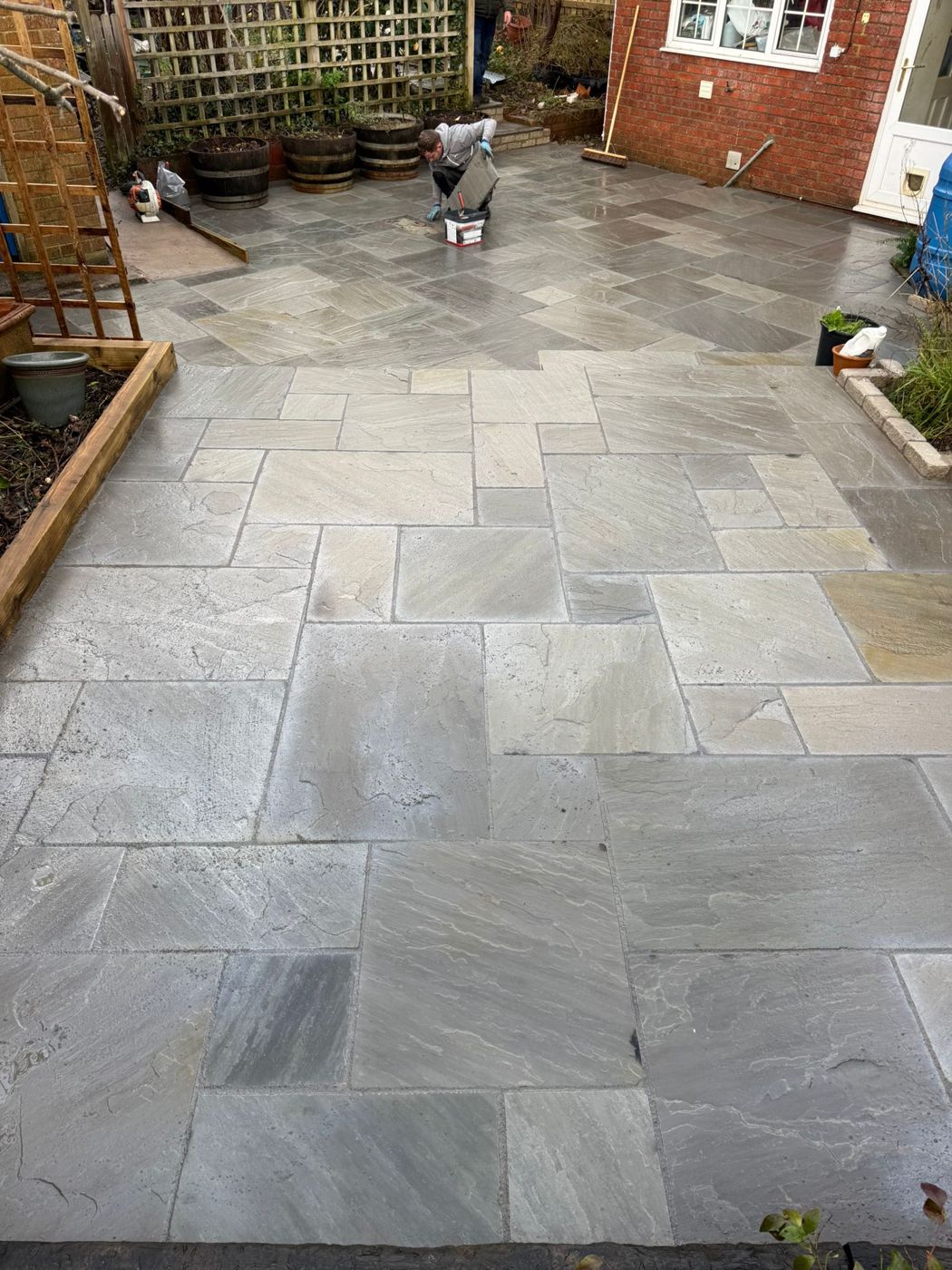
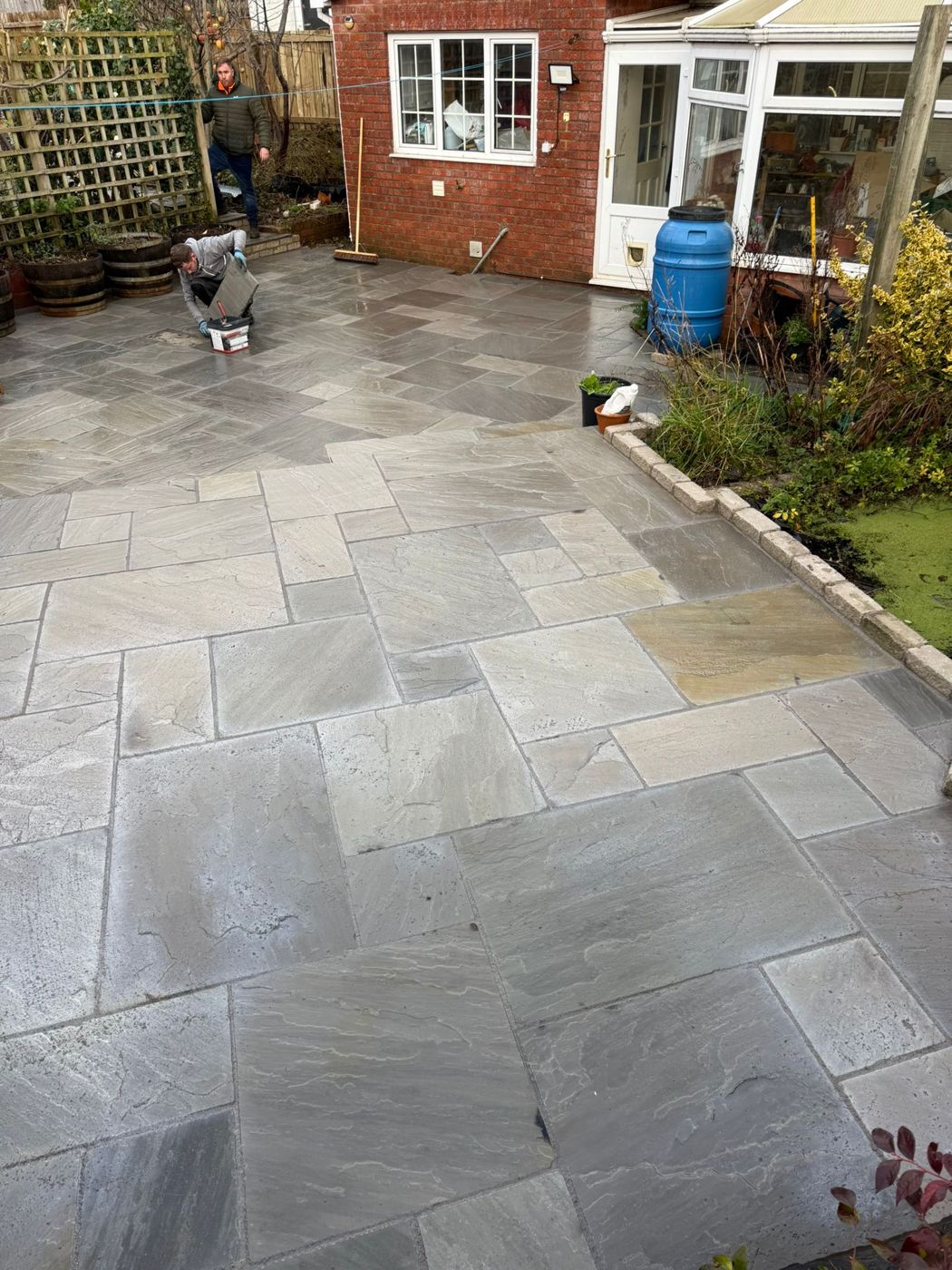
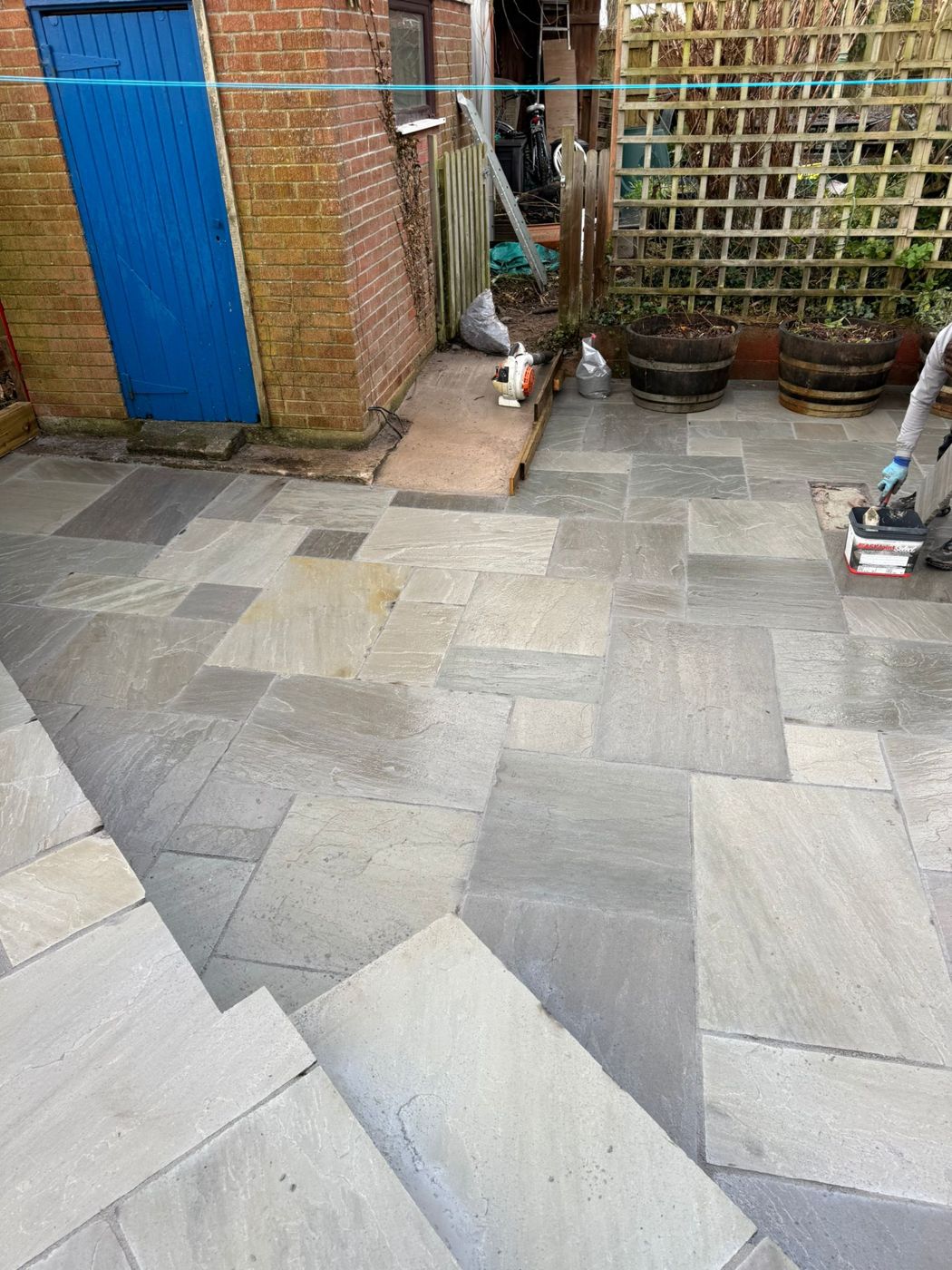
This Pontypool back garden is now paved almost from fence to fence in cool grey riven stone. The slabs come in several sizes and are laid in a random pattern, so the grain and the lighter and darker pieces break up what is quite a large area of paving.
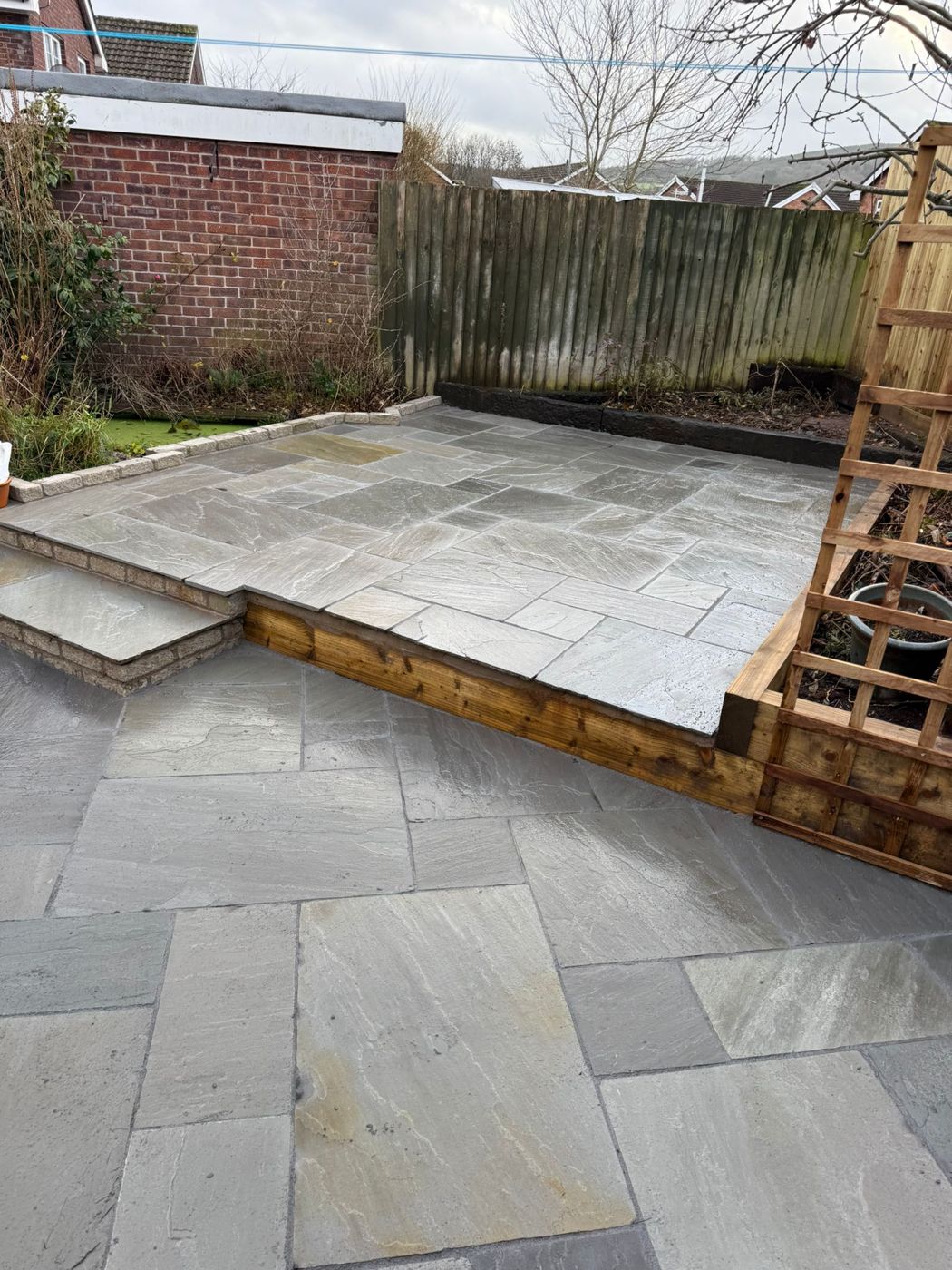
The garden works on two levels. The lower patio runs from the back of the house and conservatory out to a brick outbuilding, and a raised section at the far end is held by timber sleepers, with a slab step leading up to it. It is typical of our patio paving work, and our Pontypool landscaping page covers more of the gardens we see in the town.
What you can see in the photos
Several of these pictures were taken while the joints were being filled. The slabs were already bedded, and the gaps between them were being worked in by hand from a bucket, one section at a time. Pointing is the last step, and it matters: well-filled joints keep water from getting under the slabs and give weeds far less room to take hold.
Around the edges, the paving meets the rest of the garden. Sleeper raised beds sit on one side, a trellis screen and half-barrel planters stand at the back, and a row of edging stones separates the paving from a planted border and a patch of lawn. A water butt sits on its own raised slab by the house.
- Grey riven slabs in mixed sizes, laid in a random pattern
- A raised upper level held by timber sleepers
- A slab step with a brick face between the two levels
- Edging stones along the border and lawn
- Paving running right up to the outbuilding door
Why the groundwork decides how it lasts
Paving that stays level for years comes down to the layers you never see. Soft soil is dug out, a hardcore sub-base is spread and compacted, and each slab goes down on a full mortar bed. The whole patio is set with a slight fall away from the house so rain runs off. Where a patio sits against a raised level like this one, the retaining edge has to be solid too, or the upper slabs will drift. There is more in how a patio should be laid.
Grey stone like this suits a red brick house well, and it hides everyday dirt better than very pale paving. If you are weighing it up against other materials, have a look at natural stone paving or porcelain, sandstone or concrete. For a local patio with a different look, see our sleeper-edged patio around two trees.
When you are ready to talk about your own garden, ask us for a free quote.
Questions About This Job
Can a patio be built on two levels?
Yes. A sloping or stepped garden is often easier to use as two flat areas joined by a step. The raised part needs a firm retaining edge, such as sleepers or a low wall, and its own sub-base.
Why does pointing take so long?
Each joint has to be filled fully and neatly without staining the stone, so it is done carefully in sections. Rushed or shallow joints are one of the main reasons patios grow weeds or lose slabs.
Is grey stone slippery?
Riven stone has a textured face that gives decent grip. Any paving can get slick with algae in shady, damp spots, so a yearly clean helps. See how to clean and look after a new patio.