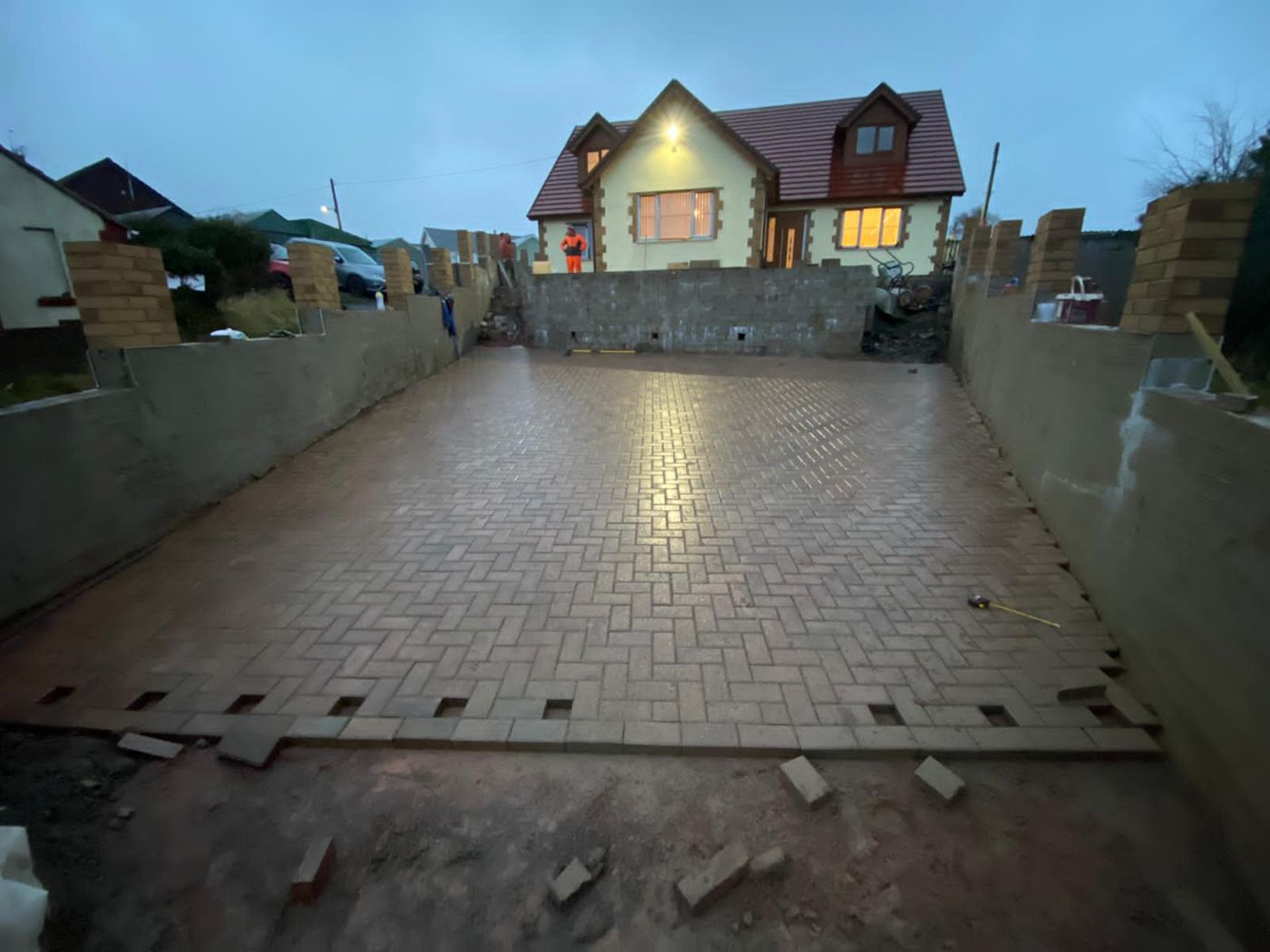
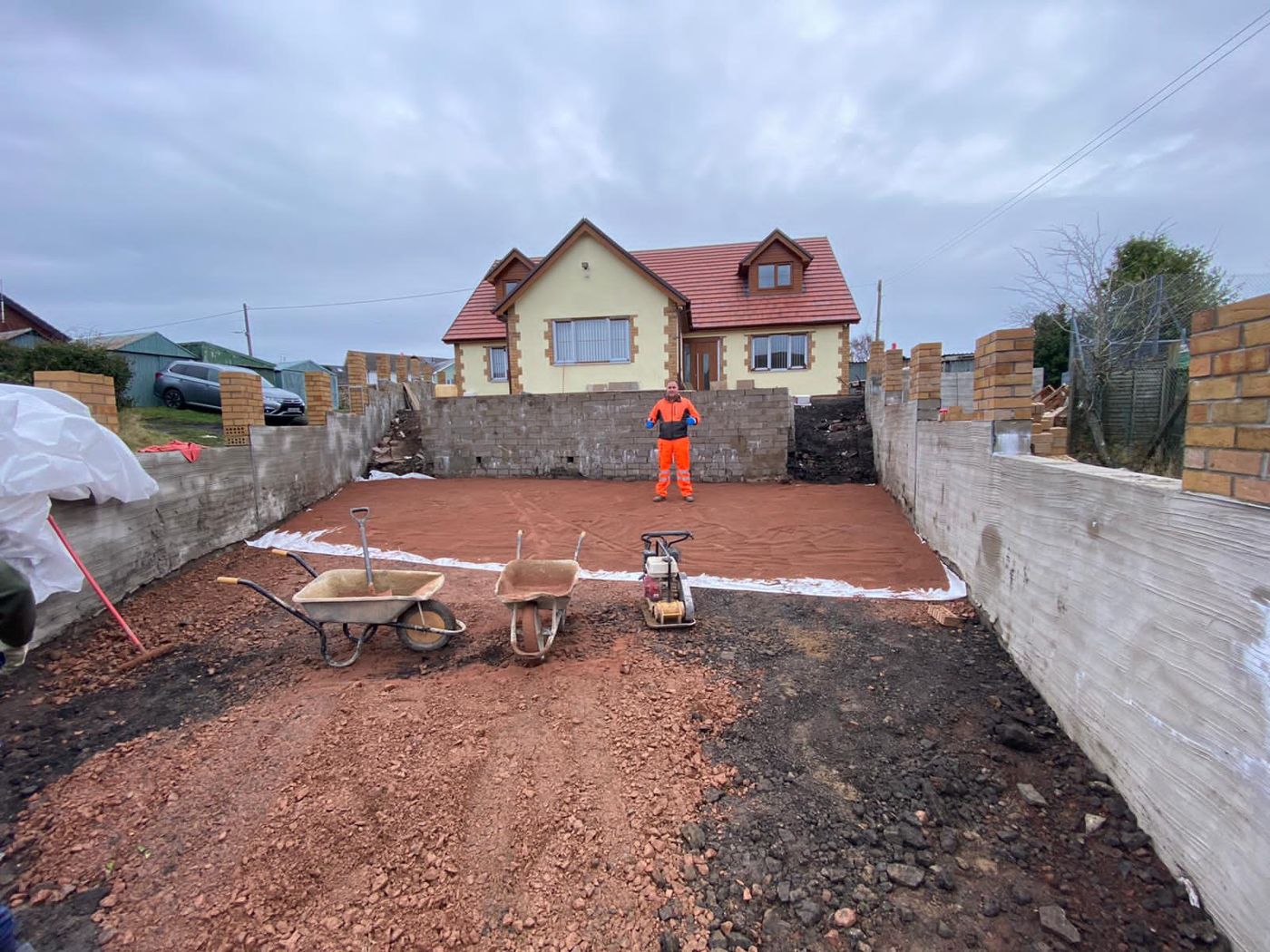
This Pontypool driveway was built from scratch in a walled space in front of a cream-rendered house with a red tiled roof. New block walls ran down either side, with buff brick piers being built along their tops, and the ground between them had to be turned into a surface fit to drive on.
The three photos follow it from the base stage to the finished blocks. We laid the drive in red block paving in herringbone, and the last shot was taken at dusk, with the lights on in the house and the new blocks shining after rain.
Building up the base
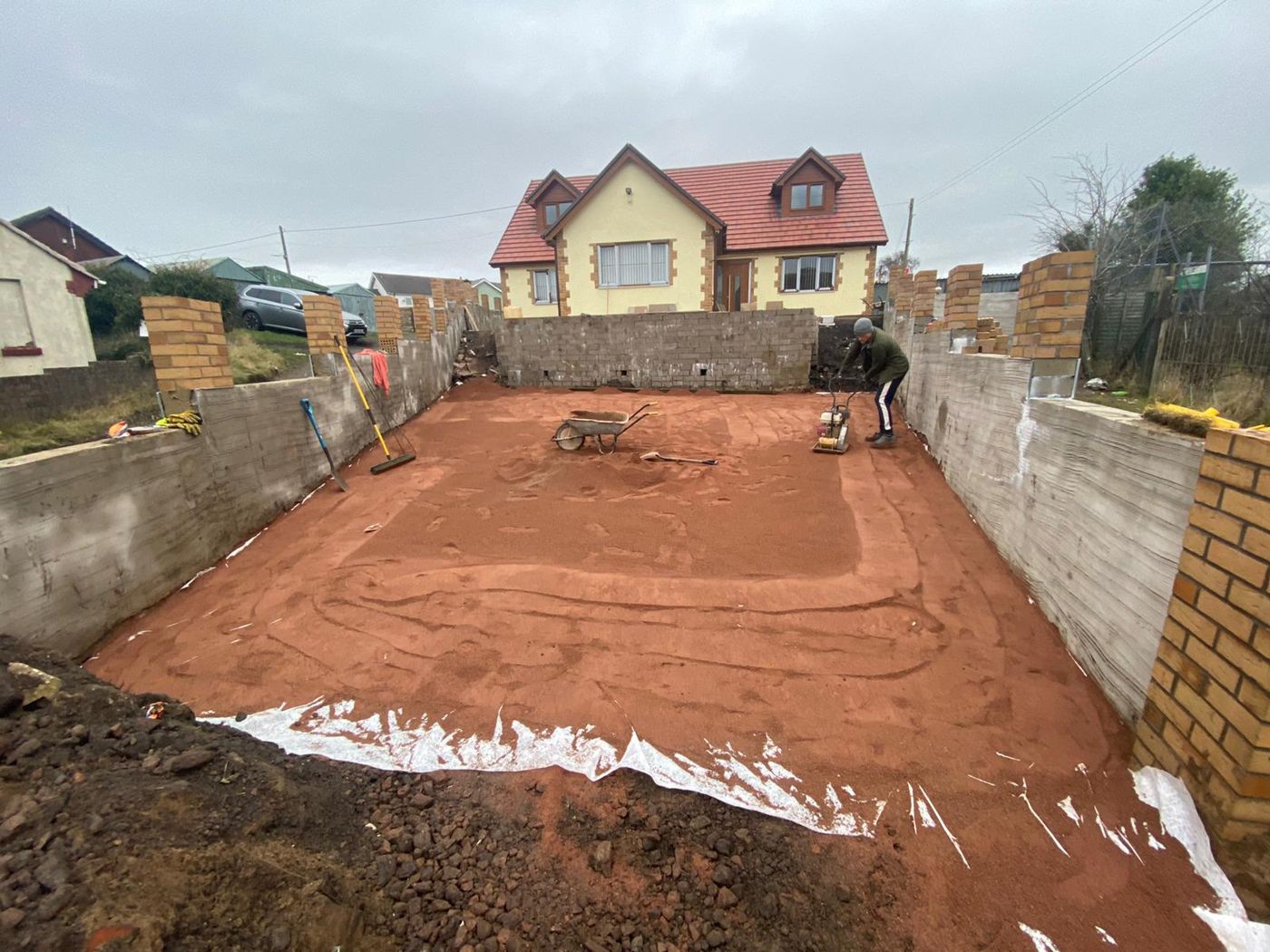
A driveway carries far more weight than a patio, so the layers underneath do most of the work. The first photos show the site with the dark sub-base going in at the near end and a smooth, red sand bed already spread across the rest. Along the edges you can see white sheeting laid under the base to separate it from the soil below.
The plate compactor and wheelbarrows in the photos are the tools of this stage. The general order of work on a block driveway like this is:
- digging out to a depth that allows for the sub-base, sand and block;
- laying a membrane, then spreading and compacting the sub-base in layers;
- spreading the sand bed and screeding it level, with a fall for drainage;
- laying the blocks, cutting in the edges and compacting the finished surface;
- brushing dry sand into the joints to lock everything together.
Why herringbone for a drive
Herringbone is the pattern most often chosen for driveways, and for good reason. Because each block is set at right angles to its neighbours, the surface resists the turning and braking of car tyres better than a straight stretcher bond. In the dusk photo you can see the soldier course along the bottom edge, with the gaps where the last cut blocks were still to go in.
The red blocks also sit well with the terracotta-coloured roof and the buff brick of the piers. Our block paving driveways page explains the colours and bonds, and our guide on what to ask before you book a block paving driveway is worth reading first.
Drives on Pontypool's hillsides
Plenty of homes around the town sit on sloping ground, where a driveway means building walls and levelling the ground before any paving happens. This one shows that kind of job: walls first, then a flat, well-drained surface between them. For more on local ground and gardens, see landscaping in Pontypool and our main patio slabbing and paving page. A courtyard with a central lawn shows the same kind of blocks at the back of a house.
Questions About This Job
How is a driveway different from a patio underneath?
A drive takes the weight of cars, so it needs a deeper, well-compacted sub-base and a pattern that locks the blocks together. A patio built to foot-traffic depth would soon rut and sink under a car.
What is the white sheet under the base?
It is usually a geotextile membrane. It stops the sub-base mixing into the soil below and helps the base stay firm over time.
Do I need permission for a new driveway?
It depends on the surface, the drainage and whether you need a dropped kerb onto the road. Check with your local council before you start, and we can help plan a design that drains properly.
How much does a block paved drive cost?
The main factors are the area, how much digging out and wall building is needed, access and the blocks you choose. Contact Tony and the team for a free quote.