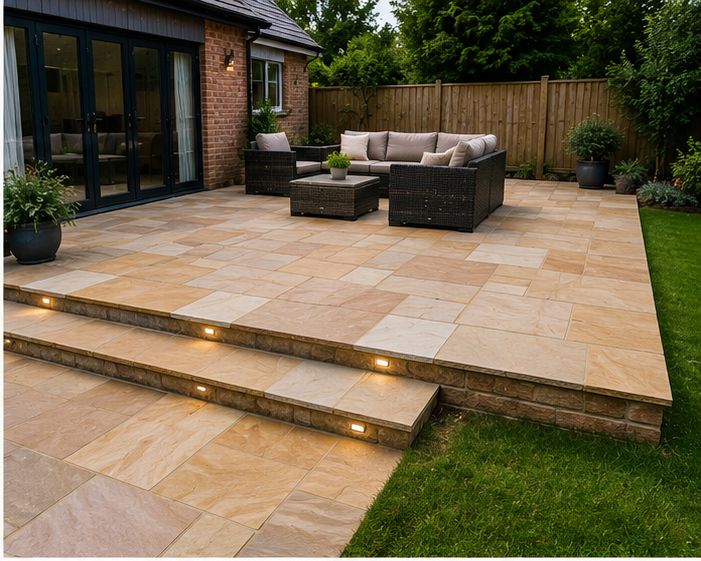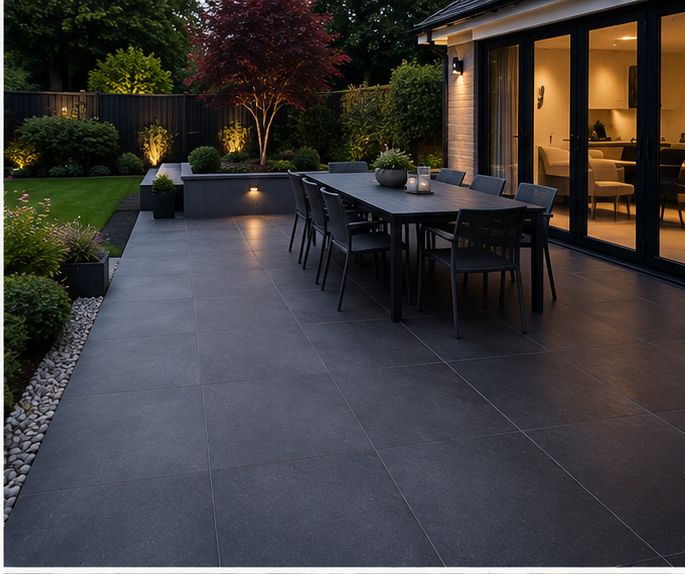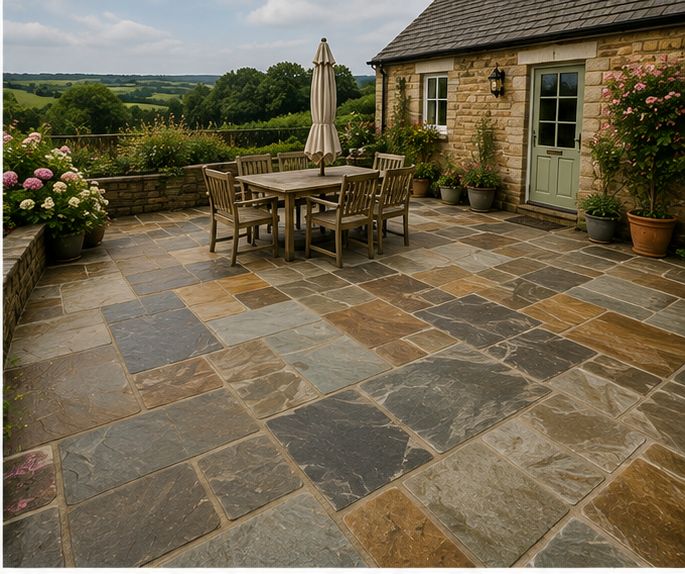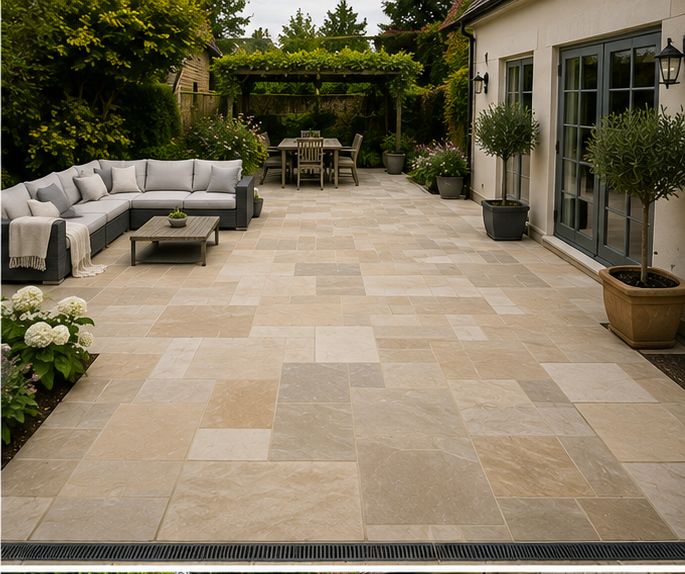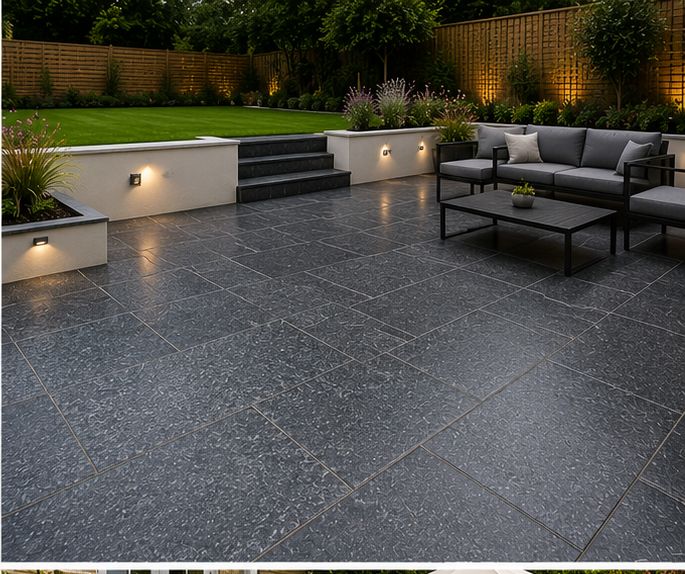
A block paved driveway has to do a harder job than any patio. It carries the weight of a car every day, turns under tyres, and has to deal with the rain that runs off a roof, a pavement and often a slope as well. Done properly, it stays flat and tidy for many years. Done in a hurry, it ruts, sinks and sheds blocks at the edges.
Tony and the team build block paved drives as part of our patio, path and driveway work across South Wales. This page covers the blocks themselves, how a drive is built, the drainage rules for front gardens, dropped kerbs and edging. For a checklist before you commit, read block paving driveways: what to ask before you book.
Herringbone drives, contrasting borders and permeable paving laid for everyday parking.
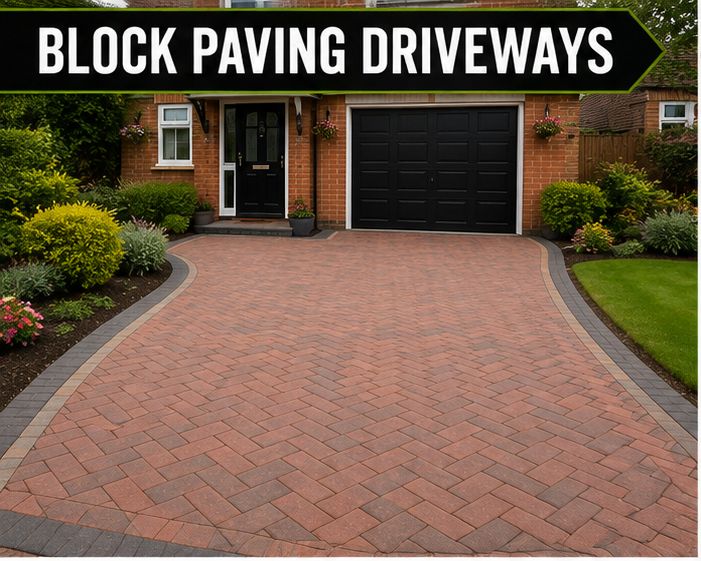
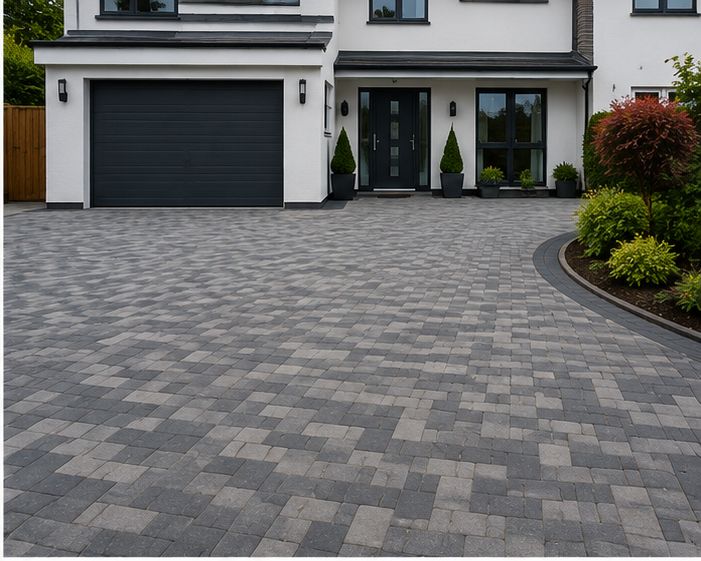
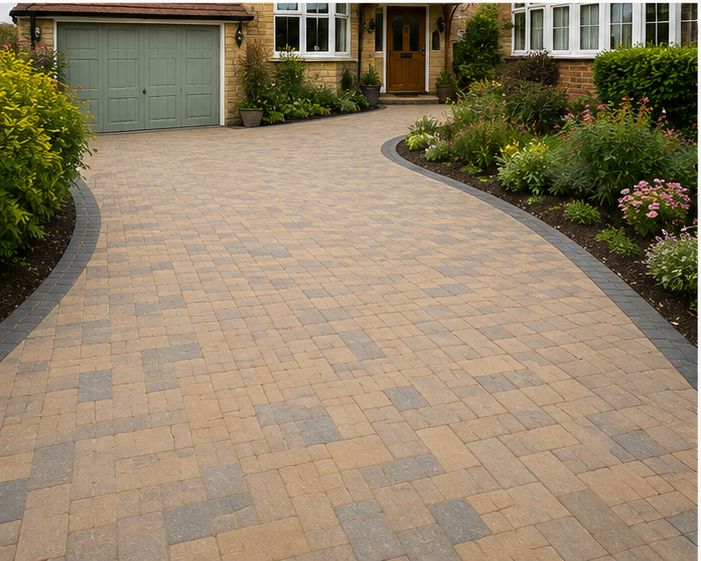
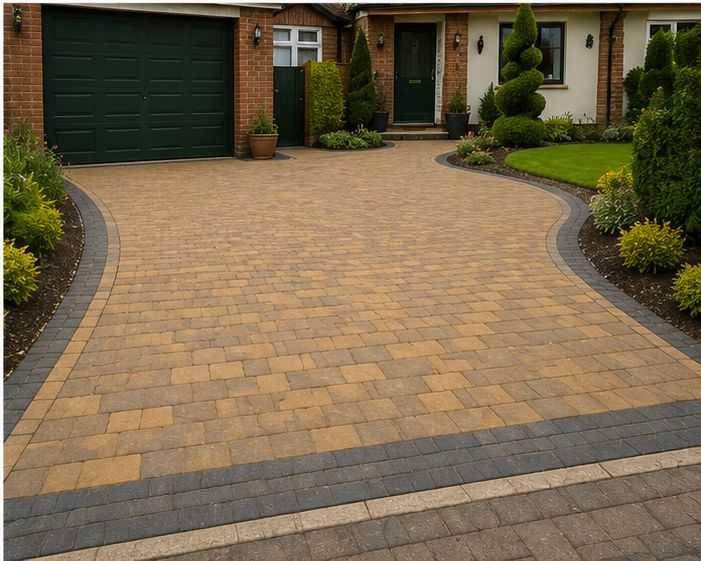
Most block paving is made from concrete, pressed into small rectangular or tumbled blocks in a wide range of colours, from charcoal and silver grey to buff, brindle and red. Clay pavers are the other main option. They are fired like bricks, so their colour runs right through and tends to last very well, and they have a more traditional look.
For a drive, block thickness matters. The thinner blocks sold for patios and paths are not meant to take a car. Driveway blocks are usually thicker, and heavier vehicles or tight turning areas may call for thicker still. We check the product is rated for the use you have in mind.
Concrete blocks sometimes show a white bloom in the first months, called efflorescence. It comes from natural salts in the concrete working to the surface, it is not a fault in the laying, and it normally weathers away on its own.
Block paving is a flexible pavement. Rather than being stuck down with mortar, the blocks sit on a bed of sand and lock together through the sand in their joints and the edging around them. That only works if every layer beneath is right.
Paving over a front garden changes where rain goes, and there are rules about it. Broadly, in Wales, laying a larger area of hard surface in a front garden can need planning permission unless the surface is permeable, or the water is directed onto a lawn, border or soakaway within your own property. New drainage schemes above a certain size may also need approval from the council acting as the sustainable drainage approving body. The thresholds and details can change, so please check with your local council before work starts. We are landscapers rather than planners, but we will build to whichever approach you settle on.
Permeable block paving is often the simplest way to meet the rules. The blocks have small spacer nibs that leave wider joints, filled with fine grit rather than sand, and they sit on an open-graded stone base with no fines. Rain soaks through the joints and into the base, where it is stored and seeps slowly into the ground. On heavy clay that drains poorly, the base may need an outlet pipe to a soakaway or drain.
With standard blocks, the answer is to shape the falls so water runs to a planted area or into a channel drain and soakaway, rather than onto the pavement. Our guide on stopping a garden waterlogging explains soakaways and channel drains in more detail.
If you want to drive across the pavement to reach a new drive, you will almost always need a dropped kerb, also called a vehicle crossover. The pavement and kerb belong to the highway authority, which is normally your local council, so you must apply to them first. They decide whether a crossing is allowed and usually set out who may carry out the work on the public footway. On some roads, particularly main roads, planning permission may be needed too. Please do not assume approval, and do not drive over a kerb that has not been dropped.
Within your own boundary, every block paved drive needs a firm edge restraint. Without one, the blocks slowly creep outwards under traffic, the joints open and the paving loses its lock. We set kerbs or edging blocks on a concrete bed with concrete haunching behind them, so the edge cannot move. A contrasting border course, or a band of granite setts, is a neat way to frame the drive at the same time.
Where a drive meets a wall, a lawn or a raised bed, we often build the edge into low brick walls so the paving has something solid to butt against.
Block paving needs little care beyond a regular sweep. The joints are its weak point: if the sand washes or is brushed out, the blocks can loosen and weeds find a way in. Topping the joints up with kilned sand, or grit on permeable paving, keeps it tight. Take care with pressure washers, which strip the joints quickly, and wipe oil drips promptly. Sealing is optional and can help hold the jointing sand.
A big advantage is that sections can be lifted and relaid if a drain needs attention or a patch settles, without breaking anything out. Block paving works well on the open-plan fronts of post-war estates in Cwmbran, and on the semis around Caerphilly and Newport where a front lawn is being turned over to parking.
Not sure which material suits your garden? Compare the options, or see our patio slabbing and paving page for the full picture.
Real reviews from homeowners across South Wales — rated 4.8 out of 5 on Google from 69 reviews and 10/10 on Checkatrade.
“Had my patio done by the company and could not be happier. Top quality work done and quickly too.”
“I was pleased to find Tony and his lads were absolutely great! Tony responded quickly & was very polite.”
“We were delighted with the work and materials, which were of very high quality. Tony and team helped us.”
Guides that help when you are choosing and planning paving.
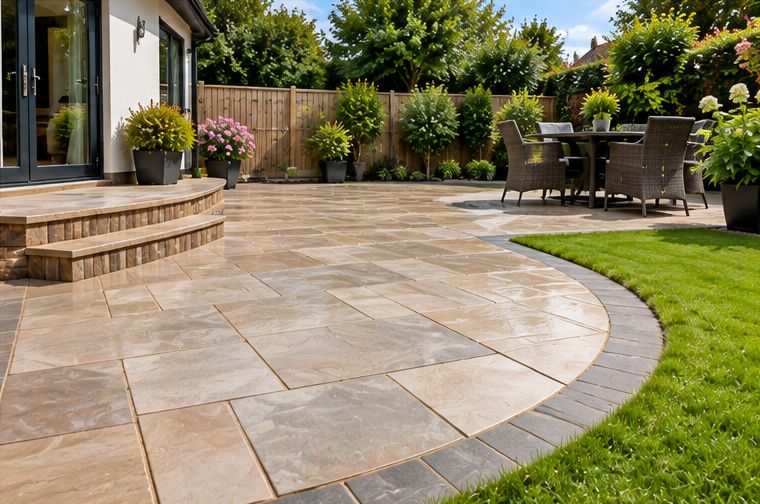
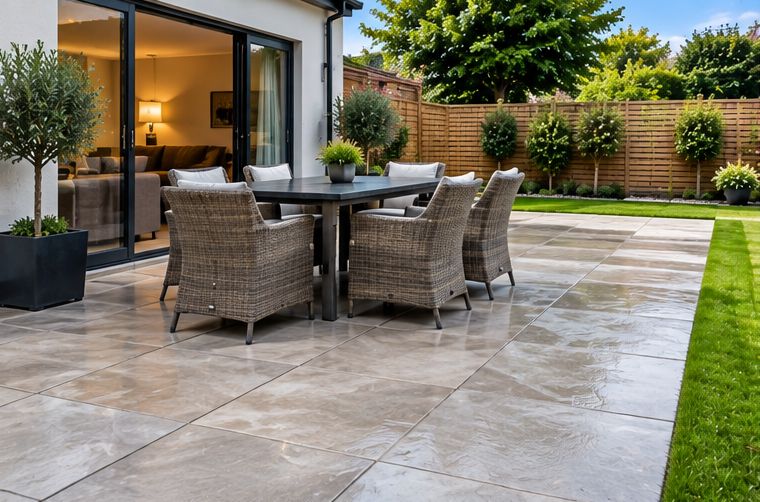
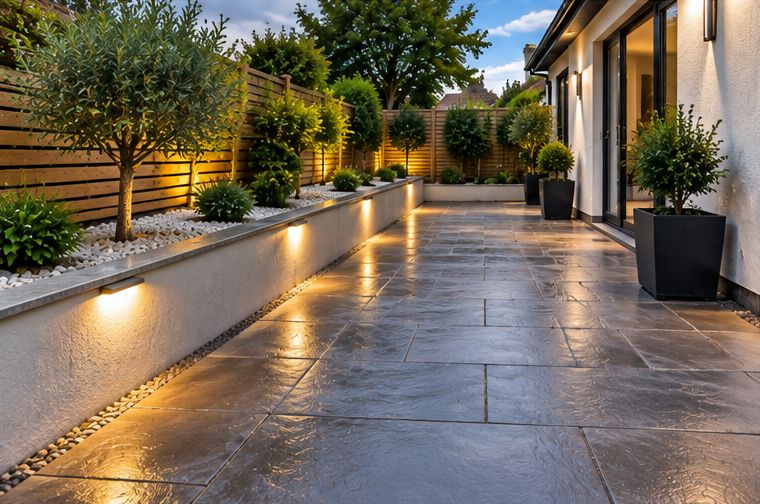
We lay paving right across South Wales. Choose your town to see patio paving there.
It depends on the size of the area, whether it is at the front of the house and whether the surface is permeable or drains to your own garden. Permeable paving often avoids the need, but rules change, so check with your local council before work begins.
The kerb and pavement belong to the highway authority, so you need their approval first, and they usually set out who can do the work on the footway. We can build the drive up to the boundary and advise on how it meets the crossing.
Almost always because the sub-base is too thin or poorly compacted, the ground beneath is soft, or the edges were not restrained. Our article on why paving sinks or lifts explains the causes and fixes.
Some seeds will land and root in the joints over time, especially in shade. Keeping the joints full, sweeping regularly and pulling weeds while they are small keeps on top of it.
The area, how much digging and muck-away is needed, the ground conditions, the blocks and pattern chosen, edging, drainage, and whether the drive is permeable. We give free quotes after seeing the site.
Tell us about the space and how you use it, and we will visit to measure, talk through drainage and give a free quote.