This was a bigger boundary than most. A house in Pontypool sat above a sloping grass area, and between the two ran a bank topped with a tangled, overgrown hedge. The photos follow the job through frost and snow from start to finish.
The hedge came out, the bank was dug back with a mini digger, and a new boundary went in: heavy treated timbers held by upright posts to hold the higher ground, with a pointed picket fence along the top. It is a good example of how a fence on a change of level is really two jobs, holding back soil and marking the line.
Clearing the old hedge line
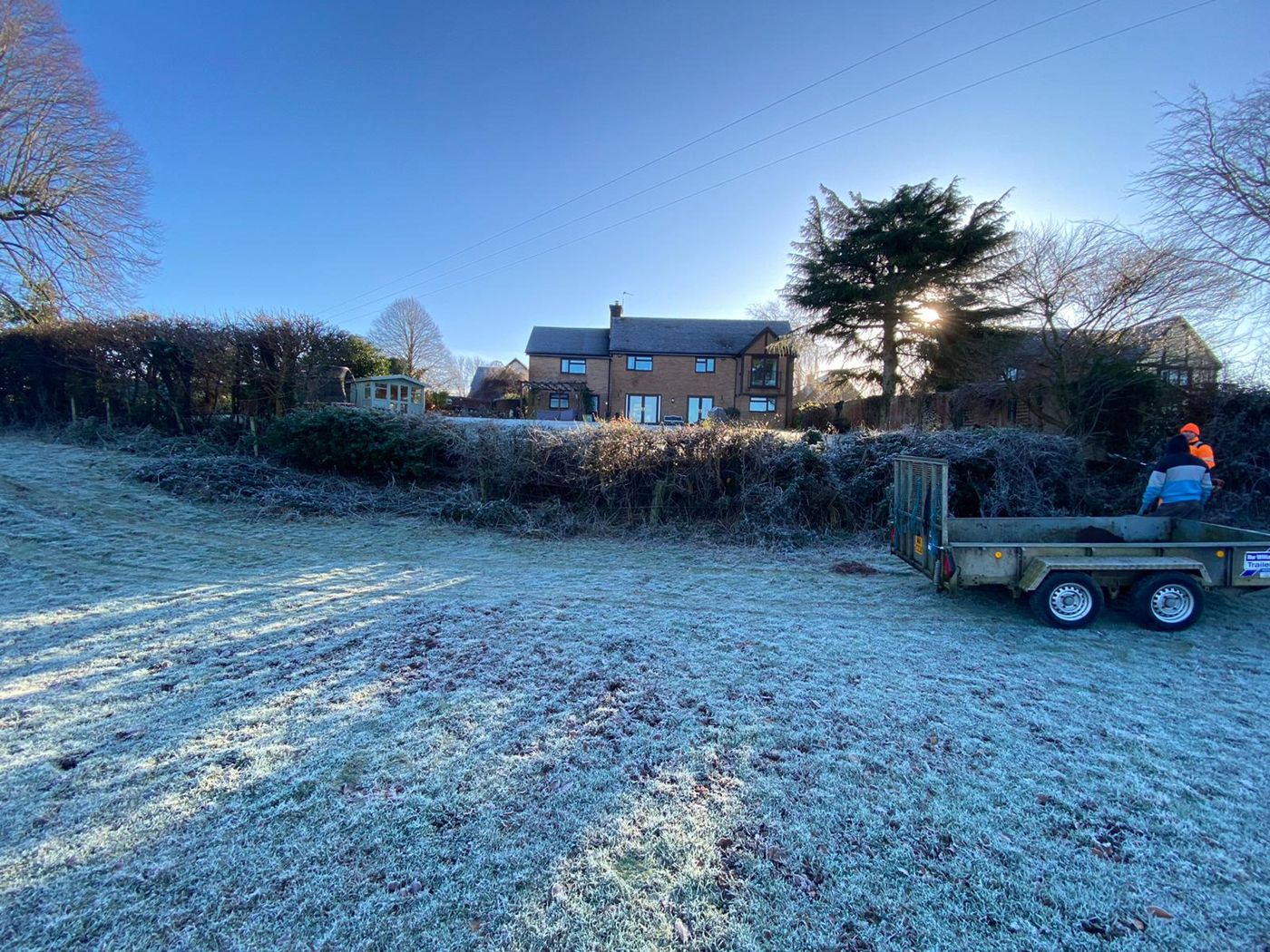
The first photo shows where we started, on a frosty morning with the trailer backed up to the hedge. The hedge had grown wide and ragged, with brambles and dead growth through it, and a fence could not go in until all of that and the main roots were out.
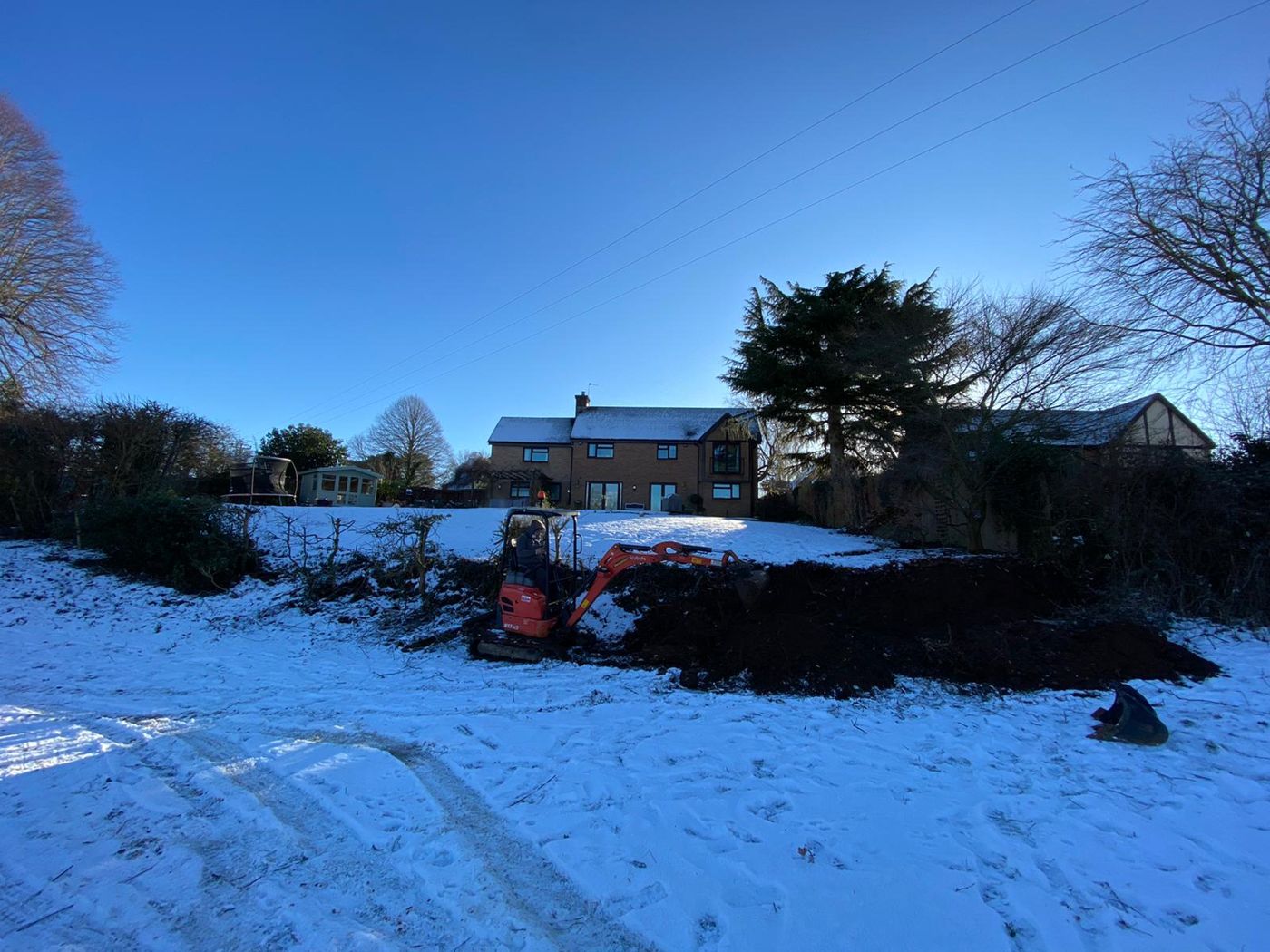
We loaded the cuttings for removal, then brought in a mini digger. By the time snow had fallen, the digger was pulling out roots and cutting the bank back to a cleaner face, with the spoil heaped along the line. Taking the green waste away is part of this kind of work, the same as on our garden clearance jobs.
Holding the bank with timber
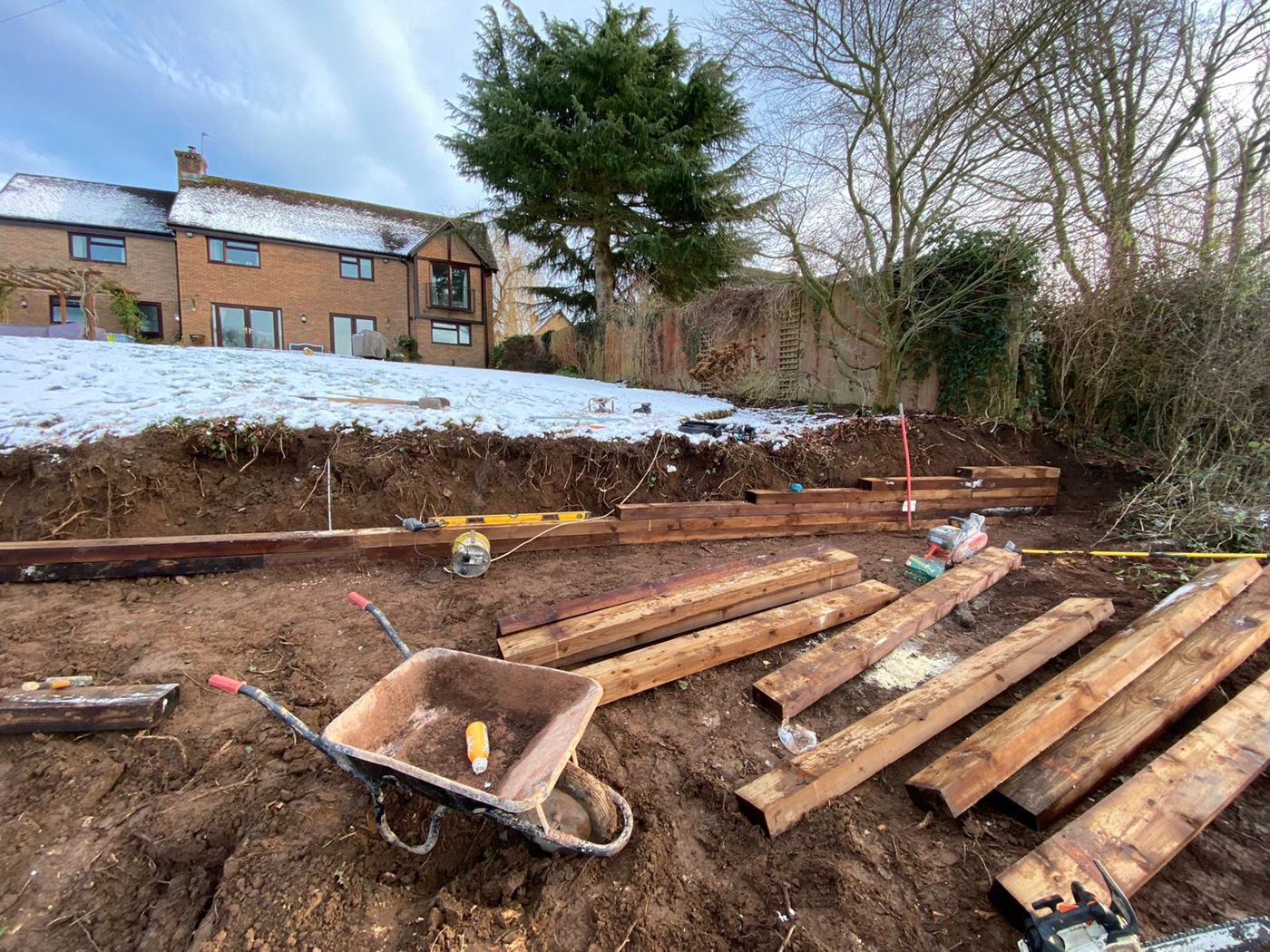
With the bank cut back, the next photo shows heavy treated timbers laid out ready, a string line pulled tight along the bank and a spirit level on the first boards. The timbers were fixed against upright posts to form a low retaining edge along the foot of the garden.
A retaining edge like this has to cope with wet soil pushing against it all winter, so the posts carry the load and need a firm, deep fixing. Where a bank is taller, we would look at a proper wall instead; our guide on retaining walls for sloping Pontypool gardens explains when each suits.
- Overgrown hedge and roots removed, cuttings taken away
- Bank dug back with a mini digger in the snow
- Heavy treated timbers set against posts as a retaining edge
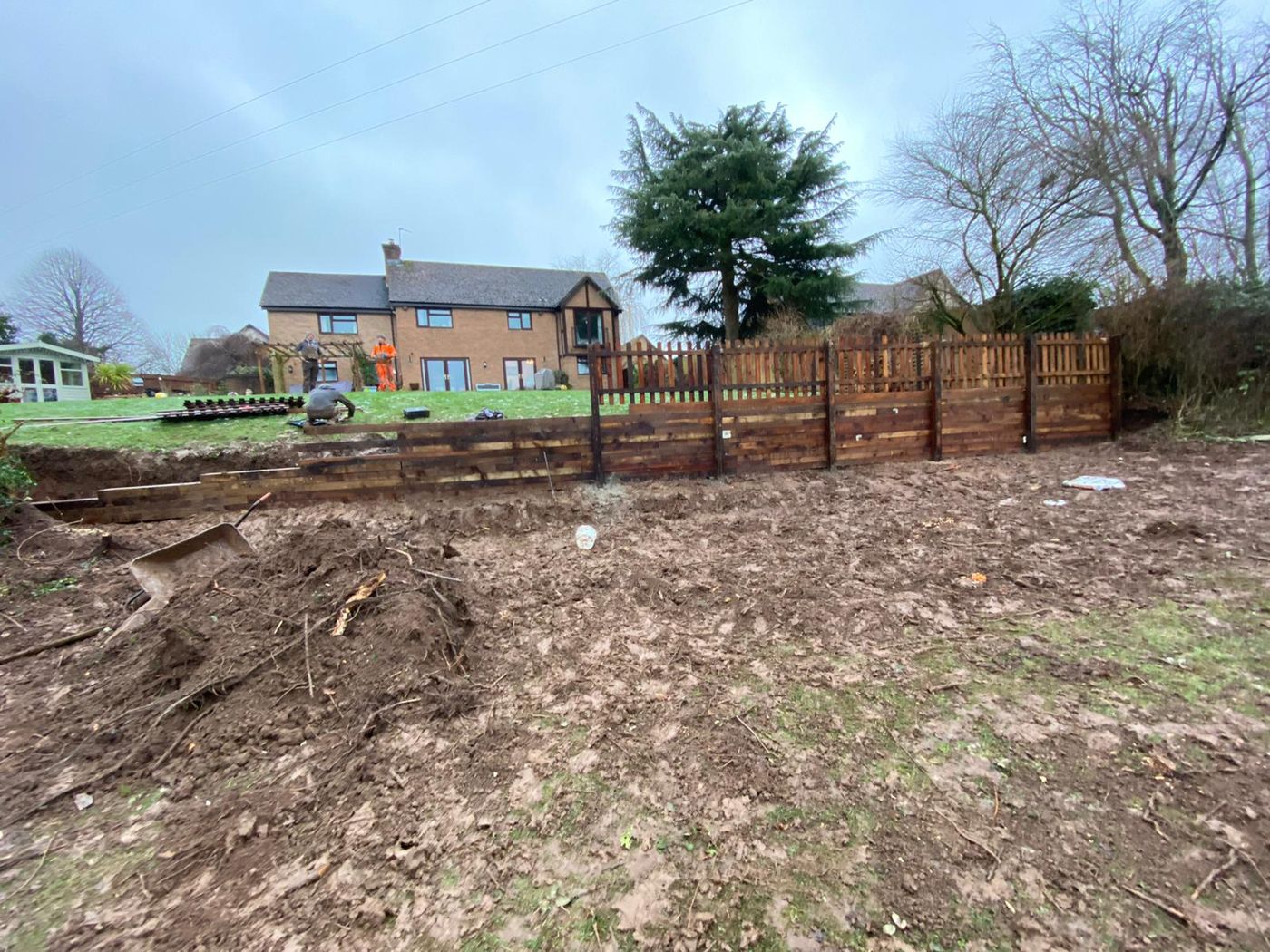
- A pointed picket fence fixed along the top, following the line of the bank
An open fence for an open view
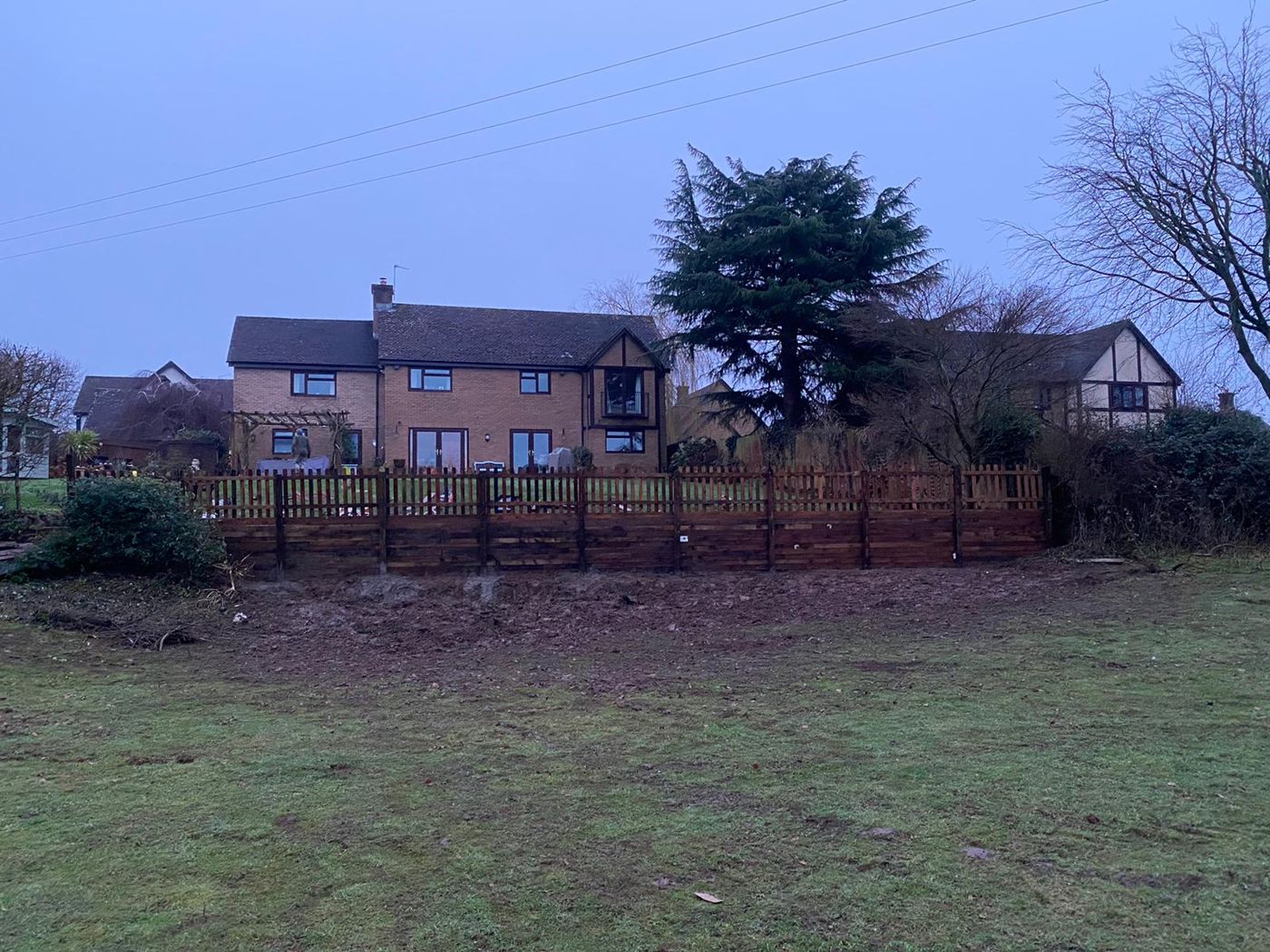
Along the top we fitted picket fencing rather than solid panels. It marks the boundary clearly, but the house keeps its outlook over the lower grass. It also lets wind through, which matters on an exposed, open plot. Our guide to close board, panel or slatted fencing compares the choices, and the fencing and gates page shows the rest of what we do.
The finished photo, taken from the grass below at dusk, shows the new timber boundary running along the bottom of the garden, with the ground in front roughed out and ready to settle. If a hedge or bank at the edge of your garden has got out of hand, see more about landscaping in Pontypool or ask us to come and look.
Questions About This Job
Can you remove a whole hedge before fencing?
Yes. We cut it down, dig out the main roots so the new posts have clean ground, and take the waste away. Check first that the hedge is yours to remove and that no birds are nesting in it.
Can timber be used to hold back a bank?
For a low bank, heavy treated timbers fixed to strong posts work well and suit a rural setting. For higher ground or where the soil is very wet, a block or stone wall is the safer choice.
Is winter a bad time to put up a fence?
Not usually. Frost and snow slow things down, but posts can still be set on most days, and hedges are best cleared outside the bird nesting season anyway.
Do you fit metal fencing too?
We talk through timber, galvanised and chain link options at the quote, depending on what the boundary needs to do.