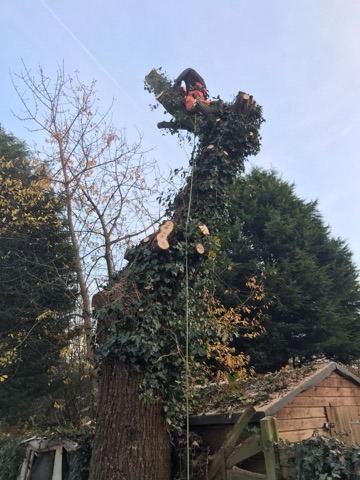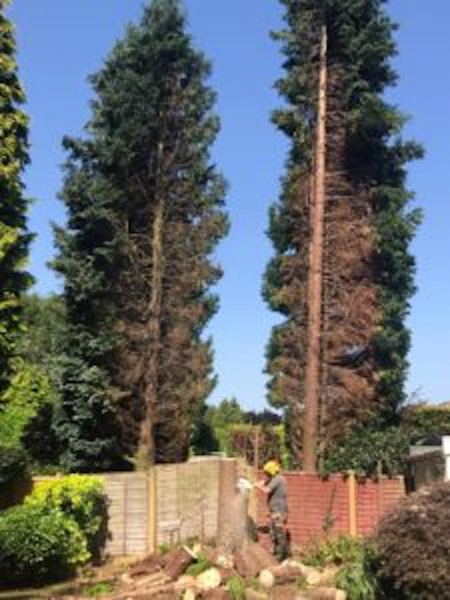
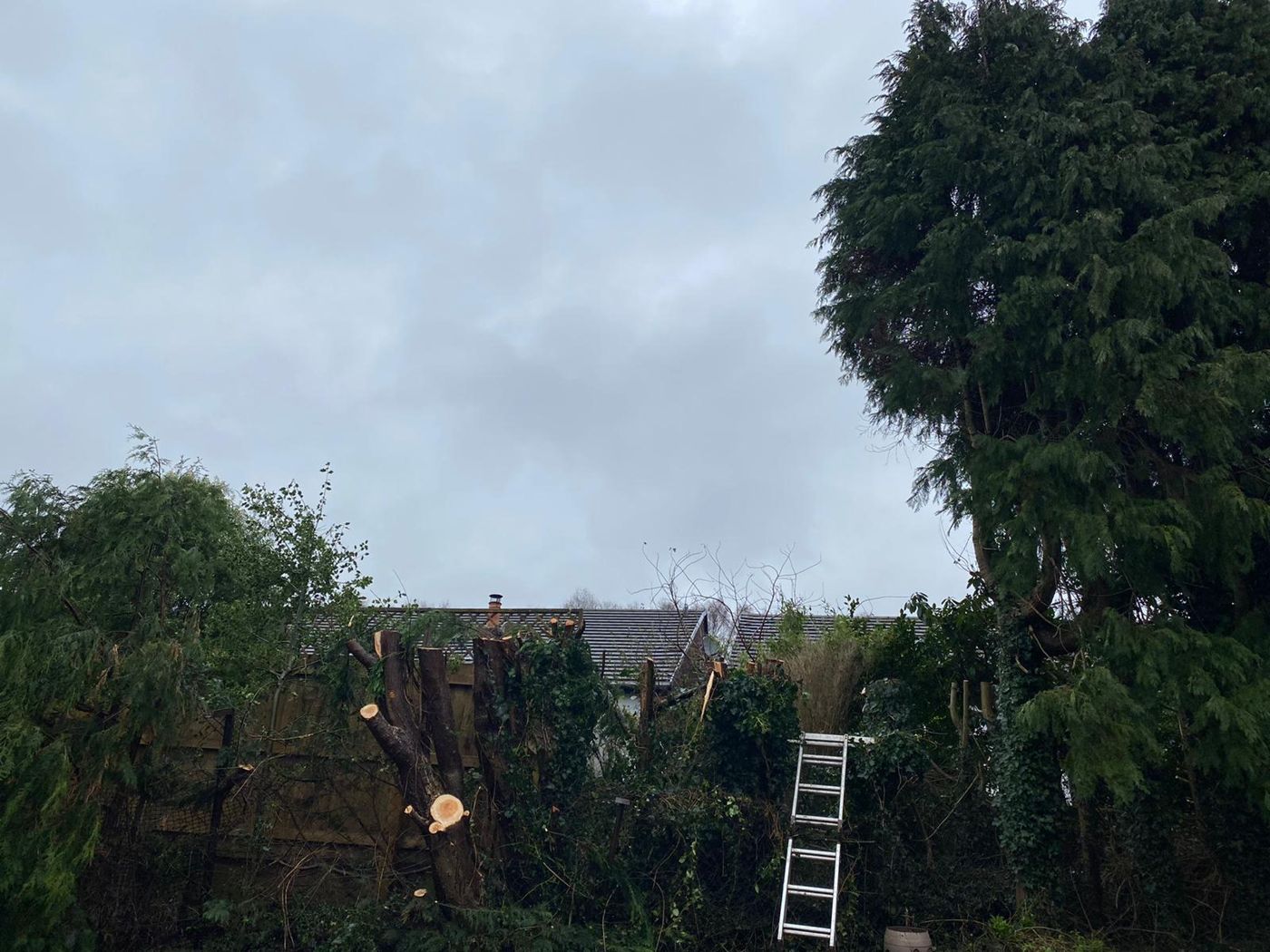
This job in Caerphilly was the removal of a group of large fir trees growing along the boundary of a back garden. Evergreens like these keep adding height and spread every year, and once they tower over a garden they take a lot of light and dry the ground out underneath.
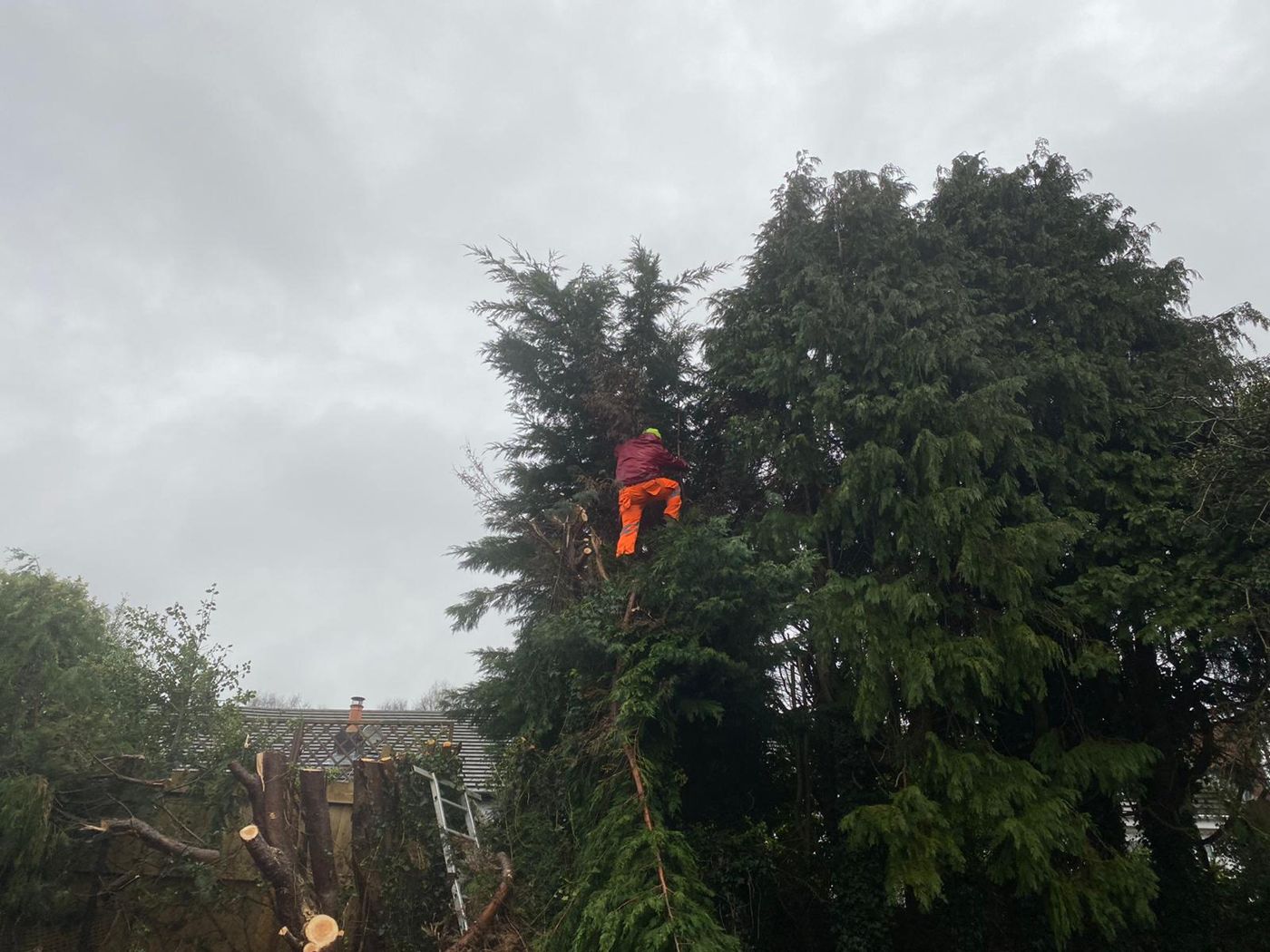
The photos were taken on a grey, overcast day. The first shows one of the team high in a fir, dressed in orange work trousers and a helmet, working down through the crown. The second shows the result along the fence: a row of cut trunks with fresh pale faces, and the next tree still waiting its turn behind the ladder.
Why tall firs come down in sections
With houses and fences close by, there was no clear space to drop a whole fir in one piece, so the safe method is to climb and remove the tree from the top down. Branches come off first, then the trunk is cut into manageable lengths and lowered or dropped into a clear area below.
Working this way keeps each piece small, so nothing heavy swings into a neighbour's roof or fence. It also means the ground beneath is not churned up by a falling crown, and the cut lengths are easy to move away once they are down.
Before any cutting starts
Felling is permanent, so a few general checks come first. We do not give legal advice, but as a matter of routine we:
- ask whether the trees might be covered by a tree preservation order or stand in a conservation area, and suggest the owner checks with the council if there is any doubt;
- look through the canopy for nesting birds, since active nests are protected;
- plan where each section will land and keep the drop zone clear;
- agree what happens to the wood, brash and stumps once the trees are down.
What the garden gains
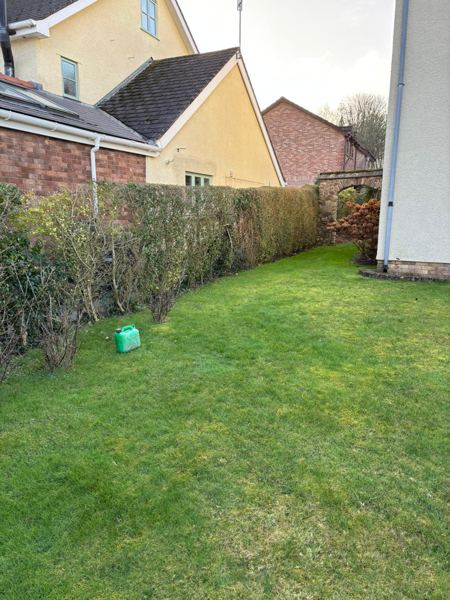
With firs of this size gone, the back of the garden opens up to the sky, and the ground that sat in deep shade can be put to use again. Some people have the stumps ground or dug out and turn the space into a border or lawn; others leave low stumps to rot down.
If you are weighing up whether a tree should come down or just be cut back, our guide to felling or pruning sets out the main points, and tree pruning for Caerphilly gardens looks at the local side. Our tree surgery and hedge care page covers the full range of work, and there is more about the town on our landscaping in Caerphilly page.
Questions About This Job
Why not just cut a tall fir at the base?
In a garden with houses and fences close by, there is rarely room for a whole tree to fall safely. Taking it down in sections from the top keeps every piece small and under control.
Will a fir grow back after it is cut down?
Most firs and other conifers do not regrow from the stump once they are felled, so there is no need to worry about shoots coming back.
Do I need permission to fell trees in my garden?
Often not, but some trees are protected by a tree preservation order or a conservation area. Check with your local council before work starts. Our guide on permission to cut down a tree in Wales has more detail.
How do I get a quote for tree felling?
Send us a message with a photo of the trees. Tony and the team will come and look, then give you a free quote.