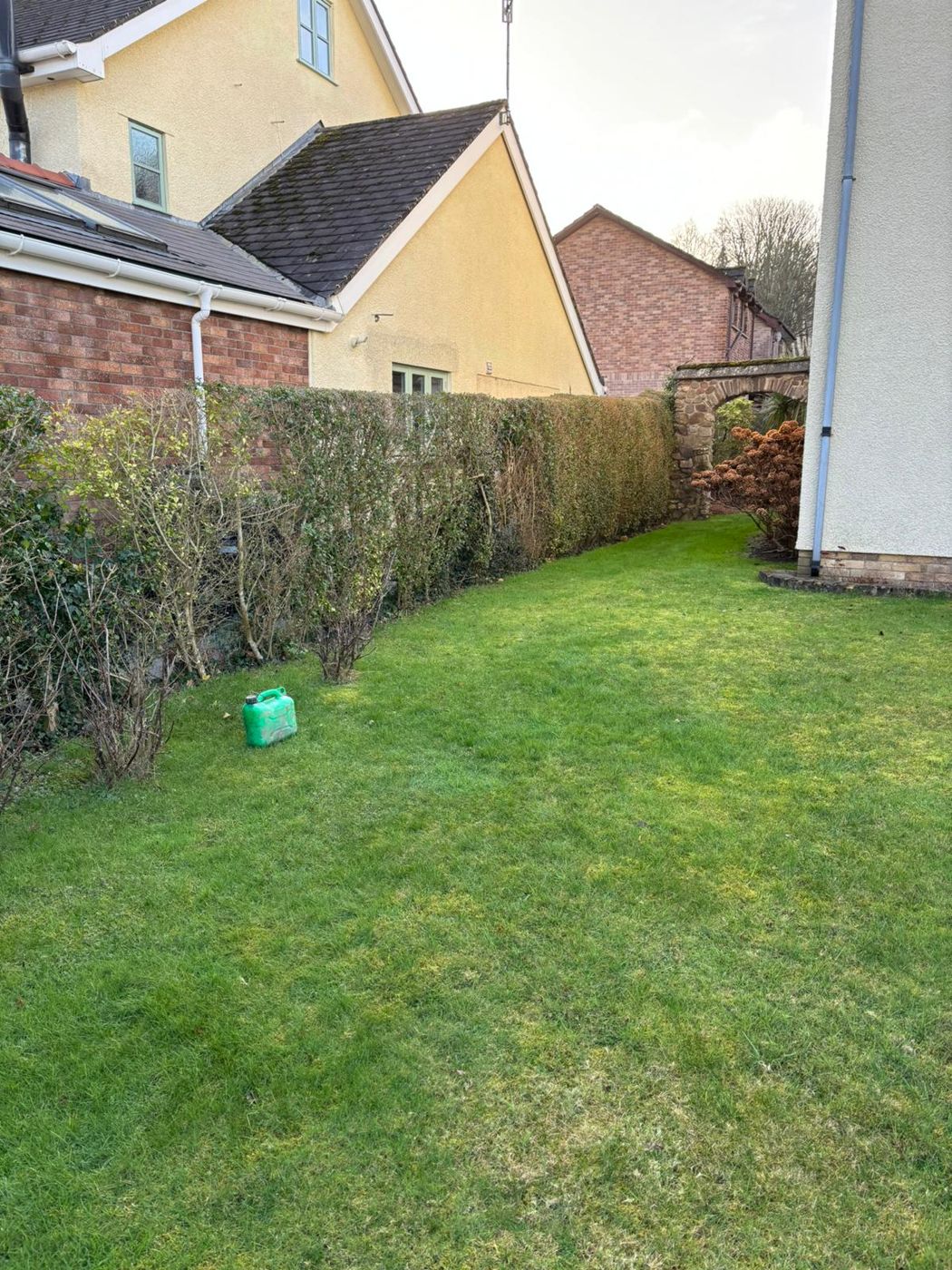
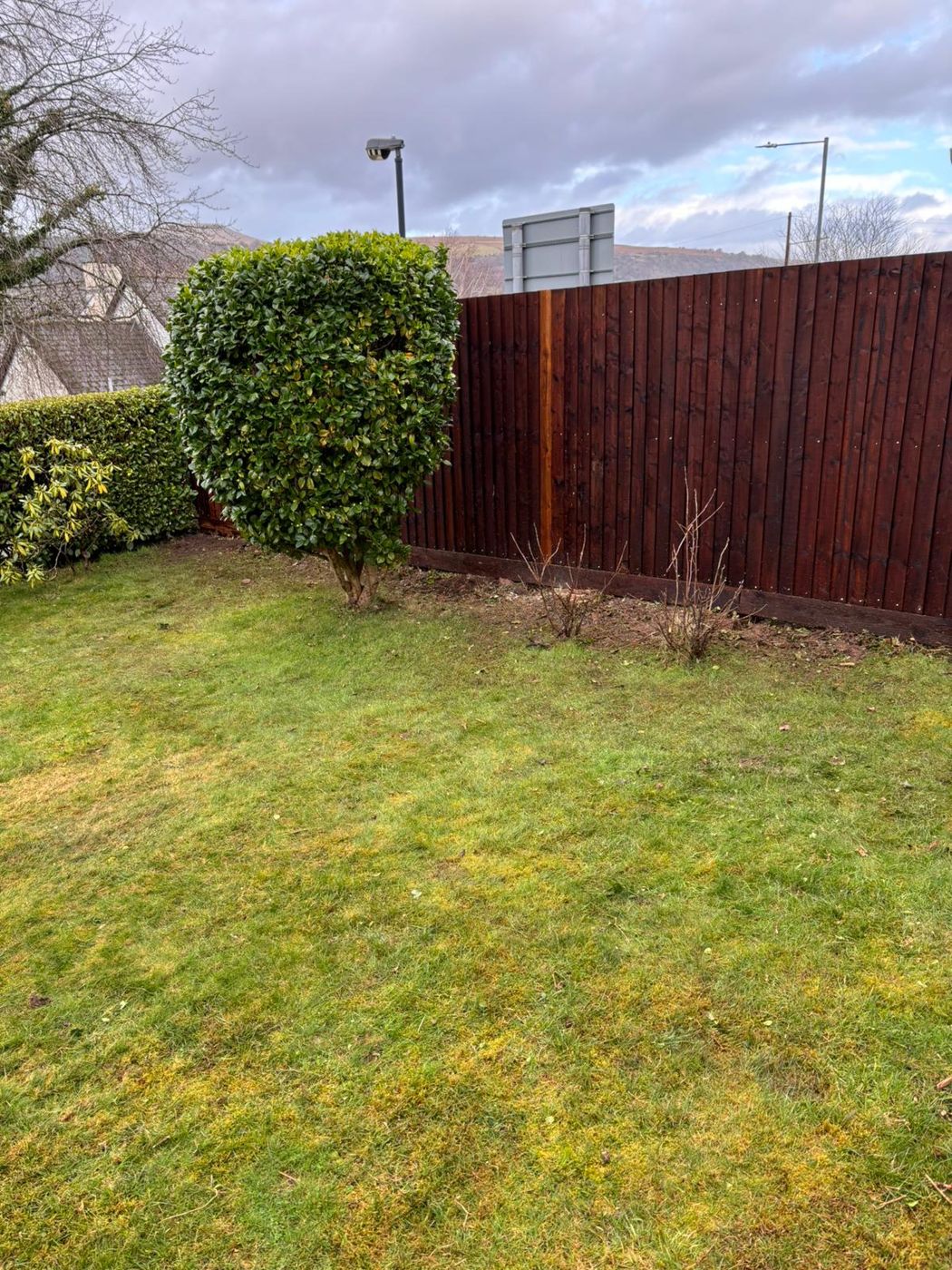
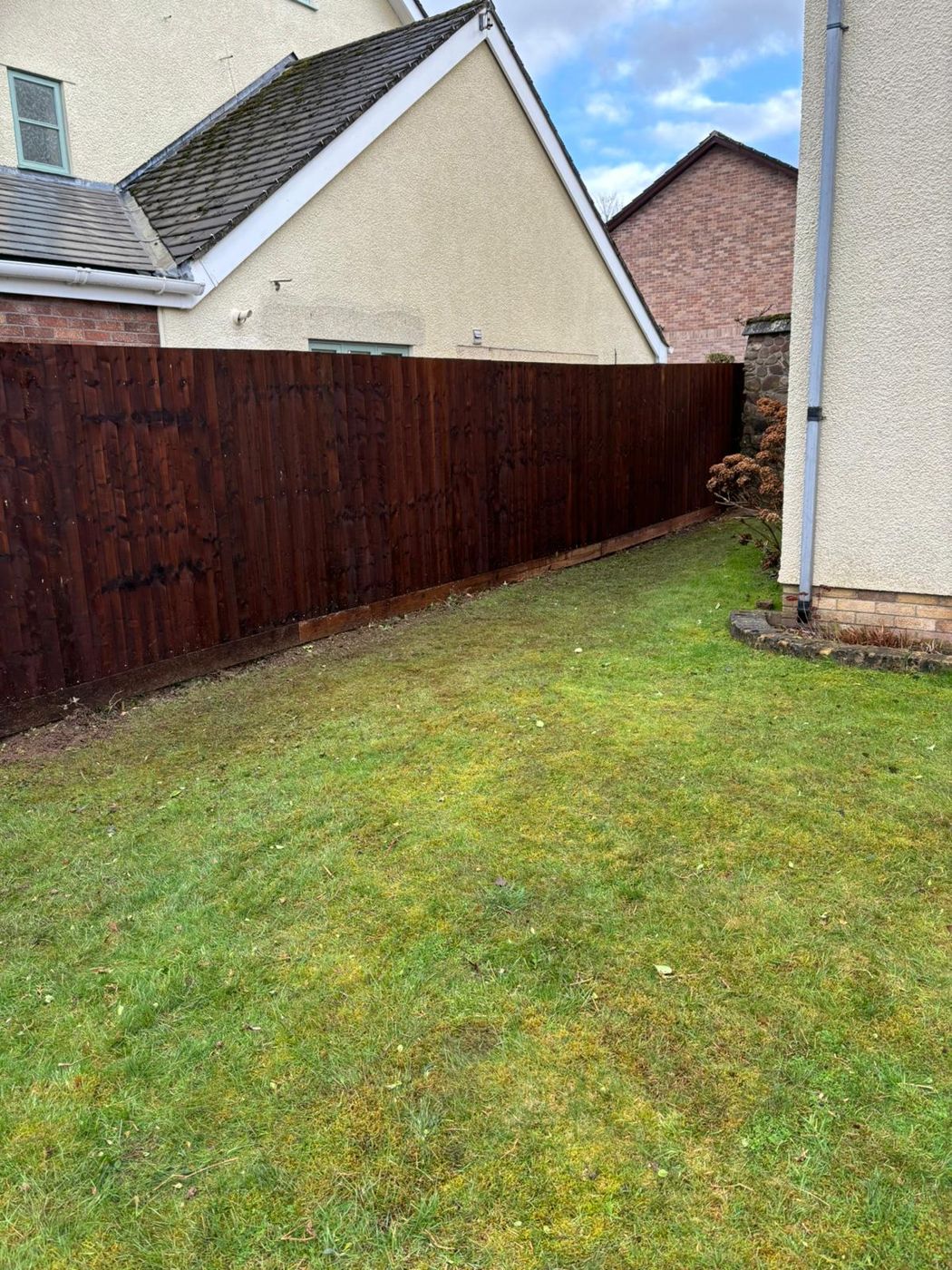
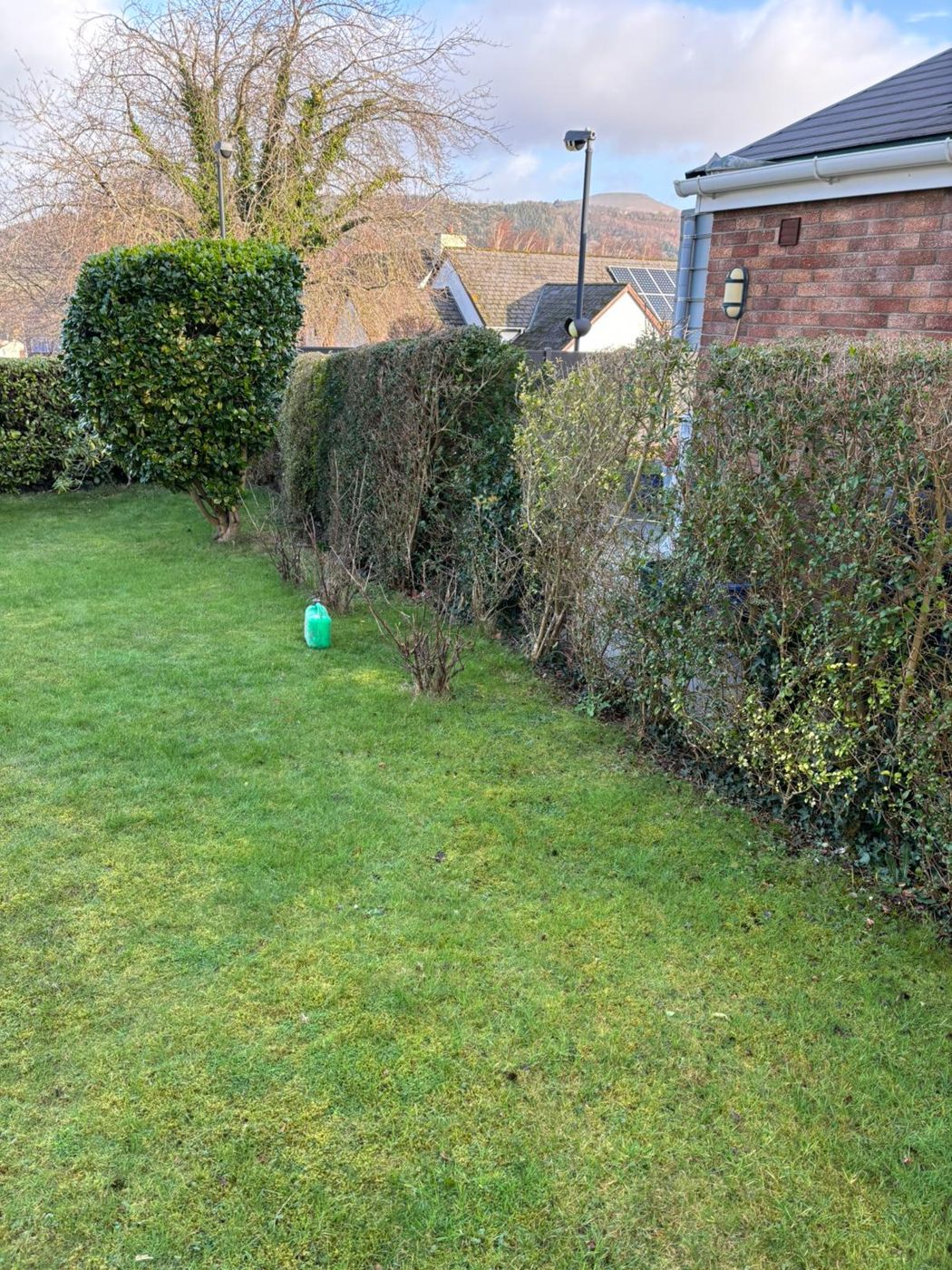
This garden wraps around the side of a house in Pontypool, with an L-shaped lawn and boundaries on two sides. When we arrived in January, one side was lined with a tired mixed hedge that had grown tall and woody at the top but thin and gappy near the ground. On the other side, a rounded evergreen shrub stood at the corner beside a longer run of hedging.
The job was general tree and hedge maintenance: pruning, trimming and shaping so the boundaries looked cared for again. It is the sort of work that makes a real difference to a garden in winter, when growth has stopped and you can see the shape of every plant.
A dome that holds its shape
The rounded evergreen at the corner is the plant most people notice first. We clipped it back to a clean dome on a short, clear stem, so it now reads as a feature rather than a lump of greenery. The mixed hedge running away from it towards the brick building was cut back along its face so the lawn keeps its full width.
Along the base of the boundary, a handful of deciduous shrubs were pruned hard, leaving a few upright stems to come again in spring. In the later photos, the long side of the garden by the rendered house has a dark-stained close-board fence along it, and the old leggy hedge line is gone from that stretch.
Why January suits this kind of work
Most hedges and shrubs are dormant in the middle of winter, so cutting them back causes little stress and there is no sap bleeding from the cuts. The main points we weigh up before a winter visit are:
- Nesting birds. Breeding birds are protected by law, so as a general practice we look for active nests before cutting. In the colder months there are far fewer, which is one reason winter is a good time.
- Protected trees. Some trees are covered by a tree preservation order or sit in a conservation area. We ask about this before any tree work, and it is worth checking with your local council if you are unsure.
- Evergreens. Plants such as laurel, bay and privet can be shaped now, and a light tidy in summer keeps them crisp.
- Waste. Clippings are bagged and taken away, so the lawn is left clear.
Keeping it tidy from here
A hedge that has been neglected for a few years rarely comes back in one visit, but regular trimming stops it getting leggy again. Our guide on how often and when to trim a hedge explains the usual timings. For more on the tree side of what we do, see our tree surgery and hedge care page, or our local page on tree surgery in Pontypool. You can also read about gardens across the town on our landscaping in Pontypool page.
Questions About This Job
Can an overgrown hedge be cut back hard?
Many common hedging plants, such as privet, laurel and hawthorn, recover well from a hard cut in winter. Conifers such as leylandii are different, as they rarely regrow from old brown wood, so we cut those more gently.
Do you check for nesting birds before cutting a hedge?
Yes, as a general practice. Active nests are protected, so if we find one we leave that section and come back later in the year.
Do you take the clippings away?
Yes. Hedge and shrub waste goes with us at the end of the visit, and the lawn and paths are raked and swept.
How do I book hedge or shrub work?
Get in touch with a few photos of the garden and Tony and the team will arrange a free quote.