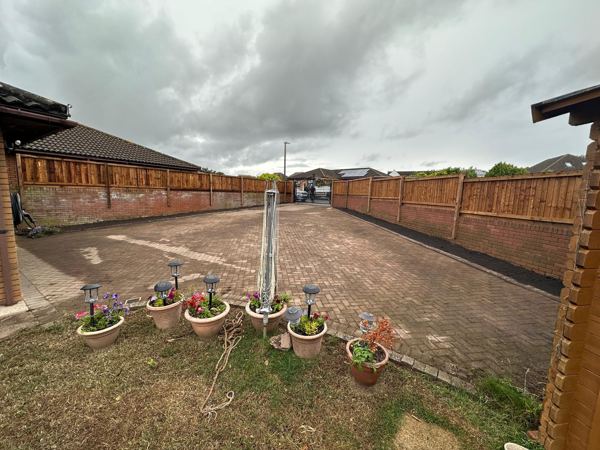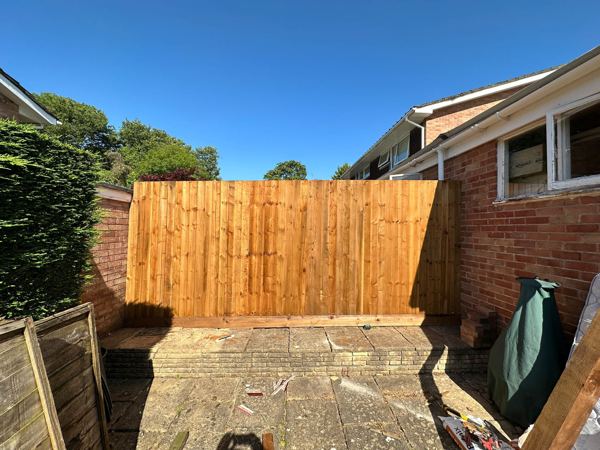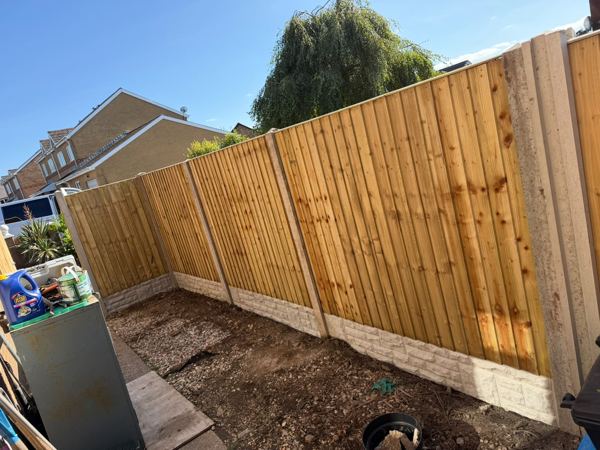
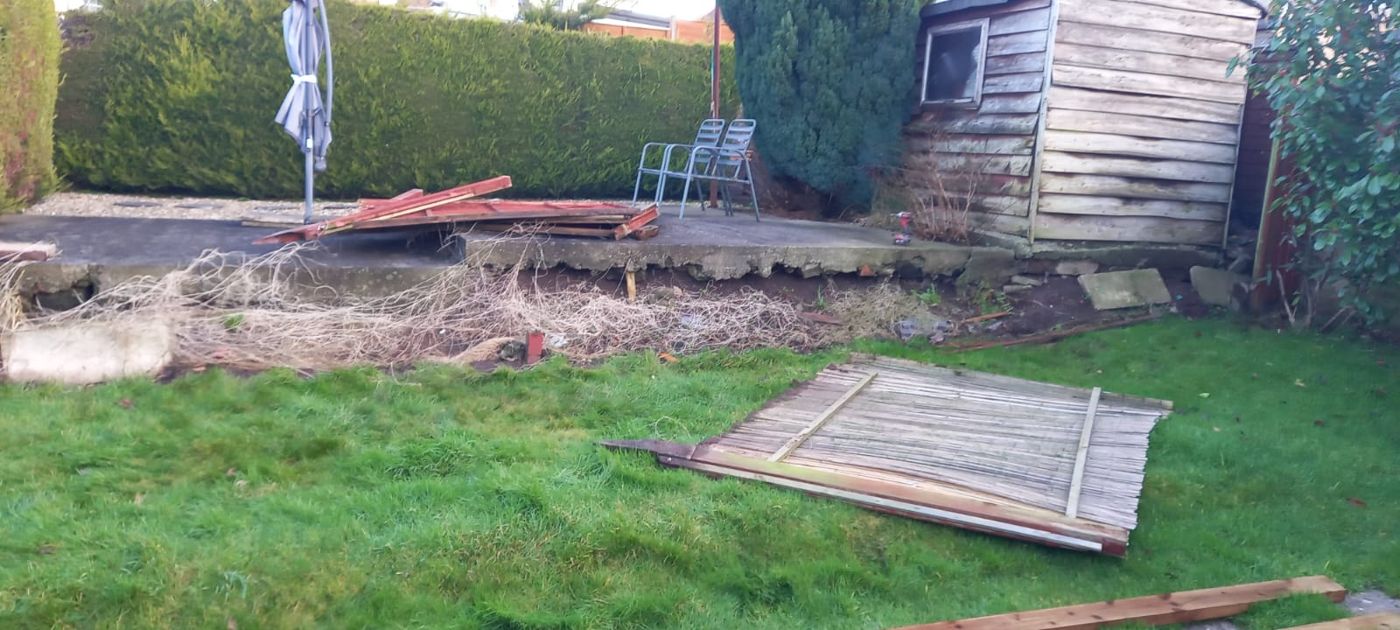
The first photo from this Pontypool garden tells the story: an old lap panel lying flat on the lawn, broken pieces of fence heaped on the patio, and a gap along the side boundary between the hedge and the shed. Whatever the fence had been, it was no longer doing its job.
Rather than slot in more ready-made panels, we built a new fence in place. Timber posts went in first, then horizontal rails, then vertical featheredge boards fixed one at a time, finished with a timber gravel board at the foot. You can see our other boundary work on the fencing and gates page, and more about gardens in the town on landscaping in Pontypool.
From flattened panel to bare frame
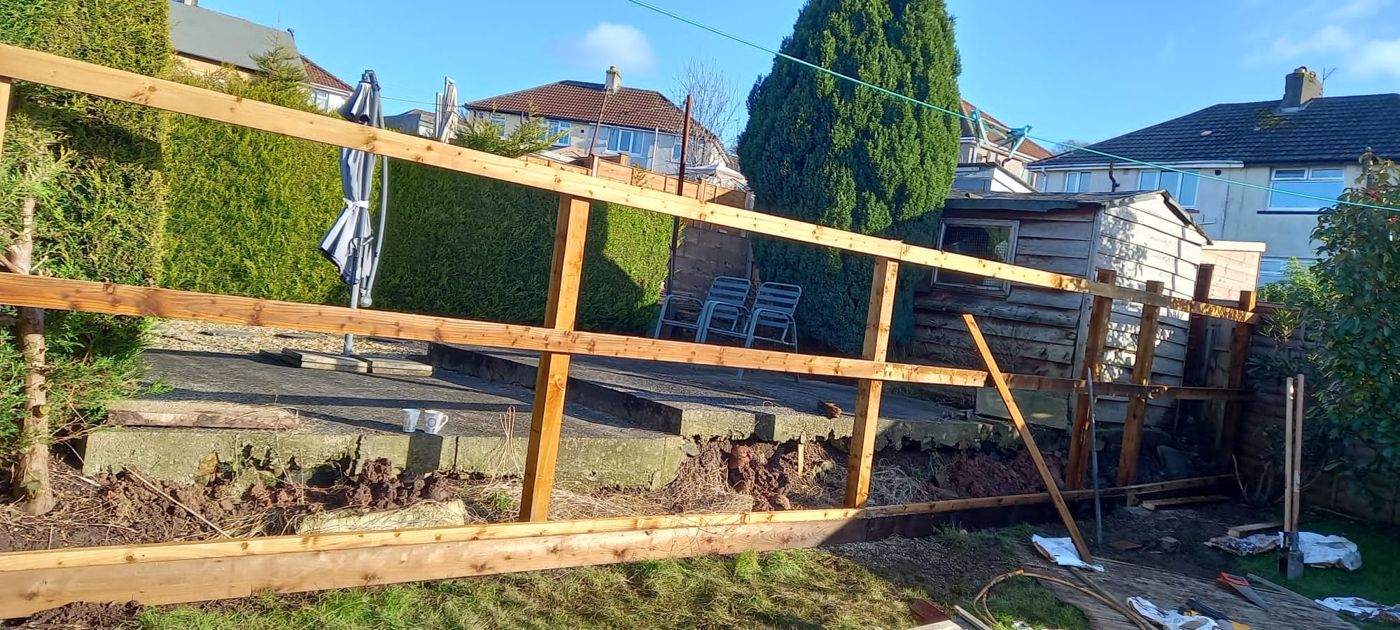
Once the broken fence was cleared, the new frame went up. The middle photo shows it half-built: square timber posts along the line, three rails running between them, and a diagonal prop holding one post steady while its footing set. The rails follow the fall of the ground rather than stepping, so the finished fence runs smoothly downhill with the garden.
A frame like this is what makes a site-built fence strong. The posts carry the load, the rails tie them together, and every board is nailed to all three rails, so wind pressure is spread along the whole run instead of resting on a few panel edges. That is one reason lap panels, which are thin woven or overlapped slats in a light frame, are often the first thing to fail in an exposed garden. Our guide to which fence stands up best to Welsh wind goes into this.
- Old lap panels and broken timber cleared from the lawn and patio
- New timber posts set along the boundary, braced while they set
- Rails fixed to follow the slope of the garden
- Featheredge boards overlapped and fixed to every rail
- A timber gravel board run along the base
The finished boundary
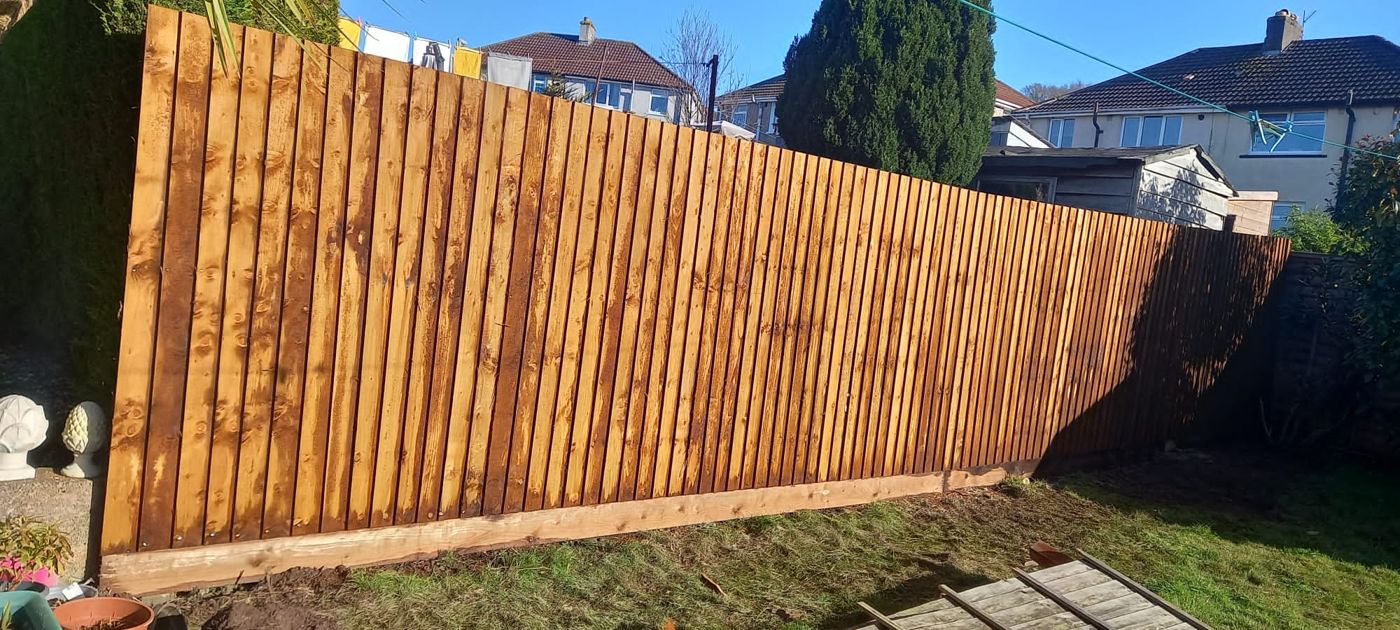
The last photo shows the fence complete in the winter sun: a solid wall of overlapping boards in fresh honey-coloured timber, from the patio end down past the conifer, with a board along the bottom keeping the featheredge off the soil. There is no gap to see through, so the garden is private again from the houses behind.
Deciding whether a damaged fence can be patched or needs replacing is not always obvious. Loose panels in sound posts can often be refitted, but if the posts have rotted at ground level the whole line usually has to come out, as it did here. Our article on fence repair or replacement sets out the signs, and there is a newer Pontypool job on concrete posts at new garden fencing in Pontypool. If your own fence has gone over, send us a message for a free quote.
Questions About This Job
What is the difference between featheredge and lap panels?
Lap panels are ready-made, with thin horizontal slats in a light frame. Featheredge is built on site from tapered vertical boards overlapped on rails fixed between posts. It is heavier, stiffer and easier to repair a board at a time.
Can a fence follow a sloping garden?
Yes. With a site-built fence the rails can run parallel to the ground so the top line slopes gently, as on this job. With panels, each bay is usually stepped down instead, leaving small triangles at the base to fill.
Why fit a gravel board under a timber fence?
It keeps the bottom of the boards clear of wet soil and grass, which is where rot starts. A gravel board is also cheap to swap on its own when it eventually wears.