Porth sits in the Rhondda, and like a lot of valley terraces this house had a back garden that rises in stages, with old stone walls on either side. The job was to pave it so every level could be used, with safe steps between them.
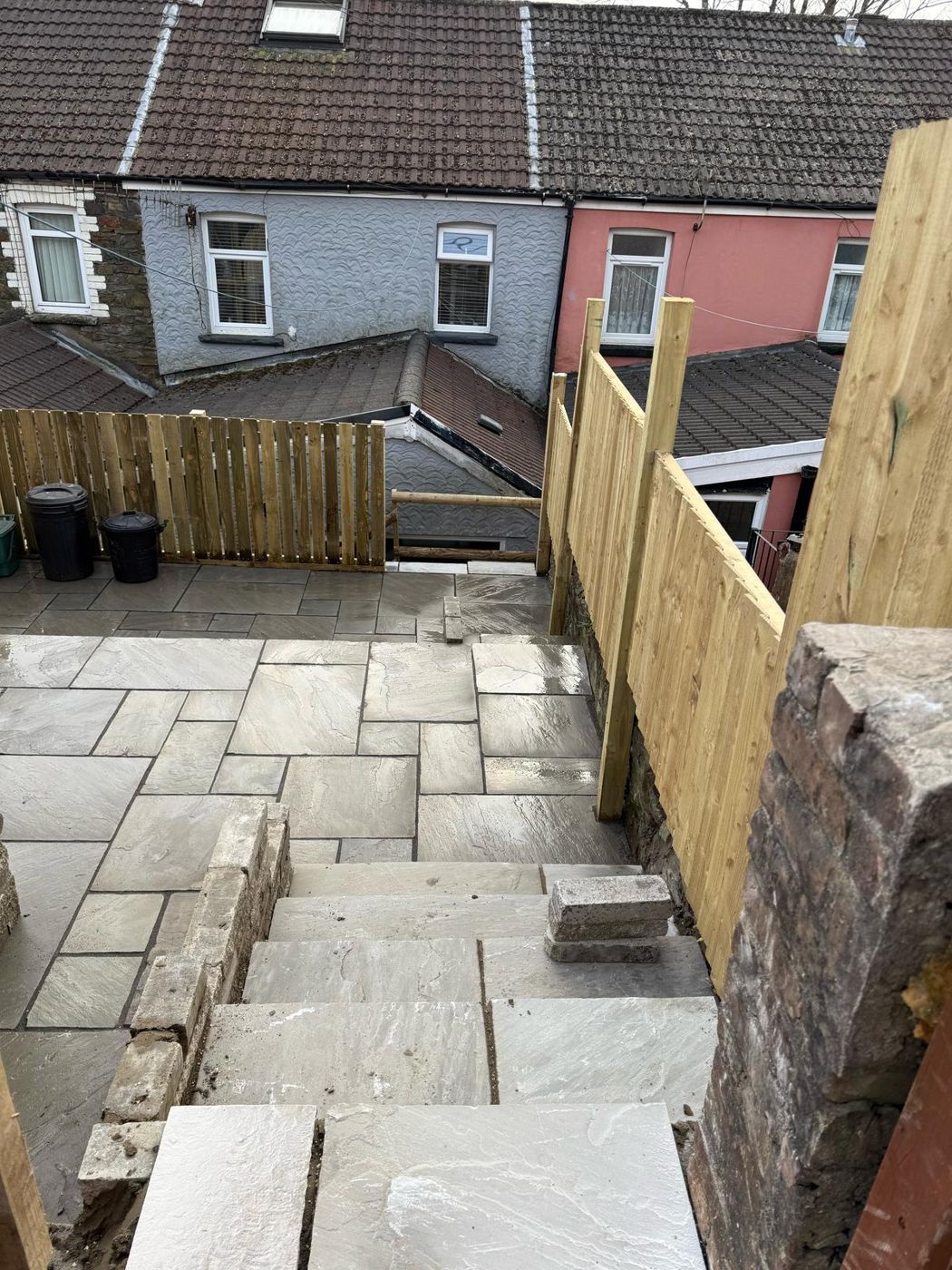
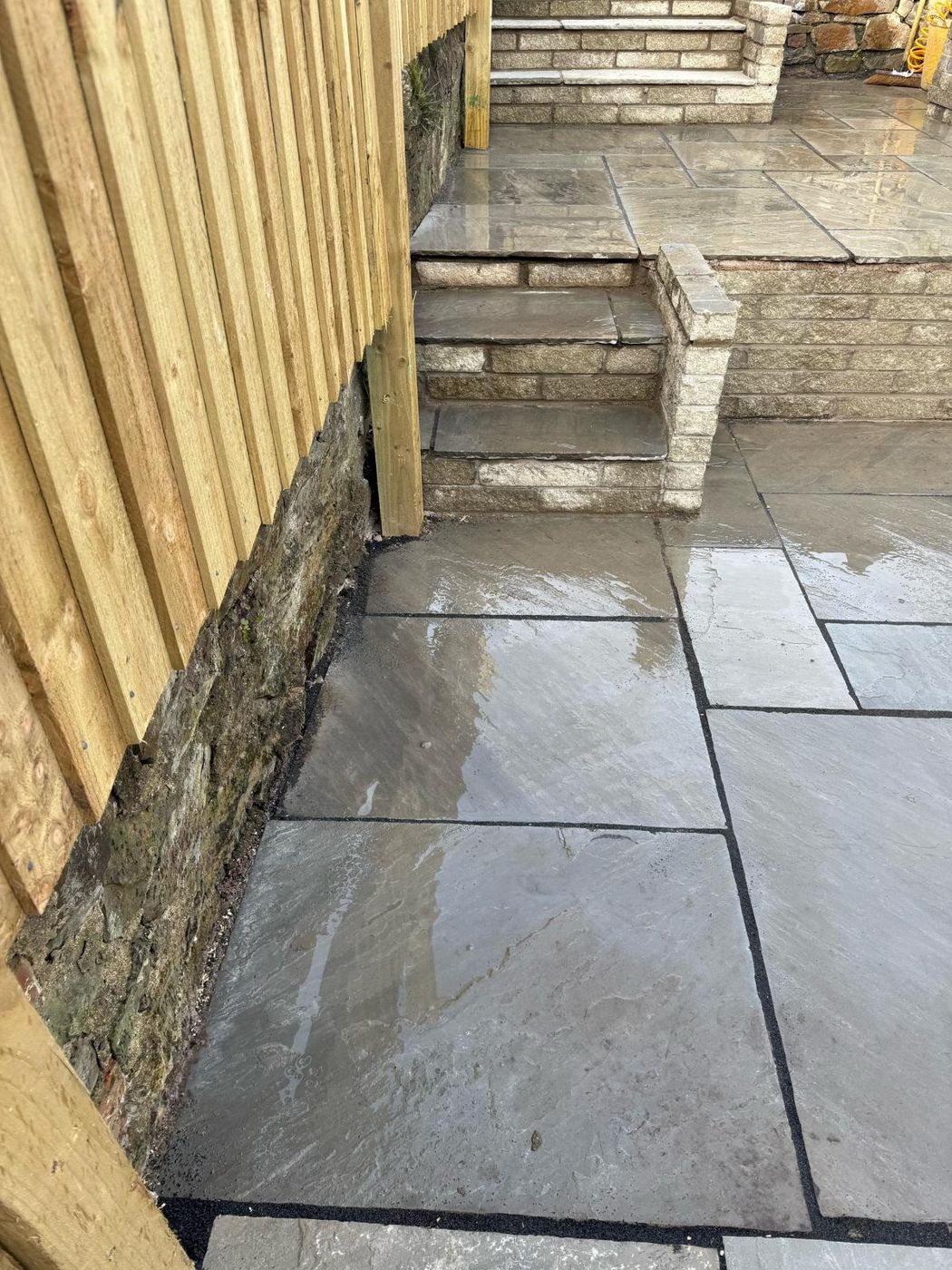
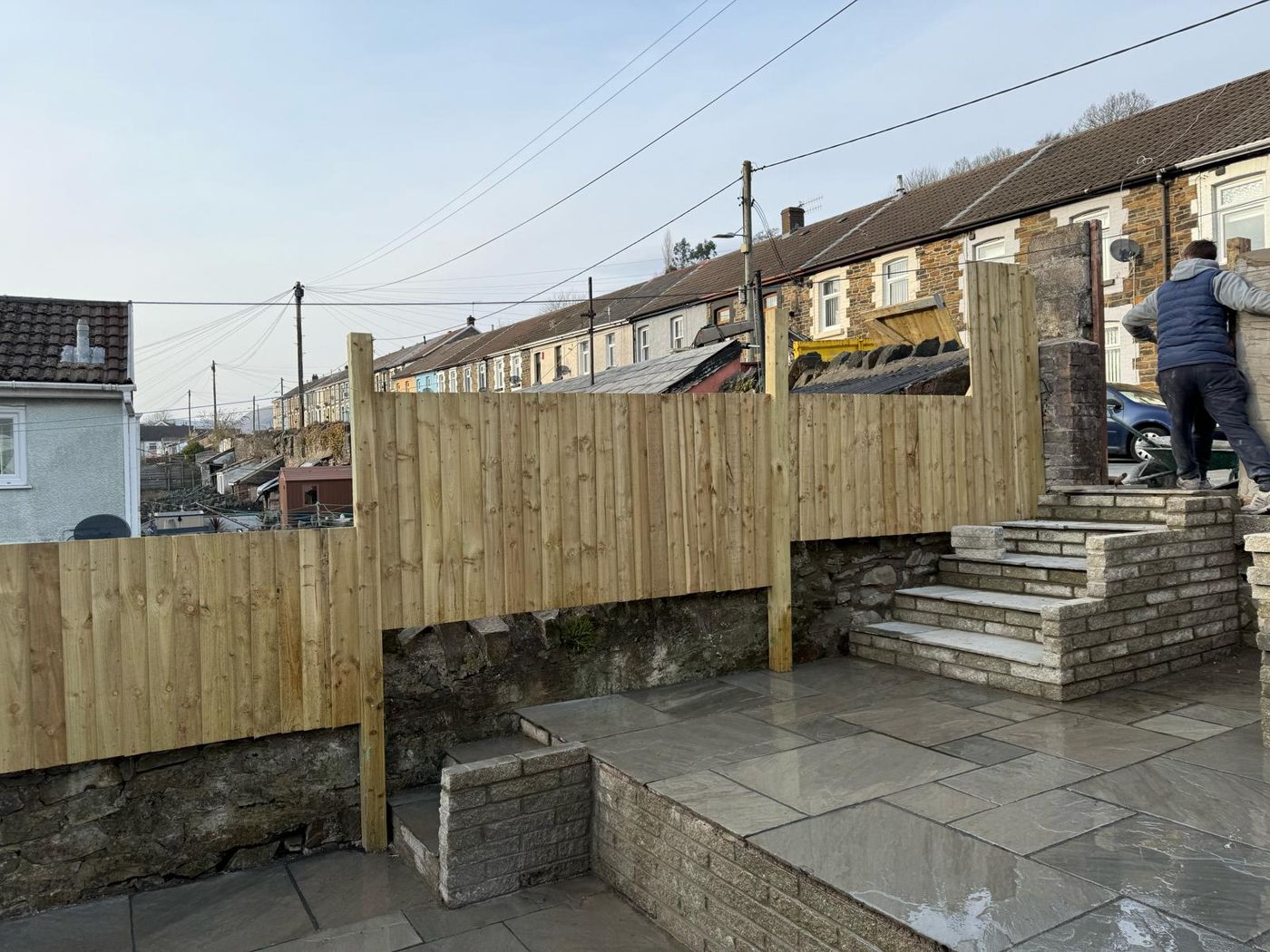
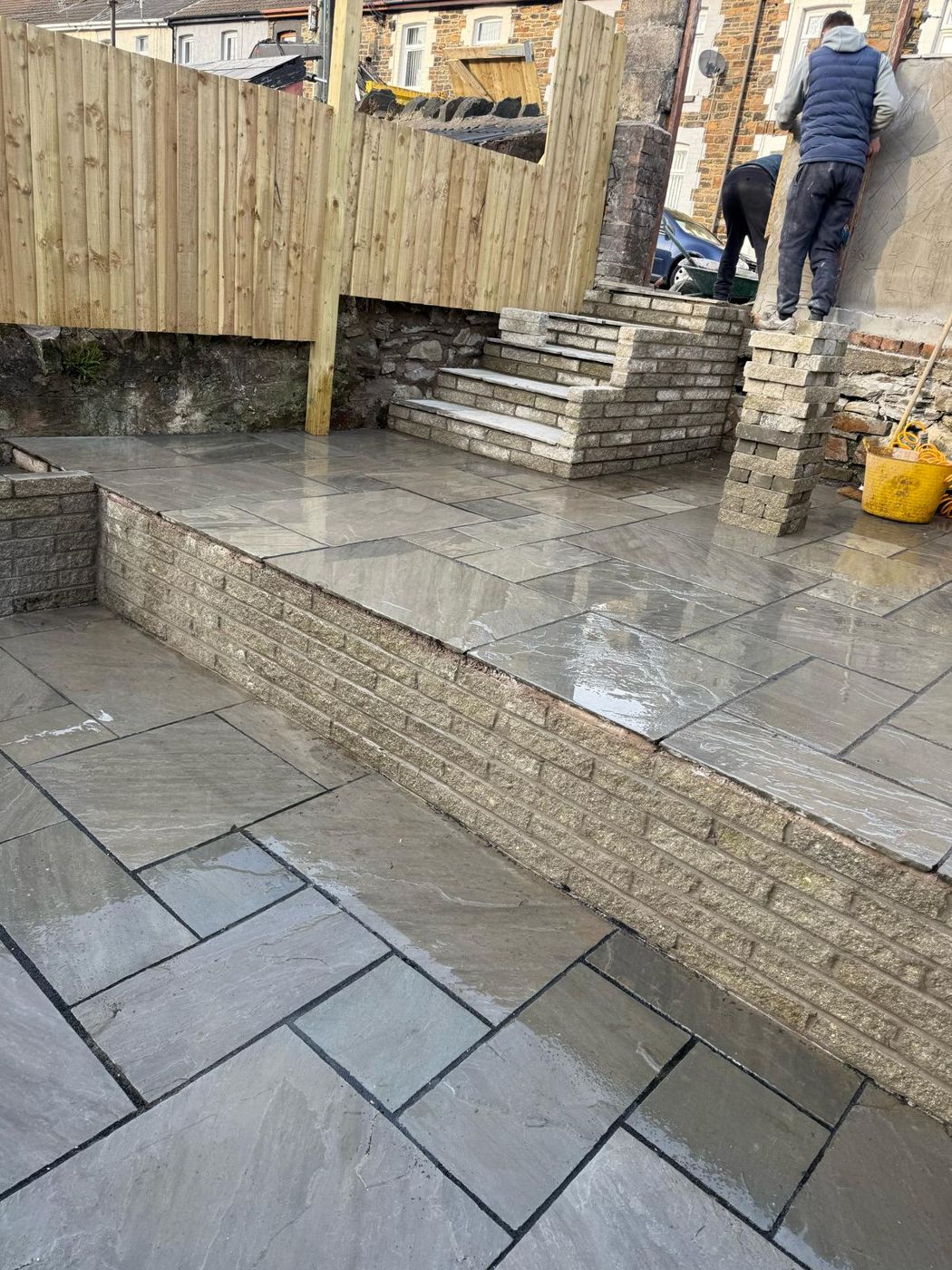
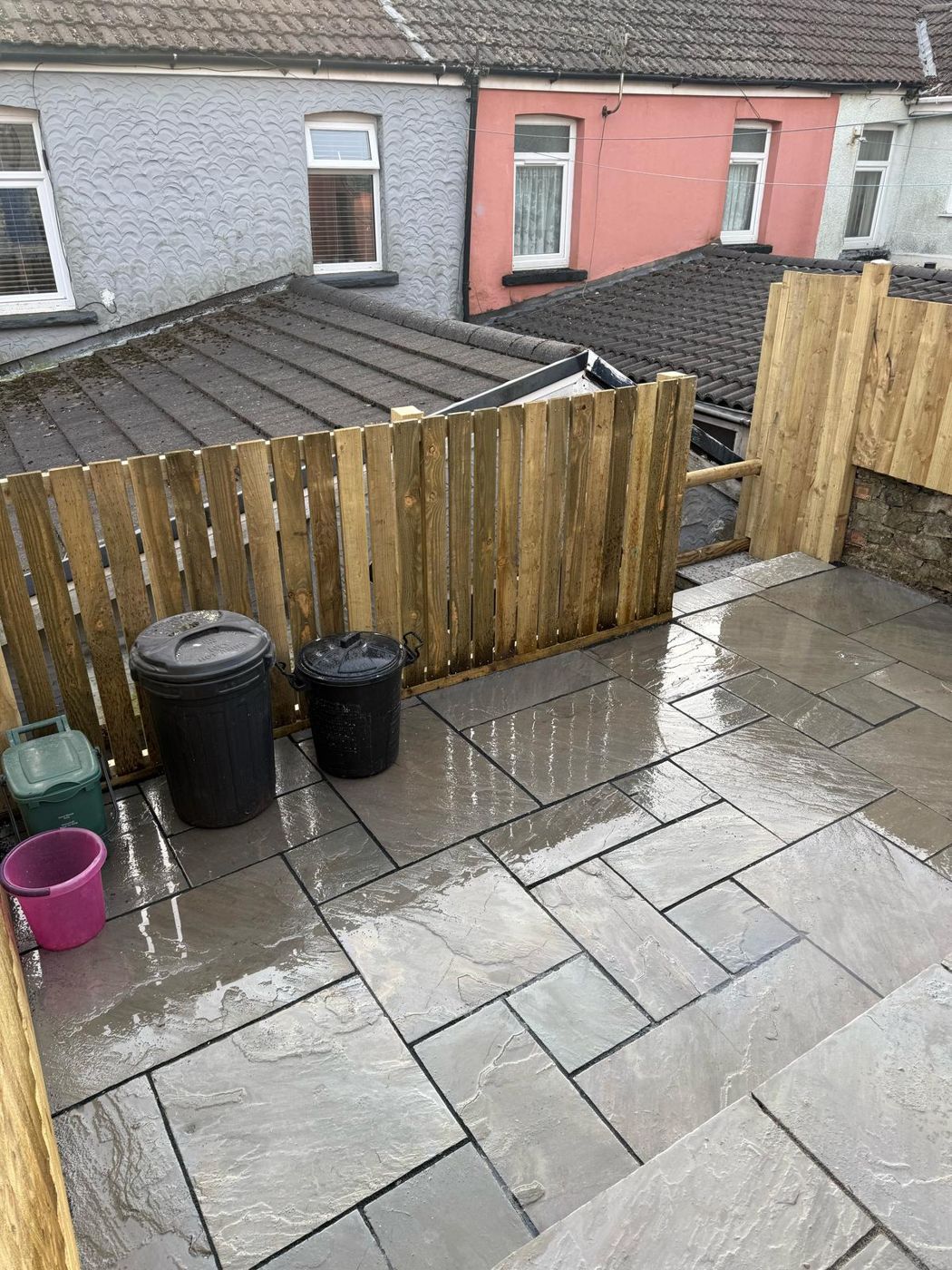
We laid grey sandstone slabs across each level, and built new steps with low walled sides to link them. Fresh timber fencing now stands above the stone boundary walls. Looking down from the top step, the levels drop away towards the terraced rooftops below.
Working with the levels, not against them
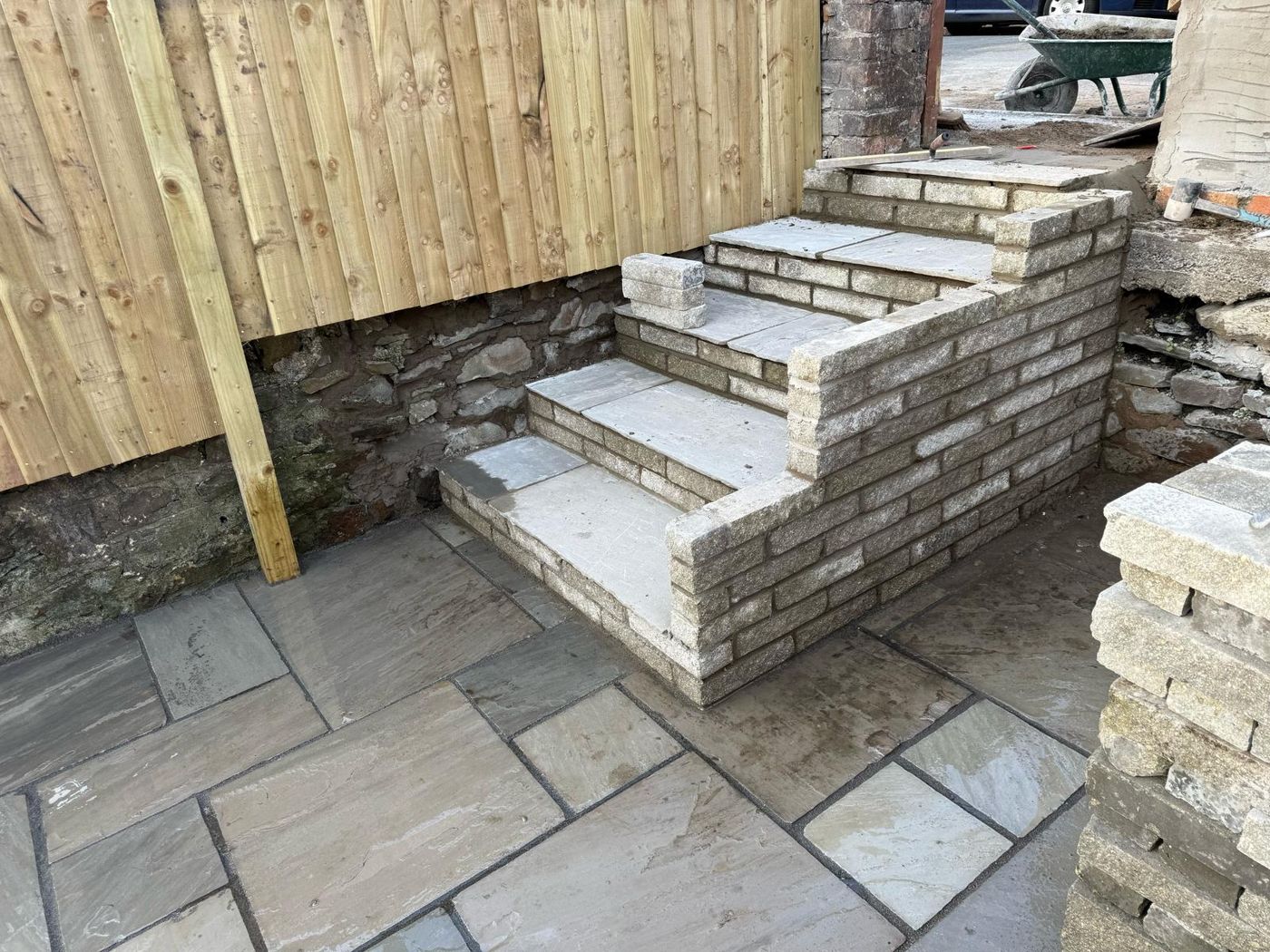
On a stepped garden like this there is no single flat patio to lay. Each level is set out and dug to its own height, and the steps are built to join them at a comfortable rise. The steps here have slab treads with a band of pale walling stone under each nosing, and short walls either side so the edges are tidy and nobody steps off the side.
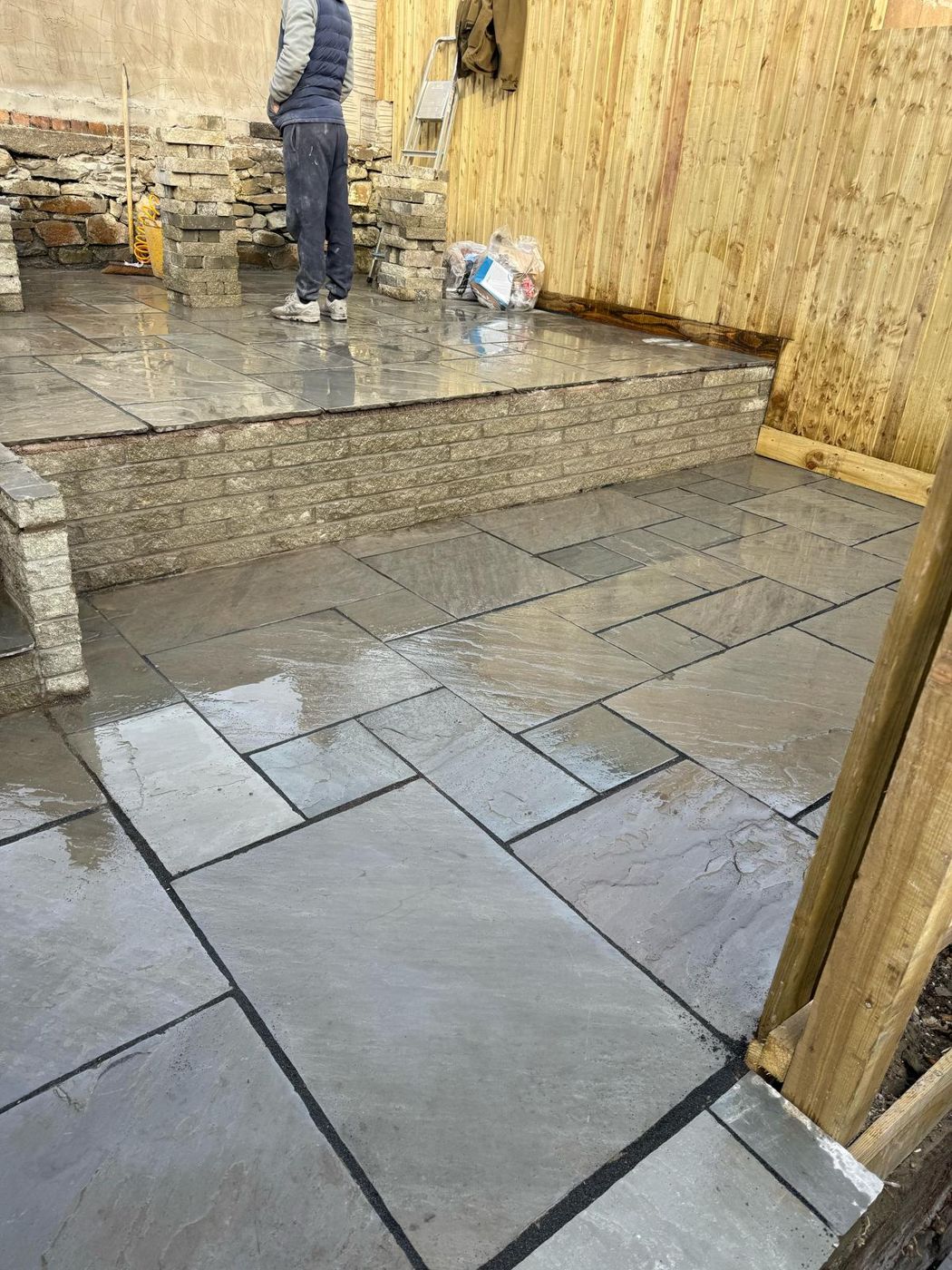
Between the upper patio levels, the drop is held by a retaining wall built from the same pale split-face walling, so the edge of each level is a clean stone face rather than a bank of soil. At the very top, the steps climb to the back of the garden where it meets the lane, and in the later photos pillars of the same walling are going up at that entrance.
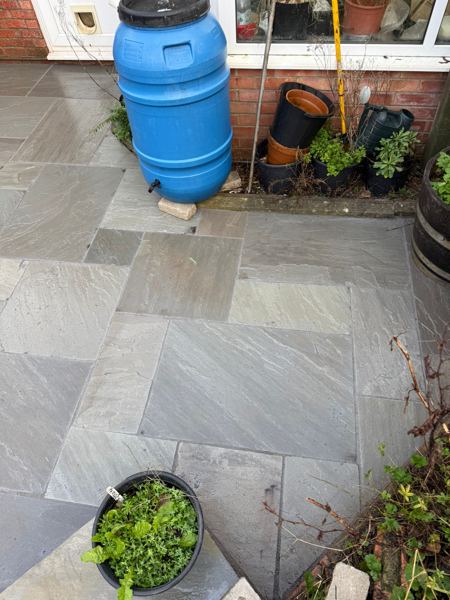
The slabs are a grey sandstone with light and dark veining, laid in mixed sizes and pointed with dark joints. Several photos were taken after rain, and show how the veining comes through when the stone is wet.
How the patio went in
The work followed the same stages we use on most patios we build:
- a visit to talk through the layout and the paving pattern;
- digging out and levelling each area;
- laying and compacting a hardcore base;
- setting the falls so rain drains away from the house and off each level;
- laying the slabs in the chosen pattern, then jointing and a full clean up.
Terrace gardens in the Rhondda
Old stone boundary walls are common in valley gardens and are worth keeping where they are sound. Here, new timber fencing on posts stands above them for extra height and privacy, while the stone stays as the base. If your garden has similar slopes, our landscaping in Tonypandy and landscaping in Pontypridd pages cover the ground we see across this part of the valley.
For more on the materials and the work, see our patio slabbing and paving page and our fencing and gates page.
Questions About This Job
Can a steep terrace garden be paved?
Usually, yes. Rather than trying to make it flat, we split it into levels and join them with steps. Where the ground changes height a lot, retaining walls may be needed to hold each level.
Why build walls at the sides of garden steps?
Walled sides hold the soil or paving either side in place, give a clean finished edge and make the steps feel safer to use, especially when they are wet.
Do you work in the Rhondda?
Yes. We cover Porth and the towns around it as well as the rest of South Wales. Get in touch for a free quote.