
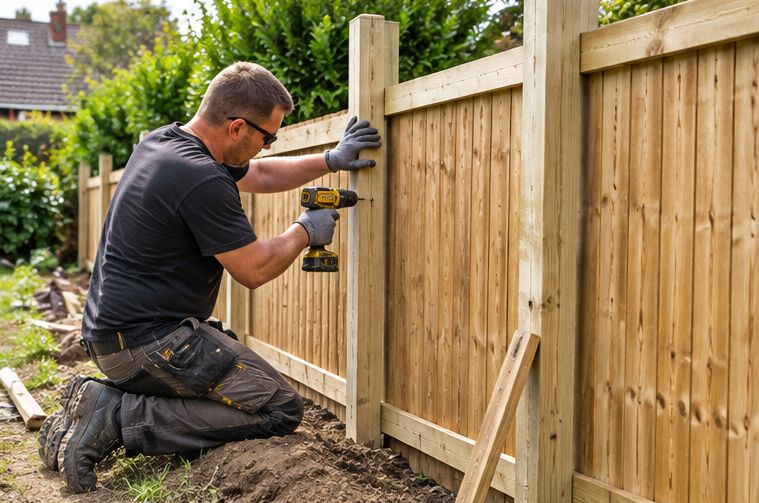
Garden gates tend to be chosen last and fitted in a hurry, which is why so many of them drag on the path, drop on their hinges or refuse to latch by their second winter. A gate is a moving part hanging off one side, and it asks far more of its post and fixings than a fence panel ever does.
This guide covers the decisions that make the difference: what the gate is for, how wide it should be, which style suits your fence, and the fitting details that keep it working. If you are also replacing the fence, our guide to close board, panel or slatted fencing will help you match the two.
Decide what the gate has to do
Start with how you will use it every day. A side gate that the bins go through each week has different needs from a pretty front gate or a pair of wide gates on to a drive. Think about:
- What passes through it: wheelie bins, a lawnmower, a wheelbarrow, bikes, a pushchair or a wheelchair.
- Security: whether it guards the back garden from the street and needs to lock.
- Privacy: whether people should be able to see through it.
- Pets and children: whether it must close itself, and whether gaps underneath or between boards need to be small.
- Looks: whether it should match the fence, the house or a wall on either side.
Getting the width right
Measure the things that will go through it, not just the gap you have. A wheelie bin and a person walking beside it need more room than most people expect, and a ride-on mower or a wide wheelbarrow needs more again. A gate that is slightly wider than you think you need is rarely a regret; one that is too narrow is a daily nuisance.
Very wide openings are usually better served by a pair of gates than a single leaf, because a long single gate puts a lot of leverage on its hinge post and tends to sag. For driveways, a pair of gates, or a gate that opens inwards onto your own land, is the usual answer. Gates next to a road or pavement should not swing out over it, and there can be height limits by a road, so check with your local council if you are unsure.
Timber gate styles
Most garden gates are timber, and the main styles are:
- Ledged and braced: vertical boards on horizontal ledges, with diagonal braces between them. The brace must run upwards from the bottom of the hinge side towards the latch side, so it props the gate up rather than letting it drop.
- Framed and braced: the same idea with a full frame around the boards. Stiffer and better for taller or wider gates.
- Close board or featheredge gates: built to match a close board fence, giving full privacy.
- Picket and palisade: lower, open gates for front gardens and cottage-style boundaries.
- Slatted gates: horizontal boards on a frame, to match a modern slatted fence.
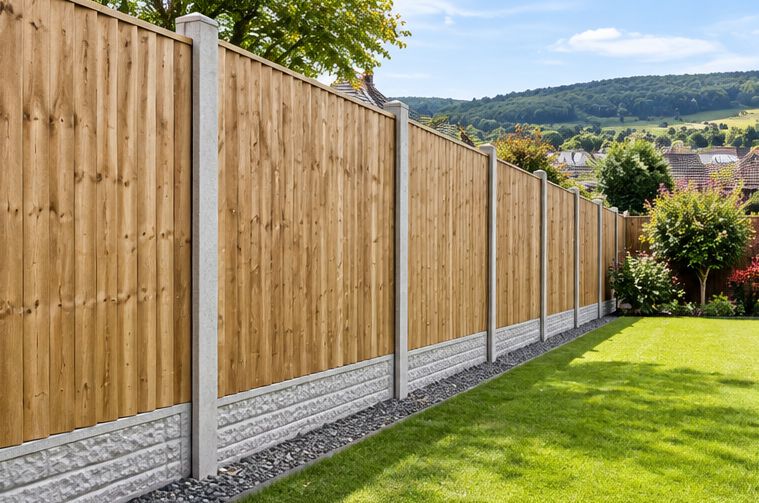
Metal gates and other materials
Metal gates, usually steel with a galvanised or powder-coated finish, suit brick piers and walls, older properties and places where you want to see through. They do not warp, but they need the right hinges and a finish that resists rust, especially near the sea. A solid metal-framed gate with timber infill is a halfway option that combines privacy with a stiffer frame.
Where the gate hangs between brick piers, the hinges fix into the masonry rather than a post. If the piers are cracked or leaning, they need attention first, which is where our brickwork and garden walls work comes in.
Posts, hinges and latches
The hinge post carries the whole weight of the gate, and leverage multiplies that load at the top hinge. That is why a gate post should be heavier than a fence post and set deeper in a good concrete footing. Wider or heavier gates call for a larger section post again. A post that leans even slightly will make the gate drop and bind.
Hardware matters too. Heavy T-hinges or strap hinges spread the load along the gate; flimsy butt hinges are only suitable for very light gates. Use galvanised or black-coated fittings, which stand up to the weather. For latches, a thumb latch or a ring latch is simple and reliable, a lockable latch or padlock hasp adds security, and a drop bolt on the second leaf holds a pair of gates in place. A gate stop, so the gate closes against something rather than swinging past the post, takes strain off the hinges.
Sloping paths and wet winters
Many South Wales gardens slope, and a gate hung over rising ground will scrape as it opens. The usual answers are to leave more clearance at the bottom, hang the gate so it opens towards the downhill side, or level a small landing area where it swings. On the steep terraces and side paths around Pontypool and Tonypandy, getting that clearance right matters more than on a flat plot.
Timber swells in damp weather and shrinks in dry spells. A gate that fits perfectly on a summer afternoon can jam in January, so we leave a sensible gap on the latch side and underneath. Treating the gate regularly, including the top and bottom edges and the end grain, keeps that movement down and helps it last. Our article on making a garden fence last longer applies just as much to gates.
Fitting it as part of the boundary
A gate works best when it is planned with the fence and the ground around it. The path underneath should be firm and level enough not to catch the bottom of the gate, which may mean a few slabs or a small area of paving from our patio and paving work. On a new fence, the gate posts go in first so everything else lines up with them.
If your current gate drags, drops or will not shut, it can often be rehung, re-braced or given new hinges rather than replaced. Tony and the team can look at it and give you free advice. See our fencing and gates page, or ask for a free quote.
Talk to T J Landscapes about your garden
Free quotes and honest advice across South Wales.
Questions People Ask
Why does my garden gate keep dropping?
Usually because the hinge post is leaning or loose, the hinges are too light, or the brace is fitted the wrong way. Fixing the post and fitting heavier hinges often cures it.
How wide should a side gate be?
Wide enough for the widest thing you will regularly take through it, with room to walk beside it. Measure your bins, mower and wheelbarrow before deciding.
Should a garden gate open inwards or outwards?
Most garden gates open inwards into the property, and gates beside a road or pavement should not open out over it. On sloping ground, opening towards the downhill side avoids scraping.
Can you make a gate to match my existing fence?
Usually, yes. Close board, slatted and panel-style gates can all be built to match the fence, and a stain can help new timber sit alongside older boards.
Can a gate be fitted to a brick wall?
Yes, hinges can be fixed into sound brick piers or a timber post can be bolted to the wall. If the brickwork is weak, it needs repairing first so the gate has something solid to hang from.