
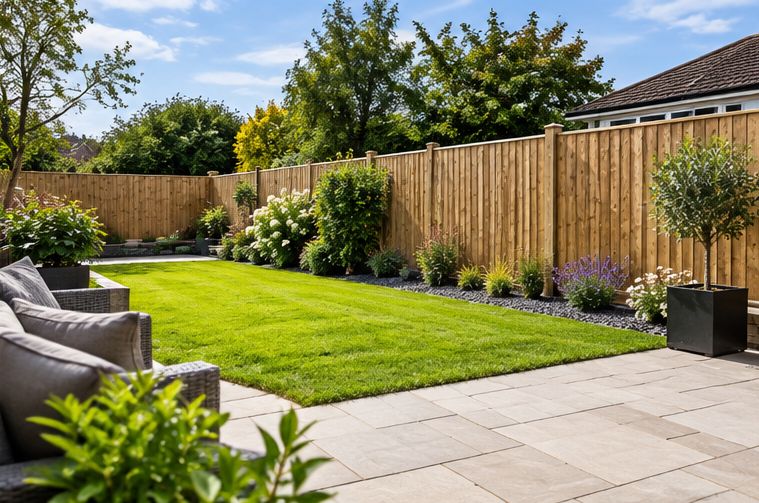
Most people start thinking about their fence when something goes wrong: a panel on the lawn after a stormy night, a section leaning towards next door, or a board that has split and let the dog see the street. The question is whether to mend the bit that has failed or start again.
There is no single answer, but there is a sensible way to work it out. This guide walks through the checks we make on a site visit, the repairs that are worth doing, and the signs that a fence has reached the end of its useful life.
Walk the whole fence first
It is tempting to look only at the part that has failed. Instead, walk the full length of the fence and look at every post and panel, because the damaged section is often just the first to go. A simple check along the way tells you a great deal:
- Push each post firmly at shoulder height. A sound post barely moves; a failing one rocks or leans.
- Look at the base of each timber post and press it with a screwdriver. Soft, crumbly or spongy wood means rot.
- Check the rails on close board fences, especially where they meet the posts, for cracks and loose joints.
- Look along the top of the fence from one end. A straight line is a good sign; a wavy line means posts are moving.
- Note any panels that are split, bowed, missing slats or coming out of their frames.
- Check the gravel boards and whether soil has built up against the timber.
When a repair makes sense
A repair is usually worth doing when the posts are sound and the problem is limited to a few boards, a panel or a rail. Typical examples include:
- A damaged panel in good posts: it can usually be swapped for a new one of a similar style, especially in slotted concrete posts.
- Split or missing boards on close board: individual boards can be replaced and nailed to the existing rails.
- A broken arris rail: metal repair brackets or a new rail can put it right without taking the whole bay apart.
- One or two rotten timber posts in an otherwise sound fence: a concrete repair spur bolted alongside, or a replacement post, can buy the fence many more years.
- A rotten or missing gravel board: a new board lifts the panel clear of the soil again.
When replacement is the better value
There comes a point where repairs cost more over time than a new fence. We usually suggest replacing a fence, or at least a full run of it, when:
- Several posts along the line are rotten or loose, not just one or two.
- The panels are thin, brittle and grey right through, so new fixings will not hold.
- The fence has been repaired so often that it is a patchwork of different styles and heights.
- The original posts were set too shallow and the whole run leans.
- You want a different style, height or a better grade of fence than the one you have.
The mismatch problem
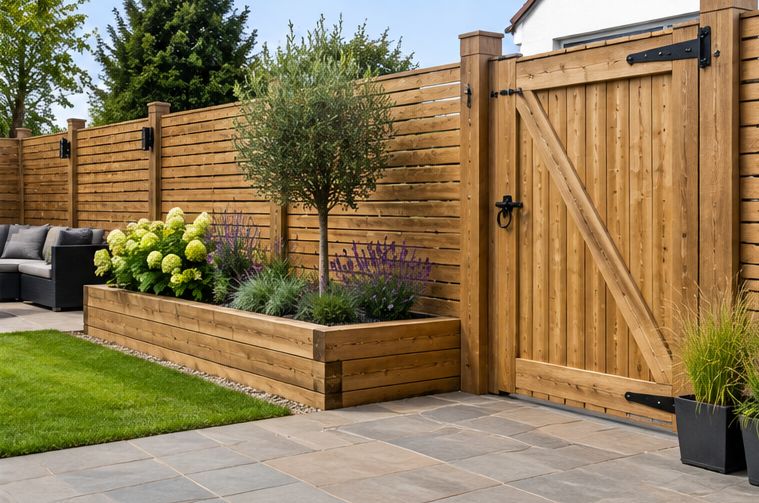
One issue people do not expect is how a new panel looks next to an old one. Fresh timber is a different colour, and panel styles change over the years, so an exact match is not always possible. A stain can help blend them in, and on a long run it can make sense to replace a complete side of the garden so it looks consistent, while mending the less visible stretches.
Storm damage: fix the cause, not only the panel
After high winds it is natural to want the garden back to normal quickly, and putting a panel back in the same slot seems the easy fix. If the posts either side have loosened, though, the next gale will usually take the same panel again. It is worth checking why that section failed. On exposed plots, and in the upper valleys around Ebbw Vale or Aberdare, that often means deeper footings, concrete posts or a design that lets some wind through. Our article on fences that stand up to Welsh wind explains the options.
If a damaged fence is leaning into a neighbour’s garden or over a footpath, it is sensible to prop it or take the loose panels down until it can be put right.
Things beyond the fence itself
Sometimes the fence is not really the problem. A retaining wall that is bulging or cracking underneath will push a fence out of line however well it is built, and a new fence on a failing wall is money wasted. In those gardens we look at the wall first, and our brickwork and garden walls work often goes alongside fencing on sloping valley plots.
Overgrown hedges, ivy and climbers are another cause. They add weight, hold damp against the timber and can lever panels out of their posts. Cutting them back, or clearing a strip along the boundary, may be part of the job, which is where our garden clearance service comes in.
Talk to your neighbour
Before repairing or replacing a boundary, it is worth checking whose fence it is. Deeds and plans sometimes show this, but not always, and many fences are shared in practice. A friendly conversation before work starts avoids disagreements later, especially if the new fence will be a different height or style. For anything more complicated about boundaries, a solicitor or your local council is the right place to ask.
Whatever state your fence is in, Tony and the team can take a look and give you free advice on whether a repair or a replacement makes more sense. See our fencing and gates page, or get in touch for a free quote.
Talk to T J Landscapes about your garden
Free quotes and honest advice across South Wales.
Questions People Ask
Can one rotten post be replaced without replacing the fence?
Usually, yes. The panels either side are taken out, the old post and its concrete are removed, and a new post is set in its place. Where that is awkward, a concrete repair spur bolted to the old post is a common alternative.
Is it worth repairing an old overlap panel fence?
If the posts are sound and only one or two panels are damaged, it can be. If the panels are brittle and the posts are loose along the run, replacement is usually better value over time.
Why does my fence keep blowing down in the same place?
That spot usually takes the strongest gusts, or the posts there have loosened or rotted. Putting the panel back without dealing with the posts rarely lasts. Stronger posts, deeper footings or a more open design are the usual answers.
Can you replace the fence but keep the concrete posts?
Often, if they are straight, firm and undamaged. New panels and gravel boards can go straight into sound slotted posts, which keeps the job simpler.
How can I make the repaired fence last?
Keep soil and plants off the timber, treat it regularly and check it after storms. Our guide on making a garden fence last longer has more detail.