
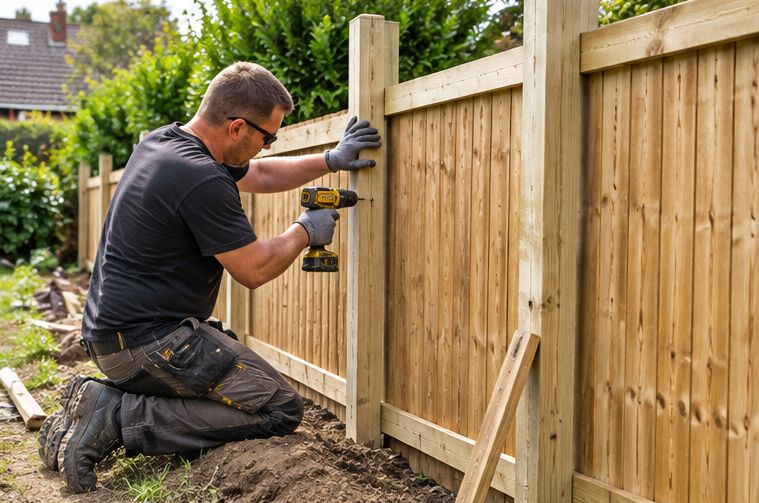
Timber fences in South Wales have a hard life. Rain arrives often and from every direction, many gardens sit on heavy clay that stays wet for months, and shady valley plots can take days to dry out after a downpour. Damp is the enemy of any timber, so most of what makes a fence last is about keeping water off it and letting it dry.
Some of the advice below is about how a fence is built, so it is worth knowing before you choose a new one. The rest is simple upkeep that any homeowner can do, and none of it takes more than an afternoon or two a year.
It starts before the first post goes in
The longest-lasting fences are designed to shed water and stay off the ground. If you are having a new fence built, these are the details worth asking about:
- Pressure-treated timber: posts, rails and boards treated in a factory under pressure, not just sprayed or dipped, with posts rated for ground contact.
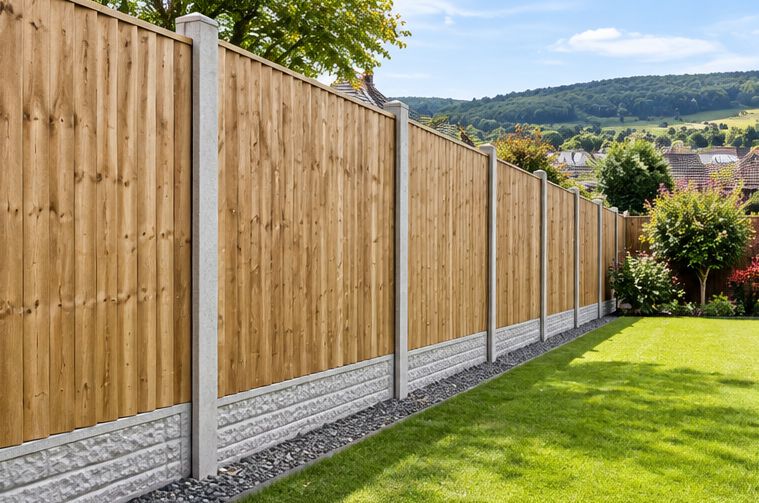
- Gravel boards: a concrete or treated timber board along the bottom, so the panel or boards never touch the soil.
- Well-set posts: concrete or timber posts at a proper depth, with the concrete shaped to shed rain.
- Caps and capping rails: post caps and a capping rail on close board keep water off the end grain, where timber soaks it up fastest.
- Rust-resistant fixings: galvanised or stainless nails and screws, which do not rust, stain or weaken in wet weather.
Keep soil, bark and plants off the timber
This is the single easiest thing you can do. Soil banked against a fence keeps the bottom permanently wet, and that is where rot begins. When you are planting or topping up a border, keep a gap between the soil and the gravel board, and never let bark mulch or compost pile up against the panels.
Climbers are lovely on a fence, but they need managing. Ivy in particular works into joints, holds damp against the boards and adds real weight. A support of wires or trellis fixed slightly off the fence lets air circulate behind the plants. Shrubs and hedges pushing against panels should be cut back each year; our tree surgery and hedge care team can take that on if the growth has got away from you.
Treat the timber regularly
Even pressure-treated timber benefits from a coat of fence stain or treatment every few years. It adds a layer of water protection, slows the greying and splitting caused by sun and rain, and gives the fence a fresh colour. Softwood panels that were only dip-treated at the factory need it more often.
A few tips for getting the most from a treatment:
- Choose a dry spell, with a day or two of dry weather before and after, so the timber is dry enough to take it in.
- Brush off dirt, moss and cobwebs first. A stiff brush is usually enough; a pressure washer at full strength can raise the grain and force water into the wood.
- Work the treatment into joints, end grain and the tops of boards, where water sits longest.
- Treat both sides where you can, after agreeing it with your neighbour on a shared boundary.
- A simple test: if rain no longer beads on the surface and soaks straight in, it is time for another coat.
Check it after storms and each spring
A quick walk along the fence line twice a year, and after any big blow, catches small problems before they spread. Push the posts to see if any have loosened, look for split boards and popped nails, and check that panels are still seated in their slots. A loose post left over winter will often take the panels either side with it.
Small fixes are straightforward: re-nail a loose board with a galvanised nail, replace a cracked gravel board, or add a repair bracket to a split rail. If you find more than that, our guide to fence repair or replacement will help you decide what to do.
Think about drainage along the boundary
In some gardens water runs down the slope and collects along the bottom fence, especially on hillside plots and in gardens on heavy clay. A fence that stands in wet ground every winter will not last, however well it was built. Lowering the soil level along the boundary, adding a gravel strip, or dealing with the wider drainage can make a real difference. Our article on how to stop a garden waterlogging covers the options, and we often include this when we landscape a garden.
Coastal and exposed gardens
On the coast, salt in the air speeds up corrosion of ordinary steel fixings, so galvanised or stainless steel is worth the extra. Around Penarth and Port Talbot, a fence facing the sea will also dry out and grey faster in sun and wind, so it tends to need treating more often than a sheltered one inland.
On high, exposed ground the challenge is the wind rather than the salt. Our guide to the fences that cope best with Welsh wind explains how post choice and design help there.
Know when to stop patching
Good upkeep adds years to a fence, but it cannot bring back timber that has rotted through. If posts are soft at the base along the whole run, the kindest thing to your budget is often to replace them once, properly, rather than keep propping them up. Where that point is depends on the fence, so it is worth a second opinion.
Tony and the team are always happy to look over a fence and give free advice. Find out what we do on our fencing services page, or ask for a free quote.
Talk to T J Landscapes about your garden
Free quotes and honest advice across South Wales.
Questions People Ask
How often should I treat my fence?
It depends on the product and the exposure, but many fences benefit from a coat every two to three years, and more often on a sunny, seaward or very wet boundary. When water stops beading on the surface, it is time.
Does a new pressure-treated fence need treating straight away?
Not usually. Many makers suggest leaving new treated timber for a while to dry out and weather before applying a stain. Check the advice for the product you are using.
Should I paint or stain a fence?
A fence stain or treatment made for rough-sawn timber is usually the better choice. It soaks in rather than forming a film that can trap water and peel.
Is it safe to pressure wash a fence?
Gently, on a low setting and at a distance, it can lift dirt. At full power it can damage soft timber and drive water into it, so a stiff brush is often the safer option.
What shortens a fence’s life most?
Standing in wet soil. Rot at the base of posts and the bottom of panels is the most common reason fences fail early, which is why gravel boards and good drainage matter so much.