
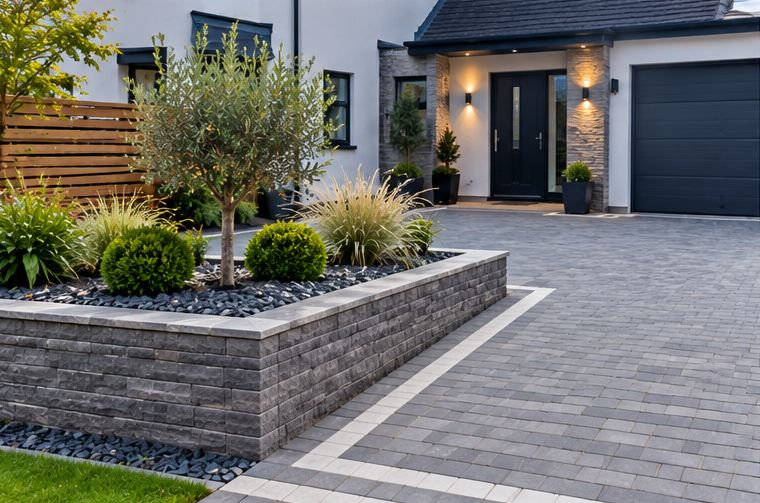
Merthyr Tydfil is a town of weather. Sitting at the head of the Taff valley, with the Brecon Beacons rising just to the north, it catches cloud that has already dropped plenty of rain on the way up the valley. Lawns stay soft for months, paths grow a green film and a patio that looked fine in June can be a skating rink by November.
None of that means a good garden is out of reach. It means the design has to be honest about the conditions. This guide walks through how we think about a Merthyr Tydfil garden from the first sketch: where people will actually walk and sit in a wet year, which surfaces and plants cope, and how to keep the whole thing looking cared for without constant work.
Start with a wet-day walk, not a sunny one
Most people plan a garden on a bright afternoon. In Merthyr Tydfil it is more useful to go out in a downpour, or straight after one, and look. Where does water run off the path? Which corner stays shiny longest? Is there a patch below the neighbour’s garden that never quite dries?
Make a rough plan of the plot and mark those spots. They tell you where not to put a seating area, where a border of moisture-loving plants would be happy, and where some form of drainage is needed before anything else is built. When Tony and the team come out to quote, this is exactly what we look for, and your notes save time.
Put the seating where it dries first
Every garden has a part that dries quickest after rain: usually the highest ground, the sunniest wall or the spot the wind reaches. That is where a patio or deck earns its keep, because you will be able to use it on more days of the year. A seat tucked into a damp, shaded corner may look inviting on paper, but in this climate it is often left to the moss.
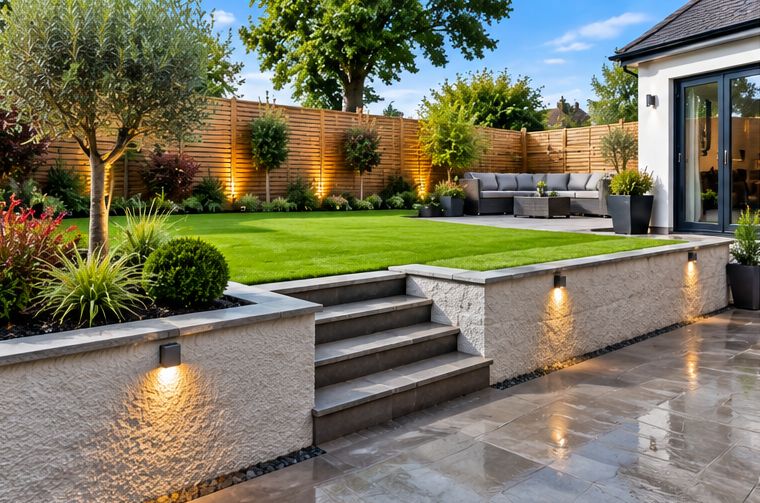
On the steeper plots behind many of the town’s terraces, the driest ground is often the top of the garden, with a view back over the rooftops. Getting up there may mean steps or a series of levels; our guide to terracing a steep Merthyr Tydfil garden explains how that is done.
Surfaces that shed water and keep their grip
Hard surfaces take the most punishment from constant rain, so choose them with care. The principles we follow are simple:
- Texture over polish. Riven stone, textured porcelain and block paving keep far more grip when wet than smooth, honed finishes.
- A fall on everything. Patios and paths should slope gently away from the house so rain runs off instead of sitting in a film.
- Somewhere for the water to go. A gravel strip, border or channel at the low edge stops run-off collecting against a wall or lawn.
- Permeable where it makes sense. Gravel paths and permeable paving let rain soak through rather than adding to the flow downhill.
Our local guide on paving that stays safe in wet Merthyr Tydfil winters goes into materials in more detail, and the patio and paving page shows the range we lay.
Planting that enjoys the rain
The good news about a wet upland garden is that a lot of plants love it. Ferns, hostas, astilbes, rodgersia, hardy geraniums and many grasses are happy with damp roots, and native shrubs such as dogwood and willow cope with heavy, cold ground. In a low corner where water gathers, a rain garden planted with these can turn a problem into the most interesting part of the plot.
What struggles in Merthyr Tydfil are Mediterranean plants that need sharp drainage: lavender, rosemary and many silver-leaved herbs. If you want them, grow them in raised beds filled with free-draining soil and grit, or in pots you can move under cover. Bark mulch on bare borders helps too, stopping heavy rain from splashing soil onto paths and keeping weeds down.
Shelter from the valley wind
Rain in the valleys rarely arrives on its own. Wind pushes it sideways, dries nothing and tests every fence and shrub. A little shelter on the windward side makes a seating area far more pleasant. A hedge, a slatted screen or a row of tough shrubs slows the wind down better than a solid barrier, which can create swirling gusts on the sheltered side.
If your boundaries need replacing, our article on strong fencing for windy Merthyr Tydfil gardens covers posts, panels and designs that last up here. You can also see our fencing work in Merthyr Tydfil.
Keeping the upkeep realistic
A wet climate means fast growth. Grass, moss and weeds all get going early and keep going late, so a design that needs constant mowing, edging and weeding will soon feel like a chore. Think about how much time you really want to spend out there.
Smaller, well-drained lawns are easier than large ones on heavy ground. Raised beds keep growing areas tidy and warm up sooner in spring. Gravel or bark in awkward shaded strips can replace grass that would only ever be mossy. Our home guide on planning a low-maintenance garden has more ideas that suit Merthyr Tydfil well.
Bringing the design together
Put these ideas together and a typical plan might look like this: a textured stone patio on the driest, sunniest ground with a slight fall to a gravel edge; a compact lawn on improved, free-draining soil; a planted rain garden in the damp corner; and a slatted screen or hedge to take the edge off the wind. Underneath it all, drainage deals with whatever the ground cannot absorb.
Each garden is different, of course. The shape of the plot, the slope, the soil and how you want to use it all change the answer. If the ground is already waterlogged, read our guide to garden drainage solutions in Merthyr Tydfil first. For everything else, our landscaping and garden design service covers the whole plan, and there is more about our local work on the Merthyr Tydfil landscaping page. Ask for a free quote and we will come and walk the garden with you.
Talk to T J Landscapes about your garden
Free quotes and honest advice across South Wales.
Questions People Ask
Is it worth having a lawn in such a wet part of Wales?
Yes, as long as the ground underneath drains. A smaller lawn on well-prepared soil will stay usable far more often than a large one laid straight onto heavy clay. Where grass would always be shaded and damp, we often suggest gravel, bark or planting instead.
Which plants do well in a Merthyr Tydfil garden?
Plants that like cool, moist conditions do well: ferns, hostas, astilbes, hardy geraniums, many grasses, dogwood and willow. Plants that need dry, sharp drainage are better in raised beds or pots.
Should I choose decking or paving in a wet climate?
Both can work. Paving with a textured surface and a good fall is usually the lower-maintenance option. Decking suits sloping ground and needs airflow and grooved or anti-slip boards to stay safe. We talk through both at the quote.
Can you design the garden and build it too?
Yes. Tony and the team plan the layout with you and then carry out the work, from drainage and levels to paving, walls, fencing, turf and planting.
How much does a garden redesign cost?
It depends on the size of the garden, the slope, access, drainage needs, the materials you choose and how much waste has to go. We explain all of it in a free, no-obligation quote.