
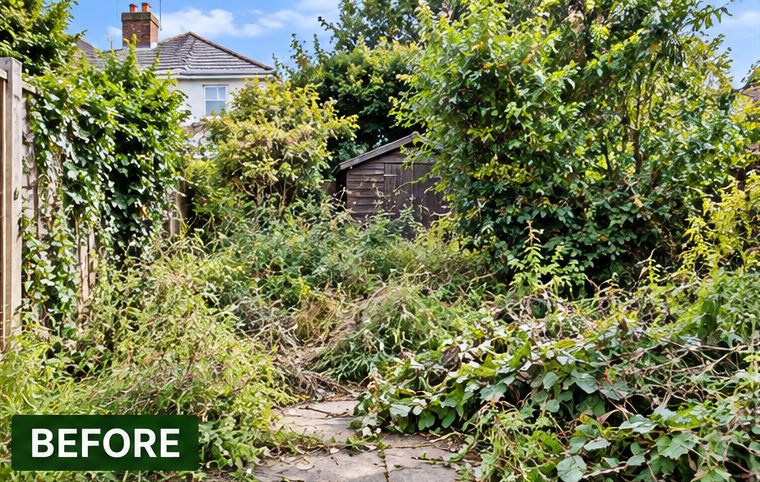
A clearance can fill a van several times over, and most people are simply glad to see it go. But where it goes matters, both for the environment and for you. If waste taken from your property is dumped in a lay-by or on a mountain road, the trail can lead back to your address.
This guide explains what normally happens to garden waste in Wales, what the law expects of householders, how to check anyone you pay to take it away, and how to keep the amount down in the first place.
What happens to green waste
Clean green waste, meaning grass, leaves, prunings, brambles and branches, is one of the easiest materials to recycle. Most of it goes to composting sites, where it is shredded and built into large heaps that heat up as they break down. After some weeks of turning and screening, it becomes a soil improver or mulch that goes back onto farmland, landscaping schemes and gardens.
Larger timber may be chipped separately for biomass fuel or woodchip products. Soil, rubble and broken paving are a different stream again, and are often crushed and reused as hardcore or fill.
Wales has one of the highest household recycling rates in the world, and garden waste is a large part of that. Every load that goes into a skip mixed up with rubbish or plastic is a load that cannot be composted.
Your duty of care as a householder
In England and Wales, householders have a legal duty of care for the waste their household produces. In plain terms, you must take reasonable steps to make sure you only hand it to someone authorised to take it. That applies whether it is a bag of hedge cuttings or a full clearance.
If you pay someone who is not registered and your waste is later found fly-tipped, you can be held responsible, as well as the person who dumped it. The council can investigate, and local authorities take fly-tipping seriously. We are landscapers, not lawyers, so for the detail check the guidance on the Welsh Government or your council’s website.
How to check a waste carrier in Wales
Anyone who transports other people’s waste as part of their business needs to be registered as a waste carrier. In Wales the public register is kept by Natural Resources Wales, and it is free to search online. It takes a couple of minutes, and it is worth doing for anyone who offers to take waste away, including us.
- Ask for the business name and its waste carrier registration number before the work starts.
- Search the Natural Resources Wales public register and check the name, number and address match.
- Ask where the waste is going, and get a receipt or invoice that describes what was taken.
- Be wary of anyone who knocks on the door offering to take waste away, will only take cash, cannot give an address, or quotes far below everyone else.
What about the council?
Councils across South Wales offer routes for garden waste, though the details differ between authorities:
- Kerbside garden waste collections. Many councils collect garden waste in a separate bin or bags, sometimes as a paid subscription and often seasonally. Useful for regular trimmings, but not for a whole clearance.
- Household waste recycling centres. Good for car loads. Some councils ask you to book a slot, and some need a permit before you can bring a van or trailer, so check the rules first.
- Bulky waste collections. For old garden furniture and other large items, most councils run a bookable collection.
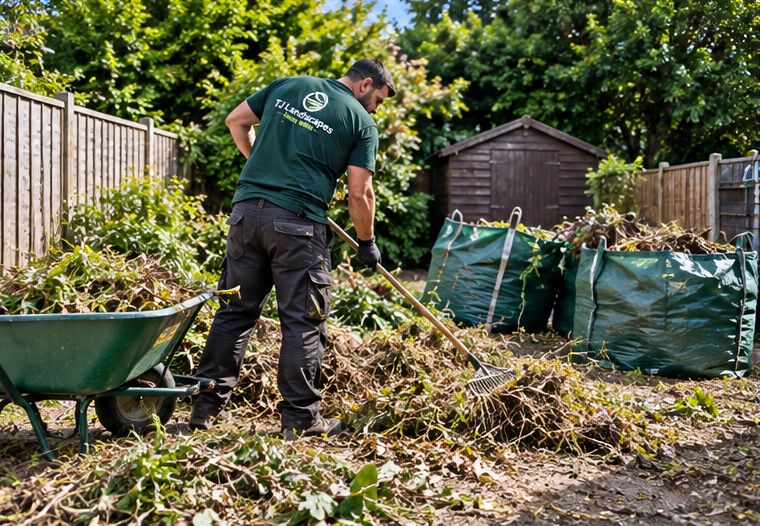
For a full clearance the volume usually makes these impractical, which is why the green waste is taken away as part of our garden clearance service.
Why burning it is rarely a good idea
A bonfire can look like the quick answer, but wet green waste smoulders rather than burns, and in the narrow valleys and terraced streets of South Wales smoke drifts straight into neighbours’ windows and washing. Councils can act where smoke causes a regular nuisance.
Never burn plastics, treated timber, old paint or rubbish, and remember that a pile of branches left for a few weeks can become a home for hedgehogs and other wildlife. Always turn a heap over before lighting it.
Waste that needs a different route
Some materials that turn up in gardens cannot go to a composting site at all. Japanese knotweed is controlled waste because tiny fragments of root can start new plants, so it has to be handled under a treatment plan. Asbestos, chemicals, fuel, gas bottles and electrical items all have their own routes. Our guide to what can and cannot go in a garden clearance lists the common ones.
Keeping waste down: reuse on site
The greenest load is the one that never leaves the garden. Depending on the job, a fair amount can be used again where it is:
- Chippings. Clean branches can be chipped and spread as a mulch on borders and under hedges, where they suppress weeds and hold in moisture.
- A compost heap or bin. Soft green material, grass and leaves rot down in a year or so. Keep woody stems, perennial weed roots and anything diseased out of it.
- Log and brash piles. A small stack of logs in a shady corner is good for beetles, frogs and fungi, and takes up little room.
- Soil and stone. Topsoil can often be moved to raised beds or low spots, and clean stone reused in paths or as sub-base for new paving.
We are happy to talk this through when we quote, as reusing material on site can reduce the number of loads to be taken away.
Planning a clearance?
If you want to know how a clearance runs from start to finish, read what happens during a garden clearance. We work from Pontypool across Torfaen, Blaenau Gwent, Merthyr Tydfil, Newport, Cardiff and beyond. Ask for a free quote and tell us what needs clearing.
Talk to T J Landscapes about your garden
Free quotes and honest advice across South Wales.
Questions People Ask
How do I check if someone is a registered waste carrier in Wales?
Ask for their registration number, then search the public register on the Natural Resources Wales website. Check that the name, number and address match the person or business you are dealing with.
Can I be fined if my garden waste is fly-tipped?
You can be held responsible if you gave it to someone who was not authorised to take it. That is why it is worth checking the register and keeping a receipt that describes the waste.
Where does garden waste end up?
Clean green waste usually goes to a composting site, where it is turned into soil improver or mulch. Soil and rubble go to a separate stream and are often crushed and reused.
Can I put garden waste in my household bin?
It is better not to. Most councils in South Wales offer a separate garden waste collection or accept it at recycling centres, where it can be composted rather than sent for disposal.
Can you leave the chippings for me?
Often, yes. Clean branches from ordinary garden trees and shrubs make a useful mulch, and leaving them on site cuts down what has to be taken away.