
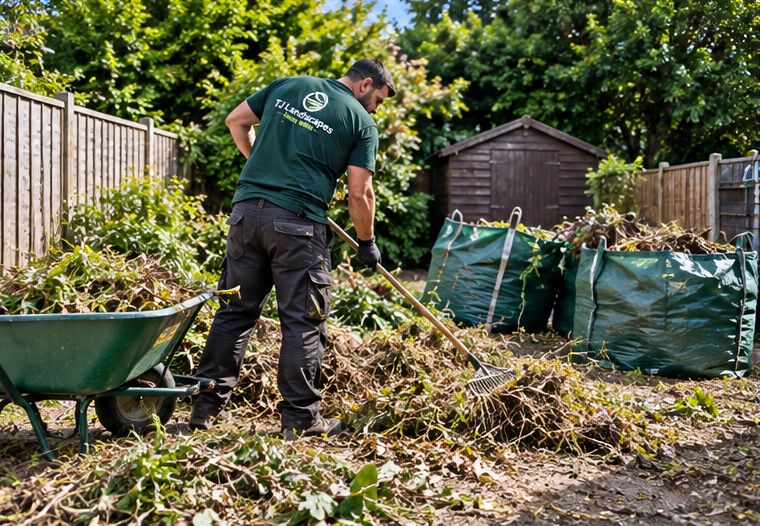
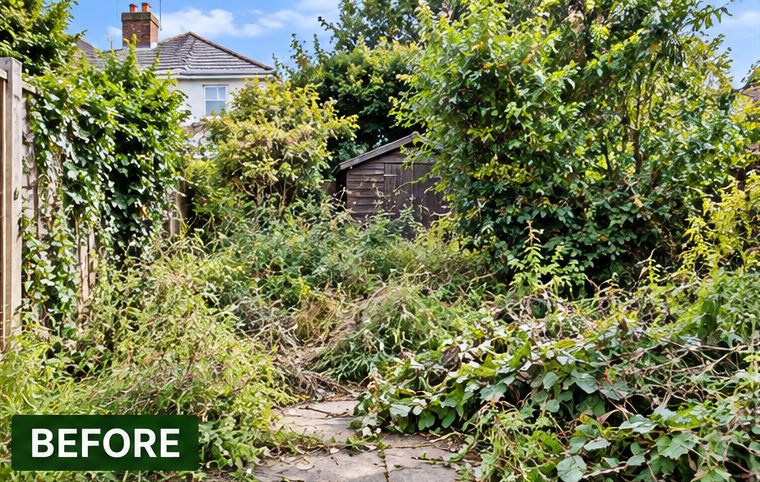
Gardens get away from people for all kinds of reasons: illness, a new baby, long working hours, or simply a couple of wet summers when nobody fancied going out there. In South Wales the combination of mild winters and plenty of rain means growth rarely stops for long, and a garden left for two or three years can look as though it has been abandoned for ten.
The good news is that most of what is under there can be recovered. This guide sets out the order we would tackle it in, whether you are doing it yourself or asking us to take on the heavy part through our garden clearance service.
Start by working out what is worth saving
Before anything is cut, walk round and look properly. Under the brambles there may be a decent shrub, an established rose, a fruit tree, a stone path or a set of steps that nobody remembers. Once the strimmer starts, these are easy to lose.
Mark anything you want to keep with a bit of tape or a cane. If you are not sure what a plant is, leave it for now: it can always come out later, but it cannot go back in. Late spring and summer are the easiest times to identify plants in leaf, even if autumn and winter are easier for the heavy cutting.
Brambles, nettles and ivy
These are the plants that make a garden feel impossible, and they all need more than a cut to keep them down.
- Brambles root wherever their arching stems touch the ground, so a patch spreads outwards every year. Cut the stems low, then dig out the woody crowns and as much root as you can. Anything left will send up new shoots within weeks.
- Nettles spread by tough yellow roots just under the surface. Fork them out rather than just cutting them, and wear gloves and long sleeves.
- Ivy on fences and walls adds a lot of weight and holds moisture against the structure. Cut through the stems at the base and let the top growth die back before pulling it off, as fresh ivy can take mortar or fence stain with it.
Hedges that have become trees
A hedge that has not been cut for a few years can be twice its intended height and far wider, shading the garden and the house. Most common hedging, such as privet, hawthorn, beech and laurel, will regrow from hard pruning, but it is kinder to the plant to reduce it over two seasons: one side and the top one year, the other side the next.
Leylandii is the exception. It does not regrow from old brown wood, so cutting back beyond the green leaves leaves permanent bare patches. If a conifer hedge has got too big, it is often better to reduce the height and accept the width, or replace it altogether.
Heavy hedge cutting is best planned outside the main bird nesting season, which runs roughly from March to August. Active nests are protected by law. Our tree surgery and hedge care page covers larger hedge reductions.
Self-seeded trees and saplings
Given a few years, sycamore, ash, willow and buddleia will seed themselves into borders, along fences and in the cracks of walls and paving. Small ones pull out easily; a sapling left for five years has a trunk and a root system that can lift paving, push a garden wall out of line or crack a drain.
Anything growing hard against a wall, the house or a boundary should come out while it is still manageable. Where a young tree has established in the right place, it may be worth keeping and shaping instead. On valley terraces, check whether the tree is helping to hold a steep bank before removing it, and think about what will stop that soil moving afterwards.
Finding the lawn again
Long grass should be cut down in stages. Take the height down with a strimmer or brush cutter first, rake off the cuttings, then mow on a high setting and lower it gradually over a few weeks. Scalping it in one go leaves yellow stubble and invites moss.
Once it is short, you will see what you have. If it is mostly grass with some moss and thin patches, scarifying, feeding and overseeding in early autumn usually brings it back. If it is mostly moss, weeds and bare soil, especially in the shady, damp corners common in valley gardens, it is often quicker to strip it and lay new turf on properly prepared ground.
Borders, shrubs and structures
Overgrown shrubs such as dogwood, forsythia, philadelphus and many others can be renovated by cutting a third of the oldest stems down to the base each year for three years. It keeps the plant flowering and brings it back into shape without killing it.
Behind all the growth there is usually some repair work. Fence panels rot where ivy and brambles have held the damp against them, paths shift, and sleepers or edging boards go soft. Make a list as you clear; it is easier to plan new fencing or path repairs once you can see everything at once.
If you are not sure what can go in the waste, see what can and cannot go in a garden clearance.
Keeping it under control afterwards
Cleared soil does not stay bare for long. Weed seeds that have been lying dormant will germinate as soon as light reaches them, and root fragments of brambles and bindweed will reshoot. The single most useful thing you can do is cover the ground quickly.
- Lay turf or sow grass on the areas that are going to be lawn.
- Plant borders with fewer, tougher plants and mulch the soil between them with bark or chippings.
- Put in firm edges between lawn and border so grass does not creep in.
- Keep a regular short session in the diary. Twenty minutes a week in the growing season will do more than a big weekend twice a year.
If the garden got away from you because it was too much work, this is a good point to change the layout. Our guide to a low-maintenance garden covers the choices, and our landscaping and garden design service can take it from a cleared plot to a finished garden.
When to call in help
Plenty of people clear a small garden themselves over a few weekends. It is worth getting help when there is a lot of waste to shift, the growth is dense and thorny, there are trees or tall hedges involved, or access means every load has to be carried up or down steps. We cover gardens across South Wales from our base in Pontypool, including the steep terraces of places like Abertillery, and green waste is taken away as part of the job. Get in touch for a free quote.
Talk to T J Landscapes about your garden
Free quotes and honest advice across South Wales.
Questions People Ask
What is the best time of year to clear an overgrown garden?
Autumn and winter are usually easiest for heavy cutting, as growth has died back and birds are not nesting. Spring is better for spotting which plants are worth keeping, so a quick look then followed by the heavy work later can work well.
Should I use weedkiller on brambles and nettles?
Digging out the roots is usually enough in a domestic garden, especially if the ground is then covered with turf, planting or mulch. If you do use a weedkiller, follow the label carefully and keep it away from plants you want to keep, ponds and drains.
Can a very overgrown hedge be saved?
Most broadleaved hedges, such as privet, beech and hawthorn, respond well to being reduced over two seasons. Leylandii and some other conifers will not regrow from old wood, so they need more care.
Is it better to repair the old lawn or lay new turf?
If there is still a reasonable amount of grass, scarifying, feeding and overseeding usually works. If it is mostly moss and bare soil, new turf on well-prepared ground is often quicker and more reliable.