
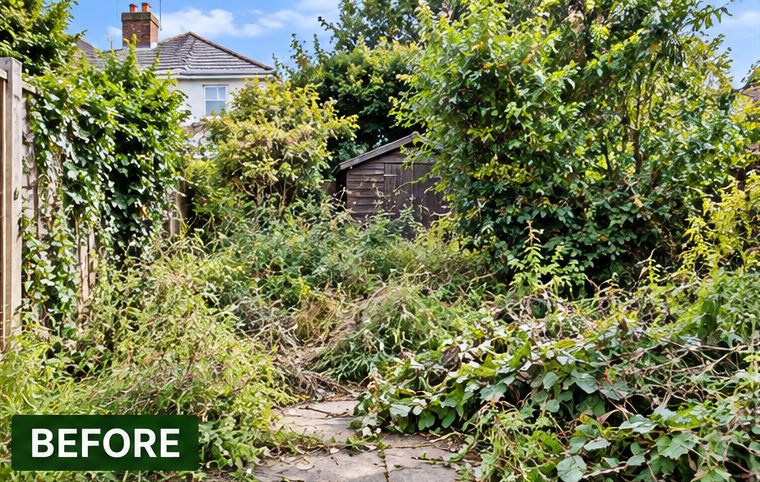
When you book a clearance, one of the first questions is simply: will you take all of it? For most gardens the answer is close to yes. Cuttings, brambles, branches and the odd broken chair are all routine. The exceptions are things that are hazardous, invasive or controlled, and knowing about them before the quote saves surprises on the day.
This guide sorts garden clutter into three groups: what we normally take, what we take if it is agreed in advance, and what has to go another way. If you want to know how the day itself runs, our guide to what happens during a garden clearance walks through it step by step.
Green waste: the bulk of almost every job
Anything that grew in the garden counts as green waste, and it is the main thing our garden clearance service removes. That covers:
- Long grass, weeds, nettles and bramble stems.
- Hedge trimmings, shrub prunings and cut-back climbers such as ivy.
- Branches and small trunks from agreed tree or hedge work.
- Leaves, dead plants, old bedding and the contents of neglected pots.
- Roots and bramble crowns dug out during the clearance.
Other things we can usually take if it is agreed
Gardens collect more than plants. Behind the growth there is often a layer of household leftovers, and much of it can go as part of the same job as long as it is listed when we quote. Typical items include:
- Broken or rotten fence panels, trellis and posts, especially where we are replacing them through our fencing service.
- Old garden furniture, plastic chairs, broken pots and planters.
- Loose timber, pallets and offcuts.
- Rubble, broken slabs, bricks and surplus soil. These are heavy and are kept apart from the green waste, so tell us roughly how much there is.
- General bagged rubbish left in the garden or down the side of the house.
The amount matters more than the type here. A few bags of rubble is one thing; the remains of a demolished wall is another, and it changes how we plan the van loads and the time on site.
Things that have to go another way
Some waste is classed as hazardous, or has its own collection route, and cannot be mixed in with garden material. If any of these are lying about, point them out at the visit:
- Asbestos. Older garages, sheds and outhouses sometimes have cement sheeting or roofing that may contain it. We will not cut, break or bag it. It needs to be checked and removed by a licensed or suitably trained contractor.
- Garden chemicals. Old weedkillers, pesticides, slug pellets and wood treatments, some of which are no longer legal to use, should go to your council’s household waste recycling centre or a hazardous waste collection.
- Paint, oil and fuel. Half-used tins, old engine oil and petrol cans are handled as hazardous waste.
- Gas bottles. Patio heater and barbecue cylinders usually go back to the supplier or to a recycling centre that accepts them.
- Electrical items. Old fridges, freezers, mowers and power tools go through the separate electrical recycling route.
- Tyres and car batteries. Neither belongs with garden waste.
Old railway sleepers deserve a mention too. Many were soaked in creosote, which is why they cannot simply be put in with timber offcuts or chipped for mulch.
Invasive plants
A few plants cause trouble far beyond the garden they grow in, and the law treats them differently from ordinary weeds.
Japanese knotweed is the one people have heard of. It turns up on old industrial ground and along railway lines and rivers throughout the valleys. Cut stems and soil containing its roots are controlled waste and must not go to a normal composting site, because tiny fragments can regrow. If we find it, we stop, tell you, and leave it alone so a treatment company can deal with it properly.
Himalayan balsam spreads along many South Wales river banks and seeds freely. Giant hogweed is rarer in gardens, but its sap can cause serious skin burns in sunlight, so it should never be strimmed or pulled by hand. We flag both rather than clearing them in with everything else.
Things we leave where they are
Some things are not waste at all, or are not ours to move:
- Active birds’ nests. They are protected by law, so a hedge or shrub with a nest in it is left until the young have gone.
- Hedgehogs, frogs, toads and slow worms that shelter in long grass and heaps. We check piles before lifting them and move animals somewhere safe and quiet.
- Trees covered by a Tree Preservation Order or standing in a conservation area, until the council has given consent. Our guide on permission to cut down a tree in Wales explains the basics.
- Anything on the neighbour’s side of the boundary, including their fence, wall or overhanging plants beyond what the law allows you to trim back.
How you can help before we arrive
A little preparation makes the job quicker and avoids anything precious going in the van:
- Move or clearly mark anything you want to keep, such as ornaments, planters, a bench or a favourite shrub.
- Take out personal belongings from sheds and greenhouses, unless clearing them is part of the job. Our guide to shed and outbuilding clearance covers that side.
- Tell us about anything buried that we might hit: shallow drains, a septic tank, an old pond liner or garden lighting cables.
- Put hazardous items to one side so they are not mistaken for general rubbish.
Where it all ends up
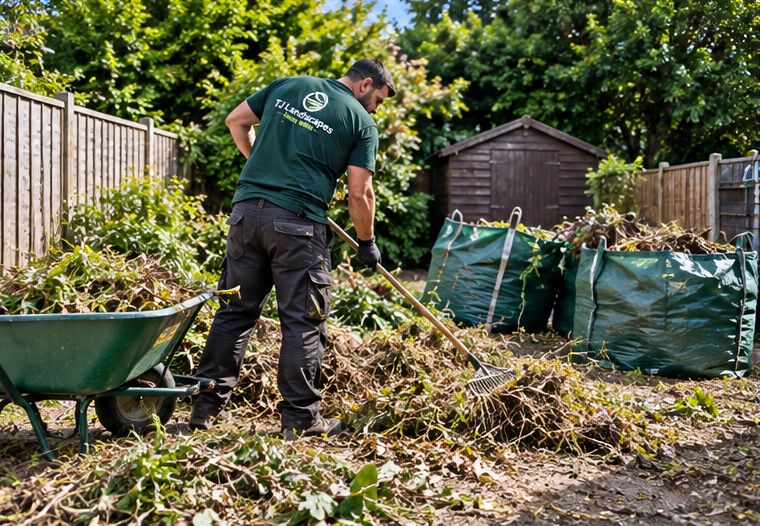
Green waste is taken away with us as part of the clearance. Rubble and general rubbish are kept separate from it because they go to different places. Whoever takes waste from your home, you have a legal duty of care to make sure it goes to someone authorised to carry it, and our article on where garden waste goes and why it matters explains how to check a carrier on the Natural Resources Wales public register.
If you are not sure whether something counts, ask. It is much easier to sort out at the quoting stage than on the day. We work across South Wales, from our base in Pontypool to Newport, Cardiff and the valleys, and you can ask for a free quote here.
Talk to T J Landscapes about your garden
Free quotes and honest advice across South Wales.
Questions People Ask
Can you take soil and rubble as well as green waste?
Usually, yes, but it has to be agreed beforehand. Soil and hardcore are heavy and are kept apart from cuttings, so a rough idea of the quantity helps us plan loads and time.
What should I do with old weedkiller and paint?
Keep them in their original containers and take them to your council’s household waste recycling centre, or ask the council about a hazardous waste collection. They should not go in general waste or down a drain.
Will you remove Japanese knotweed?
No. If we find it we leave it undisturbed and tell you, because it needs a proper treatment plan and specific disposal. Digging or strimming it without one usually spreads it.
Can you take an old shed away?
In most cases, yes, once it has been emptied and anything hazardous has been dealt with. Sheds and garages with cement sheet roofs need checking for asbestos before anyone breaks them up.
Can branches be left on site as mulch?
Often. Clean branches from ordinary shrubs and trees can be chipped and spread on the borders if you want to keep them, which also cuts down what has to be taken away.