
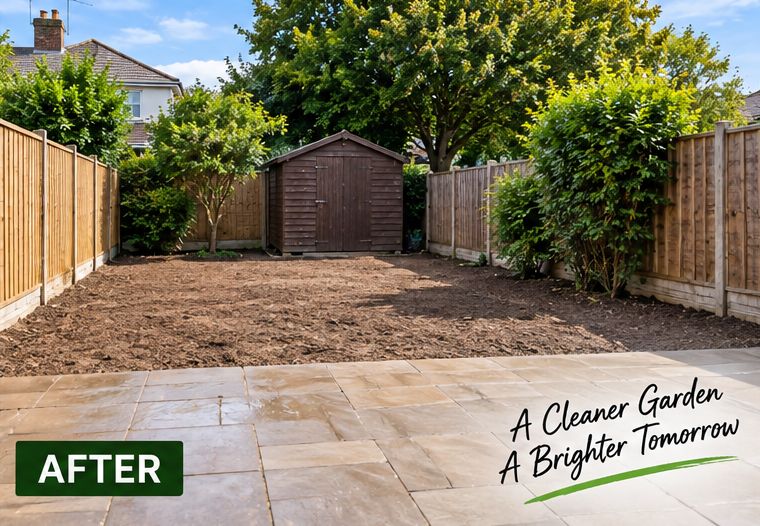
The garden is often the last thing on the list when a house is being got ready for market. The inside gets painted, the carpets get cleaned, and the back garden stays as it was: long grass, a tangle of shrubs and a shed nobody has opened in years. Then the listing photos go up and the garden is either left out or shown looking wild.
Buyers and tenants notice. A garden that looks like a project makes people think about time and money they would rather not spend. Here is how to approach a pre-sale or pre-let clearance so it helps rather than costs more than it needs to.
Why the outside space matters to buyers and tenants
People look at online listings long before they book a viewing, and the photo of the back garden is one of the images they linger on. A clear lawn, a swept patio and a visible boundary suggest a house that has been looked after. An overgrown plot suggests the opposite, even if the rooms are spotless.
At viewings, a garden they can walk round lets people picture themselves using it. That is hard to do when half of it is under brambles and they cannot tell where it ends. For families and anyone with a dog, a secure, usable garden can be a deciding point.
Decide how far to go
There is no need to design a new garden for someone else. The aim is to show what is there and let the next owner decide what to do with it. In practice that usually means one of three levels of work:
- A tidy. Mow, trim hedges and edges, weed the paths and clear any rubbish. Enough for a garden that has had one lost summer.
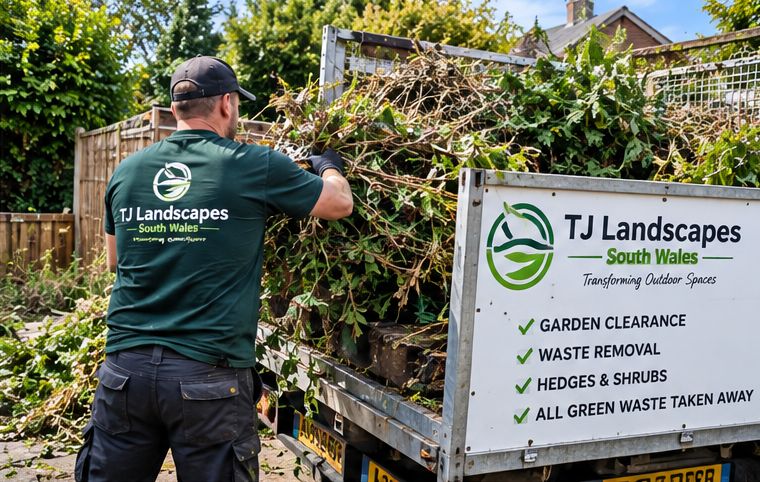
- A full clearance. Cut back everything that has taken over, dig out brambles and self-seeded saplings, clear old structures and take all the waste away. This is what most of our garden clearance enquiries before a sale involve.
- Clearance plus quick fixes. The clearance, followed by a few targeted repairs so nothing obvious puts people off. More on those below.
If you are unsure which applies, ask the estate or letting agent what they think buyers or tenants in that area expect. They see the reaction at viewings.
Quick fixes that are worth doing afterwards
Once the ground is clear, a few problems usually show themselves. These are the ones that tend to put people off most, and the ones that are fairly quick to put right:
- Rotten or leaning fence panels. A few new panels or a short run of new fencing makes the boundary look secure again.
- A lawn that has gone to moss and bare earth. Fresh turf gives an instant green space for photos, although it needs watering if the house is empty.
- Slippery, green paving. A clean and a check for loose or rocking slabs, which buyers notice underfoot.
- Hedges and trees shading the house. Sensible trimming or crown lifting can let light back into the rooms, which matters at viewings. Our tree surgery and hedge care page covers that work.
Resist anything bigger unless you have a good reason. A brand-new patio or deck is a personal choice, and the next owner may have different ideas.
Letting: getting a garden ready between tenants
For landlords, the gap between one tenancy and the next is the natural time to sort the garden out. It is far easier to clear an empty property than to work round someone living there, and it sets a clear starting point for the next occupier.
Take dated photographs once the clearance is done. If the condition of the garden is ever questioned at the end of the next tenancy, a record of how it was handed over helps everyone. It is also worth being clear in the occupation contract about who looks after the garden and to what standard. The rules on renting in Wales changed under the Renting Homes (Wales) Act, so check the current guidance or ask your agent rather than relying on an older template.
Think about the next few years as well as the next few weeks. A rental garden with fewer high-maintenance features, such as big hedges, fussy borders or a pond, is more likely to stay tidy. Our guide to planning a low-maintenance garden has ideas that suit a let property.
Empty houses, probate and clearing from a distance
A lot of pre-sale clearances happen when a house has been empty for a while, often after a relative has died or moved into care. The family may live some distance away and be dealing with the inside of the house at the same time.
It does not need you standing over the work. We need access to the garden, a clear agreement about anything that stays, such as plants with sentimental value, ornaments or a greenhouse, and a way to send you photos once it is done. If a shed or garage full of belongings is part of the job, our guide to shed and outbuilding clearance explains how we handle the contents.
Things to check before the house goes on the market
Some things found during a clearance affect the sale itself, not just how the garden looks:
- Japanese knotweed. Sellers are usually asked about it on the standard property information forms, and lenders take it seriously. If we find it we will tell you straight away and leave it alone. Get it assessed by a treatment company and talk to your conveyancer.
- Boundaries. Clearing overgrowth sometimes shows that a fence or wall is not where everyone assumed. Do not move anything before checking the deeds.
- Protected trees. If there is a large tree in the garden, check with the council for a Tree Preservation Order or conservation area before any work on it.
- Hazardous materials. Old cement sheet garages or sheds may contain asbestos, and need checking before they are taken down. See what can and cannot go in a garden clearance.
Timing the clearance
Aim to have the garden cleared before the listing photos are taken, not after the first viewings. Allow a little time for quick fixes, and for new turf to settle if you are laying it.
In spring and early summer, hedges and dense shrubs may hold nesting birds, which are protected, so some cutting may have to wait. Growth also comes back quickly at that time of year, so a garden cleared in April may need a quick tidy again by June if the house has not sold. In autumn and winter the work is often easier and the results last longer.
To see what the day involves, read what happens during a garden clearance. For a garden that has gone well beyond a tidy, getting an overgrown garden back under control goes further.
Getting a quote
We clear gardens for sellers, landlords and families across South Wales, from Cwmbran and Caerphilly to the terraces of the Rhondda and Cynon valleys. The price depends on the size of the garden, how far it has gone, access and how much waste there is, and the quote is free. Send us a message with the address and a rough idea of your timescale.
Talk to T J Landscapes about your garden
Free quotes and honest advice across South Wales.
Questions People Ask
Is it worth clearing a garden before selling?
Usually, yes. A cleared garden photographs better and lets buyers see its size and shape, and it removes an obvious job from their list. Big new features are a different matter and are rarely worth adding just for a sale.
Can you clear the garden if the house is empty?
Yes. We need access to the garden and a clear agreement on what stays, and we can send photos when the work is finished.
Should I lay new turf before selling?
If the lawn is mostly moss or bare soil, new turf can make a big difference in photos. It needs regular watering for the first few weeks, so plan for that if nobody is living at the property.
What if you find Japanese knotweed?
We stop work on that area, leave it undisturbed and tell you. Get it assessed by a treatment company and let your conveyancer know, as it can affect a sale.
Do landlords need to clear the garden between tenants?
It depends on the occupation contract and what was agreed at the start, so check that first. In practice a clear, easy-care garden at the start of a tenancy is much more likely to be looked after.