
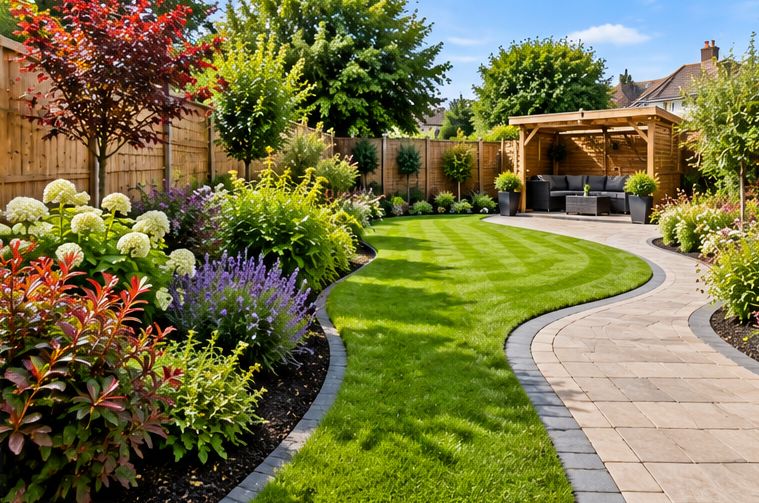
A garden makeover needs a surprising amount of stuff. A small patio can mean several tonnes of sub-base, sand and slabs. A retaining wall means blocks, stone or sleepers plus concrete. Then there is the soil, rubble and old paving that has to go back out. On a flat suburban plot with a side drive, none of that is much of a problem.
In Abertillery, the back gardens climb the valley side behind long rows of houses, often with no side passage at all. Getting materials in and waste out is the part of the job people ask about most, and it is where good planning saves time and mess. This guide explains how we approach it. For the design side, see our landscaping and garden design page and our page on landscaping in Abertillery.
Walking the route before we quote
When Tony visits an Abertillery garden, he looks at the route as closely as the garden itself. That means following the way materials would travel, from where a delivery vehicle could stop to the spot where they will be used. Along the way we note:
- How wide the rear lane is, whether it is surfaced, and whether a lorry or only a small van can get along it
- The width and height of the back gate, and whether it can be taken off its hinges for a day
- Every step, slope and tight corner between the gate and the work area
- Whether the lane is shared with neighbours who need to get their cars or bins through
- Where a skip, bulk bags or pallets could sit without blocking anyone
All of that feeds into the quote, because a route with thirty steps and a narrow gate takes longer than a level walk. It is one of the main reasons two gardens of the same size can cost different amounts, as our guide to what affects the cost of landscaping explains.
When the lane is at the top, and when it is at the bottom
Terraces on a valley side are usually built in rows along the contours, so a rear lane can sit above your garden or below it. That changes how the job runs.
If the lane is at the top, heavy materials come in downhill, which is kinder on the barrow, but spoil from digging has to be pushed back up. If the lane is at the bottom, everything coming in goes uphill, and we pace deliveries so we are not moving more than we can lay in a day. Either way, we try to arrange the work so the heaviest items travel the shortest distance.
Deliveries on a shared lane
Builders' merchants can usually drop bulk bags and pallets with a crane lorry, but only where the lorry can reach and there is somewhere safe to set them down. In a narrow lane that may be a tight fit, and neighbours still need to get past.
We time deliveries for when we are on site to move them, rather than leaving a pallet of slabs in the lane overnight. Where a big lorry cannot get in, we order smaller loads or collect materials ourselves. If something has to sit on the road at the front, check with Blaenau Gwent County Borough Council whether a permit is needed for a skip or materials on the highway; we can help you work out what to ask.
Choosing materials that suit the route
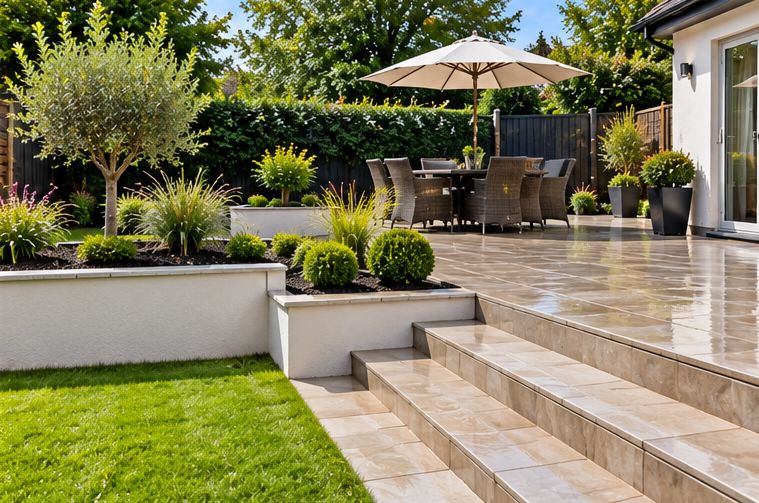
Access can shape design choices as well as logistics. Large-format slabs look smart, but a single big slab is heavy and awkward to carry up narrow steps. Long sleepers and deck boards need a straight run through the gate. On a hard route, we might suggest:
- Smaller slab sizes or setts that one or two people can carry safely
- Timber and boards cut to length before they arrive
- Blocks or stone that come in manageable units for a retaining wall
- Bagged rather than loose aggregates where a bulk load cannot be tipped near the gate
None of this means settling for second best. It means picking products that give the look you want and can actually reach the garden. Our guide to stepped patios for steep Abertillery gardens shows how paving levels are planned on these plots.
Taking the waste back out
What comes out of an Abertillery garden is often heavier than what goes in. Digging a level or a footing on a valley side can turn up stone, clinker and old rubble along with soil. We load waste as we go, into bags or straight into the vehicle, so it does not build up on the garden or in the lane.
Green waste, old fencing and broken slabs all go the same way. If you have a lot to clear before any building starts, read our guide on clearing an Abertillery garden with rear lane access.
If there is no back lane at all
Some Abertillery houses have no usable rear access, or the lane has been blocked or fenced over the years. The job can still be done, but everything has to go through the house. In that case we lay protective sheets along the hall and through the kitchen, keep the route short and clear, and bag waste so it can be carried out neatly.
It takes longer and needs your house to be clear for the day, so we talk it through with you at the quote stage. Sometimes a neighbour with a gate onto the lane is happy to let materials pass through their garden, but that is always something to agree between you, not something we would assume.
What you can do to help
A few small things make a big difference on the day. Clear the route through the garden of pots, bikes and bins. Let your neighbours know when work starts, especially if they share the lane. Make sure the back gate opens and we can get a key if it is locked. And if you know of anything tricky along the way, such as a loose step or a soft patch of ground, tell us before we start.
When you are ready to talk about your own garden, send us a message with a note on where your rear access is. You can also find layout ideas in our guide to making the most of a narrow Abertillery terrace garden.
Talk to T J Landscapes about your garden
Free quotes and honest advice across South Wales.
Questions People Ask
Will materials have to come through my house?
Only if there is no other way. Many Abertillery terraces have some kind of rear access, and we use it wherever we can. If the house is the only route, we protect the floors and keep the path as short as possible.
Can a skip go in the rear lane?
Sometimes, if the lane is wide enough and nobody's access is blocked. Where an Abertillery lane is too narrow, we load waste straight into our vehicle as we work. A skip on the public road may need a permit from the council.
Does difficult access make a job more expensive?
It can, because carrying materials a long way on steps takes more time. It is one of several things that drive cost, alongside size, ground conditions, levels and materials. We allow for it in a free quote, so there are no surprises.
Do I need to tell my neighbours?
It is a good idea on a shared lane. A quick word about when deliveries are due and how long the work will run helps keep things friendly, and it gives them a chance to move cars or bins out of the way.