
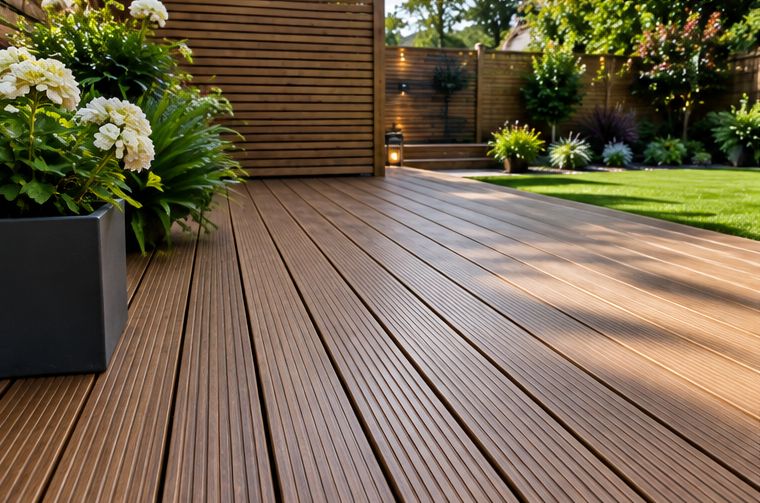
Behind most terraces in Abertillery the ground climbs or drops away sharply, and the garden is often only as wide as the house. Finding somewhere flat enough for a table and two chairs can feel impossible. Digging out a level for a patio is one answer, but it means holding back soil with a wall and carrying spoil out through a narrow gate.
A small deck works the other way round. It stands on its own supports above the slope, so the hill stays where it is. This guide is about the compact decks that suit Abertillery gardens: where they fit best, how they are held up, and how we get them built on a plot you reach by a rear lane. For the service in general, see our garden decking page, and for the wider picture of these gardens, our page on landscaping in Abertillery.
Think small and think in platforms
On a narrow terrace plot, a deck does not need to fill the garden. A platform that takes a small table, a bench or a pair of chairs is often all the space needs, and a compact deck keeps the frame low, the posts short and the cost of materials down.
Rather than one large deck, some Abertillery gardens suit two small platforms joined by a short flight of steps. That follows the stepped shape of the plot, gives each level its own use and avoids a single tall structure towering over the neighbours. A deck also pairs well with a paved level, so if you are weighing the two, read our guide to stepped patios for steep Abertillery gardens alongside this one.
Where on the slope it should sit
The position matters more than the size. There are three places a small deck usually works on a valley terrace:
- Off the back door or yard, where the ground falls away. The deck extends the flat area you already have, and it is the easiest spot to reach with a cup of tea.
- Halfway up the garden, on a shelf in the slope. This often catches more sun than the yard, which can sit in the shadow of the house and the back walls.
- At the top, by the lane gate, where you may get a view across the Ebbw Fach valley. It is a longer walk, so it works best as an evening spot rather than somewhere to eat every day.
Sun is worth checking before anything else. On a valley side, the hill opposite and the terrace behind can block the light for much of the day, so we look at where the sun falls at the times you would actually use the deck.
Holding a deck up on a hillside
A deck on sloping ground needs a frame that stays put. On the uphill edge the frame may sit almost on the ground, while on the downhill edge the posts can be a metre or more tall. Those taller posts need bracing so the whole thing cannot sway, and every post needs a sound footing. Our guide to raised decking covers frames, steps and balustrades in detail.
Valley ground can change within a few metres. You might hit stone near the surface, old ash or rubble where a yard was built up, or soft, wet soil where water runs down the hill. We dig to see what is there before deciding on concrete footings, adjustable supports or ground screws, and we avoid leaning the deck on an old retaining wall unless we are sure it can take the load.
Where a deck will sit well above the ground, check with Blaenau Gwent County Borough Council before it is built. Raised platforms can need planning permission, and overlooking the gardens either side is a common concern on tightly packed terraces. We can explain the layout options, but the council makes the planning decision.
Rain, shade and a grippy surface
Abertillery sits high in a wet valley, and a deck in a shaded corner can stay damp for days after a shower. That is when timber turns green and slippery. A few choices make a real difference:
- Leave a gap between boards and keep the space underneath open, so air can dry the timber out
- Lay weed membrane and gravel below, so the void stays tidy and does not hold water against the frame
- Consider grooved or anti-slip boards, especially for any steps
- Composite boards take less upkeep in damp spots, though they still need the odd wash
Our guides to stopping decking going slippery and composite or timber decking go further on board choice.
Getting the timber in by the back lane
Deck boards and joists come in long lengths, and long lengths do not go round tight corners. On an Abertillery terrace the rear lane is usually the only sensible way in. We check the width of the lane, the size of the gate and any steps on the route before we order materials, and we may have boards cut to length in advance if the route is especially awkward.
Because a deck needs far less digging than a patio, there is also much less spoil to carry back out, which is one reason decking suits these gardens. The full picture of access is in our guide to getting materials into an Abertillery back garden.
Finishing touches for a compact deck
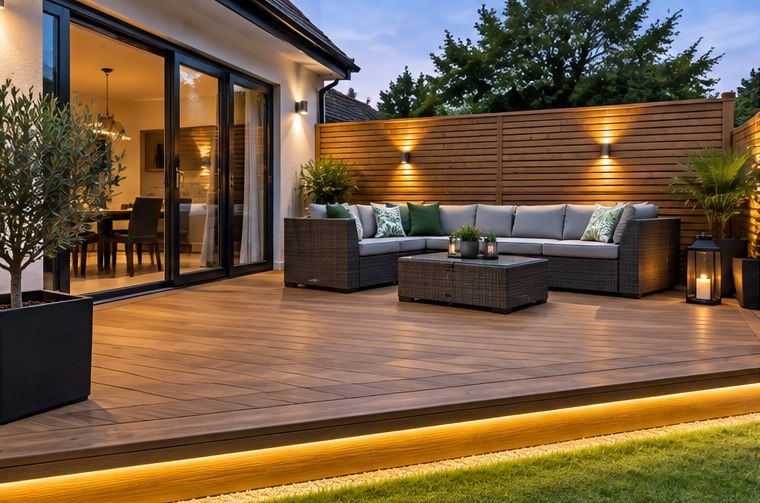
On a small platform, every edge counts. A bench built into the side of the frame saves space, planters along the downhill edge can soften the drop and add privacy, and a couple of low lights make the steps safer after dark. If the deck sits in the middle of a planted slope, a tidy edge of gravel or bark around it helps it look settled rather than dropped in.
If the rest of the plot needs attention too, our guide on low-maintenance ideas for Abertillery back gardens has ideas for the parts around the deck.
Talk to T J Landscapes about your garden
Free quotes and honest advice across South Wales.
Questions People Ask
How big should a deck be in a narrow Abertillery garden?
Big enough for the way you will use it, and no bigger. Set out your table and chairs on the ground and measure round them with room to pull a chair back. On most Abertillery terraces that gives a platform that fits comfortably within the width of the plot.
Is a deck better than a patio on a steep slope?
Often, on the steepest parts. A deck avoids cutting into the hill, building a tall wall and removing lots of soil. Where the slope is gentler, a paved level can be the more durable choice. We can suggest what suits each part of the garden when we visit.
Can you build a deck over an old concrete yard?
Usually, yes, if the concrete is sound and water can drain away underneath. It can be a tidy way to cover a cracked yard behind a terrace. See building decking over an old patio or concrete.
What affects the cost of a small deck?
The height of the frame, the steepness of the ground, the type of footings, the boards you choose, any steps or balustrade, and how easy it is to carry materials in from the lane. We give a free quote once we have seen the garden, so get in touch to arrange a visit.
How long will a deck last in a wet valley?
That depends on the timber or composite, how well the frame is built and how much air gets underneath. A deck that dries out quickly after rain will last far longer. Our guide on how long garden decking should last explains more.