
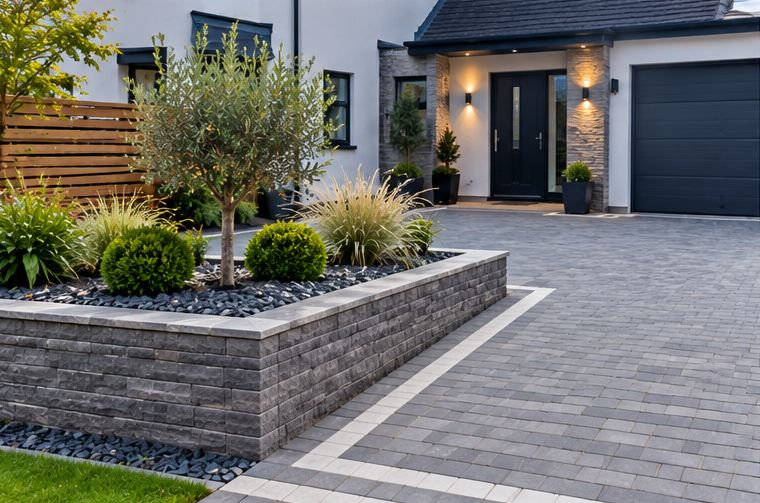
It is the first question almost everyone asks, and it is a fair one. The honest answer is that two gardens of the same size can end up with very different quotes, because the cost of landscaping is shaped far more by the ground, the access and the finish you choose than by the measurements alone.
This guide walks through the things that really drive the cost of a garden project in South Wales. It will not give you a figure, because any figure without seeing your garden would be a guess. What it will do is help you understand a quote, compare quotes fairly, and spot where you might save or where cutting corners would cost you later. When you are ready, we give free quotes and free advice after a proper look at the garden.
Size matters, but less than people think
Area obviously counts: a bigger patio needs more slabs, more sub-base and more hours. But the relationship is not straight-line. A small courtyard with awkward corners, lots of cuts around drains and a step up to the back door can take nearly as long as a larger, simpler rectangle.
Shape and detail add time. Curves, borders of a contrasting paving, built-in planters and several changes of level all look lovely and are well worth doing, but each one adds labour. If you are working to a budget, a simpler layout in a better material often looks smarter than a complicated one in a cheaper product.
Access: how the materials get in and the waste gets out
Access is one of the biggest hidden factors, and in South Wales it is often the deciding one. A semi with a side gate wide enough for a small digger and a skip on the drive is a very different job from a mid-terrace where every bag of sand and every barrow of soil has to go through the house or up a flight of steps from a rear lane.
Plenty of valley terraces, such as those in Abertillery and Tonypandy, have narrow, stepped back gardens where machines simply cannot go. That work is still very doable; it just takes more hands and more time, and a good quote will reflect that honestly.
- Is there side or rear access, and how wide is the narrowest point?
- Can a skip or a bulk bag delivery sit close to the garden, or will it need a permit on the road?
- Are there steps, steep paths or tight turns between the road and the work?
What is under the surface
Ground conditions vary a lot across the region. Heavy clay, common in parts of the lowlands and valley floors, holds water and moves as it wets and dries. Stony upland ground and made-up ground from earlier building work can hide rubble, old foundations and buried concrete. Neither is a problem once it is known about, but both change how much digging, carting away and sub-base a job needs.
A well-built patio or path depends on a properly compacted base, and on poor ground that base may need to be deeper. It is not the exciting part of the job, but it is the part that decides whether the paving is still level in ten winters. Be wary of any quote that seems to skip it.
Levels and slopes
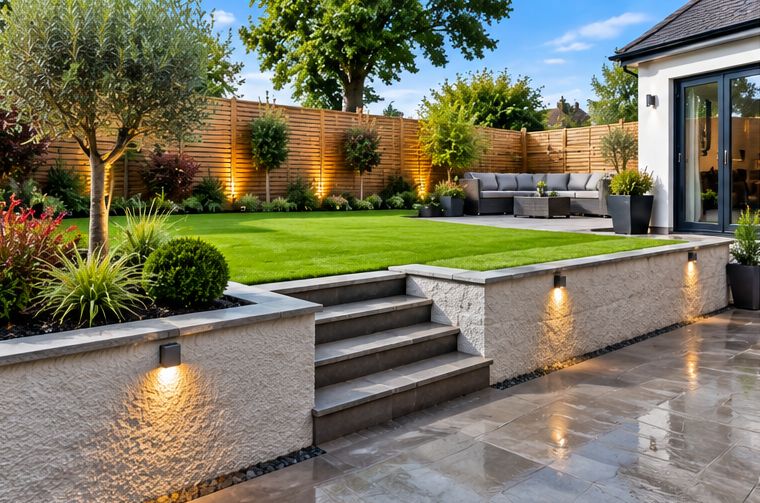
A flat garden is the simplest to work with. A sloping one, which describes a great many gardens in Pontypool and the valleys, usually means moving soil, building retaining walls or steps, or terracing with sleepers. Those structures are where much of the cost of a sloping garden goes, and they are worth doing properly because they hold everything else up.
Our guide to landscaping a sloping valleys garden goes into the options in more detail.
Drainage and the Welsh weather
With the rainfall South Wales gets, drainage is rarely an optional extra. Paving has to be laid with a fall so water runs away from the house, and that water has to go somewhere sensible, whether a soakaway, a channel drain or permeable paving. Lawns on clay may need drainage or a better soil before turf goes down.
If a garden already floods or stays boggy, fixing that first is usually the best money you will spend. Our article on stopping a garden waterlogging explains the common fixes.
Materials and finish
This is the part you control most directly. Across patios and paving, decking and fencing, there is a wide range from budget to premium, and the difference is not only looks. Porcelain paving, capped composite boards and heavier fence posts generally cost more to buy but can need less upkeep over the years.
- Paving: concrete slabs, natural sandstone or limestone, porcelain, block paving or gravel each sit at different points on the scale.
- Decking: treated softwood, hardwood and composite differ in both cost and maintenance. See our composite or timber decking guide.
- Walls: brick, block with a render or stone facing, natural stone and timber sleepers all behave differently on price and on looks.
- Extras such as lighting, water features and planting add to the total but can often be phased in later.
Clearing, waste and what is already there
Before anything new goes in, the old usually has to come out. Lifting a tired patio, breaking up concrete, grubbing out shrubs or taking down a leaning fence all create waste, and waste has to be loaded, carried and disposed of properly. Green waste, soil and hardcore are handled differently, so the mix matters as well as the volume.
If the garden is badly overgrown, a garden clearance first can make the rest of the job quicker and gives everyone a clear view of what they are working with.
How to get a quote you can compare
The fairest way to compare quotes is to make sure they describe the same job. Ask what depth of sub-base is included, how drainage will be handled, what happens to the waste, and exactly which materials are being used. A lower figure that leaves out the base or the drainage is not really cheaper.
Tony and the team give free quotes and free advice across South Wales. We will look at the access, the ground and the levels, talk through what you want from the garden, and suggest where the budget will make the most difference. Start with our landscaping and garden design page, or get in touch and tell us about your garden.
Talk to T J Landscapes about your garden
Free quotes and honest advice across South Wales.
Questions People Ask
Can you give me a rough price over the phone?
We would rather not, because the things that change the cost most, like access, ground and levels, are hard to judge without seeing them. A visit is free and gives you a quote you can rely on.
Is it cheaper to do the garden in stages?
It can help spread the cost, and many people do it. The one thing we would suggest is doing the groundwork, drainage and any walls first, so later stages are not undoing earlier ones.
Does the time of year affect the cost?
The cost of the work itself does not usually change much, but very wet weather can slow some jobs, especially ones involving digging on clay. Busy spring months also mean booking ahead is sensible.
What can I do to keep costs down?
Keep the layout simple, choose materials that suit how you actually use the garden, and be open about your budget. If you can clear light rubbish yourself beforehand, tell us and we will price accordingly.
Why do quotes vary so much between landscapers?
Often because they are not quoting for the same thing. Differences in base depth, drainage, materials and waste removal can explain most of the gap, so it is worth asking each one to spell those out.