

Lawn care can look complicated when you read the backs of product packets, but most of it comes down to regular mowing at the right height, feeding in the growing season, letting air and water into the soil, and keeping off the grass when it is at its most fragile.
This calendar is written for South Wales, where the growing season is long, winters are usually wet rather than bitterly cold, and moss is never far away. Higher valley gardens tend to run a couple of weeks behind the coast in spring, so adjust the timings to your own patch. For a new lawn, start with our turf laying page.
Early spring: waking the lawn up
As the soil warms and the grass starts to grow, usually from March in lower areas and a little later in the valleys, give the lawn a light tidy. Rake off leaves, twigs and any debris left from winter, and clear worm casts by brushing them when dry.
Make the first cut with the mower on a high setting, just to take the tips off. Wait until the ground is firm enough that you are not leaving footprints; mowing soft, wet ground does more harm than an untidy lawn.
Mid to late spring: feed and tackle moss
Once the grass is growing steadily, it will benefit from a spring lawn feed, which gives it the nitrogen it needs to green up and thicken. Follow the rates on the packet; overdoing it scorches the grass and pushes soft growth that is prone to disease.
- Treat moss if it is a problem, then rake out the dead moss a couple of weeks later.
- Deal with weeds by hand for small numbers, or use a selective lawn weedkiller if they have spread.
- Reseed small bare patches once the soil is warm and moist.
- Start to lower the mowing height gradually as growth speeds up.
Summer: mowing and dry spells
Summer is mostly about regular mowing. Cutting little and often, perhaps once a week, keeps the grass dense and crowds out weeds. Keep to the rule of removing no more than a third of the leaf at a time, and raise the height of cut during hot, dry weather so the grass shades its own roots.
Established lawns are tougher than they look. A lawn that goes brown in a drought is usually dormant rather than dead and will green up again when rain returns, which in Wales it usually does. If you do water, water deeply once or twice a week rather than lightly every evening. A summer feed can help a lawn that sees heavy use, but avoid feeding in a heatwave or drought.
Early autumn: the most important season
If you only give your lawn one proper session a year, make it early autumn, typically September. The soil is still warm, rain is returning and the grass has time to recover before winter.
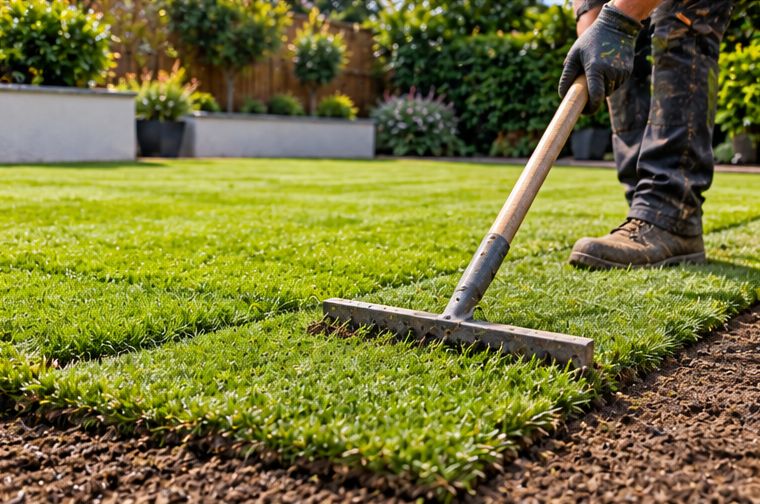
- Scarify: rake out thatch, the layer of dead grass and moss at the base of the lawn, with a spring-tine rake or a scarifier. It looks brutal at first but the lawn recovers quickly.
- Aerate: spike or hollow-tine the lawn to relieve compaction, especially on clay or on well-used paths across the grass.
- Topdress: brush a thin layer of sandy topdressing into the holes to improve the surface and drainage.
- Overseed: sow seed into thin areas while the soil is warm.
- Autumn feed: use a feed made for autumn, which is lower in nitrogen and helps roots rather than leafy growth.
Late autumn: leaves and the last cut
As trees drop their leaves, rake or blow them off the lawn regularly. A mat of wet leaves left for weeks blocks the light, keeps the grass damp and invites moss and disease. Leaves can go on a compost heap or into a leaf-mould bag rather than the bin.
It is also a good moment to tidy the lawn edges with a half-moon edger, and to look at the trees and hedges around the grass. Overhanging branches that cast heavy shade in summer can be thinned or lifted over winter, which lets more light reach the lawn the following year. Our tree surgery and hedge care page explains what that involves.
Keep mowing as long as the grass is growing, raising the height a little for the last few cuts. In mild years in South Wales grass can keep growing into December, so an occasional trim on a dry day in winter is no bad thing.
Winter: mostly leave it be
Winter is the time to rest the lawn. Stay off it when it is frosty, because frozen grass blades snap and leave brown footprints, and when it is waterlogged, because walking on wet soil compacts it. Keep clearing leaves and fallen debris.
Use the quieter months to service the mower and sharpen its blade. A blunt blade tears grass rather than cutting it cleanly, and the torn tips brown off and weaken the plant.
Winter is also a good time to notice where water sits after rain. Areas that stay soggy for days point to compaction or a drainage problem, which our guide to garden waterlogging covers.
When a lawn needs more than care
Regular care keeps a good lawn good, but it cannot fix a lawn laid on poor ground. If yours stays thin, mossy or waterlogged despite the routine above, the cause is usually in the soil, the drainage or the amount of light. Our guide on why lawns go patchy, mossy or bare helps pin down the reason.
Sometimes the answer is a fresh start: new turf on properly prepared ground, perhaps with a neater edge or a redesign of the space. In a very shaded spot, a patio or planting may serve better than grass. Tony and the team can look at your lawn anywhere from Penarth to Ebbw Vale and give you free advice and a quote.
Talk to T J Landscapes about your garden
Free quotes and honest advice across South Wales.
Questions People Ask
How short should I cut my lawn?
For a family lawn, a medium height is best for most of the year, going a little longer in summer droughts, in shade and in autumn. Very short cutting weakens the grass and lets moss in, particularly in damp, shaded gardens.
How often should I feed my lawn?
Most lawns do well with a spring feed and an autumn feed. A busy family lawn may benefit from an extra summer feed. Always follow the product rates, and use a proper autumn formula later in the year.
Should I leave grass clippings on the lawn?
Short clippings from regular mowing can be left to return nutrients to the soil. Long clumps should be collected, as they smother the grass. In damp weather, collecting is usually tidier.
Is it worth scarifying every year?
On most lawns in South Wales, yes, because damp conditions build up thatch and moss quickly. A light scarify each autumn is usually better than a very heavy one every few years.
Can I mow in winter?
Yes, if the grass is growing and the ground is firm and dry. Keep the blades high and skip it if the lawn is frosty or soft underfoot.