
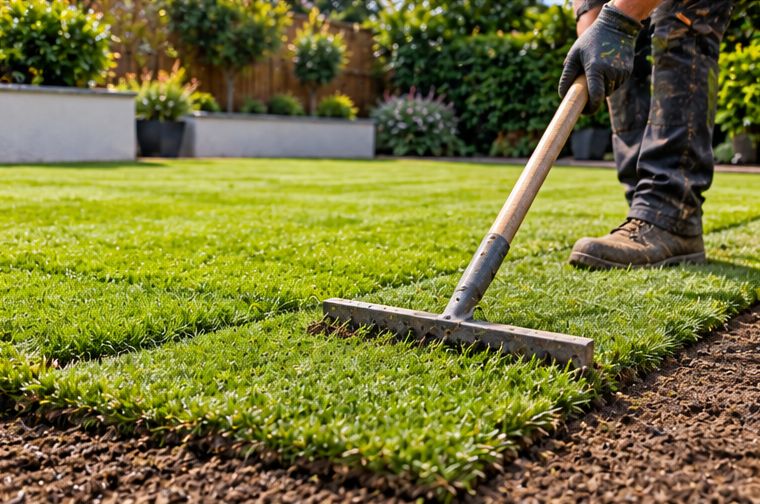
Freshly laid turf looks like a finished lawn, but underneath it is still a set of separate rolls sitting on the soil. For the first few weeks its job is to send roots down and knit into the ground, and your job is to give it the conditions to do that.
This week-by-week guide covers watering, walking, mowing and the problems to look out for. It applies whether the lawn was laid by us as part of our turf laying work or by you on a weekend.
Day one: water straight away
Give the turf a thorough soaking as soon as it is laid, ideally within an hour or so of the last roll going down. The water should go right through the turf and into the soil beneath, because that is where the roots need to go.
To check, lift a corner of a roll after watering. The soil underneath should be dark and damp, not dry and dusty. If it is dry, keep going. It is quite common to under-water on the first day because the grass looks wet on top.
Weeks one and two: keep it moist
For the first fortnight the turf should not be allowed to dry out. In warm or breezy weather that can mean watering every day, sometimes twice in a heatwave. In cool, damp weather, which we get plenty of, rain may do much of the work for you, but do not assume a light shower is enough.
- Water early in the morning or in the evening, when less is lost to evaporation.
- Use a sprinkler or a hose with a spray head so water falls evenly and does not wash soil from the joins.
- Pay extra attention to edges, joins and any slope tops, which dry out first.
- If gaps open up between rolls, the turf is drying and shrinking. Water more and brush a little topsoil into the gaps.
- Avoid the opposite extreme: turf sitting in standing water will also suffer.
Keeping off the lawn
While the roots are going down, try to keep foot traffic to a minimum. Walking on it to water or move a sprinkler is fine, but avoid games, wheelbarrows, garden furniture and dogs racing round it. Uneven pressure at this stage leaves dips and footprints that are hard to get out later.
If you have to cross it regularly, lay a scaffold board or plank to spread your weight. On a family lawn, it can help to plan the laying for a time when children are less likely to want to play out.

Weeks two to three: checking the roots
After about two weeks in the growing season, gently try to lift a corner. If it resists and you can feel roots holding, it is rooting well. If it lifts freely, keep up the watering and check again in a few days. In cooler months it can take noticeably longer.
Once the turf has rooted, you can start watering less often but more deeply. Soaking it well every few days encourages roots to follow the moisture down, which makes for a tougher lawn than a daily sprinkle that keeps the roots near the surface.
The first cut
The first mow usually comes once the turf has rooted and the grass has grown a little, often two to three weeks after laying in spring or summer. Make sure the mower blades are sharp, set the cut to its highest setting, and only take the very tip off. Mow when the grass is dry, and use a mower with a grass box if you can.
Over the next few cuts, lower the height gradually. A good general rule for any lawn is never to remove more than about a third of the grass height in one go. Scalping new turf weakens it and lets moss and weeds in.
Weeks four to six: easing into normal use
By now the lawn should be well rooted and growing strongly. You can let normal use build up gradually, cut regularly and water only in dry spells. Hold off on weedkillers, moss killers and heavy feeding until the lawn is established; most products advise waiting several months on new turf, so check the label.
If the turf was laid in autumn, growth slows as the weather cools. Keep leaves off it, stay off it when it is frosty or waterlogged, and let it settle through winter. Our guide to when to lay turf in South Wales explains how the seasons change the aftercare.
Slopes, shade and exposed gardens
Not every part of a new lawn behaves the same. On a sloping garden, water runs off the top and collects at the bottom, so the upper rolls may need extra watering while the lower edge needs less. Watering slowly, or in two shorter sessions, gives it time to soak in rather than running away.
Turf in the shade of a fence, wall or tree dries more slowly and grows more slowly, so it may need less water but more time before its first cut. In exposed hilltop or coastal gardens, wind can dry turf surprisingly fast even on a cool day, so check it more often than the temperature alone would suggest.
Common problems and what they mean
- Yellowing in patches: usually drying out, or turf that sat rolled too long. Keep watering; it normally recovers.
- Shrinking gaps at the joins: not enough water. Water more and fill the gaps with topsoil.
- Soggy, yellow areas that stay wet: a drainage problem underneath. See our guide on stopping a garden waterlogging.
- Mushrooms popping up: often from buried wood or organic matter. They are harmless and usually disappear.
- Rolls lifting at the edges: poor contact with the soil. Press them down, water well and keep off them.
Most of these clear up once the cause is fixed. If a new lawn keeps struggling, the problem is almost always in the ground below, which our guide to preparing ground for turf goes into.
Tony and the team give aftercare advice with every lawn we lay, and we are happy to come back and look if something does not seem right. Wherever you are, from Aberdare to Chepstow, get in touch for free advice.
Talk to T J Landscapes about your garden
Free quotes and honest advice across South Wales.
Questions People Ask
Can I water new turf too much?
Yes. Turf that sits in waterlogged soil can yellow and the roots can struggle for air. Aim for soil that is moist but not squelching, and cut back if puddles form.
Do I need to water new turf if it rains?
A long soaking rain usually does the job, but a light shower often only wets the top. Lift a corner to check the soil beneath before deciding to skip watering.
When can I feed new turf?
Most turf is grown with plenty of nutrients, and a pre-turf fertiliser gives it a start. Wait until it is well established, usually a couple of months, before a normal lawn feed, and avoid high-nitrogen feeds late in the year.
My new turf has gone brown. Is it dead?
Not necessarily. Grass that browns from drought often greens up again once watered properly. If the roots are still attached and the base of the grass is alive, keep watering and give it time.
Can I use a lawnmower with a roller on new turf?
Once the turf has rooted, a light mower is fine. Avoid heavy rollers or ride-on mowers for the first few weeks, and never mow when the ground is soft or wet.