
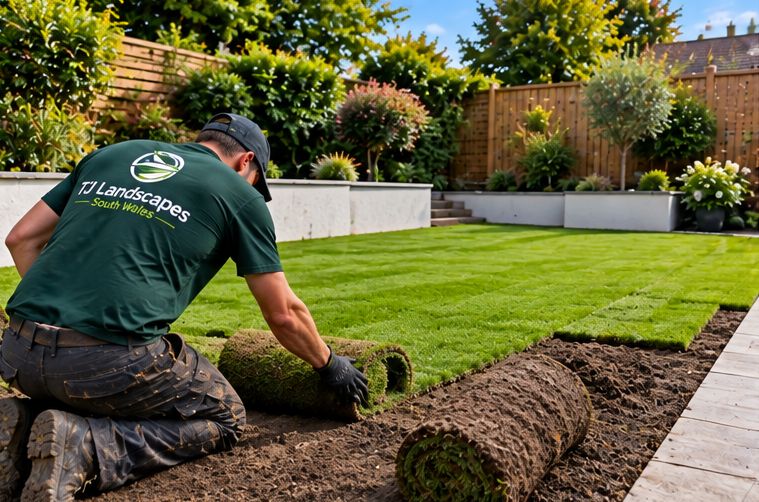
When someone asks us to put in a new lawn, one of the first questions is whether to use rolls of turf or sow grass seed. Both can give you a good lawn in the end. They simply get there by different routes, and each has its own risks along the way.
This guide sets out how they compare in a South Wales garden, where the weather is mild but wet, many plots slope, and a lot of soil is heavy clay or thin and stony. If you already know you want turf, our turf laying page explains how we go about it.
The short answer
Choose turf if you want a usable, green lawn quickly, if children or dogs will be on it within a couple of months, or if the ground slopes and loose seed would wash downhill in the first heavy shower.
Choose seed if the area is large, the garden is not needed straight away, and you are happy to water, wait and keep people off for a good while. Seed also lets you pick a very particular grass mix, for example for deep shade, which is not always available as turf.
How quickly each one gives you a lawn
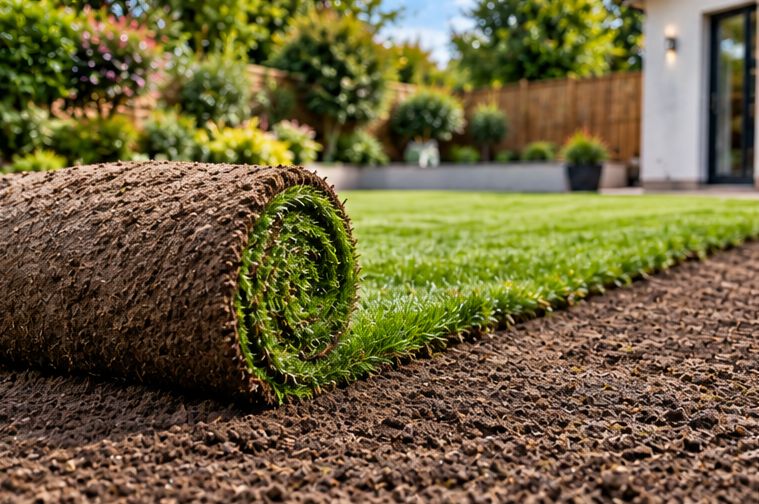
Turf is a lawn from the moment the last roll goes down. It looks finished that afternoon, and once it has rooted into the soil beneath, usually within a few weeks in the growing season, it can take light use. By the end of its first full season it should be much like any established lawn.
Seed is slower. In warm, moist soil the first shoots usually show within one to three weeks, but the lawn looks thin and patchy for some time after that. It generally needs a few months of steady growth before it can stand up to regular use, and many seeded lawns only really thicken in their second year.
Weather, timing and our climate
Seed is fussy about timing. It needs warm soil to germinate and steady moisture afterwards, which in practice means sowing from mid spring or in early autumn. Sow too late and cold soil stalls it; sow in high summer and the young grass can scorch before its roots go down.
Turf is far more forgiving, which is one of its big advantages here. It can be laid through much of the year, provided the ground is not frozen or waterlogged. Our guide on the best time to lay turf in South Wales goes through the seasons in detail.
Heavy rain is the other factor. A downpour on freshly sown ground can wash seed into puddles or off a slope altogether, leaving bald strips and thick clumps. On the steep back gardens common in towns like Abertillery or Tonypandy, pegged turf is usually the safer bet.
What drives the cost of each
Seed itself costs much less than turf for the same area, which is why it is often chosen for big lawns. But the material is only part of the picture. Both need exactly the same ground preparation, and that is where most of the work lies.
- Size of the area: the bigger the lawn, the more the gap between seed and turf widens.
- Access: turf is heavy, and carrying rolls through a house or up steps takes time.
- Ground condition: clearing old grass, weeds, rubble or roots is the same job whichever you choose.
- Topsoil and levels: if the ground needs building up or regrading, the soil and labour apply to both.
- Drainage: a wet patch has to be sorted either way before any grass will do well.
- Follow-up: seed often needs overseeding in thin spots, and more of your time spent watering and weeding.
We can price both routes in a free quote so you can compare them for your own garden.
Weeds, birds and other hazards
Freshly sown soil is an open invitation. Weed seeds already in the ground germinate alongside the grass, and in the early weeks it can be hard to tell them apart. Birds pick at the seed, cats dig in the soft ground, and slugs can graze tender seedlings on damp nights.
Good turf arrives as a dense, established mat of grass, so weeds struggle to get a foothold and birds have nothing to eat. That does not make turf trouble-free, since it must be kept watered until rooted, but the early risks are fewer and easier to manage.
Choosing the grass itself
Most turf sold for gardens is a hard-wearing mix, often containing ryegrass along with finer grasses such as fescues. It is a good all-round choice for family lawns that see football, trampolines and dogs. Finer ornamental turfs exist but need more care and do not like heavy wear.
With seed the choice is wider. You can buy mixes aimed at shade, drought, heavy wear or a fine finish, and blend them for different parts of the garden. If a corner under trees gets little light, a shade mix sown there may give better results than any standard turf, though no grass likes deep shade.
What we usually recommend
For most domestic gardens in South Wales, and especially sloping ones, small ones and family gardens that need to be used soon, we tend to suggest turf. The quicker result and lower risk usually outweigh the saving on materials, because the groundwork is the same either way.
Seed makes sense for large, gently sloping or level areas where there is no hurry, and for patching or thickening an existing lawn. Either way, Tony and the team can prepare the ground properly, lay or sow the lawn, and tie it into a wider landscaping plan with paths, beds or a new patio. Once it is in, our guide on looking after a lawn through the year will help keep it healthy.
Talk to T J Landscapes about your garden
Free quotes and honest advice across South Wales.
Questions People Ask
Is a seeded lawn weaker than a turfed one?
Not once both are established. After a year or two a well-sown lawn can be every bit as good as turf. The difference is mainly in how long it takes to get there and how much can go wrong in the meantime.
Can I overseed a thin lawn instead of re-turfing?
Often, yes. If the lawn is thin rather than dead, scarifying, sowing seed into the gaps and topdressing in early autumn or spring can bring it back. If it is mostly moss, weeds or bare soil, starting again with turf is usually quicker.
How long before I can use a seeded lawn?
Expect a few months of growth before regular use, and keep heavy play off it for longer if you can. Turf can usually take light use within a few weeks once it has rooted.
Does turf or seed cope better with clay soil?
Neither copes well with badly drained clay. What matters is improving the soil and drainage first. Once that is done, both will grow, though turf avoids the risk of seed sitting in puddles on the surface.
Can you lay turf on a slope?
Yes. On a slope we lay rolls across the gradient and peg them where needed so they do not slide before rooting. It is usually a much safer option than seed on steep ground.