
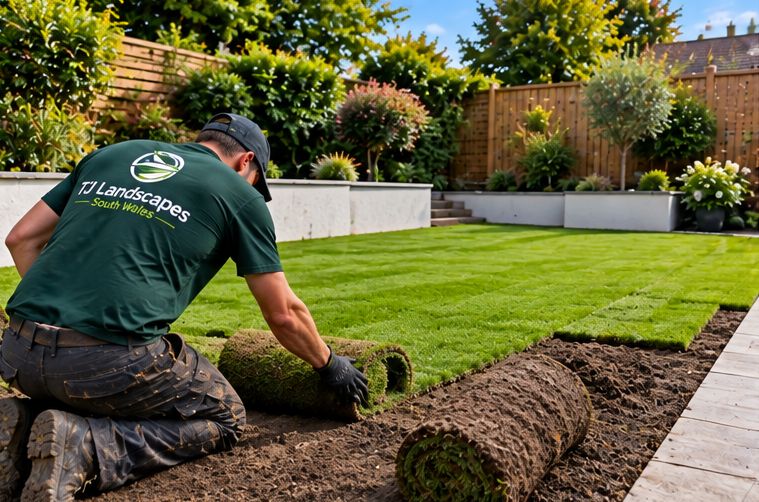
Laying rolls of turf is the quick, satisfying bit. The work that decides whether the lawn thrives or struggles happens before a single roll arrives: clearing the site, sorting the soil, dealing with water and getting the levels true.
Here is how we prepare ground for turf across South Wales, step by step, with notes on the heavy clay, thin stony soil and sloping plots we come across so often. If you would rather hand the whole job over, our turf laying service covers everything from clearance to the final roll.
Step 1: Clear the area completely
Start by removing everything that should not be under a lawn: the old grass, weeds, stones, bits of brick, buried rubble and roots. Old turf can be lifted with a turf cutter or spade, or killed off first and then dug in if it is thin and mostly grass.
Perennial weeds such as docks, dandelions, couch grass and bindweed need particular attention, because they will push up through new turf. Dig out as much root as you can. Some people use a weedkiller a few weeks beforehand and let it work before digging; if you do, follow the label carefully and allow the recommended time before laying anything.
On neglected plots or new-build gardens, there is often a surprising amount of builders' rubble just below the surface. A garden clearance before the lawn work can take the waste away in one go.
Step 2: Break up the soil
Grass roots need loose, open soil to grow into. Dig over or rotavate the area to a spade's depth, breaking up large clods. This is especially important where the ground has been compacted by building work, parked vehicles or years of foot traffic.
Avoid working the soil when it is wet. Clay that is dug or rolled while sticky smears and seals, and you can end up with a solid pan just below the surface that water cannot pass through. It is worth waiting for a drier spell, even if that means a delay of a few days.
Step 3: Improve the soil you have
The soil under turf needs to be reasonably deep and free draining. A depth of roughly 10 to 15 centimetres of decent topsoil is a common aim. On many sites the existing soil just needs some improvement; on others, particularly thin, stony valley ground or new-build plots, we bring in screened topsoil.
- Heavy clay: work in sharp sand or grit and some well-rotted organic matter to open it up. Do not add fine builders' sand, which can make clay worse.
- Thin or stony soil: pick out the larger stones and add topsoil so roots have something to hold on to and moisture is retained in dry spells.
- Very sandy soil: organic matter helps it hold water and nutrients.
- Imported topsoil: make sure it is screened and free of weeds and debris, and spread it in layers so it can be firmed evenly.
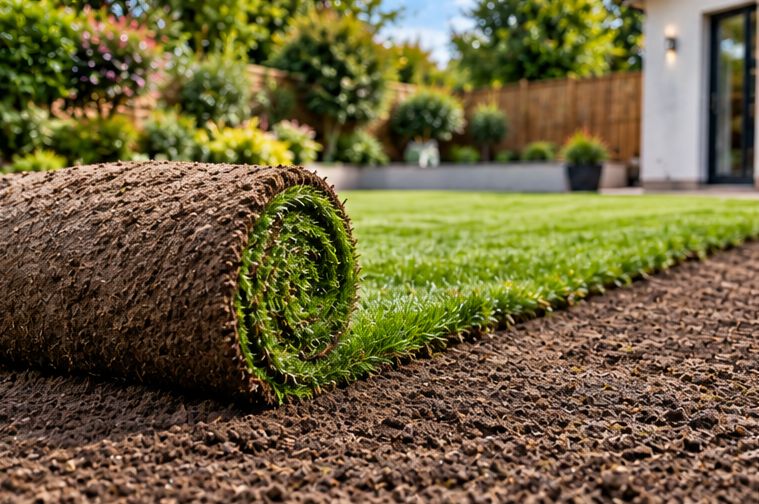
Step 4: Deal with drainage first
If a patch of your garden holds puddles for days after rain, turf will not cure it. The grass on that spot will yellow, go thin and fill with moss. Drainage is far easier to sort while the ground is open than once the lawn is down.
Depending on the cause, the answer might be breaking up a compacted layer, improving the soil, adjusting levels so water runs off, or putting in a land drain or soakaway. Our guide on stopping a garden waterlogging explains the options in more detail.
Step 5: Level, firm and rake
With the soil improved, rake it roughly level, removing any stones that come to the surface. Then firm it by treading across the whole area with your weight on your heels, in small shuffling steps, or with a light roller. Rake it again and repeat. The aim is soil that is firm enough not to sink under a footprint, but not packed hard.
Take the time to check levels. Hollows collect water, and bumps get scalped by the mower. Aim for a smooth surface that sits slightly below any adjoining patio or path, so the finished turf ends up flush and the mower can run straight off the edge.
On sloping gardens, a gentle, even fall is fine, but steep or uneven slopes are hard to mow and dry out at the top while staying wet at the bottom. Sometimes it is worth creating a level area with a retaining wall or sleepers. Our guide on landscaping a sloping valleys garden covers this.
Step 6: Feed and final rake
Just before laying, rake in a pre-turf or pre-seed fertiliser according to the packet. These are designed to help new roots establish. Give the surface a final light rake so the top is fine and crumbly rather than smooth and crusted, which helps the turf roots bite in.
If the soil is very dry on the day, a light watering the evening before can help. It should be moist, not muddy.
Order the turf last
Turf is best laid within a day of delivery, so only order it once the ground is fully ready. Rolls left stacked for several days, especially in warm weather, heat up and yellow in the middle. It also helps to plan where the delivery will go and how rolls will be moved, as turf is heavy and access through a terrace or up steps takes planning.
Once it is down, the first few weeks are about water and patience; see our guide to caring for new turf in the first six weeks. If you would like Tony and the team to look at your ground and suggest what it needs, ask for free advice and a quote. We work right across the area, from Caerphilly to Monmouth.
Talk to T J Landscapes about your garden
Free quotes and honest advice across South Wales.
Questions People Ask
Can I lay new turf on top of old grass?
It is not a good idea. The old grass rots underneath, leaving a spongy, uneven layer, and the new roots struggle to reach the soil. Lift or kill off the old lawn first and prepare the ground properly.
How much topsoil do I need under turf?
Around 10 to 15 centimetres of good topsoil is a common aim. If your existing soil is already that deep and in reasonable condition, it may only need improving rather than replacing.
Should I roll the soil before laying turf?
Firming is important, but heavy rolling can compact the soil too much, particularly clay. Treading it or using a light roller, then raking the surface, gives a firm but open base.
How long should I leave the ground after preparing it?
If weeds were a problem, leaving the prepared soil for a week or two lets buried weed seeds germinate so you can hoe them off. Otherwise you can lay as soon as the ground is ready and dry enough to work.
Do I need a pre-turf fertiliser?
It is not essential on good soil, but on poor or imported soil it helps new roots get going. Use a product made for new lawns and follow the rates on the packet.