
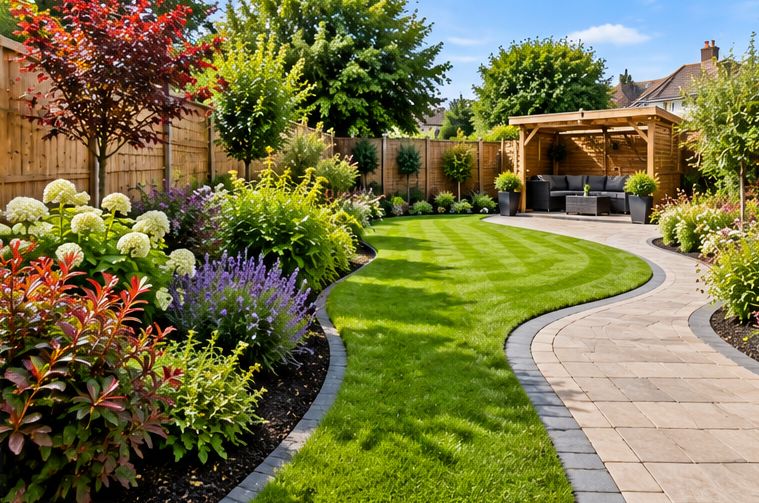
Walk along any row of Victorian houses in Cardiff and the back gardens behind them are remarkably alike: a narrow rectangle, a brick wall on each side, a back wall or lane gate at the end and often an outrigger kitchen that steals a strip of light. What people do with that rectangle varies enormously, and the difference between a yard that gets ignored and one that gets used every evening usually comes down to planning rather than money.
This guide is about that planning. It sets out the order we think in when Tony and the team look at a small terrace garden in Cardiff, from the first look at the light to the day the last slab goes down. For the wider picture of what we do across the city, see our page on landscaping in Cardiff.
Spend a day watching the light
Before any drawing, find out where the sun actually reaches. In a walled Cardiff yard the answer changes a lot through the year. A spot that is bright at midday in June may sit in shadow from October to March, while the far end by the back wall can be the only place that catches evening sun.
A simple way to check is to take a photo from the back bedroom window every couple of hours on a clear day. Those photos tell you where to put a seat, where plants will thrive and where a lawn would struggle. It is common for the best seating spot to be at the far end of the garden, not outside the kitchen door.
Give every part of the garden one job
Small gardens go wrong when they try to do everything everywhere. It helps to list what the space has to do, then give each job its own patch. Most households in the terraced streets end up with a list something like this:
- somewhere to sit and eat, placed in the sunniest corner;
- a home for the bins and recycling boxes that is easy to reach from the lane or the house;
- dry storage for bikes, tools or a mower if you keep any grass;
- a washing line or rotary dryer that does not block the route to the back gate;
- planting, even if that means a few deep beds and pots rather than borders.
Layout tricks that make a yard feel bigger
Once the jobs are placed, the shape of the layout matters. A few ideas work particularly well in long, narrow city gardens:
- Split the length into two or three rooms. A step, a change of surface or a low planter across the garden stops the eye running straight to the back wall.
- Turn the grid. Paving laid on the diagonal, or a path that zigzags between beds, makes the space read wider than it is.
- Keep to one or two materials. Three kinds of slab, a gravel strip and a deck in one small yard looks busy. A limited palette feels calm.
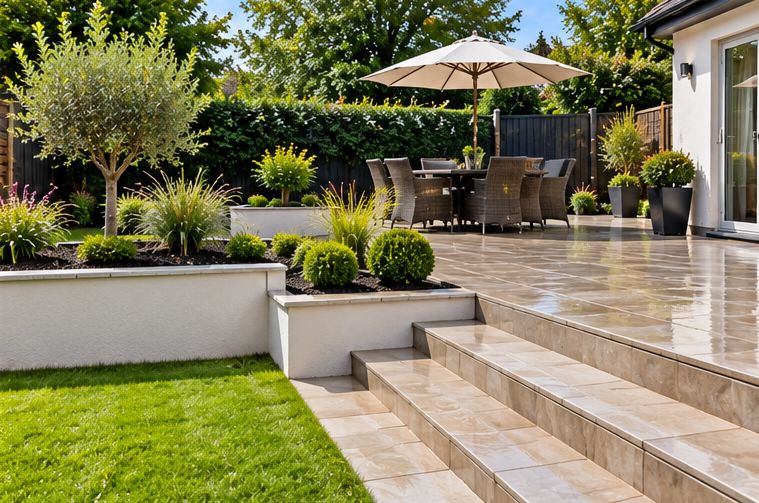
- Use a slight change of level. Even one step down to a seating area gives a sense of arrival.
Our guide to patio ideas for walled back gardens in Roath and Canton goes further into paving layouts for this kind of space.
Build upwards, not outwards
When floor space is short, walls are an asset. Trellis or wire fixed to a sound brick wall carries climbers, and a narrow bed along its foot takes very little ground. Raised beds built from brick or sleepers bring planting closer to eye level, give you a place to perch and make weeding easier on the knees.
Before fixing anything to an old boundary wall, check it is yours, or agree it with the neighbour, and make sure it is in good order. Loose bricks and crumbling mortar should be dealt with first; our brickwork team can repoint or rebuild sections. For ideas on beds and containers, read raised beds and planters for a compact Cardiff garden.
Grass, gravel or paving underfoot
Many owners of small Cardiff gardens ask whether it is worth keeping a lawn at all. In a bright yard, a small square of good turf can be lovely and cool underfoot. In a shaded one it tends to thin, go mossy and turn to mud by the back door. If you want grass in a shady plot, our article on getting a lawn growing in a shaded Cardiff garden is worth reading first.
Paving is the usual answer, but it needs somewhere for rain to go, because a sealed yard has no soil left to soak it up. Gravel beds, planting pockets left in the paving and a proper drainage point all help. Pale materials also bounce light around, which matters when the walls are high.
Plan the carry before the design is final
In a lot of Cardiff terraces, every slab, bag of sand and tonne of soil has to come through the front door, along the hallway and out through the kitchen, unless there is a usable rear lane. That affects the design. Very large format slabs may not turn the corner of a narrow passage, and heavy deliveries may need to sit on the pavement for a while.
We look at the route on the first visit, measure door widths and tight turns, and plan floor protection and how waste will leave the garden. It rarely rules anything out, but it does shape the choice of materials and the time the job takes. Our guide on how long a garden makeover takes in Cardiff explains how access feeds into the timetable.
A sensible order of work
When the whole garden is being redone, the order matters. As a rule we clear first, repair walls second, sort drainage and levels third, then lay hard surfaces, build beds and finish with planting and any turf. Doing it the other way round means carrying bricks over a new patio or digging up fresh paving to run a pipe.
If you are not sure where to start, Tony and the team are happy to come out and give free advice on a small garden, whether you want the whole thing redesigned or just one corner sorted. See our landscaping and garden design service, or ask for a free quote.
Talk to T J Landscapes about your garden
Free quotes and honest advice across South Wales.
Questions People Ask
Is a small Cardiff terrace garden worth paying to redesign?
Often it is the garden that benefits most, because every corner is on show from the house. A clear layout with storage, seating in the sun and some height in the planting can turn a yard you walk past into one you use.
Should I keep a lawn in a small back garden?
Only if it gets enough light and you are happy to mow it. In a bright yard a small lawn works well; between high walls, paving, gravel and planting usually give a better result.
Where should the bins go?
As close to the route they take on collection day as possible, whether that is the lane gate or the house. A simple screened bin store stops them taking over the one sunny spot.
Can you work on a garden with access only through the house?
Yes. We protect floors and hallways, carry materials in by hand and take waste out the same way. We allow for the extra time in the quote so there are no surprises.
Do I need planning permission for a new patio in my back garden?
Ordinary back garden landscaping does not normally need it, but listed buildings, conservation areas and raised platforms can be different. If in doubt, check with Cardiff Council before work starts.