
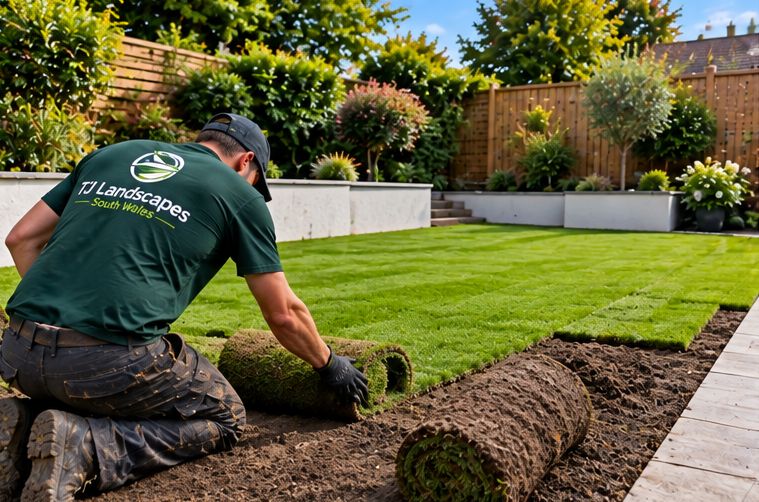
We hear the same story in plenty of Cardiff gardens. The lawn was laid, it looked lovely for a summer, and within two years it had turned to moss, mud and a few tired tufts. Nothing was done wrong in the watering. The grass simply never got enough light to keep going.
Shade is the normal state of affairs in a city of terraced streets, tall boundary walls and mature trees. This guide covers why it happens, what you can change, and when it is kinder to your garden, and your weekends, to grow less grass. For the laying itself, see our turf laying page, and for the wider picture of gardening in the city, our Cardiff landscaping page.
Where the shade comes from in a city garden
In the older streets the culprit is usually brick. A narrow terrace plot with a back wall at head height and the house itself on the south side can go most of the winter without direct sun touching the ground at all. Even in June, one strip along the north-facing wall may get only an hour or two.
Further out, in suburbs like Whitchurch, Rhiwbina and Llandaff, trees are the bigger factor. A single sycamore or lime in a neighbour's garden can throw shade across three or four plots, and its roots take water from the soil the grass is trying to grow in. That dry shade is the hardest of all for a lawn.
Newer homes on the edges of Cardiff have their own problem: tall fences close to the house on small plots, so the garden sits in the shadow of timber rather than trees.
Start by mapping the sun
Before spending anything on turf, spend a day watching the garden. Note where the sunlight falls at breakfast, lunchtime and late afternoon, ideally in spring and again in summer. A few phone photos from an upstairs window at set times make this easy.
As a rough rule, most lawn grasses struggle with fewer than four hours or so of direct sun a day in the growing season. Areas with dappled light through a thin canopy can still hold a decent lawn. Areas in solid shade all day almost never will, whatever seed or turf goes down.
- Bright all day: a normal hard-wearing lawn will cope.
- Half the day in sun: a shade-tolerant mix, cut a little higher, usually does well.
- Dappled light under trees: possible, but expect thinner grass and yearly patching.
- Solid shade: think about paving, bark, gravel or shade planting instead.
Getting more light in
Sometimes the shade can be reduced rather than accepted. Lifting the lower branches of a tree, or thinning its crown, can let far more light reach the ground without losing the tree. Our guide to crown lifting, thinning and reduction explains what each involves.
Before any tree is touched, check whether it is protected. Parts of the city are conservation areas, and individual trees can carry preservation orders. Our article on tree work in Cardiff conservation areas covers what to look into first. If the tree belongs to a neighbour, talk to them before anything else.
On the boundaries, paler surfaces help a little. A painted or rendered wall reflects more light than dark brick, and a slatted fence lets some through where a solid one blocks it. Neither turns shade into sun, but in a small yard every bit counts.
Preparing ground that has been sat in shade
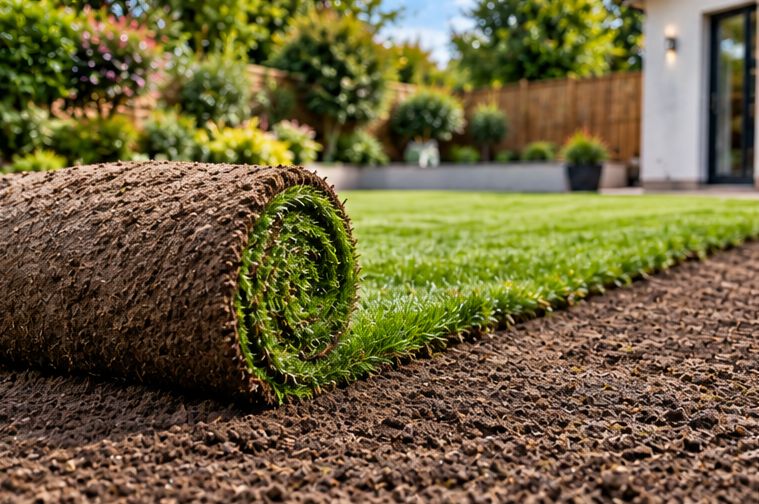
Soil in a shaded city garden is often in poor shape: compacted by years of feet, sour with moss, and in terrace gardens sometimes full of old brick, ash and clinker from coal fires. Grass roots cannot get down through that, and water sits on top in winter.
We strip out the old turf and moss, dig or rotavate to break up the compaction, pick out rubble and roots, and bring in good topsoil where the existing soil is thin or poor. Getting the level right matters too, so that rain runs off rather than pooling in the darkest corner. Our guide on preparing the ground before laying turf goes through the steps in more detail.
Under trees, be careful. Digging deep or piling soil over roots can harm the tree, so we keep disturbance light there and accept a slightly thinner lawn in return.
Choosing grass that tolerates shade
Standard garden turf is usually a hard-wearing mix heavy in ryegrass, which likes sun. For shaded areas, look for turf or seed with a higher share of fine fescues and other grasses bred to cope with less light. Shade turf is less widely stocked than standard rolls, so it is worth asking early.
Seed gives you more choice of mix, and in a small Cardiff garden the area involved is often modest enough that seed is practical. Our comparison of turf and seed sets out the trade-offs. A common approach is turf across the brighter part and a shade mix sown into the gloomy strip.
Looking after a shaded lawn
Shade grass needs gentler treatment than a sunny lawn. The changes are small but they add up over a season.
- Cut higher. Leaving more leaf means more of the little light available can be used.
- Mow less often, and never when the lawn is soggy.
- Rake up fallen leaves promptly in autumn so they do not smother the grass.
- Keep foot traffic off the shadiest strip, perhaps with stepping stones through it.
- Water under trees in dry spells, since roots take most of the moisture.
- Overseed thin patches each autumn rather than waiting for them to go bare.
Moss will still turn up in a damp, shaded Cardiff lawn. It is a sign of the conditions rather than a failure, and our guide on why lawns go patchy, mossy or bare explains how to keep it in check.
When less lawn is the better answer
In a lot of small terrace gardens, the honest advice is to shrink the lawn to the part that gets sun and do something else with the rest. A patio or path in the darkest area, a bed of ferns and shade-loving shrubs along the wall, or a gravel or bark area often looks better all year than struggling grass.
Artificial grass is another option people ask about for dark corners. It stays green, though it still needs a good base and drainage, and it does get warm and needs cleaning. Our guide to making the most of a small Cardiff terrace garden has more ideas for dividing up a tight space, and our landscaping and patio pages show the other work we do.
If you would like someone to look at the light and the soil with you, Tony and the team can come out, talk it through and give you a free quote for whichever route suits.
Talk to T J Landscapes about your garden
Free quotes and honest advice across South Wales.
Questions People Ask
Will any grass grow in full shade?
Not well. Shade-tolerant mixes cope with part shade and dappled light, but ground that gets no direct sun at all in the growing season rarely holds a lawn for long. Paving, planting or gravel usually works better there.
Is turf or seed better for a shaded lawn?
Seed offers a wider choice of shade mixes, while turf gives a quicker result. Many shaded gardens end up with a mix of both: turf where it is brighter and a shade seed mix where it is darker.
Why does my Cardiff lawn go to moss every winter?
Shade, damp and compacted soil are the usual reasons, and many city gardens have all three. Improving drainage, cutting higher and letting in more light will help more than moss killer alone.
Can you cut back my neighbour's tree to get more light?
You generally need to agree it with your neighbour, and the council's permission may be needed if the tree is protected or in a conservation area. We can advise on what would help once those checks are done.
How long before I can use a new shaded lawn?
Rooting is slower in shade, so allow longer than for a sunny lawn and keep use light through the first season. Our advice on caring for new turf in the first six weeks applies here too.