
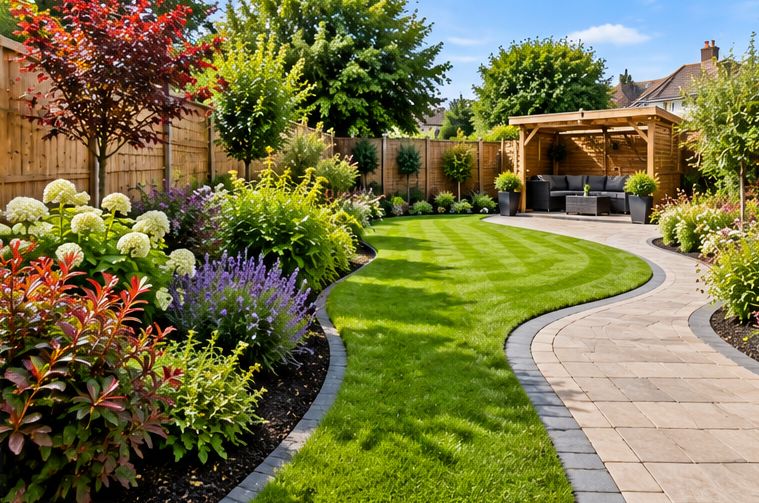
Many of the gardens we see in Cardiff have very little soil left to plant in. The yard behind a terrace may be concrete or slabs from wall to wall, and where there is ground it is often thin, stony and in shade. Raised beds are the natural answer. They sit on top of whatever is there, you fill them with good soil, and they lift the plants closer to the sun.
They also do something for the look of a tight space. A well-placed bed breaks up a plain yard, marks out a seating area and gives the eye somewhere to rest. This guide covers where they work best, what to build them from, and the checks we make before building one in a city garden. It sits alongside our landscaping and garden design service and our Cardiff landscaping page.
Follow the light, not the walls
The obvious place for a bed is along a boundary wall, and often that is right. But in a narrow garden one wall will face north and sit in shade for most of the day, while the opposite one catches the afternoon sun. Put the beds for vegetables, herbs and flowering plants on the sunny side, and keep the shady side for ferns, hostas and other plants that like it cool.
In a very small yard, a single L-shaped bed wrapping round a sunny corner often works better than two thin strips down each side. It leaves a clear central space for a table and chairs and makes the garden feel wider. Our guide to making the most of a small Cardiff terrace garden looks at the whole layout in more depth.
Protecting the old boundary walls
This is the part people most often miss. Many garden walls behind Cardiff terraces are around a century old, built with soft lime mortar and only one brick thick, and never meant to hold back soil. Filling a bed straight up against one can push damp into the wall and, over time, weaken it. If the wall is shared, it is also your neighbour's wall.
We usually build a bed as a freestanding box with its own back, leaving a small gap to the boundary, or line the back face so wet soil does not sit against the old brick. If the wall already leans or has loose bricks, it is better to repair it first. Our brickwork page covers repointing and rebuilding.
Materials that suit a city yard
The right material depends on the style of the house, the budget and how long you want the bed to last.
- Brick: matches the house and walls of an older terrace and lasts for decades. It needs a proper footing. Our guide to building brick raised beds and planters explains how they are built.
- Timber sleepers: quick to build, warm-looking and easy to carry through a house in manageable lengths. Choose sleepers treated for garden use rather than old railway sleepers, which can leak tar.
- Rendered block: a clean, modern finish that can be painted to brighten a shaded yard.
- Stone: suits the older villas and cottages in places like Llandaff, and the gardens of stone-fronted houses.
- Freestanding planters: good for rented homes or where the ground cannot be dug, and they can move with you.
Height, width and a place to sit
A bed you can reach across from one side should be no more than about a metre wide, or around 60 centimetres if it backs onto a wall. Any wider and you end up treading on the soil.
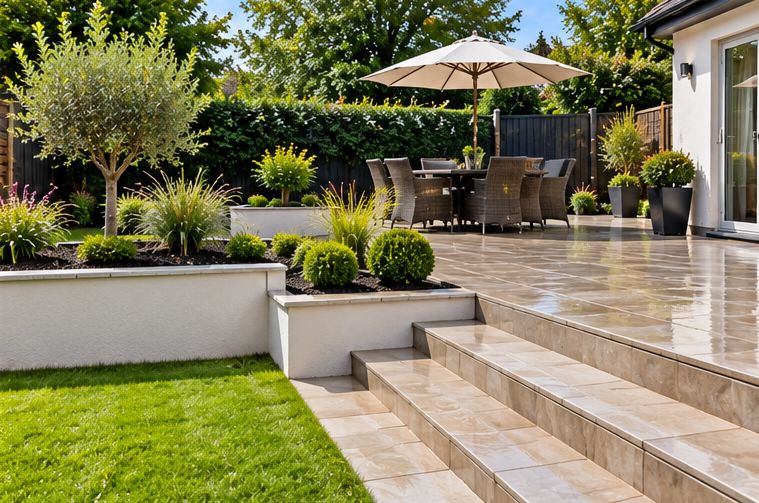
Height is a matter of taste and practicality. A low bed of two or three sleepers is enough for most flowers and herbs. Bringing it up to roughly seat height, around 45 centimetres, means you can sit on the edge, which is very handy in a small garden where there is no room for a bench as well. A wide timber or stone coping on top makes it comfortable. Taller beds are kinder on the back for anyone who finds bending difficult.
Drainage and what goes inside
A raised bed built on concrete or slabs has nowhere for water to go unless you make it. We leave weep gaps at the base of brick beds, and where possible break through a concrete base so water can drain into the ground below. In a wet Cardiff winter, a sealed box will fill like a bath and drown the roots.
For filling, a good topsoil mixed with compost suits most planting. A deep bed does not need to be all soil: a layer of rubble or coarse material at the bottom helps drainage and reduces the amount that has to be carried through the house. Plan the soil delivery carefully, since bulk bags cannot always be dropped outside a terraced house on a busy street.
Planting ideas for small city beds
Beds in a compact yard work hardest when they look good for most of the year. A backbone of evergreen shrubs or grasses, a few climbers trained up the wall on wires, and seasonal colour in front will keep a bed interesting through the winter months.
Many Cardiff households use raised beds for herbs, salad and soft fruit. They are close to the kitchen, easy to keep weed-free and warm up faster in spring than the ground. Some people add a small water feature or low garden lighting set into the bed edge, which makes a small space pleasant to sit in on summer evenings.
Combining beds with paving and decking
Raised beds are often built as part of a wider makeover. Laying a new patio first and then building beds on top gives a neat edge and clear falls for rainwater. Our guide to patio ideas for walled back gardens in Roath and Canton has more on the paving side. Beds also work well framing a low deck, with planters built into the edge.
If you would like help working out where beds would go in your garden, Tony and the team can visit, look at the light and the walls with you, and give a free quote.
Talk to T J Landscapes about your garden
Free quotes and honest advice across South Wales.
Questions People Ask
Can I build a raised bed straight onto concrete?
Yes, but it needs drainage. We leave gaps at the base or break through the concrete in places so water can escape, and fill the bottom with free-draining material.
Are sleepers or brick better for a Cardiff terrace garden?
Brick usually matches the house and lasts longer. Sleepers are quicker, softer in look and easier to get through a narrow hallway. Both work well if built properly.
Can a raised bed go against my neighbour's wall?
It is best to keep soil off a shared wall, either by leaving a gap or building the bed with its own back. Talk to your neighbour first, and check the wall is sound.
How deep should a raised bed be?
For flowers and herbs, a depth of a couple of sleepers is usually enough. Vegetables and shrubs appreciate more. Beds built to seat height give plenty of depth and a place to sit.
Can you build raised beds as part of a bigger garden makeover?
Yes, and it often makes sense to plan them together with paving and drainage. Our guide on how long a garden makeover takes in Cardiff shows how the stages fit.