
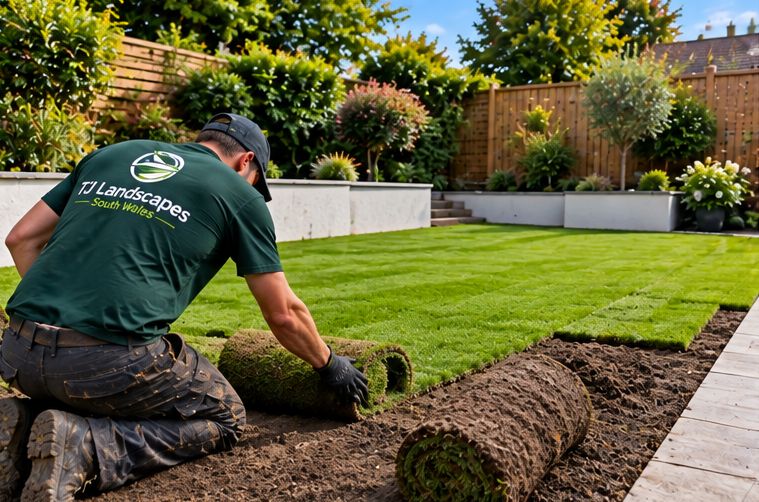
One of the good things about turf is that it gives you a lawn straight away, and unlike seed it can be laid for a large part of the year. Even so, some months make life much easier for a new lawn than others, and our climate, with its mild, wet winters, heavy clay in places and cooler upland valleys, has its own quirks.
Here is a season-by-season guide, followed by the preparation and aftercare that help new turf root well. For more about our lawn work, see our turf laying page.
Autumn: often the easiest time
Early to mid autumn is usually a very good time to lay turf in South Wales. The soil is still warm from summer, so roots grow quickly, and the rain that usually arrives in autumn saves a lot of watering. Cooler air means the turf is less likely to dry out and shrink at the joins.
The main thing to watch in autumn is the ground itself. If the soil becomes waterlogged, particularly on clay, it is better to wait a few days than to work it when it is sticky. Walking and working on wet clay squashes the air out of it and can leave a compacted, badly drained layer under the new lawn.
Spring: a strong second choice
Spring is the other favoured window, once the soil has started to warm and the worst frosts have passed. Grass begins growing actively, so turf roots in well, and there is a whole growing season ahead for the lawn to thicken up before winter.
Spring in Wales can be surprisingly dry at times, so new turf laid in late spring may need regular watering. Higher valleys such as those around Ebbw Vale and Merthyr Tydfil tend to warm up a little later than the coast, so the ideal moment there can come a few weeks after it does in Cardiff or Newport.
Summer: possible, but thirsty
Turf can be laid in summer, and plenty of lawns are. The catch is water. In a warm, dry spell new turf can dry out and shrink within a day or two, leaving gaps at the joins. If you choose summer, be ready to water thoroughly and often, ideally early in the morning or in the evening, until it has rooted.
Avoid laying turf during a heatwave or a hosepipe ban if you can. It is not impossible, but it puts the lawn under a lot of stress at the very start of its life.
Winter: only when the ground allows
In the milder, lower parts of South Wales, turf can sometimes be laid in winter during a spell of reasonable weather. Roots grow slowly in cold soil, so it takes longer to establish, but it will usually get going when spring arrives.
The firm rule is not to lay turf on frozen ground, or on ground that is waterlogged or covered in snow, and not to walk on frosty grass. In the upland valleys, winter conditions are often simply too wet and cold, and it is better to wait.
Preparation matters more than timing
A lawn laid at the ideal time on poor ground will struggle, while one laid at a less perfect time on well-prepared ground will usually come good. That is why the groundwork is where most of the effort should go.
- Clear old grass, weeds, stones and debris. A garden clearance first can help on neglected plots.
- Break up compacted soil, and on heavy clay consider improving it with good topsoil and some grit or sharp sand to help drainage.
- Deal with any existing drainage problems before the turf goes down; it is much harder afterwards. See our guide to stopping a garden waterlogging.
- Rake and firm the soil to an even level, so there are no hollows where water will sit.
- Rake in a pre-turf fertiliser if the soil is poor.
Laying and aftercare
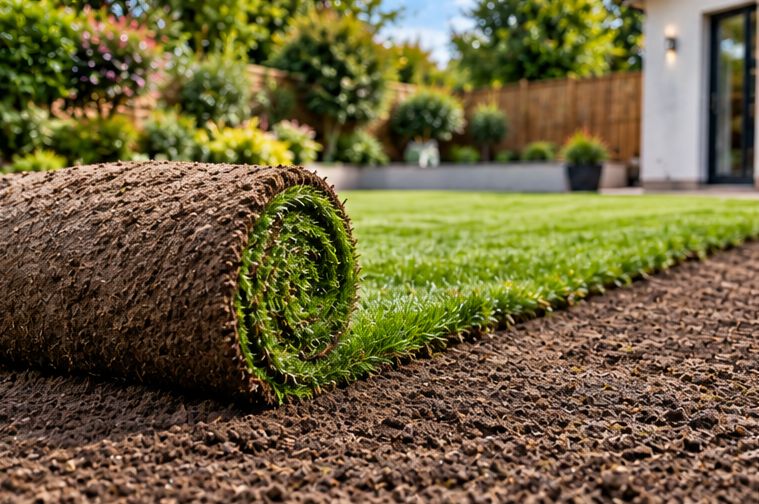
Turf is a living product and does not like sitting rolled up. It should be laid as soon as possible after delivery, ideally within a day of it arriving. Rolls are laid in a staggered pattern like brickwork, butted tightly together, and firmed down so the roots touch the soil. On a slope, laying across the slope and pegging the turf where needed helps stop it slipping.
Water it well straight away and keep it moist until it roots, which can take a couple of weeks or more depending on the season. Keep off it as much as you can during that time. When the turf has knitted in and you cannot easily lift a corner, give it a first light cut with the mower set high, then lower the height gradually over the following cuts.
The first winter is the real test in South Wales. Try to keep leaves raked off so they do not smother the grass, avoid walking on it when it is frosty or sodden, and resist the urge to feed it late in the year. A spring feed and a light scarify once it is well established will usually help it thicken up nicely.
Getting it done
Tony and the team lay new lawns across South Wales, often as part of a wider landscaping project alongside new paths, patios or edging. We will look at your soil, drainage and light, suggest a suitable turf for how the lawn will be used, and give you free advice and a free quote. If you are weighing up a lawn against other surfaces, our low-maintenance garden guide may help.
Talk to T J Landscapes about your garden
Free quotes and honest advice across South Wales.
Questions People Ask
Can I lay turf in the rain?
Light rain is fine and can even help. Heavy rain that leaves the soil muddy and sticky is not, especially on clay, because working the ground when it is wet compacts it. It is better to wait a day or two.
How soon can I walk on new turf?
Keep off as much as possible for the first two to three weeks while it roots. Light, necessary walking is fine, for example to water it, but avoid heavy use, games or furniture until it has knitted in.
Will turf grow in a shady garden?
Some turf mixes cope better with shade than others, but no grass does well in deep shade. If part of the garden gets very little light, a patio, gravel or shade-loving planting may be a better choice there.
Why has my new turf gone yellow?
Usually because it dried out, was left rolled up too long, or is sitting in water. Keep watering if it is dry; if the ground is waterlogged, drainage may be the problem. Most turf recovers if the cause is fixed quickly.
Is turf better than seed?
Turf gives you a usable lawn much sooner and has a wider window for laying. Seed is cheaper for large areas but takes longer to establish and is more at the mercy of birds, weeds and the weather.