
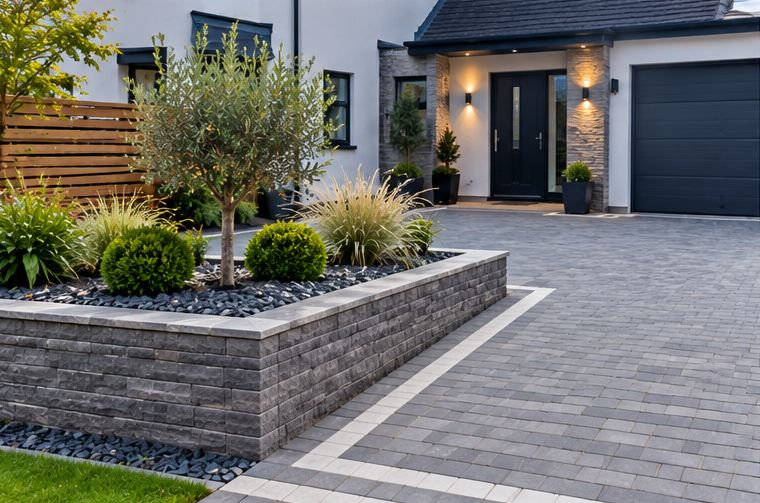
Gardens in Talgarth are rarely blank rectangles. A stone cottage might have a narrow yard at the front and a long strip running up behind it; a farmhouse might have a lawn, an old orchard and a paddock that nobody has decided what to do with. The Black Mountains fill the skyline on one side, and the weather arrives from the hills with very little warning.
This guide gathers the design ideas we find work best on Talgarth properties. It sits alongside our landscaping and garden design service and the landscaping in Talgarth page, which explains how we cover the town from our base in Torfaen.
Decide what the garden should look at
Before choosing a single plant or slab, stand at the kitchen window and the back door and note what you can see. In Talgarth that is often a long view of the mountain ridge, a church tower, a line of field trees or a neighbour's barn. Some of those views are worth framing; others are worth screening.
A simple rule helps: keep things low and open on the side with the good view, and put height, walls and evergreen shrubs on the side you would rather not look at. A bench or small terrace placed at the point where the view opens up gives the whole garden a purpose.
Work outwards from the back door
Country gardens feel calm when they are organised in rings. The ring nearest the house is the most finished; each one further out is a little rougher and needs a little less attention.
- The doorstep zone. A stone terrace, pots of herbs, a place to kick off muddy boots and somewhere dry to sit with a coffee.
- The working garden. Lawn, borders, a washing line, the shed and perhaps raised vegetable beds within easy reach.
- The outer garden. Fruit trees, rough grass with mown paths, a wildflower strip or a pond.
- The boundary. Native hedging, dry stone or mortared walls and fencing that suits whatever is on the other side.
Thinking in rings stops a big plot feeling like one endless chore. It also tells you where to spend money: the doorstep zone is used every day, so it deserves the best materials.
Materials that belong at the foot of the hills
Much of the older building stone around Talgarth is warm, earthy sandstone, and the countryside is full of grey slate roofs, oak gateposts and field hedges. Picking up those colours makes new work look settled from the first day. Muted sandstone or reclaimed-looking setts for the terrace, gravel for paths, oak sleepers for steps and edging, and galvanised or black metal for gates all sit comfortably here.
Bright white porcelain, glossy blue-grey slabs and very formal clipped shapes can look out of place against a rural backdrop, although a crisp modern extension can carry them well. If you are unsure, we can bring samples to the property so you can see them against the walls in real light. Our article on natural stone paving for a Talgarth cottage covers the paving choices in more detail.
Planting that can take a hill-country winter
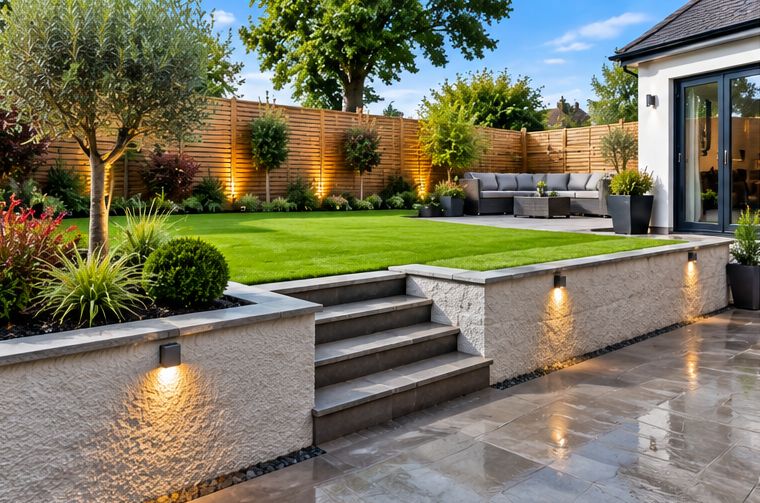
Talgarth gardens get more rain and colder nights than gardens down near the coast, and a late frost can catch tender plants out well into spring. The plants that thrive are tough, native or well tried in upland gardens: hawthorn, hazel, field maple and holly in hedges; rowan, crab apple and birch as small trees; hardy geraniums, lady's mantle, foxgloves, ferns and grasses in the borders.
Group plants in generous drifts rather than dotting single specimens around, and mulch bare soil with bark to hold back weeds and protect roots through the wet months. Anything precious or tender is best kept in pots near the house, where it can be moved into shelter when a cold night is forecast.
Kitchen gardens and raised beds
A lot of people moving to the edge of the national park want to grow their own. Raised beds are a sensible way to do it here. They warm up earlier in spring, drain faster after heavy rain and let you fill them with good topsoil where the natural ground is thin or stony.
Timber sleepers suit the country look and are quick to build; stone or brick beds last longer and can double as seating walls. Put them in the sunniest spot you have, close to a tap, and leave paths wide enough for a wheelbarrow. A low hedge or a slatted fence on the windward side makes a real difference to how well crops do.
Paths, gates and the walk to the field
On a country plot the routes through the garden are as important as the spaces. Think about how you get from the back door to the log store, the compost heap, the car and the gate into the field, and make those routes firm and dry. Compacted gravel or stone paths edged with timber are practical and look right.
Where the garden meets a field or paddock, a field gate or a simple wooden pedestrian gate marks the change from garden to countryside. Our guide to stock fencing and boundary fencing around Talgarth explains how to choose boundaries for each stretch, and stone walls and gateways for Talgarth properties looks at entrances.
Room for wildlife without the garden looking neglected
Country gardens can do a great deal for birds, bats and insects, and the trick is to make wild areas look deliberate. A mown path through long grass, a clean edge between lawn and meadow, or a neat log pile beside a native hedge all read as planned rather than forgotten.
Ponds, bird boxes, a strip of wildflowers and hedges left uncut through the nesting season all help. We go into this further in wildlife-friendly landscaping near Talgarth.
Talk to T J Landscapes about your garden
Free quotes and honest advice across South Wales.
Questions People Ask
Can a country garden in Talgarth be low maintenance?
Yes, if the design keeps the tidy areas small and near the house. Bark-mulched borders, gravel paths, a sensibly sized lawn and rough grass further out all cut down the weekly work. Our guide to planning a low-maintenance garden has more ideas.
Should we design the whole plot at once?
It is worth planning it all at once, even if the work is spread over a few seasons. That way the terrace, drainage and paths are built in the right order and nothing done early has to be dug up later.
Do you need to see the property before suggesting ideas?
It helps a great deal. Views, slopes, wet spots and access vary so much around Talgarth that we like to walk the garden with you. The visit and the quote are free.
Do we need planning permission for garden changes near the national park?
Most ordinary garden work does not, but walls by a road, changes to access and work to protected trees can. Check with the Brecon Beacons National Park Authority or Powys council first. We are landscapers, not planners, but we will flag anything worth asking about.
How do we start?
Send us a few details and photos through the enquiry form and we will arrange a time to come out and talk it through.