
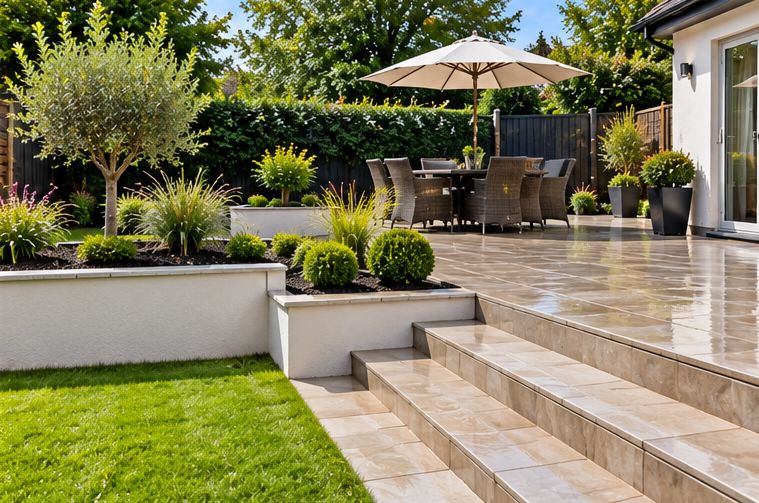
One of the pleasures of living near Talgarth is how close the wild is. Buzzards over the fields, swallows around the outbuildings, bats at dusk, and the Black Mountains rising behind it all. A garden here can either sit apart from that, as a neat island of lawn and fence, or blend into it and give the wildlife somewhere else to feed, shelter and breed.
Wildlife-friendly landscaping does not mean letting the whole garden go wild. It means planning the space so there is a tidy, usable area near the house and a looser, richer edge further out. This guide looks at how that works on a country plot, and which features make the biggest difference. For the wider design side, see country garden design ideas for Talgarth homes.
Think in zones, from the house out to the fields
The easiest way to plan a wildlife garden on a rural Talgarth plot is to picture it in bands. Closest to the house is the part you use every day: a terrace, a path, a lawn for children and a few borders. Beyond that comes a middle zone of mixed shrubs, fruit trees and longer grass. At the far edge, where the garden meets the fields, things can be at their wildest.
This gradual change from tidy to wild looks natural against the hills and gives animals a safe route in from the countryside. It also saves work, because the far zones need cutting once or twice a year rather than every week.
Native hedges instead of bare fences
A mixed native hedge is probably the single best thing you can add. Hawthorn, blackthorn, hazel, holly, field maple, dog rose and guelder rose give flowers for insects in spring, berries and nuts for birds in autumn, and dense cover for nesting all year round. On an exposed plot below the Black Mountains they also filter the wind far better than a solid barrier.
Where you need a fence for livestock or privacy, a hedge can be planted alongside it and allowed to take over the job as it grows. Our guide to stock fencing and boundary fencing around Talgarth looks at combining the two. Existing hedges are worth looking after too; see managing big trees and hedgerows near Talgarth for trimming and laying.
Hedgehogs roam a long way each night, so small gaps at ground level under fences and gates, roughly the size of a CD case, let them pass between gardens and fields.
Meadow strips and longer grass
A large lawn cut short every week offers very little to insects. Leaving a strip or a corner to grow long through the summer, with a neat mown path through it, changes that quickly. Many native wildflowers will appear on their own once the mower stops, and more can be added as plug plants or seed.
Wildflowers generally do best on poorer soil, so a patch of old paddock or a cleared bank often works better than rich garden soil. The long grass is cut once in late summer, left to drop its seed for a few days, and then raked off. If you still want a proper lawn nearer the house, see large lawn installation for a Talgarth property.
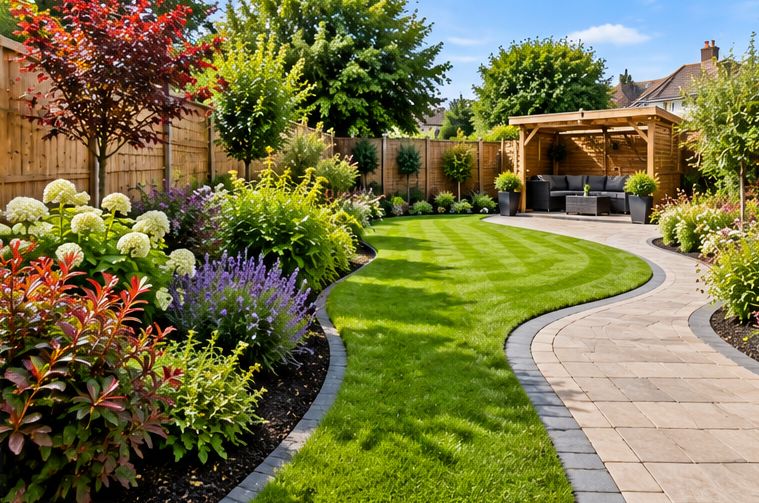
Water, wood and shelter
Even a small pond brings a garden to life, with frogs, newts, dragonflies and birds coming to drink and bathe. A good wildlife pond has at least one gently sloping side so animals can get in and out, some deeper water in the middle and native plants around the edge. With the rainfall around Talgarth, a pond can often be topped up from a water butt.
- Log piles in a shady corner feed beetles and fungi and give shelter to hedgehogs and toads.
- Dry stone walls and rock piles hold warmth and hide insects, lizards and small mammals.
- Bird and bat boxes fixed to mature trees or buildings add nesting space.
- Compost heaps are warm, busy places that slow worms and hedgehogs often move into.
Much of this can be made from what a clearance leaves behind, as clearing overgrown land around a Talgarth property explains.
Keeping the night sky dark
Much of the land around Talgarth is part of the Brecon Beacons National Park, which is an International Dark Sky Reserve. Bright, upward-facing garden lights spoil that view of the stars and also disturb bats, moths and other night-time wildlife.
Wildlife-friendly lighting is low, warm in colour and pointed down at the path or step it needs to light. Motion sensors or timers mean lights are only on when needed. It keeps the garden safe to walk through after dark without lighting up the fields beyond.
It is worth thinking about the house as well as the garden. A security light that floods the lawn every time a cat walks past is one of the most common problems, and swapping it for a lower, shielded fitting on a shorter timer makes a real difference to the bats that hunt along hedges and tree lines after dark.
Planting that feeds wildlife through the year
In the borders near the house, choose plants that flower in succession from early spring to late autumn. Spring bulbs, fruit blossom, foxgloves, lavender, herbs, and late asters and ivy flowers all keep bees and other insects fed. Seed heads left standing over winter feed finches, and berrying shrubs carry birds through the cold months.
Plants need to cope with the colder winters and wetter weather at the foot of the Black Mountains, so hardy, native or well-proven garden plants tend to do better than tender ones. Mulching borders with bark or leaf mould keeps the soil moist and full of worms. Our guide to gardens in the Black Mountains: planning for the weather covers what copes with the local climate.
We can plan and build all of this as part of a wider design; see our landscaping and garden design page and our landscaping in Talgarth page for more.
Talk to T J Landscapes about your garden
Free quotes and honest advice across South Wales.
Questions People Ask
Will a wildlife garden look messy?
Not if it is planned. Keeping the area near the house neat, mowing clean paths through long grass and giving wild areas a clear edge makes the whole garden look deliberate rather than neglected.
Can I have a wildlife pond with young children around?
It needs care. Many families wait until children are older, or fit a strong grid just below the surface. A bog garden or a shallow water bowl is a safer start in the meantime.
When is the best time to plant a native hedge?
Bare-root native whips are planted in the dormant season, roughly from late autumn to early spring, when the ground is not frozen or waterlogged.
Does a wildlife garden need less maintenance?
Usually a little less, but not none. Long grass needs a yearly cut, hedges a trim and ponds an occasional clear-out. It is a different kind of upkeep rather than weekly mowing and edging.
Can you design and build a wildlife-friendly garden for us?
Yes. Get in touch and Tony will visit, talk through how you use the garden and what you would like to attract, and give you a free quote.