
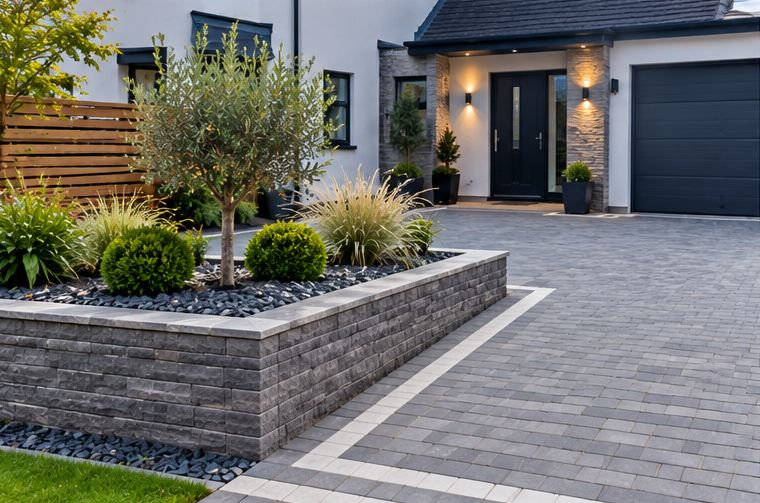
Stone is everywhere in and around Abergavenny: in cottage walls, old garden terraces, boundary walls and the fronts of Victorian villas. Much of it is the warm, reddish-brown sandstone found across this part of Monmouthshire, and a new wall in a matching stone settles into a garden here far faster than brick or block.
There are two broad ways to build one. A dry stone wall is held together by the weight and fit of the stones alone. A mortared wall is bedded and pointed, usually with a lime or cement mortar. Both have a place, and this guide explains which to choose and why. For the brick side of things, see Choosing Bricks and Coping for a Garden Wall.
How a dry stone wall stands up
A well-built dry stone wall looks simple but follows a clear set of rules. It starts on a footing of large, flat stones laid in a shallow trench on firm ground. It is built as two faces that lean slightly inwards, a shape called the batter, so the wall is wider at the base than the top.
The gap between the faces is packed tight with smaller stones, known as hearting, so nothing can shift. Long through stones span the full width at intervals to tie both faces together, and the top is finished with cope stones set on edge to lock everything down and throw off the rain.
Because there is no mortar, water drains straight through, and the wall can flex slightly as the ground moves with frost and rain. That is why dry walls last so well in upland country and why so many old ones in the Welsh hills are still standing.
Where a dry stone wall suits best
Dry stone is at its best on the more open, rural edges of Abergavenny: field-side boundaries, walls running up a hillside garden, low edges to a kitchen garden and informal terraces. It suits a cottage or farmhouse and gives a rougher, softer look that ages quickly, with moss and small plants taking hold in the joints.
- Wildlife friendly. The gaps shelter insects, small mammals and sometimes nesting birds.
- Free draining. No build-up of water behind low retaining sections.
- Easy to repair. A fallen section can be taken down and rebuilt using the same stone.
- Needs width. The batter and hearting make it thicker than a mortared wall of the same height.
Planted dry walls, with alpines or trailing plants tucked into soil pockets, are a lovely way to edge a raised bed. Our guide to kitchen gardens and raised beds in Abergavenny has more ideas along those lines.
When mortar is the better choice
A mortared wall can be built thinner and more upright, which matters in a tight town garden or along a pavement. It gives a crisper, more formal finish that suits a Victorian villa, a front boundary or a wall tied into the house itself. It also makes more sense where a wall has to carry a gate, a pier or fixings for lighting.
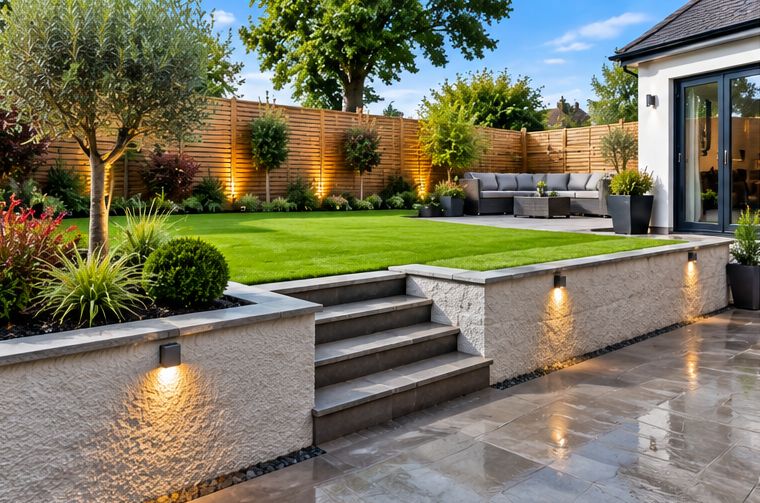
For taller retaining walls holding back a hillside terrace, a mortared wall on a proper concrete foundation, with drainage behind it and weep holes through it, is usually the sounder option. Any retaining wall of real height needs careful thought, and some need an engineer's input. Our guide on when a retaining wall needs engineering advice explains where that line sits.
Lime or cement for old stone
Older stone walls around Abergavenny were almost always built with lime mortar. Lime is softer and more breathable than cement, so moisture can escape through the joints rather than the stone, and the wall can move a little without cracking.
Repointing an old wall in hard cement mortar often does more harm than good. Water gets trapped, the face of the stone can flake away in frost and the cement stands out as a hard grey line. For repairs to period walls, we match the original lime mortar as closely as we can. For brand new walls, a suitable mortar is chosen to match the stone and the job.
Repairing a bulging or collapsed wall
Wet winters, tree roots, ivy and years of soil pressure all take their toll on garden walls. A bulge, a lean or a patch of loose stones is usually a sign that the wall needs taking down and rebuilding in that section rather than patching the face.
We carefully take the damaged stretch down, sort and keep the stone, check the footing and any drainage behind, and rebuild using the original material wherever possible. Where stone has been lost, we look for a close match in colour and texture. Ivy is cut back first and its roots pulled from the joints, since it is often the cause. If trees are growing right against a wall, our tree surgery and hedge care team can deal with them too.
Listed buildings and conservation areas
Parts of Abergavenny are covered by conservation area rules, and some older properties are listed. Boundary walls can be included in that protection, especially along the front of a house. Before demolishing, raising or substantially altering a wall like that, check with Monmouthshire County Council. Like-for-like repairs are usually straightforward, but it is always better to ask first.
Planning a new stone wall
Start with what the wall has to do: mark a boundary, keep out wind, hold back soil, create a raised bed or simply look good. Then think about height, where the stone will come from and how it will be brought in, since access on a steep Abergavenny plot can shape the whole job. A stone wall often pairs well with a matching patio; see patio ideas for Abergavenny stone cottages.
Our brickwork and garden walls service covers dry stone, mortared stone and brick walls, retaining walls, piers and repairs. You can read about the wider design side on our landscaping in Abergavenny page, or book a free quote and Tony will look at the ground, the stone and the best way to build it.
Talk to T J Landscapes about your garden
Free quotes and honest advice across South Wales.
Questions People Ask
How long does a dry stone wall last?
A properly built one with a good footing, tight hearting and firm copes can stand for generations. Old field walls across upland Wales are proof of that. Most problems come from poor footings, missing copes or roots growing through.
Can you match the stone of my old cottage?
We try to. Reclaimed local stone is often the closest match for colour and weathering, and new sandstone can be chosen to blend in. We will show you options before any wall goes up.
Is a dry stone wall strong enough to retain soil?
For low changes in level, yes, and it drains well. For higher retaining walls, a mortared wall on a concrete foundation with drainage behind it is usually safer.
Can I grow plants on a stone wall?
Yes. Dry walls in particular suit small alpines, ferns and trailing plants in the joints. Keep ivy and woody climbers off old walls, as their roots force the stones apart.
What affects the cost of a stone wall?
The length and height, the stone chosen, whether it is dry or mortared, the foundations needed, access for materials and how much old wall has to come down first. A free quote sets it all out.