
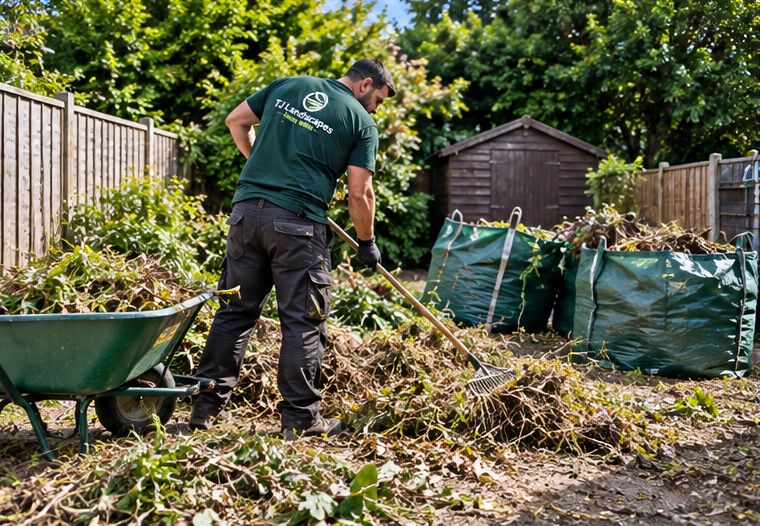
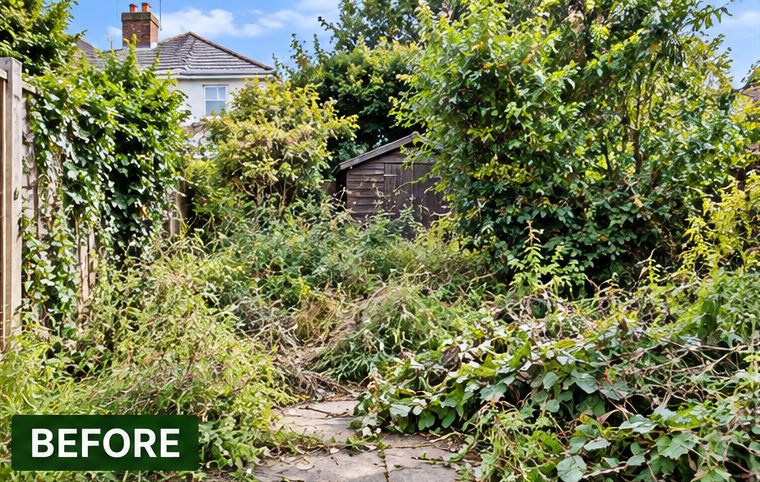
Newport has a lot of rented homes, from Victorian terraces near the centre to semis and newer houses on the big estates. When a tenant moves out, the inside gets the attention: cleaning, repainting, a new carpet. The garden is often the last thing anyone thinks about, and it is frequently where the surprises are. Piles of rubbish behind the shed, a lawn knee-high since June, a fence panel lying flat and a hedge swallowing the path.
This guide is for landlords and letting agents who want the outside sorted quickly and properly before new tenants arrive. It covers what a clearance involves, how to fit it into a void period, and how to leave a garden that is easier to look after next time. For the service itself, see our garden clearance page, and for the wider picture, landscaping in Newport.
Book the garden early in the void
The most common mistake is leaving the garden until the week before the new tenancy starts. If the clearance turns up a broken fence, a rotten shed or a trip hazard on the path, there is then no time to fix it. Booking the garden in the first few days of an empty period gives room for any follow-on work.
It also helps with viewings. A tidy, cleared garden photographs better and gives prospective tenants a far better first impression than an overgrown one, particularly on family homes where the garden is part of the reason people are looking.
What a rental garden in Newport usually needs
Every property is different, but the jobs we are asked to do between tenancies tend to follow a pattern.
- Cutting back grass, brambles, weeds and self-seeded saplings that have taken over.
- Trimming hedges back from paths, windows and the front boundary.
- Removing left-behind items such as old furniture, broken toys, garden rubbish and bagged waste.
- Emptying and clearing out a shed or lean-to.
- Clearing weeds and moss from patios, paths and yards so they are safe underfoot.
- Taking all of the green waste and general garden rubbish away.
Terrace yards and estate gardens: different jobs
In many of the older terraced streets, the back garden is a narrow yard, sometimes reached from a rear lane. The work there is usually more about rubbish and hard surfaces than greenery: weeds in the cracks, a buildup of junk and perhaps a small bed that has gone wild. Access through a rear gate makes it much easier to carry waste out without going through the house.
Semis and newer estate homes more often have a proper lawn, borders and fences on three sides, so the clearance is bigger and greener. In those gardens, it is worth looking at how the space was left, because a bare lawn with a few scruffy shrubs is easy for a tenant to keep. A lot of borders and fussy planting usually is not.
What we take away, and what needs other arrangements
We remove green waste, soil and turf, garden rubbish, old timber and most general items left in a garden or shed. Some things cannot go in a normal garden clearance and need to be handled separately, such as asbestos sheeting on an old shed roof, gas bottles, paint and chemicals. If we spot them, we will tell you and explain the options.
Our guide to what can and cannot go in a garden clearance lists the details, and shed and outbuilding clearance covers emptying and removing old structures.
Safety checks once the garden is clear
Clearing a garden often reveals problems that were hidden under the growth. As the landlord, you will want to know about anything that could hurt a tenant or their children before the new tenancy starts. We point out what we find as we go.
- Loose, rocking or lifted paving slabs and steps, which are a common trip hazard.
- Fence panels or posts that are leaning, broken or held up by the hedge. Older Newport estates often have cracked concrete posts; see replacing old concrete fence posts in Newport.
- Garden walls that are cracked, bulging or losing their top courses.
- Gates that do not close or latch properly, especially where there are young children or dogs.
- Dead or dangerous branches over the garden, a path or a neighbour's property.
Most of these can be put right in the same void period. We handle fencing and gates, paving repairs and tree and hedge work as well as the clearance, so one visit can cover the lot.
Leaving a garden that stays tidy
The best time to make a rental garden easier to manage is when it is empty. A few simple changes cut down the work for tenants and the risk of another big clearance in a few years.
Replace a tired, weedy lawn with fresh turf, or reduce it and add a patio or gravel area. Take out overgrown shrubs and fussy borders in favour of a few tough plants and bark. Lay a membrane under gravel so weeds do not come through. Keep hedges to a height a tenant can trim from the ground. Our guide on planning a low-maintenance garden has more ideas, and laying turf in Newport explains why ground preparation matters on local soil.
Working with an empty property
Most landlords and agents are not on site, which is fine by us. We can collect a key, work to a gate code or arrange access with the agent, and send photos of the finished garden so you can see it without making a trip. If you have several properties around Newport, we can also plan clearances as each one becomes empty.
Keeping a dated set of before and after photos is sensible for your own records at the start and end of each tenancy. It is general good practice rather than legal advice, and your letting agent can tell you what they need.
Talk to T J Landscapes about your garden
Free quotes and honest advice across South Wales.
Questions People Ask
How quickly can a rental garden be cleared?
A small, moderately overgrown garden is often a day's work or less. It depends on size, how overgrown it is and how much has been left behind. Larger or badly neglected gardens can take longer. We give you a clear idea when we quote.
Do I need to be there?
No. We can work from a key, a lockbox or access arranged with your agent, and send photos when the job is done.
Can you fix fences and paving at the same time?
Yes. Once the garden is cleared, we can repair or replace fence panels, posts and gates, relay loose slabs and trim trees and hedges, so the property is ready for the next tenant.
What affects the cost of a clearance?
The size of the garden, how overgrown it is, how much waste there is and what type, and how easy access is, especially where everything has to go through the house. Tony gives free quotes after seeing the garden or photos. Get in touch to arrange one.
Do you work for letting agents?
Yes. We are happy to deal with agents directly on access, timing and photos, as long as we know who is approving the work.