
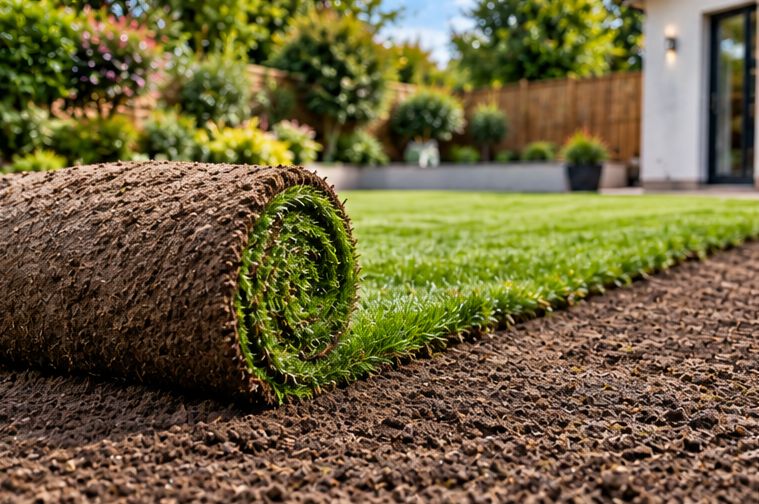
Rolling out fresh turf is the satisfying part, and it only takes a few hours. What decides whether that lawn is still green and level in three summers is the ground it sits on. In Newport that ground varies a lot from one district to the next, and the same preparation will not suit every garden.
This guide looks at the kinds of soil we meet around the city, what each one needs before turf goes down, and how to look after it afterwards. It sits alongside our turf laying service and our wider notes on landscaping in Newport.
Three kinds of lawn ground around Newport
Broadly, the Newport gardens we turf fall into three groups. Knowing which one you have is the first step, because each fails in a different way.
- Low, heavy ground near the Usk. Clay and silty soil that holds water through the winter. Lawns here turn soft, mossy and rutted, and new turf can sit in a puddle for days.
- Estate gardens with a thin skin of topsoil. On many newer developments, a few centimetres of soil were spread over compacted subsoil, sometimes with builders' rubble mixed in. Roots hit a hard layer and stop.
- Small, shaded back gardens. Behind older terraces and some semis, high walls and fences keep the sun off for much of the day, and the ground is often tired and full of old roots.
Checking the soil before anything is ordered
When we come out to quote, we dig a few small test holes rather than judging from the surface. A spade's depth tells you a lot: the colour and smell of the soil, whether water sits in the bottom of the hole, how far down you hit stones or rubble, and whether the ground is loose or packed like a path.
After heavy rain, it is worth noticing where water lingers in your garden and for how long. A lawn that stays wet for a day is normal in a Newport winter. One that holds surface water for most of a week needs drainage sorting before any new turf, or you are paying for the same problem twice.
Heavy, wet ground: giving the water somewhere to go
On the clay and silt of the lower parts of the city, the aim is to open the soil up and move surplus water away. Depending on how bad it is, that can mean deep cultivation to break up the pan, working in sharp sand or good topsoil, raising the lawn slightly so it sheds water, or laying a land drain to a soakaway or a suitable outlet.
We do not recommend simply putting fresh turf on top of waterlogged clay and hoping. The roots stay shallow, moss moves in by the second autumn and the lawn starts to feel spongy underfoot. Our guide on how to stop a garden waterlogging explains the drainage options in more detail, and the same thinking applies to paving in our article on patio drainage in Newport.
New estates: breaking through the hard layer
Where a garden came with the house on a newer development, the soil often looks fine on top and hides a compacted layer a short way down. Diggers and site traffic will have run over it for months before the topsoil was spread. Turf laid on that goes brown quickly in a dry spell because the roots cannot reach any moisture.
The fix is physical. We lift or rotavate the surface, break up the compaction beneath, pick out rubble, stones and buried plastic, and bring in screened topsoil where the existing layer is too thin. It is the least glamorous part of the job and the one that makes the biggest difference. If you are planning a wider rethink of a new-build plot, our piece on family garden layouts for Newport's newer estates may help you decide where the lawn should go.
Shade, old roots and small terrace gardens
In a narrow garden with tall boundaries, the honest question is whether turf is the right choice at all. Standard lawn grasses want several hours of direct light, and a strip that only sees the sun at midday will thin out however well it was laid. A shade-tolerant turf helps, and so does trimming back overhanging branches, but in the darkest corners a small patio, gravel or a planted border can work better.
Where turf does suit, we clear old roots and weeds thoroughly, since perennial weeds will push straight through new grass. Our general guide to why lawns go patchy, mossy or bare is useful if you are trying to rescue an existing lawn instead.
Levels, edges and the finished surface
Once the soil is right, we level it by eye and with a rake and board, firm it by treading or rolling, and rake again so the surface is fine and even. A slight fall away from the house is sensible on heavier ground. Hollows left now become puddles later, and bumps get scalped by the mower.
Edges are worth thinking about at the same stage. A mowing strip of bricks or slabs along a border or fence line saves a lot of trimming, and a solid edge next to a patio stops the turf creeping or crumbling. Our brickwork and paving can be done in the same visit, so the lawn and its surrounds are finished together.
Laying day and the first six weeks
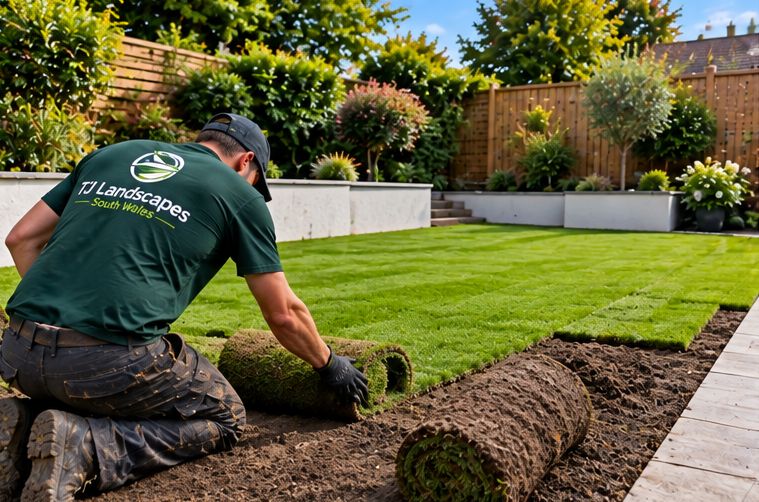
Turf is cut fresh and should go down within a day or so of delivery. We lay it in a staggered pattern like brickwork, butt the joints tight, work from boards so we are not treading dents into the prepared soil, then water it in well.
After that, the care is down to you, and Newport weather helps and hinders in equal measure. A wet spell does the watering for you. A warm, breezy week in May or June can dry the edges out surprisingly fast, even after rain. Lift a corner now and then: if the soil underneath is dry, water. Our guide to caring for new turf in the first six weeks sets out a simple routine, and the best time to lay turf in South Wales covers timing.
Talk to T J Landscapes about your garden
Free quotes and honest advice across South Wales.
Questions People Ask
Can you lay turf on clay soil in Newport?
Yes, but the clay needs opening up first. We cultivate it deeply, add sharp sand or topsoil where it helps and deal with any standing water. Turf on untreated heavy clay tends to struggle within a year or two.
My new-build garden already has a lawn that keeps dying. Why?
The most common reason is compaction under a thin layer of topsoil, which stops roots growing down. Relaying turf without breaking that layer rarely fixes it. We check with a spade when we visit and explain what the ground needs.
When is the best time to turf a Newport garden?
Autumn and spring are the easiest seasons, when the ground is moist and warm enough for rooting. Turf can go down in summer with careful watering. We avoid laying on frozen or waterlogged ground.
Do you take the old lawn away?
Yes. We lift old turf, weeds and any rubble we dig out and take it away, so you are left with a clean, prepared site. For a bigger tidy-up first, see our garden clearance service.
How do I get a quote for new turf?
Send us a few details and photos through the contact form. Tony will visit, look at the soil, the access and the size of the lawn, and give you a free quote. What affects the cost is mostly preparation: how much digging, drainage and topsoil the ground needs.