
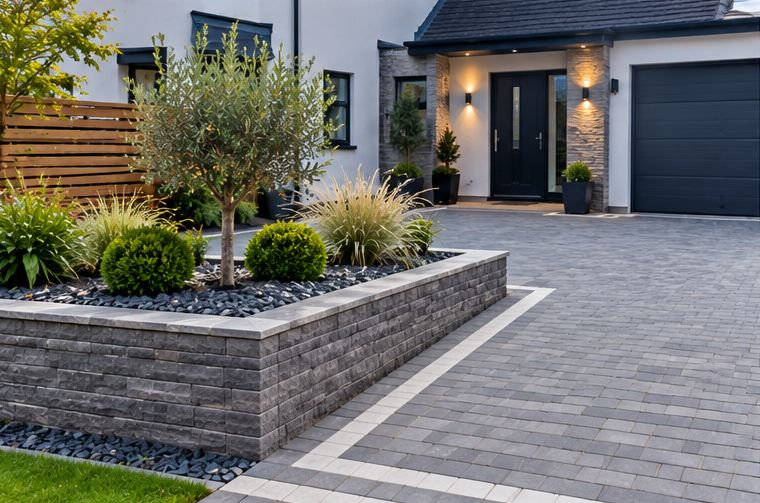
Walk through the middle of Monmouth and you see a town built over centuries: Georgian fronts, Victorian additions, older stone cottages and the odd newer infill between them. Behind many of those front doors is a garden that has been changed piecemeal by every owner, with a bit of crazy paving here, a concrete path there and a wall that has been patched in three different materials.
Pulling a garden like that back together is some of the most satisfying landscaping and garden design work we do. This guide sets out the design ideas we come back to most often for period homes in Monmouth, and the practical points that decide whether they work. For the wider picture of what we do in the town, see our landscaping in Monmouth page.
Let the house set the palette
An older house already gives you most of your design decisions. The colour of its stone or brick, the style of the windows and the height of the rooms all suggest what will sit comfortably outside. A garden that picks up one or two of those materials looks as if it belongs; one that introduces five new ones rarely does.
When we visit, we look at the back wall of the house, the boundary walls and any old edging or paving already buried in the borders. It is surprising how often original stone setts, clay edging tiles or old flags turn up under a lawn. Where they can be lifted and reused, they give a new layout instant age.
- Pick one main hard material for paths and terraces, and one accent at most.
- Match mortar colour to the existing walls, not to the new paving.
- Keep timber for gates, benches and pergolas, where it softens the stone.
Long, narrow plots: divide them into rooms
Many town gardens in Monmouth are much longer than they are wide, often running back from the house between two high walls. Laid out as one strip of lawn with a path down the side, they feel like a corridor. Split into two or three spaces, they feel far bigger.
A simple sequence works well: a paved terrace by the house for eating outside, a middle section of lawn or gravel with planting, and a quieter space at the far end, perhaps with a bench, a small tree or a shed hidden behind a trellis. A low hedge, a change of level with one or two steps, or an arch across the path is enough to mark each room.
Try not to run the path dead straight down one wall. Moving it to the centre, or letting it step from one side to the other, slows you down and makes the garden feel less like a passageway.
Old walls are an asset, so treat them well
High stone or brick boundary walls are one of the real pleasures of an older Monmouth garden. They hold warmth, shelter tender plants and give a sense of enclosure that a fence never quite matches. They also need looking after.
Before planting against an old wall, check it over for loose stones, open joints and bulges. Soft lime mortar was used in a lot of older walls, and repointing with a hard cement mix can trap moisture and damage the stone over time. We can repoint, rebuild short failed sections and add raised beds and low stone walls that tie in with what is there. Our brickwork and garden walls page covers that side of the work.
Climbers and wall shrubs soften the stone beautifully, but use wires or trellis rather than letting self-clinging plants root into weak joints.
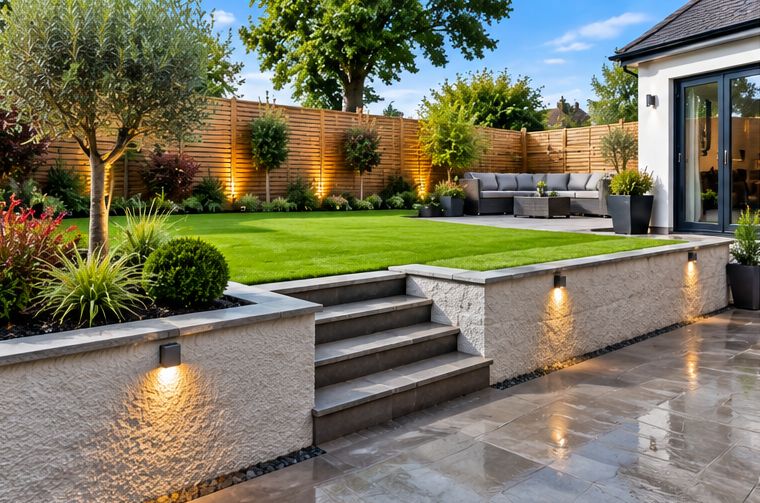
Paths and surfaces with a softer finish
For the ground plane, period gardens tend to suit natural textures. Sawn or riven sandstone, reclaimed flags, brick laid in a herringbone or basket-weave pattern, and gravel edged in brick or steel all look at home beside older walls. Bound gravel or a well-compacted self-binding path gives a traditional look with firmer footing.
Where you want something cleaner and very low in upkeep, a muted porcelain in a stone colour can still work, especially near the house. Our guide to choosing paving for a Monmouth town house goes through the options in detail, and the patio and paving page covers how we lay them.
Planting that fits an older garden
Structure matters more than variety. Clipped box or yew (or a box alternative if box blight is a worry), a pair of standard trees either side of a path, and a few repeated shrubs give a period garden its bones. Looser planting then fills in between: roses, lavender, catmint, hardy geraniums, foxgloves and ferns in the shadier corners.
Existing mature trees are often the oldest thing in the garden after the house. If one is casting too much shade, lifting or thinning the crown may be better than taking it out. Read caring for mature trees in Monmouth gardens before deciding.
Small details that finish the job
A few touches make a big difference in a small walled garden. Low-level lighting along a path or washing up a wall lets you use the space on summer evenings. A small water feature, even a simple bowl or wall spout, adds sound and masks traffic noise in the centre of town. Planters in stone, terracotta or lead-effect finishes suit the style better than bright plastic.
Bins, bikes and oil tanks are the details that spoil period gardens most often. Plan somewhere for them at the start: a timber store, a screened corner by the back gate or a slim shed against a side wall.
Listed buildings and conservation areas
Much of central Monmouth is historic, and some properties are listed or sit in a conservation area. That can affect changes to boundary walls, gates, front gardens and trees. We are landscapers, not planners, so our advice is always to check with Monmouthshire County Council before altering walls or taking out a tree. For trees in particular, our general guide on tree permission in Wales explains what to ask.
Most back garden work, such as planting, paths, lawns and patios well away from the house, raises no issue at all. But a quick check first costs nothing and avoids problems later.
Talk to T J Landscapes about your garden
Free quotes and honest advice across South Wales.
Questions People Ask
Can you reuse old stone or bricks found in my garden?
Usually, yes. We clean and sort what can be saved and work it into new paths, edging or wall repairs. Reclaimed material rarely covers a whole job, so we blend it with new stone chosen to match.
My Monmouth garden is long and narrow. Where do I start?
Start by deciding what you want from each end: somewhere to eat, somewhere to sit quietly, somewhere for storage. Then divide the plot into spaces for each, with a path that links them. We can sketch a layout on a free visit.
Is gravel practical in a town garden?
It works well on paths and in courtyards, drains freely and suits older houses. Use a good edge to keep it in place and a stabilising grid underneath if you want firmer footing or plan to wheel bins over it.
How long does a period garden redesign take?
It depends on size, access and how much hard landscaping is involved. Everything may need carrying through the house or a side passage in the centre of town, which adds time. We give a realistic timescale with your quote.
How do I get ideas priced up?
Send us a few photos and a note of what you like using the contact form. We will arrange a visit and put together a free quote, with suggestions if you are not sure yet.