
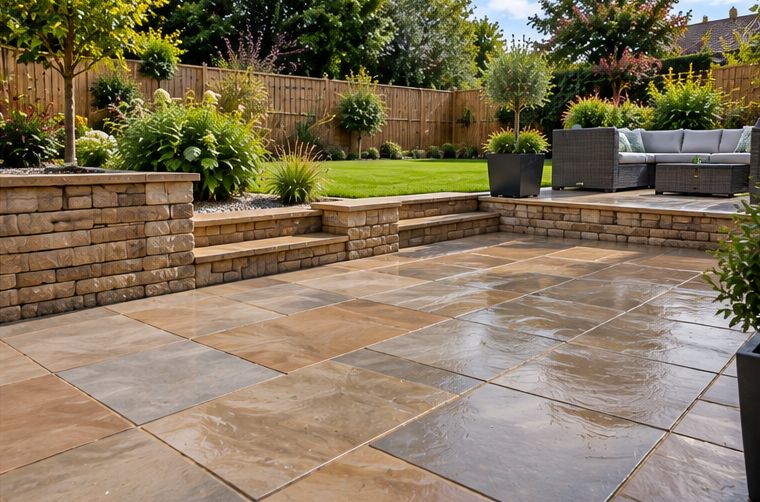
A cottage garden is all about abundance: roses over the door, herbs by the path, vegetables and flowers jumbled together. But underneath the froth there is usually a firm frame of old walls, edged beds and a path or two. In and around Monmouth, that frame is often stone, from the boundary walls of older town properties to the field walls and outbuildings of cottages on the rural edge.
This guide looks at how to repair an existing wall, add new walls and raised beds that suit a period cottage, and plan planting to soften them. For the wider range of work we do, see our brickwork and garden walls page.
Look after the walls you already have
Old garden walls are part of the character of Monmouth, and it is almost always worth repairing them rather than replacing them. Common problems are loose or missing stones along the top, mortar washed out of the joints, ivy roots prising stones apart and bulges where the wall is leaning.
Many older walls were built with lime mortar rather than cement. Lime is softer and lets moisture escape, so the wall can breathe and move slightly without cracking. Repointing an old stone wall with hard cement mortar can trap water and make the stone itself crumble over time. When we repair older walls we usually use a lime mortar and try to match the colour and texture of what is already there.
Before any work on a boundary wall, talk to your neighbour, and if your home is listed or in a conservation area, check with Monmouthshire County Council first. We can advise on the building side, but we are not planners or surveyors.
When a wall is holding back soil
Some walls in older gardens are not just boundaries. They hold up a raised terrace or the garden next door. A bulging retaining wall needs more care than a freestanding one, and a tall or failing wall may need a structural engineer to look at it before anything is rebuilt. Our guide When Does a Retaining Wall Need Engineering Advice? explains the warning signs.
Choosing stone that belongs
New walls and raised beds look right when the stone matches the house and the walls already around it. Much of the older building around Monmouth uses a warm, reddish sandstone, though you will also see limestone, brick and render. We look at what is already on site and try to find reclaimed or new stone of a similar colour and size.
Where matching stone is hard to find, a well-chosen brick can work beautifully alongside old stone, especially for edging, steps or copings. Our guide on choosing bricks and coping looks at the options.
- Random stone laid in mortar gives a relaxed, traditional look that suits cottages.
- Coursed stone, laid in level rows, looks neater and more formal, closer to a town house wall.
- Dry stone walling, with no mortar, suits rural gardens and makes a good home for insects and small plants.
- Brick with a stone coping, or stone with a brick coping, can tie a new wall to an older house.
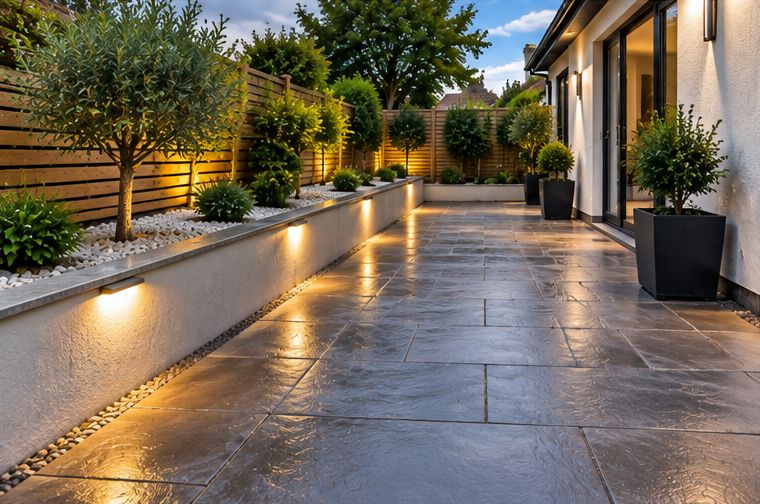
Raised beds for a cottage garden
Raised beds are useful in any garden, but they are especially helpful on the low, damp ground found in parts of Monmouth. Lifting the soil means better drainage, warmer roots in spring and a bed you can reach without kneeling. They also give a cottage garden a sense of order, keeping loose planting from spilling onto the paths.
In a small cottage garden, low stone or brick beds, about knee height, often look best. Too high and they can feel heavy. On a larger plot, a row of beds for vegetables and cut flowers works well, with paths wide enough for a wheelbarrow in between.
Timber sleepers are a lighter, quicker option and suit a kitchen garden or a more rustic setting. They will not last as long as stone or brick, but they are simple to build and easy to change later. Our guide to building brick raised beds and planters covers the construction in more detail.
Getting the foundations and drainage right
A stone wall or raised bed is only as good as the ground it sits on. Even a low bed needs a proper footing, particularly on soft or wet ground, or it will crack and lean. Our guide Garden Wall Foundations: Why They Matter explains why.
Water needs somewhere to go. Raised beds need a free-draining base and weep holes near the bottom of the wall so the soil does not become waterlogged and push the wall outwards. Where a garden is very wet, it helps to deal with drainage first; see Gardens Near the Wye and Monnow.
Softening the stonework
A new wall can look stark at first. Planting is what makes it belong. Trailing plants along the top of a raised bed, small plants tucked into gaps in a dry stone wall and climbers trained along a boundary all help new stone blend in. Moss and lichen will follow in a few seasons, especially in a damp Monmouth garden.
Good cottage plants for this include lavender, thyme and other herbs at the top of sunny walls, with ferns and shade-lovers along cooler, damper walls. Our article Garden Design Ideas for Monmouth Period Properties has more on planting that suits older homes.
Tony and the team can repair old walls, build new walls, beds and steps, and bring in topsoil and planting to finish. Read more on our Monmouth landscaping page, or contact us for free advice and a free quote.
Talk to T J Landscapes about your garden
Free quotes and honest advice across South Wales.
Questions People Ask
Can you match the stone in my existing wall?
We try to. We look at colour, size and how the stones are laid, then source reclaimed or new stone to suit. An exact match is not always possible, but a close one usually blends in within a few seasons.
Should I use lime or cement mortar to repair an old wall?
For most older stone walls, lime is the better choice because it lets the wall breathe. Cement is harder and can trap moisture. We use whichever suits the wall and the stone.
How high should a raised bed be?
For most people, around knee to thigh height is comfortable for working without bending too far. Lower beds suit small cottage gardens visually, while taller beds help with access if kneeling is difficult.
What affects the cost of a stone wall or raised bed?
The size, the stone you choose, the foundations needed, the ground conditions, access to the garden and how much soil or waste has to be moved. We explain it all in a free quote.
Do I need permission to repair a boundary wall?
Straightforward repairs often do not, but listed buildings, conservation areas, taller walls and walls next to a road can have rules. Shared walls may also involve your neighbour. Check with Monmouthshire County Council before starting.