
Monmouth grew up where the Monnow joins the Wye, and plenty of its homes sit on the flat, fertile land beside them. That river soil grows wonderful plants, but in a wet winter it can stay saturated for weeks, and some gardens see the river itself come over the bank from time to time.
This guide is about designing with that in mind rather than fighting it. The general drainage methods, such as land drains, French drains and soakaways, are covered in our guide on how to stop a garden waterlogging. Here we look at the Monmouth side of things: what makes riverside ground different, and how we shape a garden to live with it.
Two kinds of wet, and why it matters
Not every soggy garden near the rivers has the same problem. Broadly, there are two kinds of wet, and they need different answers.
- Water that cannot get away. Heavy or compacted soil, run-off from roofs and patios, or a blocked old drain. This is surface water, and good drainage usually sorts it.
- Water coming up from below. On low ground near a river, the water table itself rises in winter. The soil fills from underneath, and a drain or soakaway has nowhere lower to send it.
Many Monmouth gardens have a bit of both. Knowing which dominates saves money, because a soakaway dug into ground that is already full of water will simply fill up. That is why we look before we recommend anything.
Read the garden in its wettest month
The most useful thing you can do before planning changes is watch the garden through a wet spell, ideally in mid-winter. Take photos after heavy rain and again a few days later. Notice where puddles form first, how long they last and whether they appear even when it has been dry locally but the river is high.
Dig a small test hole in the lowest spot. If water seeps into it from the sides and sits at a steady level, you are looking at the water table. If it stays dry at depth but the surface is sodden, the problem is in the top layer of soil, and that is much easier to put right.
Your own observations, plus a site visit from us, tell us far more than a map. It is still worth checking the flood information published by Natural Resources Wales for your address so you know what the river has done in the past.
Put the dry things high and the wet things low
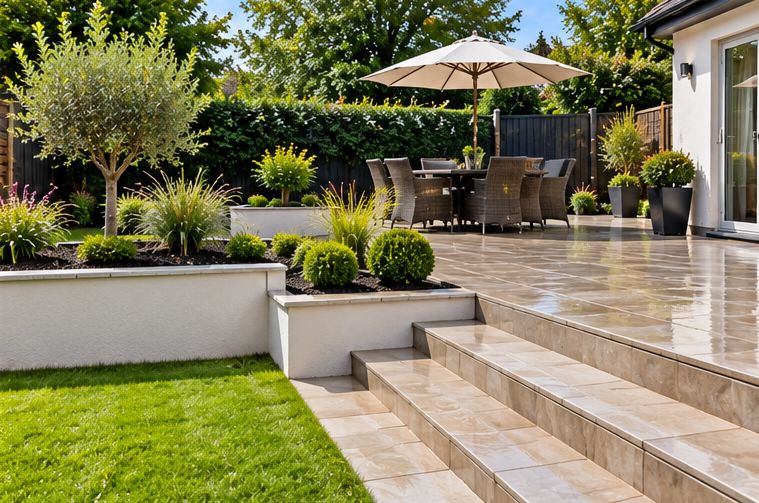
Once we know how the ground behaves, the layout almost draws itself. The areas you use every day, such as the patio, the path to the shed and the washing line, go on the highest, driest ground, usually close to the house. The lowest corner becomes the place for planting that likes damp feet, a wildlife area or a bog garden.
Where the whole plot is low, we lift the useful parts instead. Raised decking on adjustable supports, raised beds built from sleepers, brick or stone, and paths laid slightly proud of the surrounding soil all keep feet dry without trying to raise the entire garden.
One caution: tipping in large amounts of soil to raise ground on a flood plain can push water towards neighbouring properties and may need permission. Talk to Monmouthshire County Council before any significant change in levels. Small raised beds and decks are a different matter from reshaping a whole plot.
Materials that do not mind a soaking
Everything in a riverside garden needs to cope with being wet for long periods, and occasionally under water. That rules some things out and makes others a natural fit.
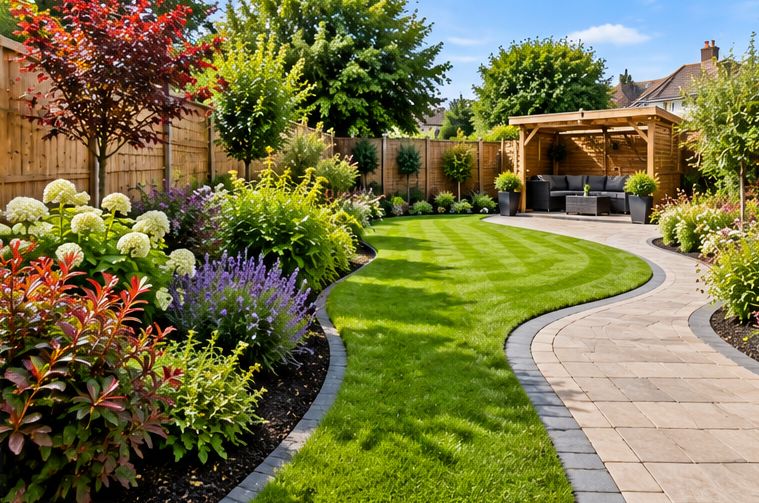
- Permeable surfaces such as gravel, bound gravel or permeable block paving let rain soak through rather than pooling or running towards the house.
- Natural stone and porcelain are unharmed by water, provided they are laid on a free-draining base with a proper fall. Our patio and paving work is built that way as standard.
- Pressure-treated or hardwood timber for decks and raised beds, kept off direct contact with wet soil where possible.
- Concrete fence posts or well-set timber posts that will not rot at ground level in constantly damp soil.
Avoid laying turf straight onto low, wet ground and hoping. If you want a lawn in the damper part of a Monmouth garden, the soil needs improving first, and sometimes a meadow or a planted area is the more honest choice. Our landscaping and garden design service can weigh up the options with you.
Plants that enjoy river soil
The upside of damp, rich ground is that some of the most beautiful garden plants love it. Planting with the conditions, rather than against them, gives a lush look that dry gardens struggle to match.
Good choices for wet or moisture-retentive soil include Siberian iris, astilbe, hostas, ligularia, candelabra primulas, marsh marigold, ferns and the coloured-stemmed dogwoods, which glow in winter. Among trees, alder and some willows cope with very wet ground, though willows are thirsty and best kept well away from the house and drains.
We can prepare and plant beds as part of a wider scheme, adding organic matter to improve structure and building up edges so the bed holds its shape through a wet season.
If the river has been in the garden
When floodwater recedes it tends to leave a layer of silt, debris and sometimes contamination behind. Wear gloves and wash hands after handling it, and take advice from the council on anything that may have come from sewers or fuel stores.
Lawns often recover once the silt is raked off and the ground has dried, though patches may need reseeding or returfing. Fences and gates may need resetting, and paving laid on a poor base can move. Our garden clearance service can remove debris and green waste, and the article on seasonal garden clearance for Monmouth homes covers the regular upkeep side.
Talk to T J Landscapes about your garden
Free quotes and honest advice across South Wales.
Questions People Ask
Will a land drain fix my waterlogged Monmouth garden?
It can if the problem is surface water or heavy soil and there is somewhere lower to discharge to. If the wet is caused by a high water table near the river, a drain has limited effect, and raising the key areas is usually the better answer.
Can I build decking on ground that floods?
Yes, if it is designed for it. We use a raised frame with good airflow underneath, fixings that resist corrosion and boards that tolerate wet. It is worth reading oak or softwood decking for a Monmouth garden when choosing timber.
Do I need permission to change levels in a riverside garden?
Small raised beds and decks are usually fine, but bringing in large amounts of fill on a flood plain can affect neighbours and may need consent. Check with Monmouthshire County Council and Natural Resources Wales before significant changes.
Which paving is best for a wet garden near the river?
Anything durable laid on a free-draining base with a good fall. Permeable block paving and gravel let water soak away, while porcelain and sandstone shrug off wet if they are laid properly.
How do I get advice on my garden?
Tell us about the garden and how wet it gets through the contact form. We will visit, look at the ground and give you free advice and a quote. More local information is on our Monmouth landscaping page.