
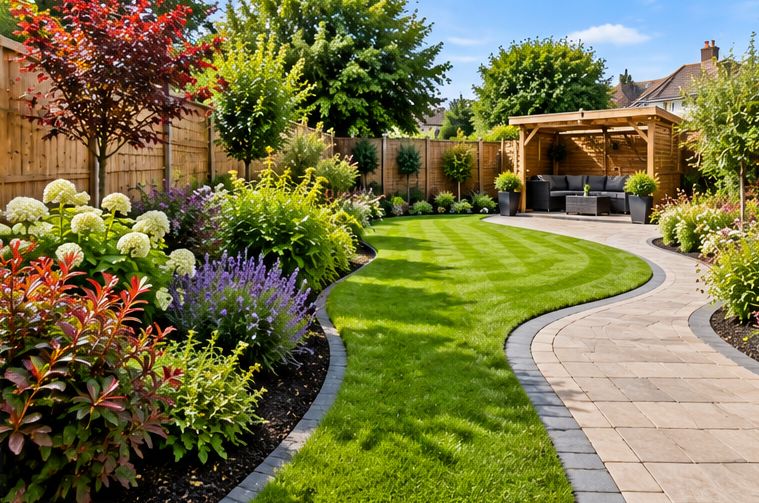
Living where the Ebbw Fach and Ebbw Fawr meet means living with hillsides close at hand. For many Aberbeeg households that brings a garden that is small, green and sheltered, with sun that arrives late in the morning and slips behind the ridge earlier than you would like. None of that stops a garden being lovely. It simply changes which ideas work.
This guide collects the ideas we find suit valley-bottom plots best, from where to put a seat to which plants will thrive in the gloom. It is meant as a starting point for your own thinking. For an overview of how we work in the village, see our landscaping in Aberbeeg page.
Map the sunlight before choosing anything
The single most useful thing you can do is watch your garden for a day or two. Note where the first sun lands, where it lingers at teatime and which corners never see it between November and February. A few photos from the back bedroom window at different hours make a handy record.
That light map decides almost everything else. The brightest patch becomes the place to sit, grow herbs or put a small lawn. The darkest strip becomes the home for ferns, a store, the bins or a gravel path. Designs that ignore the light tend to leave people with a patio they never use and a lawn that turns to moss.
Ideas for the brightest corner
In many Aberbeeg gardens the sunniest spot is not by the back door but further up the plot, where the ground climbs towards the light. It is worth considering a seat up there, even if it means a few steps to reach it.
- A small paved or gravel terrace, just big enough for a bistro table and two chairs.
- A couple of raised beds or sleepers for salad, herbs and strawberries, where the soil warms up faster.
- A short strip of lawn for children or a dog, rather than trying to turf the whole plot.
- A bench against a wall that catches the afternoon sun and holds its warmth into the evening.
Where the bright spot is on a slope, a small deck or a low retaining wall can create the level ground. Our guide to retaining walls on steep ground in Aberbeeg covers the options for holding up that terrace.
Planting that is happy in shade and moisture
Shade is only a problem if you choose plants that want sun. A damp, sheltered valley garden can grow things that would sulk on an exposed hilltop. Ferns, hostas, hellebores, foxgloves, ivy-leaved cyclamen, Japanese anemones and many woodland shrubs will all cope, and several will thrive.
Layering helps a small space feel generous: a tall shrub or small tree at the back, mid-height perennials in front and ground cover filling the gaps so bare soil does not turn into a weed bed. Pale flowers and variegated leaves show up far better in shade than deep reds and purples, which tend to disappear into the gloom.
If you would rather spend less time weeding, our advice on planning a low-maintenance garden shows how to combine planting with bark, gravel and paving so the upkeep stays manageable.
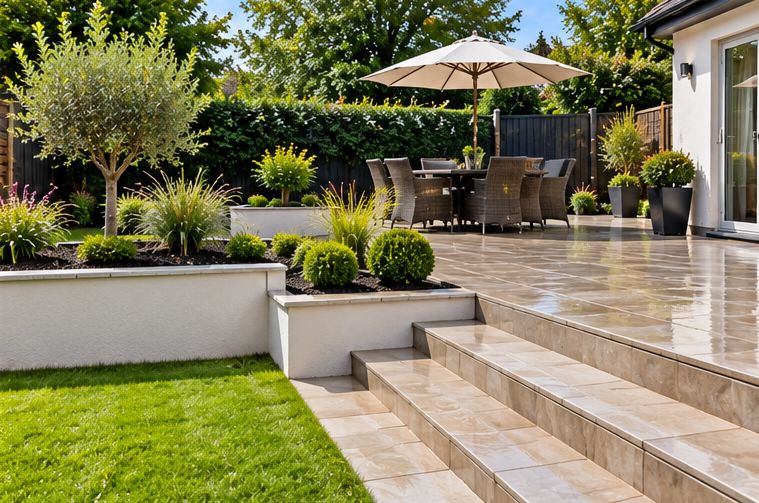
Brighter surfaces for a darker plot
Colour choices on the ground matter more in a valley bottom than almost anywhere else. Pale stone, buff sandstone and light gravel reflect what sun there is and lift the whole garden. Dark grey slabs and black composite boards can look smart in a showroom but make a shaded Aberbeeg yard feel smaller and colder.
Grip matters just as much as colour. Surfaces that stay damp will grow algae, so a textured finish is safer than a smooth one. Our guide to patio paving for Aberbeeg cottages goes through the stone choices in more detail.
Making a feature of the bank
Many homes here have a steep bank or a high old wall at the back of the garden. Instead of fighting it, treat it as a backdrop. A bank planted with shrubs, ferns and spring bulbs can look like a small woodland garden from the kitchen window, and it needs far less attention than a lawn.
Older walls can carry climbers such as climbing hydrangea or ivy, as long as the wall is sound and the plant is kept in check. Where the bank is bare and slipping, planting alone will not hold it. That is a job for proper retaining work first, then planting on top.
Evening light and small finishing touches
Because the sun goes early, garden lighting earns its place in a valley garden. Low path lights make steps safer on dark winter evenings, and a couple of spotlights on a tree or the bank give the garden depth after dusk. Cables are best laid while the ground is open, so it is worth planning lighting at the start of a makeover rather than adding it later.
A small water feature can work too, though in a damp plot a self-contained bowl or wall spout is usually wiser than a pond that adds more wet ground. Pots in the brightest spot give you seasonal colour that can be moved as the light shifts through the year.
Pulling the ideas into one plan
The best valley gardens tend to use just a handful of these ideas, chosen to suit the plot. A typical layout might be a pale stone seating area in the sunny corner, shade planting along the dark side, a gravel path linking the two and some lighting on the steps. Good drainage underneath ties it together.
If your ground is soggy as well as shaded, read dealing with damp ground in an Aberbeeg garden before settling on a design. When you are ready, Tony and the team can visit, walk the garden with you and suggest a layout through our landscaping and garden design service. You can ask for a free quote here.
Talk to T J Landscapes about your garden
Free quotes and honest advice across South Wales.
Questions People Ask
Can I still have a lawn in a shaded Aberbeeg garden?
Often yes, as long as it goes in the brightest part of the plot and the soil underneath drains. A smaller lawn in the right place does far better than a large one stretching into deep shade. Our guide to new lawns for small Aberbeeg gardens explains how we prepare the ground.
What colour paving suits a valley-bottom garden?
Lighter tones such as buff or silver-grey stone generally work best, because they bounce light around and make a small space feel open. Choose a textured finish so it stays safe when damp.
Is it worth putting a seating area up the slope?
If that is where the sun is, usually yes. A seat that catches the evening light gets used, while one in constant shade tends to be ignored. Safe steps and a level base make the difference, and we can build both.
Do you help with planting as well as hard landscaping?
Yes. Planting, topsoil, bark and raised beds are all part of the work Tony and the team do, alongside patios, walls and fencing. We can suggest shade-tolerant plants that suit a damp valley plot.
How do I start planning a makeover?
Watch where the light falls, list what you want to use the garden for and note any wet patches. Then get in touch for a free visit. Our guide on planning a garden makeover in Aberbeeg has more on the first steps.