
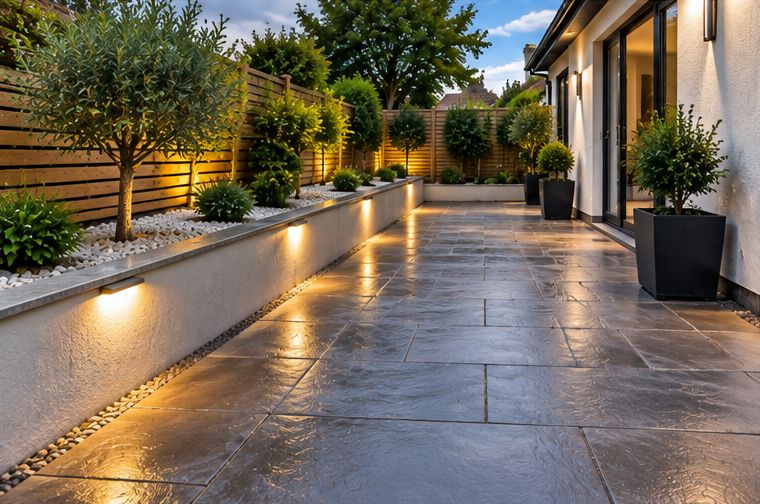
Hemmed in by hillsides where the Ebbw Fach and Ebbw Fawr come together, Aberbeeg has very little naturally flat garden ground. Many homes rely on walls to hold back the bank behind them or to create the level strip that serves as a yard. Some of those walls are old, built in stone or block by previous owners, and they have been holding wet soil for a very long time.
This guide explains how to read the condition of an existing wall, the choices when one needs work and what goes into building a new retaining wall that lasts. It sits alongside our brickwork and garden walls service and our wider landscaping in Aberbeeg page.
Why so many gardens here depend on walls
When houses are built into a narrow valley, the ground has to be cut away to make room for them, and whatever is left behind needs holding up. Over the years owners add more walls to gain a terrace, a path or a parking space. The result is that a typical steep plot may have two or three retaining walls of different ages and materials.
A retaining wall is not the same as a boundary wall. It is under constant sideways pressure from the soil behind it, and that pressure rises sharply when the soil is saturated. In a damp valley bottom, water is the main reason walls fail, which is why drainage features so heavily in everything below.
Signs an old wall is struggling
Walk along your walls every so often, especially after a wet winter. Things to look out for include:
- A bulge or lean, where the face is no longer straight and upright.
- Cracks that are widening, or stepped cracks following the mortar joints.
- Stones or blocks pushed out, loose or missing.
- Soil or water seeping through the face, or a constantly wet patch at the base.
- Ground at the top of the wall sinking, cracking or pulling away.
- Fences or paths on top of the wall starting to tilt.
A single hairline crack may be nothing to worry about. Several signs together, or any change you can see over a few months, are worth getting looked at. If a wall is leaning badly, keep people and pets away from the low side until it has been checked.
Repair, rebuild or replace
Not every tired wall needs to come down. Loose pointing can be raked out and repointed. A small section of fallen stone can sometimes be rebuilt on its original line. Clearing blocked weep holes or adding drainage behind the top of the wall can take pressure off.
Where a wall is leaning or bulging along its length, patching usually only delays the problem. The better answer is often to take the wall down in sections, dig out behind it, form a proper footing and rebuild with drainage. On a steep plot that has to be done carefully, keeping the bank supported while the work goes on.
For taller walls, walls close to a house or road, or anything holding back a large volume of ground, a structural engineer should be involved. Our guide to when a retaining wall needs engineering advice sets out when we would recommend that.
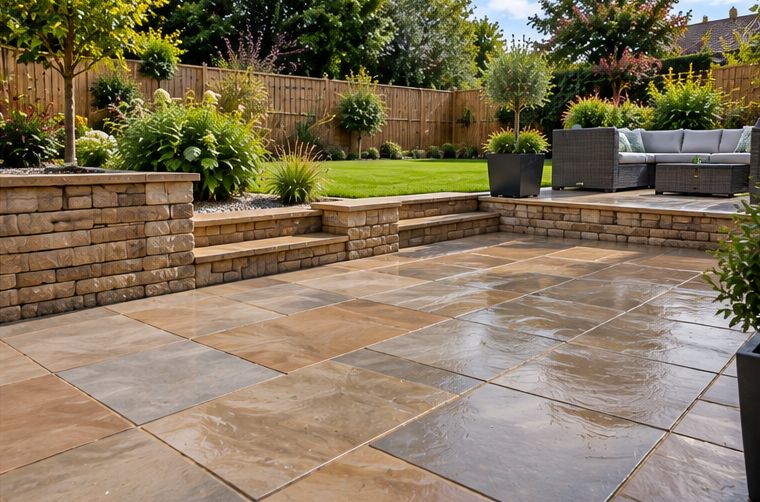
What goes into a retaining wall that lasts
The part you see is only half the story. A well-built retaining wall on wet valley ground normally includes:
- A proper footing: a concrete foundation of the right width and depth for the height and the ground. Our guide to garden wall foundations explains the basics.
- Free-draining backfill: clean stone behind the wall rather than the wet clay that came out of the hole.
- A way for water to escape: weep holes or a pipe at the base so water does not build up behind.
- The right material: block, brick, stone or timber sleepers, chosen for the height and the look of the garden.
- A sensible coping: a capping that throws water clear of the face.
Turning a bank into terraces
Many people in Aberbeeg want to make more of the slope behind the house. A series of lower walls is usually easier and safer to build than one tall one, and it creates several usable levels: a patio at the bottom, a lawn or raised beds in the middle and perhaps a seating spot at the top where the sun reaches.
Low terraces can be built in sleepers for a softer, more informal look, while brick or stone walls give a permanent finish that suits an older cottage. Steps linking the levels need to be comfortable and safe in the wet, with even risers and a grippy tread. Our guide to garden steps in brick and stone goes into this. For the wider design, see garden ideas for Aberbeeg valley-bottom homes.
Neighbours, ownership and permissions
Walls on steep ground often sit on or near a boundary, and it is not always clear who owns them. Check your deeds before planning work, and talk to your neighbour early if the wall holds up their ground or yours. Where work affects a shared or neighbouring wall, the Party Wall Act may apply, so it is sensible to take advice.
Height and position can also bring in planning or building control rules, particularly for walls next to a road or path. Check with Blaenau Gwent council if you are unsure. We are landscapers, not planners or solicitors, but we will flag anything we think needs checking.
Getting a wall looked at
If you have a wall that worries you, or a bank you would like to turn into something useful, Tony and the team can come and take a look. The cost of wall work depends mainly on the height and length, the ground behind it, how much soil has to be dug and taken away, the materials and the access to the site. Ask for a free quote and we will talk you through the options.
Talk to T J Landscapes about your garden
Free quotes and honest advice across South Wales.
Questions People Ask
My garden wall is leaning. Is it dangerous?
It might be. A lean usually means the wall is losing the battle with the soil behind it. Keep people off the low side, avoid adding weight at the top and get it looked at. We can advise whether it needs rebuilding or an engineer's input.
Can you build a retaining wall with sleepers?
Yes, for lower heights sleepers work well and suit a relaxed garden. For taller or more permanent walls on wet Aberbeeg ground, masonry with a concrete footing is usually the better choice.
Why does drainage matter so much behind a wall?
Wet soil is much heavier and pushes harder than dry soil. Without drainage, water builds up behind the wall each winter until it bulges or cracks. Free-draining backfill and weep holes let it escape. See also dealing with damp ground in an Aberbeeg garden.
Who is responsible for a wall between two gardens?
It depends on ownership, which your deeds should show. Where it is shared or unclear, agree the work with your neighbour first and take advice on any party wall matters before starting.
Can you put a fence on top of a retaining wall?
Sometimes, but a fence adds wind load to the wall, so it depends on how the wall was built. Often it is better to set posts just behind the wall. Our guide to fencing options for Aberbeeg gardens covers this.