
Gardens in Aberbeeg are mostly on the small side, often a strip behind a terrace or a pocket of ground beside an older cottage. In a plot that size, a patch of green does a lot: it cools the eye, gives children somewhere soft to sit and makes a hard yard feel like a garden.
It also has a harder life than a lawn on an open, sunny estate. The village sits deep between hillsides where two rivers join, so shade and wet soil are the usual challenges. Here we look at how to give a small lawn in Aberbeeg a fair chance. Our turf laying page covers the service, and the landscaping in Aberbeeg page puts it in context.
Is grass the right choice for this corner?
Grass needs light, air and soil that drains. A patch that gets a few hours of sun a day and dries out within a day or two of rain will usually carry a decent lawn. A corner that sits in shade from autumn to spring, under dripping trees, on ground that squelches underfoot, will struggle whatever turf goes down.
Be honest about how the space is used as well. If the only route to the shed crosses the lawn, that line will wear bare, especially when the soil is wet. A few stepping stones or a narrow path laid alongside saves a lot of repair later.
Finding the brightest patch
Spend a day or two watching where the sun falls. In many Aberbeeg gardens the brightest ground is not next to the house but further back or higher up the slope, where it clears the roofline. That is often the best place for grass, with paving or gravel nearer the door where the shade lies longest.
If a tree on the bank is the main cause of shade, crown lifting or thinning can make a real difference. Our guide to tree work on steep banks near Aberbeeg explains the options.
Preparing heavy, wet valley soil
Most lawn problems in the village start below the surface. Valley-bottom soil is often heavy, compacted by years of use, and mixed with stone, old ash or builders' rubble near older houses. Good preparation usually involves:
- clearing weeds, old turf, roots and stones
- breaking up compacted ground so water can move down
- adding a layer of fresh topsoil, and sharp sand where the ground is very heavy
- grading the surface so water runs off rather than sitting in a dip
- firming and raking to a fine, even finish before the turf arrives
Where water collects no matter what, a drain may be needed before the lawn. See dealing with damp ground in an Aberbeeg garden for the choices, and how to prepare the ground before laying turf for the step-by-step process.
Choosing turf for a shaded, damp plot
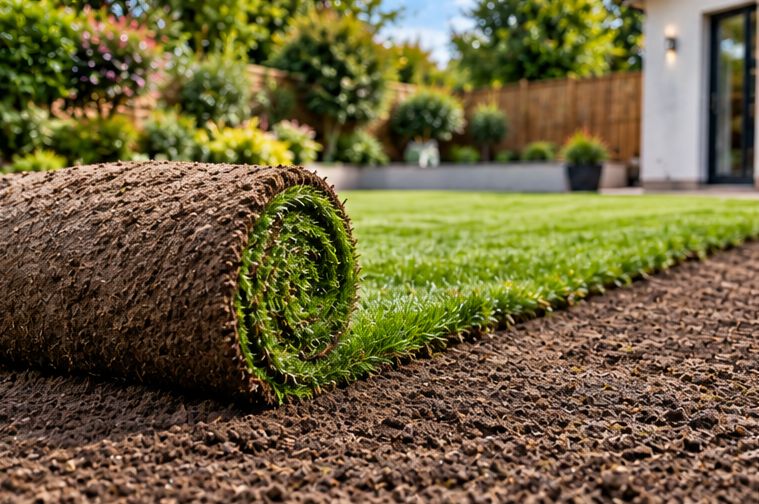
Standard hard-wearing turf suits open, sunny ground. For shadier Aberbeeg gardens, a turf with more shade-tolerant fescues in the mix often copes better, though it prefers lighter wear. We suggest a type once we have seen your light and how the lawn will be used. Turf is usually a better choice than seed in a small space: it gives an instant finish, beats the weeds and is less at the mercy of a wet spell. The guide turf or seed weighs up both.
Edges and a small-garden finish
In a compact garden the edge of the lawn is on show all the time. A mowing strip of brick or stone laid flush with the grass lets you run the mower right over the edge, stops grass creeping into borders and gives a crisp outline. It also helps where the lawn meets a patio, keeping a neat line where the two join.
On a sloping plot, a gentle gradient is fine for a lawn, but a steep one is hard to mow and slow to establish. Terracing the ground first, with a low wall or sleepers, gives flat lawn steps that are far easier to look after.
Laying day and the first weeks
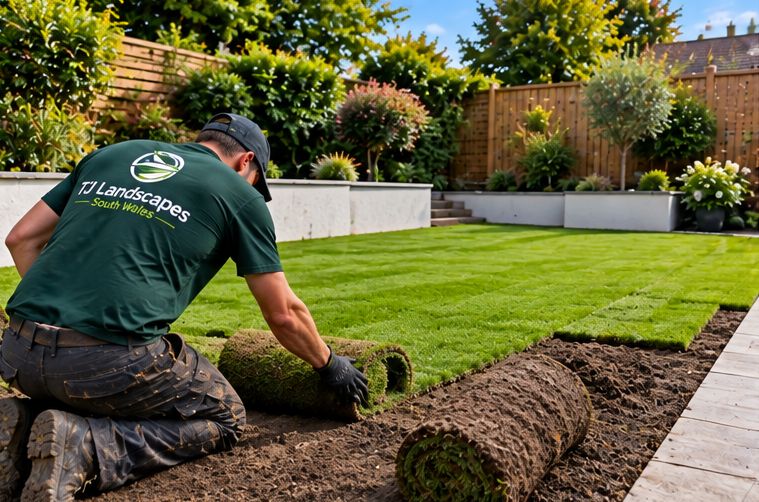
Turf is laid on the day it arrives, in staggered rows like brickwork, and firmed down so every roll touches the soil. In a small Aberbeeg garden, rolls may have to come through the house or up a flight of steps, so we plan that with you and protect floors where needed.
New turf needs watering until it roots, even in a damp valley, because summer spells can still dry it out. Keep off it for the first couple of weeks. The guide watering and caring for new turf in the first six weeks covers the aftercare.
Keeping a small lawn healthy in a damp village
Once it has rooted, a lawn in Aberbeeg needs slightly different care from one in a dry, open garden. Mow a little higher than you might elsewhere, as longer grass copes better with shade. Avoid walking on it or mowing when it is sodden, since that squashes the soil and invites moss.
Rake off fallen leaves promptly in autumn, because a wet layer of leaves left for a few weeks will yellow the grass underneath. Spiking the lawn with a garden fork in autumn lets air and water back in, and a light top dressing of sandy loam over the years gradually improves heavy ground. For a month-by-month routine, see how to look after a lawn through the year.
When something other than grass works better
Some corners are simply too dark or wet for a living lawn. Good alternatives include shade planting with ferns and hostas, gravel with a few pots, bark under trees, or a small patio. Artificial grass is another option for a tiny, heavily shaded yard, provided the base beneath it drains well.
A lawn often forms one part of a wider plan, so it is worth reading planning a garden makeover in Aberbeeg before deciding. To have us look at your plot, use the enquiry form.
Talk to T J Landscapes about your garden
Free quotes and honest advice across South Wales.
Questions People Ask
Why does my lawn in Aberbeeg keep going mossy?
Moss thrives where grass is weak: shade, damp, compacted soil and close mowing all favour it. Treating the moss without fixing the cause brings it back. Improving drainage and light usually helps most. Read why lawns go patchy, mossy or bare.
Is it worth laying turf in a very small garden?
Yes, if the spot gets enough light. Even a few square yards of lawn change how a small garden feels. It just needs the same careful ground preparation as a big one.
When is the best time to lay turf in Aberbeeg?
Autumn and spring are generally easiest, when the soil is moist and warm enough for roots to grow. Avoid laying on waterlogged or frozen ground. When is the best time to lay turf goes into more detail.
What affects the cost of a new lawn?
The area, how much clearing and levelling is needed, the amount of topsoil, any drainage work, edging, the turf chosen and how easily materials reach your Aberbeeg garden. Tony will price it for free once he has seen the plot.
Can you replace an old, bumpy lawn rather than start from scratch?
Usually the old turf is lifted, the ground improved and levelled, and new turf laid. Patching a tired lawn rarely lasts where the soil underneath is the problem.