
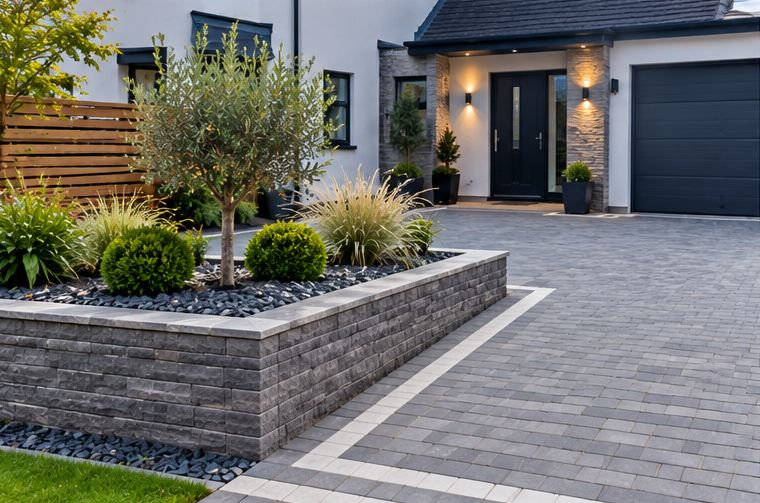
It is tempting to begin a garden project with a picture of the finished result: a patio, a lawn, a pergola, some lights. In Aberbeeg that picture has to fit a particular kind of site. The village lies deep in the valley where the Ebbw Fach and Ebbw Fawr come together, and its terraces and cottages usually have compact plots on steep ground, with damp soil and shade to contend with.
Planned in the right order, even a small, awkward Aberbeeg garden can become a space you use every day. This guide sets out that order. Our landscaping and garden design page explains the service, and landscaping in Aberbeeg describes the local conditions we work with.
Step one: write down how you will use it
Before thinking about materials, list what the garden needs to do. Somewhere to eat outside? Room for children to play? Space to dry washing, grow vegetables or keep bins out of sight? A safe route from the back door to the lane? In a small plot every use competes for space, so rank them.
Think about who will look after it, too. If you want to spend weekends sitting in the garden rather than working in it, say so at the start. That steers the plan towards hard surfaces, gravel and tough shrubs rather than large borders; our home guide to planning a low-maintenance garden has ideas.
Step two: map the sun and the wet
With hills rising on several sides, sunlight in Aberbeeg can be short, and it moves around the garden through the year. Note where the sun reaches in the morning, at midday and in the evening, and ideally check again in winter. Then note where puddles sit after rain and where the ground stays soft.
Those two maps usually point to the answer. Seating and lawn go where it is bright and dry; gravel, ferns and shade planting take the darker, wetter corners. For more on the wet side, read dealing with damp ground in an Aberbeeg garden, and for layout inspiration, garden ideas for Aberbeeg valley-bottom homes.
Step three: sort the structure before the surfaces
The parts of a garden you notice least are the ones that cost most to fix later. On a sloping Aberbeeg plot that means:
- Levels: deciding where flat areas will be and how they connect by steps or ramps
- Retaining walls: checking old ones and planning new ones where the ground is being cut or built up
- Drainage: getting water away from the house and off paths and lawns before they are laid
- Boundaries: repairing or replacing fences and walls while there is room to work
- Trees: any pruning or felling done before new surfaces go down underneath
Getting this skeleton right first means the finish work is not disturbed later. Our guides on retaining walls on steep ground in Aberbeeg and fencing options for Aberbeeg gardens cover two of the big pieces.
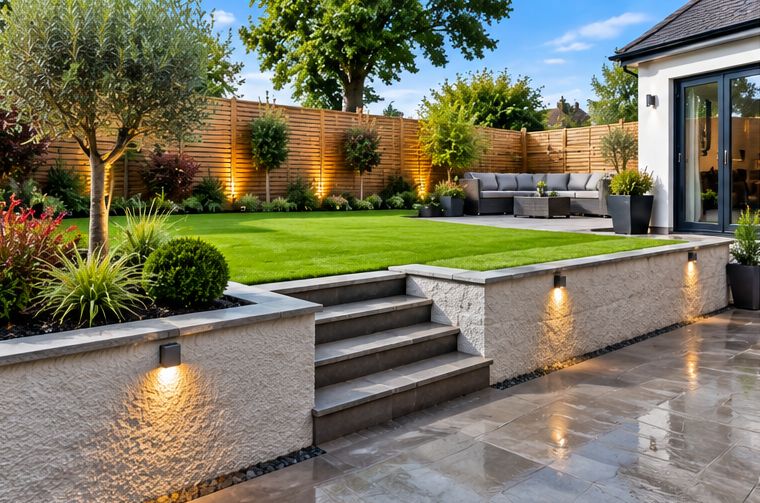
Step four: choose materials that cope with damp and shade
Materials behave differently in a sheltered, moist valley than on an open hilltop. Some surfaces turn green quickly in shade, so textured finishes and good falls matter more than usual. Porcelain and some natural stones are easier to keep clean, while light colours brighten a shady yard. Next to an older cottage, stone and brick often sit more comfortably than bright modern finishes.
Where the ground is uneven, a deck can replace a lot of digging; see raised decking for uneven Aberbeeg gardens. Where it is a patio you want, patio paving for Aberbeeg cottages goes through the choices.
Step five: decide whether to do it in stages
Not every makeover has to happen at once. A sensible split is to do the groundwork and structure first, such as clearance, drainage, walls and levels, then add patios, lawn and planting later. That way nothing finished has to be lifted to fix what lies beneath it.
Staging also spreads the disruption. In a small Aberbeeg garden with one way in, it can be easier to live with a few days of groundwork, enjoy a usable yard for a while, then come back for the finishing layer when you have decided exactly what you want. The key is to plan the whole garden at the start, even if it is built in parts, so the first stage does not block the second: pipes, cable ducts for future lighting and the footings for a later wall are all cheaper to put in early.
If the garden is currently hidden under bramble, the first stage is simply seeing what is there. Clearing overgrowth from an Aberbeeg garden explains how that works.
What shapes the budget
Every garden is priced on its own, but the same things drive the cost each time: the size of the area, how steep it is, how much soil has to move, the retaining and drainage work needed, the materials you choose and how much waste has to leave. Access plays a large part in the village, where slabs, sand and topsoil may have to be carried up steps or along a narrow path rather than tipped by the back gate.
Our home guide to what affects the cost of garden landscaping explains each factor. Knowing roughly what you want to spend helps us suggest what to prioritise.
From first visit to finished garden
Tony comes out to see the garden, walks it with you and talks through your list. We then send a free quote setting out the work in order, and agree start dates. On site we keep the garden as tidy as possible, protect paths through the house where needed and take away our waste as we go.
If you are starting to think about a makeover, send us some photos and a few lines about what you want through the enquiry form, and we will arrange a visit.
Talk to T J Landscapes about your garden
Free quotes and honest advice across South Wales.
Questions People Ask
Do I need a drawn garden design before contacting you?
No. A list of what you want and a few photos are plenty to start. We can sketch a layout with you on site and refine it from there.
What time of year is best for a makeover in Aberbeeg?
Hard landscaping can go ahead most of the year, although very wet or frozen spells slow groundwork. Turf and planting generally establish most easily in spring or autumn. Planning over winter lets work start as the weather improves.
Can a steep Aberbeeg garden really be made usable?
Usually, yes. Terraces held by walls or sleepers, a raised deck and well-built steps can turn a slope into a series of level spaces. Our home guide on landscaping a sloping valleys garden shows the principles.
Will I need planning permission for my makeover?
Most garden work does not need it, but raised decks, tall walls or fences, and changes to the front of a property can. Check with Blaenau Gwent County Borough Council if you are unsure. We will flag anything we think needs asking about.
How long does a garden makeover take?
It depends on the size, the slope, the access and how much structural work is involved. A small project may take days; a full makeover with walls and drainage takes longer. We give a realistic timescale with the quote.