
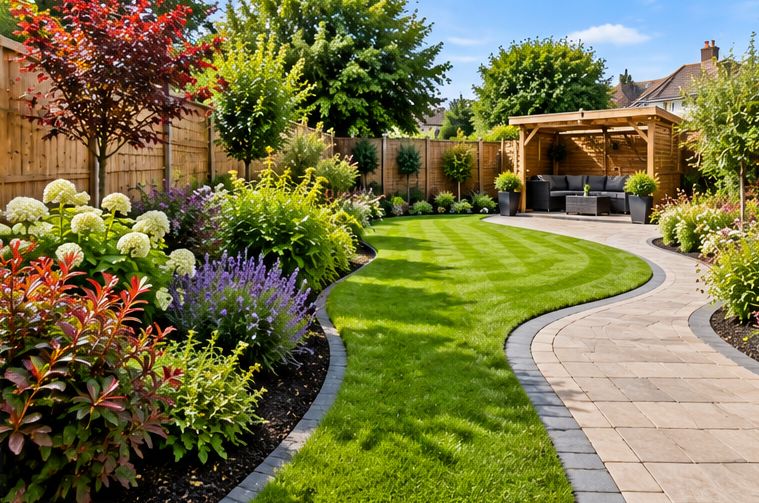
Walk down almost any road of older semis in Caerphilly and look over the back fences, and the gardens tell a similar story. A strip of cracked concrete by the kitchen. A lawn that runs a long way down. A shed that was put wherever there was room, a washing line post, a border along one side and, at the very end, a corner that nobody quite knows what to do with.
Those long plots are a real asset. They are bigger than most new-build gardens around the town, and with some thought they can hold a sunny terrace, a proper lawn, somewhere to grow things and somewhere to hide the bins. This guide gathers the ideas we suggest most often for Caerphilly semis. For an overview of all our work in the town, see our landscaping in Caerphilly page.
Start with how the garden gets used
Before choosing a single slab, it helps to write down what the garden actually has to do. For many Caerphilly households, where one or both adults drive or take the train to Cardiff each day, the honest answer is weekend barbecues, a summer evening drink, somewhere for children or a dog to run about, and a place for bikes and bins that does not spoil the view from the kitchen.
Once that list exists, the layout almost draws itself. Anything used daily goes close to the house, anything used weekly sits in the middle, and anything used now and again can live at the far end.
Split a long semi garden into rooms
A long, straight garden seen all at once from the back door can feel like a corridor. Breaking it into two or three areas, each with its own purpose, makes it feel wider and more inviting. The divisions do not need to be solid. A change of surface, a low hedge, a row of sleepers or an arch over the path is enough to tell the eye that one space has ended and another begun.
A pattern that works well behind many Caerphilly semis:
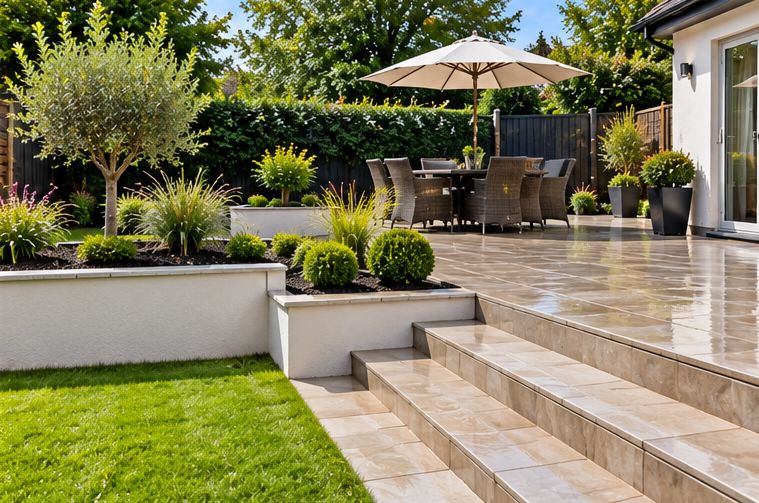
- By the house: a paved terrace wide enough for a table, laid below the damp-proof course with a fall away from the wall.
- The middle: an open lawn with crisp edges, so it is quick to mow and easy for children to use.
- The far end: raised beds, a shed on a proper base, a compost corner or a second seat that catches the evening sun.
- Linking them: a firm path, set off-centre or gently curved, so you can reach the end of the garden in slippers in February.
Deal with the old concrete and the side path
Many semis here still have the original concrete apron by the back door, often patched, sunk at one corner or sloping the wrong way. It can be tempting to lay new paving straight over the top, but that raises the level towards the damp course and rarely lasts. Breaking it out and starting again on a proper base is usually the better investment. Our patio and paving page explains what goes underneath a patio that stays flat.
The side path is the other forgotten space. On a semi it is often the only way in for a wheelie bin, a bike or a delivery of topsoil. Resurfacing it, adding a decent gate and putting a light on the wall makes the whole house feel better cared for, and it will matter on the day any landscaping materials arrive.
Work with the neighbours' side of the garden
A semi shares one long boundary with the house next door, and that boundary often has the most history: a mix of old fence panels, a bit of wall and a hedge planted decades ago. Before planning beds or a patio along that side, check who owns which boundary and talk to your neighbour about any changes. A new run of fencing or a low brick wall is sometimes a joint project. Our brickwork and garden walls team can rebuild a tired boundary wall to match the house.
If privacy from next door is the main issue, a slatted screen or a pleached tree near the seating area often does more than raising the whole fence line, and it keeps the garden feeling open.
Planting that suits a busy week
Deep borders full of fussy perennials are lovely, but they need time that many commuting households in Caerphilly simply do not have. We usually suggest a backbone of evergreen shrubs and grasses, with a few flowering plants for colour, and a thick layer of bark over the soil to keep weeds down and hold in moisture through dry spells.
Raised beds built from sleepers or brick make growing vegetables and herbs far easier to manage, because the soil is kept loose and there is no bending to ground level. For more ideas on cutting down the weekend jobs, see our guide to planning a low-maintenance garden.
Seating, surfaces and the decking question
The terrace is where most of the money goes, so it pays to choose the material carefully. On a level garden, paving usually makes sense close to the house. Where the plot falls away from the back door, which happens on some Caerphilly streets set into the hillsides around the basin, a deck can be quicker to level than building up for a patio. Our article Patio or Decking for a Caerphilly Garden? weighs up the two for local plots.
Garden lighting along the path and around the seating area is a small addition that makes a big difference in autumn and winter, when the light has gone by the time you get home from work.
Doing it in stages
Not everyone wants the whole garden done at once. That is fine, as long as the plan is drawn for the full plot first. Doing the heavy work in the right order saves money: clearing, levelling and drainage first, then walls and paving, then fencing, then lawn and planting. If you are starting with a garden full of old sheds and overgrowth, our guide to garden clearance before a Caerphilly makeover covers that first step.
Tony and the team will walk the garden with you, talk through what you would like and suggest a layout and order of work. Visit our landscaping and garden design page for the wider service, then get in touch to book a free visit.
Talk to T J Landscapes about your garden
Free quotes and honest advice across South Wales.
Questions People Ask
How long does it take to landscape a semi garden in Caerphilly?
It depends on the size of the plot, how much has to be cleared and what is being built. A new terrace and path might take a week or so; a full redesign with walls, paving and a new lawn will take longer. We will give you a realistic timescale when we quote.
What affects the cost of landscaping a long back garden?
The size of the garden, how easy the side access is, what the ground is like, the materials you choose, any changes in level, drainage and how much waste has to go. We explain each of these in a free quote, and our guide to what affects the cost of garden landscaping goes into more detail.
Can we keep the lawn and just change the rest?
Often, yes. If the grass is healthy and the ground drains, we can work around it and tidy the edges. If it is worn, mossy or waterlogged, it is usually better to relay it once the heavier work is finished.
Is there anything we need permission for?
Most ordinary garden landscaping behind a house does not need planning permission, but raised decks and platforms, high walls or fences, and some front garden changes can. If you are unsure, check with Caerphilly County Borough Council before the work starts.
Will you draw up a design?
We talk through a layout with you on site and explain how it would work, so you know what you are agreeing to before anything is dug.