
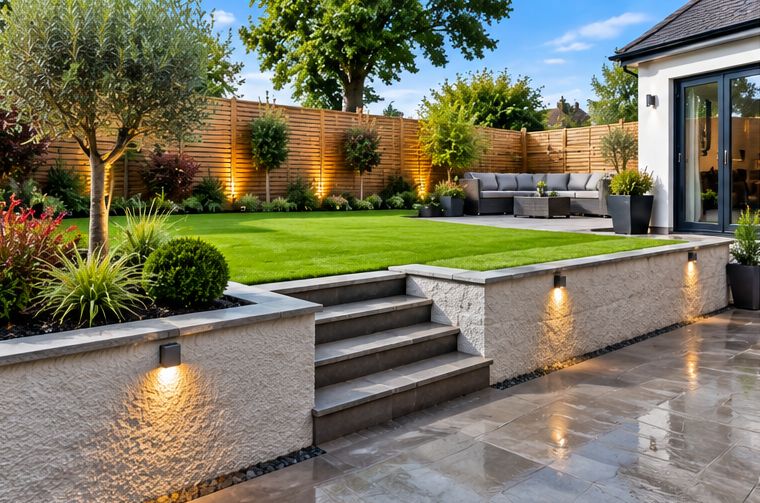
Brickwork does a quiet job in most gardens. It marks the edge of a drive, holds back a bank, lifts planting up to where you can enjoy it, and gives a lawn or patio a clean finish. In Caerphilly the kind of wall that suits a home depends a lot on its age. The interwar and post-war semis often have old front walls that have been patched, cracked or knocked about by cars. Newer estate homes often have open-plan fronts with no walls at all, and back gardens that could do with some structure.
This guide looks at the walls and planters that tend to work on each kind of Caerphilly property, how to get the look right, and why the part below ground matters most. For the full range of work we do, see our brickwork and garden walls page.
Front walls on older semis
The front boundary wall of an older semi has usually had a hard life: frost, roots from a hedge behind it, and the odd bump from a reversing car. Typical signs of trouble are loose coping, open mortar joints, a lean towards the pavement and cracks that step up through the brick courses.
Sometimes repointing and resetting the coping is enough. Where the wall is leaning or the footing has failed, rebuilding is usually the honest answer. When a drive is being widened, it is a good moment to shorten or rebuild the wall at the same time, with neat piers either side of the opening. Our guide to driveway and path paving in Caerphilly covers the paving side of that job.
Adding shape to open-plan estate fronts
Many newer estates around Caerphilly were designed with open lawns running from house to pavement. They look tidy when new, but they can feel exposed, and the grass is often worn where people cut the corner. A low wall, a line of brick edging or a small raised planter by the door can give the front some definition without shutting it off.
Before building anything at the front of a newer house, check your deeds. Some developments have covenants that restrict walls, fences or planting in front gardens, and walls next to a road over a certain height may need permission. If in doubt, ask Caerphilly County Borough Council first. A very low planter or edging is often the simplest way to add structure within the rules.
Brick planters and raised beds at the back
In the back garden, raised planters solve several Caerphilly problems at once. On heavy or compacted ground, they give plants a deep bed of good soil to grow in. Along a boundary, they soften a long run of fence. Next to a patio, they bring planting up to seat height, and a wide coping turns the edge into somewhere to perch.
- Line the inside of the planter so damp soil is not held against the brick all year.
- Leave weep holes or a drainage layer so water can escape at the base.
- Fill with a good topsoil mix rather than the clay dug out for the footing.
- Make them no wider than you can reach across comfortably from one side.
There is more on proportions, drainage and finishing in building brick raised beds and planters. If you are planning the wider layout of the back garden, Garden Landscaping Ideas for Caerphilly Semis shows how planters fit into a zoned design.
Matching the brick to the house
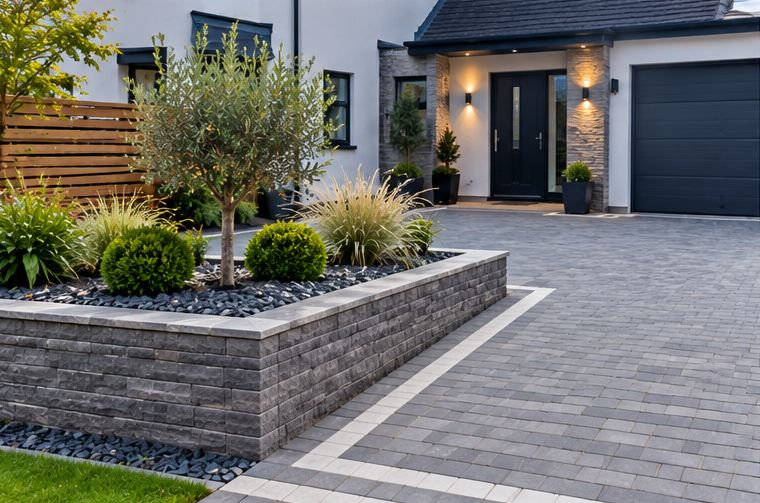
Nothing makes a new wall look more out of place than a brick that fights with the house. Older semis in the area are built in a mix of brick, render and pebbledash, while newer estates often use a single facing brick or a render and brick combination. Where the house is brick, we try to match the colour and texture as closely as possible, or pick a complementary one where an exact match is no longer made.
The coping matters too. A brick-on-edge finish suits a traditional front wall, while a stone or concrete coping gives a cleaner line to a contemporary planter. We explain the choices in choosing bricks and coping for a garden wall.
Footings on clay ground
Clay is common in the ground around Caerphilly, and it moves. It swells when wet and shrinks when it dries, especially close to trees and hedges that draw moisture out of it. A garden wall sitting on a shallow, narrow footing in that kind of soil will crack sooner or later.
For that reason we dig down to firm ground, pour a concrete footing sized for the wall, and keep well clear of tree roots where we can. On new-build plots we also watch for made-up ground and buried rubble, which can hide soft spots under an apparently level garden. What Lies Under a New-Build Garden in Caerphilly explains what we tend to look for, and garden wall foundations covers the build in detail.
When a wall holds back soil
Where a Caerphilly garden steps up or down, a wall that retains soil is doing a very different job from a freestanding one. It has the weight of wet earth pushing against it, so it needs a stronger build and a way for water behind it to drain. Low retaining walls and planters are routine for us, but taller ones, or any wall near a house, a drive or a neighbour's boundary, may need engineering advice first. See when does a retaining wall need engineering advice? for the warning signs.
Planning your wall or planter
The things that shape a quote for brickwork are the length and height of the wall, the depth of footing needed, the brick and coping you choose, access for materials and whether an old wall has to come down first. See our brickwork in Caerphilly page and our Caerphilly landscaping page for more on our local work, then get in touch for free advice and a free quote from Tony and the team.
Talk to T J Landscapes about your garden
Free quotes and honest advice across South Wales.
Questions People Ask
Can you match the bricks on my Caerphilly semi?
We try to match colour and texture as closely as possible. Some older bricks are no longer made, so where an exact match is not available we choose a brick that sits comfortably with the house rather than one that jars.
Is it worth repairing an old front wall?
If the wall is upright and the footing is sound, repointing and new coping can give it many more years. If it is leaning, badly cracked or moving, rebuilding on a proper footing is usually better value in the long run.
Can I build a wall in front of my estate house?
Check your deeds first, as some newer developments restrict walls and fences in front gardens. Height rules also apply to walls next to a road, so ask the council if you are unsure.
Do brick planters need drainage?
Yes. Without a way for water to escape, the soil stays waterlogged and the bricks stay damp, which leads to staining and frost damage. We build in drainage and line the inside.
Can a planter double as seating?
Yes. A planter at seat height with a wide, smooth coping makes a handy perch beside a patio, and it saves space in a smaller garden.