
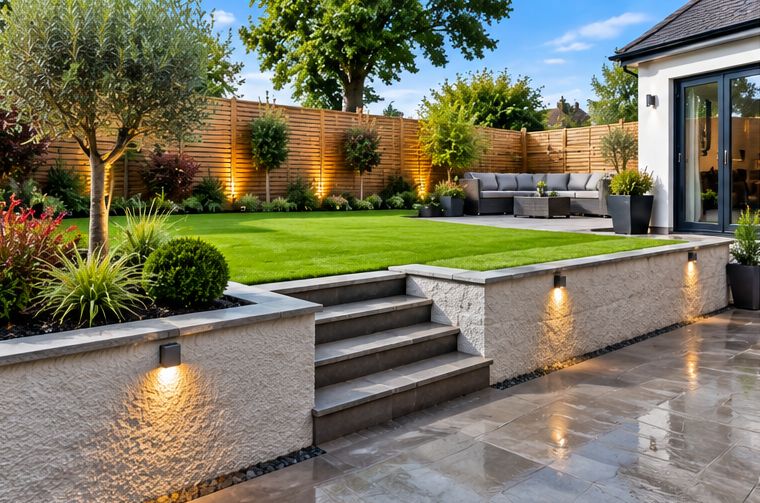
Ebbw Vale sits high up at the head of its valley, several hundred metres above the sea, and the weather knows it. Cloud settles on the hills, rain comes in sideways off the moorland, and winter mornings stay white long after the frost has gone from gardens down in Newport or Cardiff.
None of that means a good garden is out of reach. It just means the order of thinking changes. In this guide we set out how we approach an Ebbw Vale garden so that it still looks and works well after five or six upland winters, and where to look for more detail on each part.
Start with a walk round in bad weather
The most useful survey of your garden costs nothing. Go out on a wet, blowy day and watch. Which corner does the wind hit hardest? Where does water run off the lane, the neighbour's plot or the hillside behind? Which patch of lawn is still white at eleven o'clock on a frosty morning?
Up here those answers vary a lot from one house to the next. A terrace tucked into the valley side can be surprisingly sheltered, while a newer house on open ground may take the full force of a south-westerly. Note it all down, or take photos, and you will have most of the brief for a new design before anyone picks up a spade.
- Wind: the direction it usually comes from and where it funnels between houses.
- Water: where it arrives, where it pools and how long it stays.
- Frost and shade: the parts of the plot that never see winter sun.
- Views: the hills are worth framing, so note where you would like to look out from.
Build shelter before you build a seating area
A patio in the windiest spot in the garden will hardly be used, however nice the slabs. We usually look for the natural lee of the house or a wall first and put the main sitting space there, then add shelter to extend it.
Solid barriers are not always the answer at this height. Wind hitting a solid fence or wall rolls over the top and swirls down the other side, so a screen that filters the wind often gives calmer air behind it. A slatted fence, a mixed native hedge or a planted bank can all do that job. Our guide to fencing that lasts on exposed Ebbw Vale plots goes into the options for the boundary itself.
Inside the garden, a low wall with a bench along it, a pergola with climbers or a group of tough shrubs can break the plot into smaller, calmer rooms. Anything tall needs to be anchored properly, because a gust that lifts one post can bring down a whole run.
Hard surfaces that shrug off frost
Freeze and thaw is what wears out paving in Ebbw Vale. Water gets into weak joints, porous stone or a soft base, freezes, expands and slowly pushes everything apart. After a few winters slabs rock, joints crumble and edges lift.
The fix is in the build rather than the surface. A well compacted sub-base, a full bed under each slab, sound joints and a steady fall so water runs off quickly make far more difference than the choice of stone. After that, pick a material with some texture, so it keeps its grip when it is wet or has a skim of frost. Porcelain, riven sandstone and good concrete flags all work when laid well; our patio and paving page shows what we lay, and which patio paving copes best with Welsh rain compares them.
Steps deserve extra care. Shallow, even risers, a textured tread and a handrail on a steep flight turn a slippery winter hazard into something you can use without thinking.
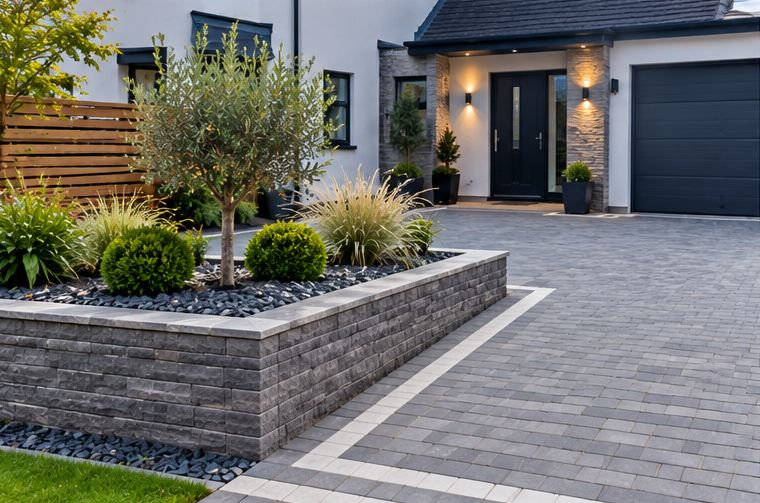
Deal with the water, not just the symptoms
More rain falls in the upper valleys than on the coast, and plenty of Ebbw Vale gardens also catch run-off from ground above them. If that water has nowhere to go, lawns turn to moss, borders rot and paving turns green.
Sometimes a change of levels is enough to send water to a border or a gravel strip. Where the ground is heavy or the plot is below a slope, a trench drain or land drain may be needed. We have written a separate guide on drainage for wet gardens in Ebbw Vale, so here we would just say: sort it before you lay anything expensive on top.
Planting that stays standing
The plants that do well at altitude tend to be the ones that grow naturally on Welsh hillsides or in similar conditions elsewhere. Think tough, compact and well rooted rather than tall and soft.
- Native hedging such as hawthorn, hazel, holly and beech for shelter belts and boundaries.
- Low shrubs that handle wind, including many hebes, dogwoods and potentillas, though some hebes dislike the coldest winters.
- Ornamental grasses and hardy perennials that bend in a gale rather than snapping.
- Raised beds for vegetables and anything that hates wet roots, so the soil warms and drains sooner in spring.
Give new plants a stake that allows a little movement, keep them watered through their first dry spell, and expect things to start growing a week or two later in spring than they would lower down.
A lawn that suits the climate
Grass copes well with rain but struggles with shade, poor drainage and heavy use on soft ground. For a family lawn in Ebbw Vale we look at drainage, topsoil depth and the amount of sun before recommending turf, and we pick a hard-wearing mix. Where a patch will always be shaded or boggy, gravel, bark or planting is often a better use of the space.
Timing matters more here too, as the growing season is shorter. Our guide to turf laying in Ebbw Vale covers when to lay and what to avoid, and our turf laying page shows how we prepare the ground.
Planning the work around the seasons
Hard landscaping can go ahead in most months, but concrete and mortar need a few frost-free days to cure, so we keep an eye on the forecast in deep winter and protect fresh work when a cold night is due. Planting and turfing suit the milder, damper windows of spring and autumn.
If you are thinking about a full redesign, it helps to talk early. Tony and the team can visit, look at the exposure, levels and ground, and give you free advice on what will last. You can read more about our work across the town on our Ebbw Vale landscaping page, see the wider service on our landscaping and garden design page, or ask us for a free quote.
Talk to T J Landscapes about your garden
Free quotes and honest advice across South Wales.
Questions People Ask
Is it worth having a patio in a windy Ebbw Vale garden?
Yes, if it goes in the right place. Put it in the most sheltered spot, often close to the house, and add a hedge, screen or low wall to soften the wind. A patio on the most exposed edge of the plot usually ends up as somewhere you walk past rather than sit on.
Which plants cope best at this altitude?
Native hedging, compact shrubs, grasses and hardy perennials generally do best. Avoid tall, soft plants in exposed spots and anything that hates wet roots unless it goes in a raised bed. A local garden centre in the valleys will also know what survives a hill winter.
Will frost damage a new patio?
A well built patio should cope. Frost damage usually comes from water getting into a weak base, dabbed slabs or poor joints. A full bed, a firm sub-base and a good fall keep water moving and out of the structure.
Can you work on Ebbw Vale gardens in winter?
Groundwork, walls, paving and fencing can often go ahead, weather permitting. We avoid laying mortar or concrete when a hard frost is due, and we leave turfing and most planting for the milder months.
Do you give free advice before a quote?
Yes. We will look at the garden, talk through what you want and what the weather will allow, and give you a free quote. There is no charge for the visit.