
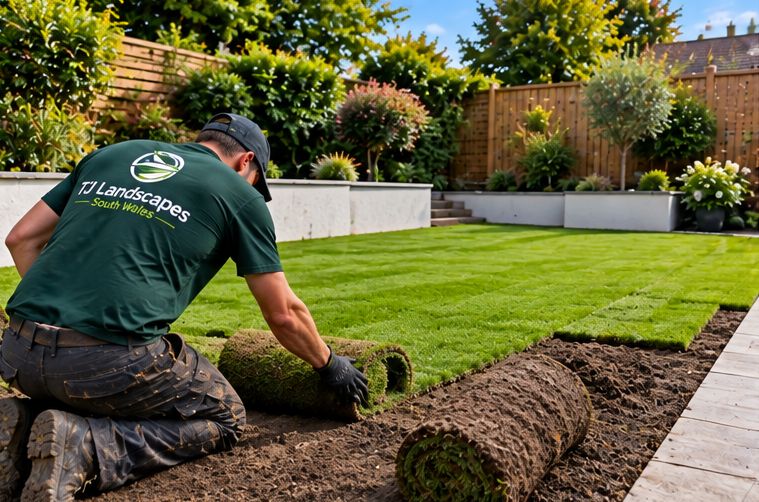
A new lawn needs three things to root: soil that is warm enough for the grass to grow, enough moisture, and ground that is not frozen or waterlogged. On the coast those conditions last for much of the year. In Ebbw Vale, high up at the top of the valley, the window is noticeably narrower.
Our general guide, when is the best time to lay turf in South Wales, covers the seasons across the region. This one looks at what changes up in Ebbw Vale, and how we plan a turfing job around it.
Why the calendar is shorter up here
Height makes a difference to temperature. The soil in an Ebbw Vale garden usually warms up later in spring and cools down earlier in autumn than soil in the lower valleys, so grass starts and stops growing at different times. Frosts can arrive earlier and linger later, and higher rainfall means the ground is more often too wet to work.
None of that stops a good lawn. It simply means the dates people quote for Cardiff or Newport do not always apply, and it pays to watch the ground rather than the calendar. Exposure plays a part as well. A sheltered terrace garden tucked into the valley side can be ready a little sooner than an open plot on higher ground, where cold winds keep the soil chilled well into spring.
A season-by-season guide for Ebbw Vale
These are guidelines, not rules. A mild, damp March can be ideal, while a cold, wet May is not. Here is how the year usually goes for turfing at this altitude.
- Late winter: usually too cold and too wet. Turf laid on frozen or sodden ground sits there without rooting, and walking on it to lay it damages the soil.
- Mid to late spring: often the most reliable time. The soil is warming, showers keep new turf moist, and the grass has the whole summer to establish before winter.
- Early summer: fine as long as you can water. Dry spells do happen here, and new turf dries out fast in sun and wind.
- High summer: possible with plenty of watering, but a hot, breezy week can scorch turf before it roots.
- Early autumn: another good window. The soil is still warm from summer and rain returns, so roots grow quickly. Up here, aim for the earlier part of autumn rather than the later part.
- Late autumn and early winter: risky, because the grass may not root before the first hard frosts.
Signs the ground is ready
Rather than picking a date, we check the ground itself. If the soil crumbles in your hand rather than smearing, it is dry enough to work. If a spade goes in easily and there is no frost in the top layer, it is not frozen. If weeds and existing grass have started to grow, the soil is warm enough for new turf to root too.
If any of those checks fail, we would rather wait a week or two than lay turf that will struggle. It is one of the reasons we keep some flexibility in the diary for lawns in the upper valleys.
Preparation matters even more on upland soil
Good timing is wasted on poor ground. Many Ebbw Vale gardens have heavy or compacted soil, thin topsoil on newer plots, or water coming down from higher ground. Turf laid over that will go yellow, mossy or bare within a year or two.
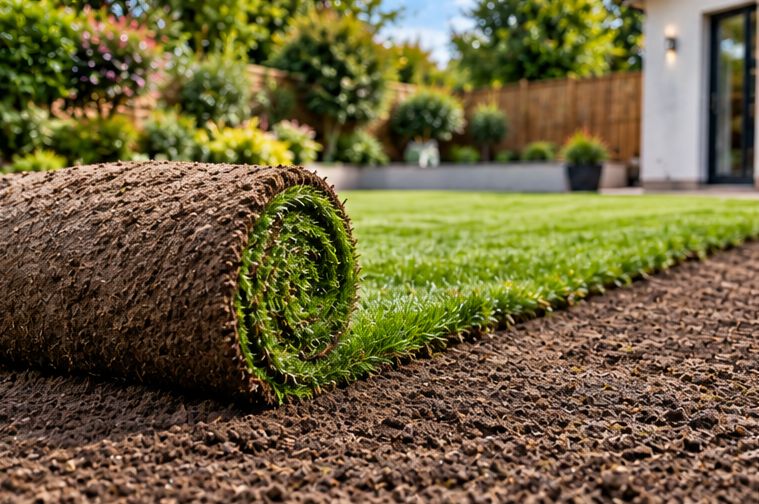
Before any turf arrives, we clear the old grass and weeds, break up compacted ground, remove stones and rubble, add topsoil where it is thin, and level and firm the surface. Where the ground holds water, we sort the drainage first; our guide to drainage for wet gardens in Ebbw Vale covers the options. The full step-by-step is in how to prepare the ground before laying turf.
Choosing turf for an Ebbw Vale garden
For most family gardens up here we recommend a hard-wearing turf, which stands up to children, dogs and the extra wear that comes with soft ground. For a shaded terrace garden, a shade-tolerant mix helps, though no grass does well in deep shade all day.
It is also worth asking whether every part of the garden should be grass. On a steep bank or a spot that stays wet, planting, gravel or a small patio may be the better answer. If you are weighing up seed instead, turf or seed explains the trade-offs; up here, the longer time seed takes to establish in a short season is a point in turf's favour.
Caring for new turf in the upland weather
The first few weeks decide whether new turf takes. In Ebbw Vale the risk usually is not heat but wind and uneven rain, so do not assume the weather will do the watering for you.
- Water deeply as soon as it is laid, and keep it moist until you cannot lift a corner.
- Check after windy days, which dry turf faster than people expect.
- Keep off it until it has rooted, especially when the ground is wet.
- Give it a first light cut once it has rooted, with the mower set high.
- If a frost is forecast soon after laying, avoid walking on it while frozen.
Our guide to watering and caring for new turf in the first six weeks has the full routine.
Booking your new lawn
Because the best windows in Ebbw Vale are fairly short, it helps to get in touch a little ahead. We can look at the garden, sort out any drainage or levelling first, and then lay the turf when the ground is right.
See how we prepare and lay lawns on our turf laying page, read more about gardens across the town on our Ebbw Vale landscaping page, or ask for a free quote. For more on how a lawn fits into a garden built for hill weather, see gardens that cope with Ebbw Vale’s upland weather.
Talk to T J Landscapes about your garden
Free quotes and honest advice across South Wales.
Questions People Ask
What month is best for laying turf in Ebbw Vale?
There is no single month, because it depends on the weather that year. Mid to late spring and early autumn are usually the most reliable windows at this altitude. We check the soil before we lay rather than relying on a date.
Can turf be laid in winter?
It is possible in a mild spell, but in Ebbw Vale winter ground is often frozen or waterlogged, and turf struggles to root. We usually advise waiting for spring.
My last lawn went mossy. Will new turf do the same?
Not if the cause is dealt with. Moss usually means poor drainage, compaction, shade or thin soil. We fix those before laying new turf, otherwise the problem comes back.
How soon can we use the new lawn?
Light use is usually fine once the turf has rooted and had its first cut, typically a few weeks after laying. Heavy use, such as football, is best left a little longer, especially on soft ground.
Do you take the old lawn away?
Yes. We strip the old grass and weeds and take the waste away, along with any rubble or stone we dig out while preparing the ground.